
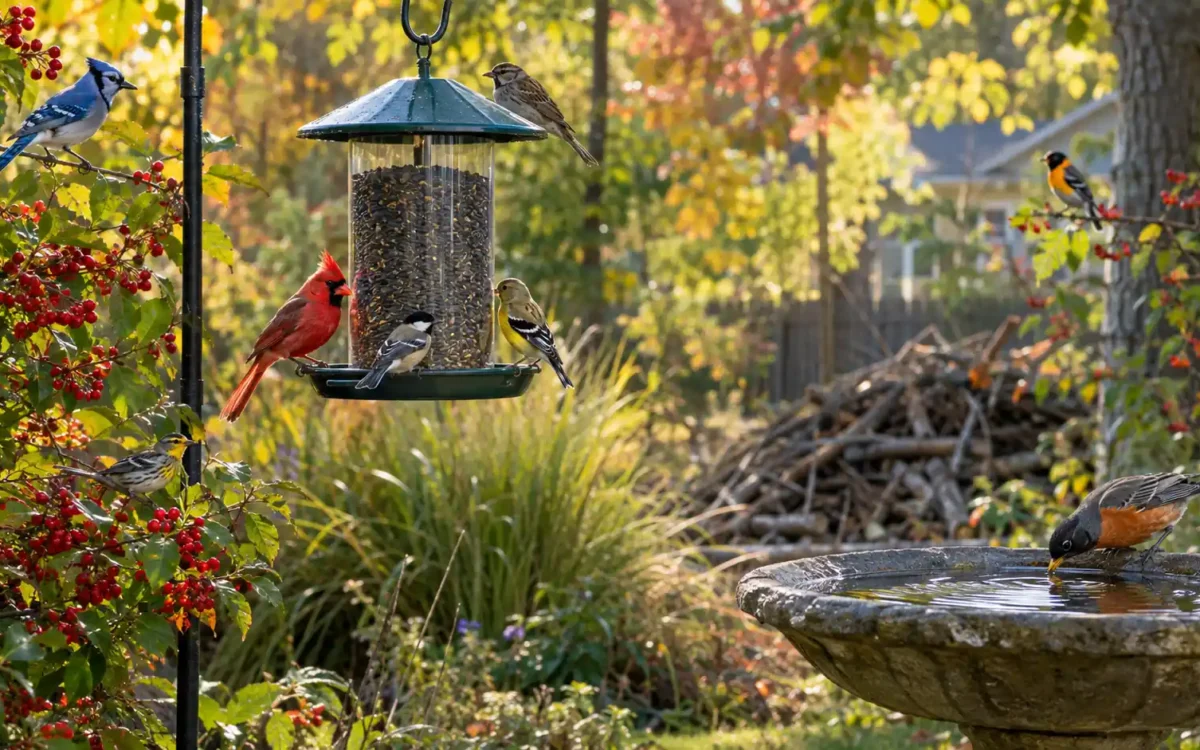
Step outside on a cool late-September morning and there’s a decent chance a small flock of warblers or sparrows you’ve never noticed before is already working through the trees, gone again within a day or two. Knowing how to attract birds during fall migration turns that brief, easy-to-miss window into something a backyard can actually take advantage of, rather than a season that quietly passes by unnoticed. This guide covers what genuinely helps during that stretch, from feeding to shelter to a few safety details most people overlook.
When Does Fall Bird Migration Start
Timing varies by species and region, but peak activity across most of North America generally runs from late September through early November. Some birds begin moving as early as mid-August, while others linger into late fall depending on food availability and weather.
How long fall bird migration lasts also depends heavily on latitude — northern yards tend to see the earliest and most concentrated activity, while southern regions often stretch the window out over a longer, more gradual period as birds pass through at different rates.
Best Time of Day to See Migrating Birds
Early morning tends to be the most active window, since many migratory species travel overnight and land to rest and refuel shortly after sunrise. A feeder or water source checked within the first hour or two of daylight often shows the widest variety of visitors.
Cloudy or slightly overcast mornings, somewhat counterintuitively, can bring even more activity than clear ones, since overcast skies sometimes encourage birds that traveled overnight to rest longer before continuing on rather than pushing ahead in bright, clear conditions.
What to Feed Birds During Fall Migration
High energy foods for migrating birds matter more this time of year than almost any other, since many species are actively fueling up for long, continuous flights. Black oil sunflower seed, suet, and mealworms all offer the dense calories migrating birds need, and our full breakdown in best bird seed for backyard birds covers which types perform best for the widest range of visitors passing through at this time of year.
Keeping feeders stocked consistently matters as much as the food itself. A feeder that’s regularly full becomes a reliable stopover point that migrating birds can count on, rather than a hit-or-miss option they pass by.
How to Make Your Backyard a Migration Stopover
Migrating birds don’t just need food along their route — they need somewhere worth pausing at all. How to make your backyard a migration stopover really comes down to layering a few basics together: reliable food, fresh water, and enough cover nearby that a tired bird feels safe stopping rather than continuing on.
Yards that combine all three tend to hold migrating visitors for hours or even a full day, compared to a bare feeder-only setup that might only get a quick, cautious visit before birds move on to somewhere with better cover.
How to Attract Migrating Hummingbirds in Fall
Do hummingbirds migrate in fall is a common question, and the answer is yes — often later than people expect. Juvenile hummingbirds are typically the last to leave breeding grounds, sometimes feeding at a nectar source for weeks after adults have already headed south.
Keeping a hummingbird feeder up through fall, rather than taking it down early, gives these stragglers a reliable energy source right when they need it most. There’s a persistent myth that a feeder left up too long will delay migration or convince a hummingbird to stay through winter — this isn’t how migration actually works, and removing a feeder too early only risks leaving a late traveler without fuel. Our guide on how to attract hummingbirds to a feeder covers the nectar ratio and placement details that apply just as well during migration as any other time of year.
Best Bird Feeder Setup for Migration Season
A well-rounded best bird feeder setup for migration season usually combines two or three food types rather than relying on a single feeder, since different species passing through have different preferences and feeding styles.
A water source matters just as much as food during this stretch. The best water feature for migrating birds is often something with movement — a dripper, small fountain, or shallow moving stream effect — since the sound and motion draw far more attention from passing birds than still water alone, especially in a yard they’ve never visited before.
Keeping Migrating Birds Safe From Window Strikes
How to keep migrating birds safe from window strikes is worth taking seriously, since collisions genuinely increase during migration as unfamiliar birds pass through unfamiliar territory, often disoriented by reflections they’ve never encountered before and moving faster than they would in a home range they already know well. Feeder placement plays a direct role here — our guide on where to place a bird feeder in your backyard covers the specific window-distance rule that meaningfully reduces this risk.
Reducing outdoor lighting at night is another simple step worth adding this time of year, since many species migrate after dark and rely on starlight for navigation — unnecessary light pollution can pull them off course and disrupt their sense of direction.
Best Plants and Shelter for Migrating Birds
Best plants for fall migrating birds tend to be native, berry-producing shrubs and trees, which offer both a natural food source and cover in one. Leaving seed heads and ornamental grasses standing through fall, rather than cutting everything back, adds even more natural forage for ground-feeding species passing through.
A simple brush pile for migrating birds, made from pruned branches stacked loosely in a corner of the yard, gives tired travelers a place to rest and hide from predators between feeding stops — a small addition that costs nothing but noticeably increases how long birds linger before moving on.
How Fall Migration Unfolds, Month by Month
Activity shifts noticeably as the season progresses:
| Period | What to Expect | What to Do |
|---|---|---|
| Mid-August | Early movers, including some hummingbirds, begin passing through | Keep nectar and seed feeders freshly stocked |
| September | Peak warbler and songbird activity in most regions | Add high-energy foods and check water sources daily |
| October | Sparrows and juncos arrive as summer residents thin out | Introduce ground-level seed for these new arrivals |
| Early November | Migration winds down; winter residents settle in | Transition toward winter-focused feeding habits |
Exact timing shifts year to year with weather patterns, so treat this as a general guide rather than a fixed schedule.
I kept a simple running list one fall of every new species that showed up at the feeders that hadn’t been seen the rest of the year, mostly out of curiosity about whether it was actually worth the effort. By the end of October the list had grown longer than expected, including a few warblers that never stuck around for more than a day or two.
It wasn’t a scientific survey, just casual notes kept on a kitchen notepad, but it made the season feel noticeably different from the rest of the year — less about the regular feeder crowd and more about who might show up next. That log is still the easiest way I’ve found to actually notice migration happening, rather than just hearing about it happening somewhere else. A few of those brief visitors never returned the following year, which somehow made the whole habit feel worth keeping up.
Frequently Asked Questions
When does fall bird migration start and end?+
Most activity across North America runs from late September through early November, though some species begin moving as early as mid-August and timing shifts depending on region and weather.
Do hummingbirds migrate in the fall?+
Yes, and often later than expected. Juvenile hummingbirds in particular tend to be the last to leave, sometimes still visiting feeders weeks after adults have already headed south.
Should I keep my hummingbird feeder up in fall?+
Yes, keeping a feeder up through fall doesn’t delay migration and gives late-traveling hummingbirds a reliable energy source exactly when they need it most.
Why are there more birds at my feeder in autumn?+
Fall combines resident birds preparing for winter with migrating species passing through, which often makes feeders noticeably busier than during quieter summer months.
Do window strikes increase during migration?+
Yes, collisions tend to rise during migration since unfamiliar birds are moving through unfamiliar territory, often confused by window reflections they haven’t encountered before.
Which one sounds closer to your yard right now?
How to Attract Birds During Fall Migration: Key Takeaways

Related Articles
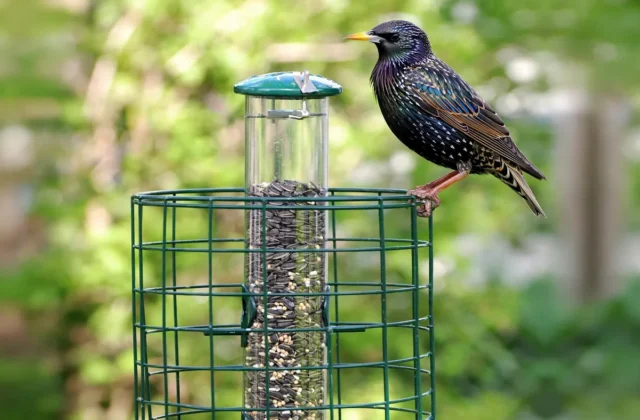
How to Keep Starlings Away From Bird Feeders: 7 Proven Tips (2026)
Nothing empties a bird feeder faster than a flock of European starlings. One minute your tube feeder is…
Read Article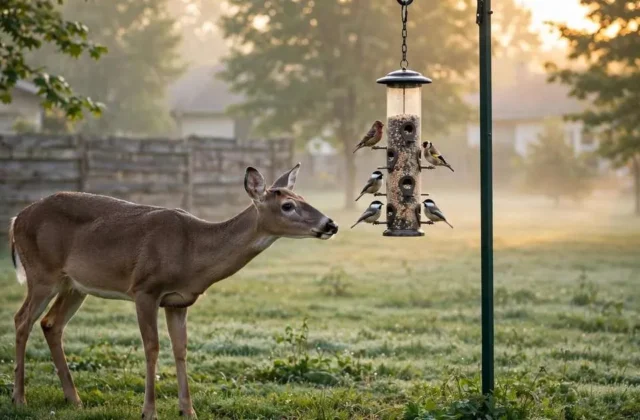
How to Keep Deer Away From Bird Feeders: 7 Proven Ways (2026)
One October morning, coffee in hand, you walk to the back window expecting the usual rush of chickadees…
Read Article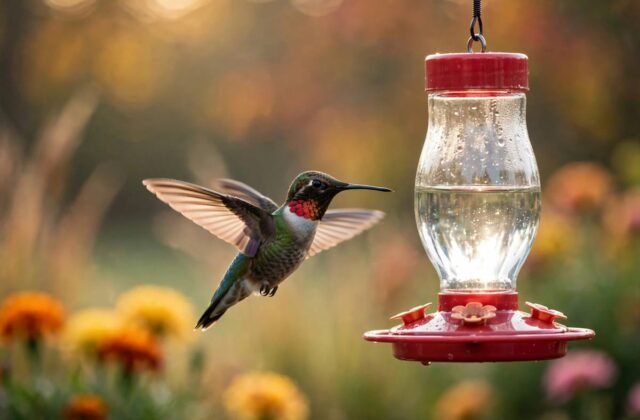
When to Take Down Hummingbird Feeders: 7 Smart Rules (2026)
Every September, I find myself standing at the kitchen window, coffee in hand, staring at my hummingbird feeder…
Read Article