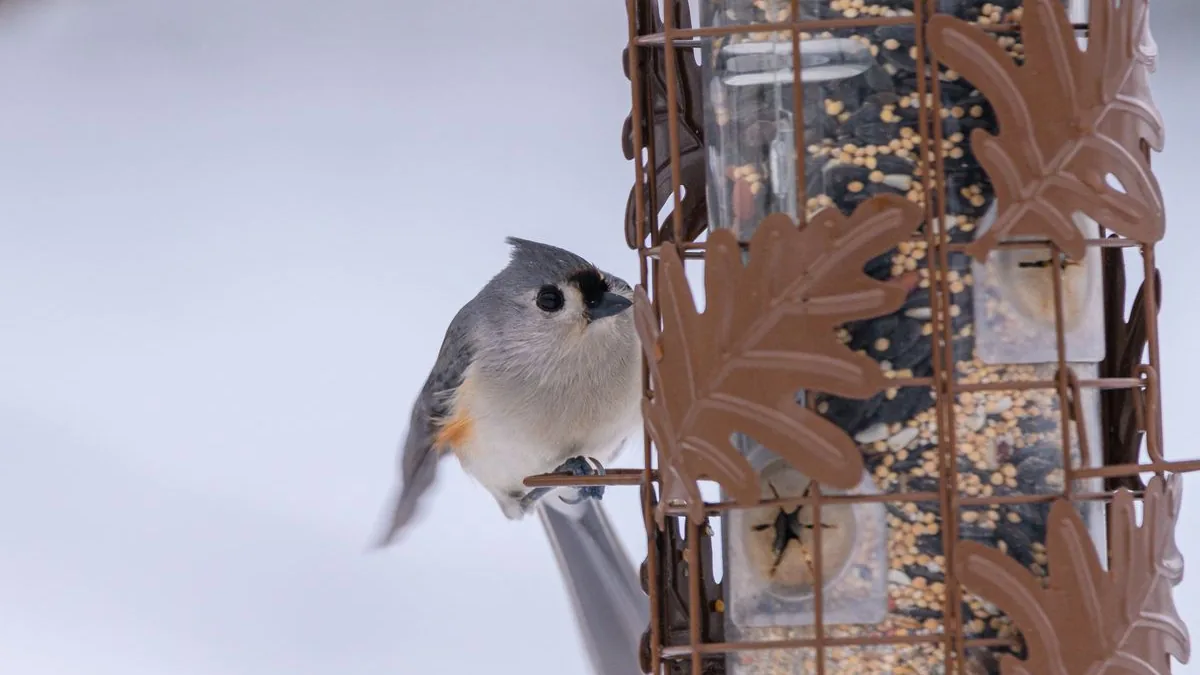
Short Answer
Your birds will be fine while you are away. A feeder is only a small part of a wild bird’s diet, so a few days without your seed will not starve them. Fill every feeder the night before you leave, put out food that keeps, and ask a neighbour to top up if you will be gone longer than a week.
First, the Good News: Your Birds Won’t Starve
Every time I pack a suitcase, the same worry pops up before the car keys do: what about the birds? They come every morning. If I disappear for ten days, will they wait?
The answer, from people who study this properly, is no. The Canadian Wildlife Federation points to research showing that some birds get only about 25 per cent of their daily winter diet from feeders, with the remaining 75 per cent coming from natural food. The Audubon Society of Rhode Island puts it even more plainly: “Don’t worry about going on vacation. The birds won’t starve.” Your regulars have a whole feeding round: neighbours’ feeders, seed heads, berries, insects under bark.
That is also why birds do not become dependent on one feeder, as I explain in my guide on whether bird feeders make birds dependent. They keep foraging while they visit you.
November does raise the stakes a little. The nights are cold and natural food is thinning, so a full feeder before you go, and a neighbour for a long trip, count more now than they would in June. If a hard freeze is forecast, get someone involved. My guide on how to help birds in a winter storm covers what to stock for the coldest days.
Pick Your Plan by Trip Length
The right plan depends on one thing: how long you will be gone.
| How long you are away | The plan | Why it works |
|---|---|---|
| A long weekend, 2 to 3 days | Fill all feeders the night before | Full feeders cover three days easily |
| About a week | Fill everything, add fresh suet, and ask a neighbour for one mid-week top-up | One refill covers the second half; suet keeps well in the cold |
| Two weeks or more | Neighbour visits twice a week; big hopper feeder; seed bag left out for them | Small refills beat one giant heap, which goes damp and mouldy |
| A month or longer | Hand the round to someone, or take feeders down and restart when home | Birds adjust either way |
The Week Before You Leave
Seven days before: clean and check. Scrub the feeders now. I use nine parts water to one part bleach, rinse well, and let them dry in the sun. Check for cracked tubes and loose ports.
Three days before: buy and test. Buy the seed now and run the bag through the Seed Bag Checker on the Feeding Tools page, so you are not leaving your neighbour a bag of filler the birds push aside. Fill the feeders and watch one morning: a full tube feeder in my garden lasts about three to five days in November, a big hopper a week or more. That tells you whether one visit is enough.
The night before: top everything off. Fill each feeder, hang a fresh suet cake, scatter a little seed on the ground, and fill the bird bath. Leave the seed bag, scoop, and a spare suet cake in one obvious, dry place (see my seed storage guide). My best bird food for winter guide lists the foods that hold up best in the cold.
The Note I Leave on the Fridge
If a neighbour is helping, leave a short note where they will see it.
“Tube feeder by the kitchen window: sunflower seed, blue bag. Platform feeder by the fence: mixed seed, green bag. One scoop in each, every other day, is plenty. Top up the bird bath if empty. If a feeder looks mouldy or smells off, leave it empty. Thank you — back on the 24th.”
Short and specific beats a page of instructions.
My Mistake: The Feeder I Filled to the Brim
Before a ten-day trip, I heaped my platform feeder to the rim, thinking more food meant more days covered. Rain came on day three. When I got home, the seed was a soggy, mouldy pile the birds would not touch, and I threw the whole lot away. A full feeder is not a lasting feeder: dry, sheltered seed in a tube or a hopper outlasts a heap on an open tray.
When You Get Home
Do not panic if the garden is quiet on your first morning back. Your birds spent the week eating elsewhere, and they will not all return on day one. Clean and refill them, and give it a few days. Resist the urge to overfill to “make up for it”: the same daily amount is right. If you took the feeders down for a long trip, put them back in the same spots; the birds remember the location.
Before You Lock the Door Checklist
Run through this once, the night before you leave:
- All feeders cleaned, checked, and filled to the top
- Fresh suet cake in the suet cage
- A little seed scattered on the ground
- Bird bath filled with fresh water
- Seed bag, scoop, and spare suet in one obvious, dry place
- Neighbour has the fridge note and your return date
- Open tray feeders left empty if rain is forecast
Frequently Asked Questions
Will birds starve if I stop filling my feeders for two weeks?
No. Feeders supply only about a quarter of a wild bird’s winter diet, per the research the Canadian Wildlife Federation cites, so birds forage elsewhere. A neighbour’s help matters most during a hard freeze.
Should I take my feeders down while I am away?
For a long trip with nobody to refill, yes: take them down and clean them. If someone can refill, leave them up, especially in winter.
How long does a full feeder last?
In my garden in November, a tube feeder lasts three to five days, a big hopper a week or more. Watch one cycle before your trip.
Can I just leave extra seed on the ground instead?
Only as a one-day scatter. Seed on the ground goes damp and mouldy fast, and it draws rats and mice. For anything longer than a day, food belongs in a feeder.
Do I need to tell my neighbour anything about cleaning?
No. Ask them only to refill, and to leave a feeder empty if it looks or smells off. Cleaning is your job when you get home.

Related Articles
How to Join Project FeederWatch: Count the Birds at Your Feeder This Winter
Project FeederWatch's 40th season runs 1 Nov 2026-30 Apr 2027. Join for $18, count birds at your feeder…
Read Article
How to Stop Birds Fighting at Your Feeder
One feeder is one territory, so one bully bird can own it. Spread two or three different feeders…
Read Article
How to Stop Bird Seed Growing Under Your Feeder
Spilled seed sprouts when it stays viable, wet, and on soil. Switch to no-mess seed, catch it with…
Read Article