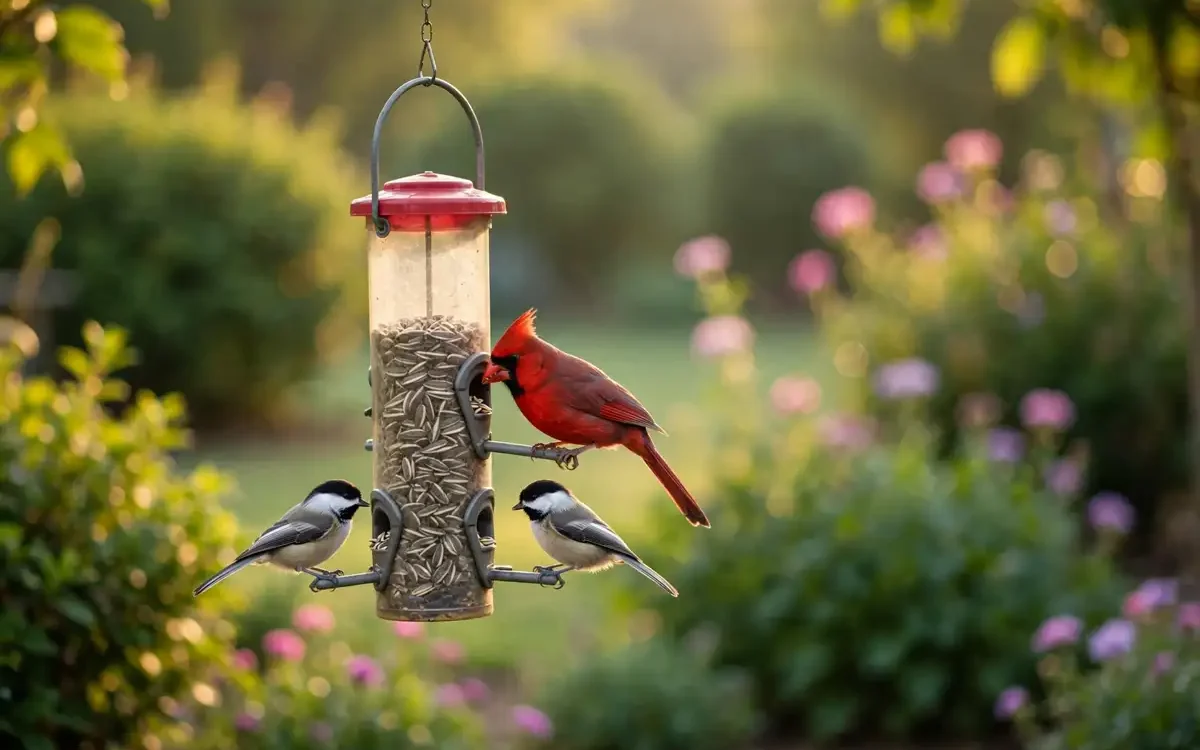
Last February, watching a downy woodpecker work my suet feeder in a sleet storm, the guilty thought crossed my mind — the one every bird lover gets sooner or later. Am I making these birds dependent on me? If you’ve ever wondered, do bird feeders make birds dependent, you’re asking exactly the right question. I carried that guilt for years, so I read what the experts say, watched my own backyard, and tested my assumptions against real bird behavior. Here’s the honest answer.
The Short Answer
- No — feeders don’t make birds dependent. Your regulars treat the feeder as one convenient stop on a much wider daily foraging route, not their only food source.
- The experts agree: feeding isn’t necessary for survival except in extreme weather — but done right, it genuinely helps birds through the hardest stretches.
- The real risks are elsewhere: dirty feeders, junk-quality seed, dangerous placement. Fix those three and refill with a clear conscience.
What “Dependent” Would Actually Mean
A truly dependent animal can’t feed itself — it loses its foraging skills and collapses when the handouts stop. That’s the nightmare playing in every feeder-owner’s head at 6 a.m. Now watch what your birds actually do. My chickadees visit the feeder a dozen times a day, and spend the hours between hammering bark crevices and caching seeds in a hundred hiding spots. A black-capped chickadee can stash thousands of seeds in one autumn and remember most of them. That’s not an animal that forgot how to feed itself.
What cured my guilt: every June, when the mulberries ripen on my neighbor’s tree, my feeders go silent for two weeks. Same birds, same yard — they just have a better offer. Then the berries run out and they’re back. A dependent animal couldn’t do that. They’re choosing your feeder, not chained to it.
What the Experts Actually Say
Stephen Kress, vice president for bird conservation at the National Audubon Society, puts it plainly: “Feeding birds is not necessary for their survival except in extreme weather conditions. Feeders can definitely help them get through that kind of weather.” Not essential, not harmful — a genuine help in the hardest stretches. He also notes most birds are insect eaters that never visit seed feeders, which is why he recommends planting native habitat alongside any feeder.
Geoff LeBaron, director of the National Audubon Society’s Christmas Bird Count, is blunter in National Geographic’s feeding guide: “The birds don’t need us to feed them.” His take: feeding is largely for us — so families can see the birds in their yards. That’s permission to enjoy your hobby without pretending you’re running a wildlife rescue.
Biologist Jack Shutt, who published a 2021 study on feeding wild animals, found that providing healthy foods can help boost bird populations and individual health — when done correctly. The “done correctly” does real work in that sentence, and it’s what the rest of this article is about. One more finding I love: chickadees made to work harder for food did not visit feeders more to compensate — the opposite of what a dependent animal would do.
3 Myths About Feeder Dependence — Busted
If part of you still asks, do bird feeders make birds dependent, these three myths are usually where that worry lives. Let’s dismantle them.
“Birds will forget how to find natural food.”
Myth Reality
Foraging is hardwired instinct plus daily practice — every bird at your feeder still probes bark and hawks insects between visits. A feeder doesn’t erase millions of years of foraging programming. Your feeder becomes the reliable corner store on a route that still includes plenty of wild foraging.
“Do bird feeders make birds dependent enough to skip migration?”
Myth Reality
Migration is driven by shortening daylight — a signal no feeder can fake. The National Audubon Society’s FAQ addresses this directly: feeding doesn’t stop migration. In fall, feeders offer late migrants running on empty a refueling stop. That’s not dependence — that’s hospitality.
“If I stop feeding, my birds will starve.”
Myth Reality
Your regulars notice an empty feeder within a day and reshuffle their route toward the other food sources they’ve used all along — they’ve never gotten 100% of their calories from you. The one exception is extreme weather: in a severe ice storm or the coldest week of winter, a suddenly empty feeder matters more. Everywhere else on the calendar, stopping is an inconvenience, not a crisis.
The 3 Real Risks (None of Them Is Dependence)
Here’s the reframe that changed how I feed: dependence isn’t the danger — negligence is. Three things actually deserve your worry:
1. Disease at dirty feeders
A crowded feeder is the ideal way to spread illness between birds. Moldy seed and waste-caked perches turn a kindness into a hazard — this is the risk researchers flag most. I scrub mine on rotation (full walkthrough: how to clean bird feeders), and after wet weeks I check for the musty smell that means seed has turned (keeping seed dry is half the battle). Spot a sick bird? Take feeders down for two weeks and disinfect before rehanging.
2. Junk food instead of real nutrition
Cheap filler mixes bulked with milo birds won’t touch, stale seed that’s lost its oils, bread tossed with good intentions — uneaten waste rots into the disease problem above. I buy smaller bags of quality seed more often (my seed guide), and match food to species: suet, peanuts, fruit alongside seed. What backyard birds eat is wider than most beginners guess — good food is the difference between a feeder that boosts health and one that’s decoration.
3. A feeder station that’s a death trap
A feeder ten feet from reflective glass is a collision waiting to happen; one at cat-pouncing height is a hunting blind you’re stocking. Keep feeders within 3 feet of windows (too close for a fatal strike) or well beyond 10 feet, near dense shrubs birds can dive into. Cover nearby isn’t optional — it’s what lets birds feed calmly instead of snatching and fleeing.
My No-Guilt Feeding Routine
1. Variety, not one seed. Black-oil sunflower in the tube, suet in a cage, peanuts in a mesh feeder, fruit on the platform in fall. No single bird gets its whole diet from one source — anti-dependence by design.
2. Water counts as feeding. A shallow birdbath with a dripper changed my bird traffic more than any seed (my water setup).
3. Plant for the birds that skip feeders. Native shrubs and unsprayed leaf litter feed the wrens and warblers that visit my yard without ever visiting my feeders. The feeder is the welcome mat; the habitat is the house.
4. Clean like it matters. Scrubbed every two weeks, weekly in wet spells, immediately if anything looks off. Old hulls go in the trash, never back in the bag.
5. Consistent — but not chained. I refill on a rhythm; consistency is a courtesy, not a contract.
What I Stopped Worrying About
- Weekend trips. The birds have backup plans. I always did too — I just didn’t know it.
- The “wrong” season. No month makes responsible feeding irresponsible. Only the menu changes.
- Enjoying it. That wonder is what turns feeder-owners into conservationists.
Going Away? The No-Guilt Playbook
Fill everything before you leave. Top off feeders, scrub the birdbath, hang a fresh suet cake. In mild weather that’s enough for a week — birds work through it while foraging wild food alongside.
In winter, recruit one human. Gone more than a few freezing days? Ask a neighbor for one mid-trip top-up. Leave a pre-measured bag by the door — it’s the easiest favor you’ll ever ask.
Don’t do the “goodbye feast.” A month of seed dumped at once just molds. Normal fill levels, that’s all.
Expect a quiet yard on return — briefly. Refill, wait two to three days, and the old crowd filters back. If they don’t, something else changed — here’s how I troubleshoot a quiet feeder — but “they starved without me” won’t be the reason.
Feeding That Helps vs. Feeding That Hurts
| ✅ Feeding that helps | ❌ Feeding that hurts |
|---|---|
| Fresh, quality seed in small batches | Stale filler mix sitting all season |
| Feeders scrubbed on schedule; removed at the first sign of sick birds | Moldy seed, caked waste, “I’ll clean it next month” |
| Variety: seed + suet + peanuts + fruit + fresh water | One cheap mix, nothing else, all year |
| Feeders near cover, placed to avoid window strikes and cats | A lone pole in the open, ten feet from reflective glass |
| Native plants and leaf litter for insect-eaters that skip feeders | Lawn-only yard where the feeder is the only food |
| Consistent refills; gradual taper if stopping in deep winter | Boom-and-bust feeding in the coldest weeks |
Frequently Asked Questions
Do bird feeders make birds dependent?
No — not in the way most people fear. Birds treat feeders as one stop on a wider daily foraging route. Research on feeder behavior found birds made to work harder for food don’t visit feeders more to compensate — the opposite of what a dependent animal would do.
Will birds starve if I stop filling my feeders?
No. Your regulars notice an empty feeder within a day and shift to sources they’ve used all along. The exception is extreme weather — taper off rather than stopping cold in the worst week of winter.
Do feeders stop birds from migrating?
No. Migration is triggered by shortening daylight, which no feeder can fake. Late migrants actually benefit from a stocked feeder as a refueling stop on their way south.
Should I feed year-round or take breaks?
Either is fine — consistency matters more than the calendar. Feed year-round with the same cleaning standards each season, or take breaks with a gradual taper, avoiding abrupt stops in extreme winter weather.
What if I go on vacation?
Fill feeders before you leave; in winter, ask a neighbor for one mid-trip top-up. Your birds have backup foraging plans — an empty week just moves your yard down their priority list until you’re back.
The Bottom Line
So, do bird feeders make birds dependent? My honest answer is no — and the guilt I felt was aimed at the wrong target. The question was never “should I feed birds?” but “am I feeding them well?” Fresh food, clean feeders, water, cover, native plants: that’s the whole job. Do that, and your feeder isn’t a crutch — it’s one of the kindest things in your yard. And when winter bites hardest, the right winter foods turn that kindness into genuine help.
Share it with a fellow bird lover who’s asked the same question — and if you’re setting up your first station, start with my beginner’s feeding guide.

Related Articles
Why Do Birds Throw Seed Out of the Feeder? (And How to Stop It)
Last fall I stood under my tube feeder, stared at the two-inch carpet of seed and husks on…
Read Article
How to Keep Bird Seed Dry in Fall: 7 Proven Tips (2026)
Bird Feeding Note: This article is for general informational purposes. Keep feeders clean, provide fresh food and water,…
Read Article
How to Keep Starlings Away From Bird Feeders: 7 Proven Tips (2026)
Bird Feeding Note: This article is for general informational purposes. Keep feeders clean, provide fresh food and water,…
Read Article