
Last updated: September 24, 2026 · 8 min read
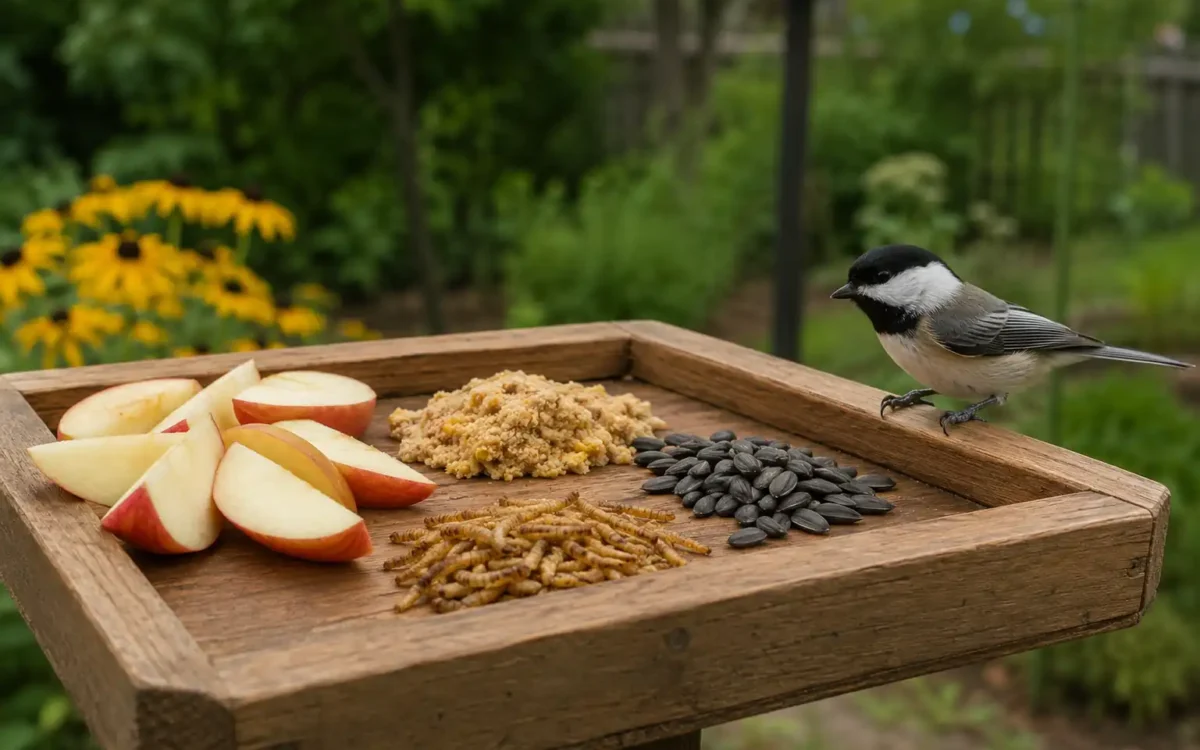
Finding the best bird food for backyard birds means looking past the marketing — walk into any store and you’ll face a wall of birdseed bags all claiming to attract “all wild birds.” Most of them are lying — or at least stretching the truth with filler grains birds won’t touch. Years of watching which seeds disappear from feeders — and which end up rotting underneath them — inform this ranking of backyard bird foods.
The Short Answer
If you’re shopping for the best bird food for backyard birds and only want to buy two things: black-oil sunflower seeds and a suet cake (in cool weather). That combination alone will bring cardinals, chickadees, finches, woodpeckers, nuthatches, and jays to your yard.
Now the full breakdown.
Ranked: The Best Bird Food for Backyard Birds
1. Black-oil sunflower seeds — the undisputed #1
Thin shells, high oil content, easy for small beaks to crack. Attracts the widest variety of any single seed: cardinals, chickadees, titmice, nuthatches, finches, jays, grosbeaks. This is the seed to buy in the biggest bag — the one to choose if only one food can be offered.
- Offer in: hopper, tube (large ports), or platform feeders
- Watch for: buy “black-oil” specifically — striped sunflower seeds have thicker shells that small birds struggle with
2. Nyjer (thistle) seed — the finch magnet
Tiny, oil-rich seeds that goldfinches, siskins, and redpolls adore. Needs a special tube feeder with very small ports (nyjer pours straight out of standard feeders). Note: nyjer dries out — if finches suddenly ignore it, the seed is probably stale, not the birds being picky.
3. Safflower seed — the cardinal specialist (and squirrel deterrent)
Cardinals, grosbeaks, and doves love safflower. Squirrels, grackles, and starlings find it bitter and usually leave it alone. Many birders report that switching one hopper feeder entirely to safflower cuts squirrel raids by more than half. If squirrels are your nemesis, this seed is your quiet weapon — more in our squirrel-proof feeder guide.
4. Suet — winter fuel
Rendered beef fat (often mixed with seeds, peanuts, or berries) is calorie-dense fuel that insect-eating birds — woodpeckers, nuthatches, chickadees, wrens — crave in cold months. Offer in a wire suet cage. Skip suet when temperatures stay above ~80°F (27°C) — it turns rancid and can coat feathers.
5. Shelled peanuts — protein bombs
High in fat and protein, loved by jays, woodpeckers, titmice, and nuthatches. Always buy unsalted, unflavored peanuts meant for birds or humans — never salted cocktail peanuts. Offer in a mesh peanut feeder or on a platform.
6. White proso millet — for ground feeders
A favorite of juncos, doves, sparrows, and towhees — the birds that prefer eating off the ground or a low platform. Don’t put millet in a tube feeder; it’s wasted there.
7. Cracked corn — sparingly
Cheap and attractive to doves, jays, and blackbirds, but it spoils fast and can harbor aflatoxin-producing mold when damp. Use small amounts in platform feeders and never let it sit wet.
Comparison Table
| Food | Top visitors | Best feeder | Cost | Notes |
|---|---|---|---|---|
| Black-oil sunflower | Cardinals, chickadees, finches, nuthatches | Hopper, tube, platform | $$ | Best all-rounder |
| Nyjer | Goldfinches, siskins, redpolls | Nyjer tube | $$$ | Goes stale — buy small bags |
| Safflower | Cardinals, grosbeaks, doves | Hopper, platform | $$ | Squirrels dislike it |
| Suet | Woodpeckers, nuthatches, wrens | Suet cage | $ | Cool weather only |
| Shelled peanuts | Jays, woodpeckers, titmice | Mesh feeder, platform | $$$ | Unsalted only |
| White proso millet | Juncos, doves, sparrows | Ground/platform | $ | Ground feeders only |
| Cracked corn | Doves, jays, blackbirds | Platform | $ | Spoils fast — use sparingly |
Foods to Avoid (With Reasons)
| Food | Why |
|---|---|
| Bread, crackers, chips | Almost no nutrition; moldy bread produces toxins; linked to “angel wing” deformity in waterfowl |
| Salted nuts or seasoned mixes | Salt is toxic to birds in quantity |
| Desiccated coconut | Swells inside birds’ stomachs — can be fatal |
| Honey | Can harbor bacteria harmful to birds; never use in hummingbird nectar either |
| Uncooked dried beans | Contain hemagglutinin, toxic to birds |
| Anything moldy or musty | Mold produces aflatoxins — throw it out, don’t “use it up” |
| Chocolate, avocado, caffeine, alcohol, onion | Toxic — keep all human junk food away from feeders |
How to Store Bird Seed (So It Stays Good)
Poor storage gets expensive fast — a 20-pound bag left in a garage can turn into a moth nursery:
- Seal it. Transfer seed to airtight containers — metal trash cans with tight lids are ideal (mice chew through plastic and bags).
- Keep it cool and dry. Heat and humidity = mold and pantry moths.
- Buy what you’ll use in 4–6 weeks. Nyjer especially loses its appeal as oils go rancid.
- Freeze to kill moths. If you spot webbing or tiny moths, 48 hours in a freezer kills eggs and larvae.
- Smell before you fill. Musty or sour = throw it out. Birds can tell, and moldy seed can kill.
Matching Food to Feeder (Quick Reference)
- Hopper feeder → black-oil sunflower, safflower, mixed quality seed
- Small-port tube → nyjer only
- Large-port tube → black-oil sunflower, peanut pieces
- Platform/ground → millet, cracked corn, peanuts, fruit
- Suet cage → suet cakes, no-melt dough in summer
- Nectar feeder → 1:4 white sugar-to-water (no honey, no red dye)
Pair this with our complete beginner’s guide to feeding backyard birds and the right feeder placement and you’ll have birds within weeks. For research-backed feeding advice, see Project FeederWatch’s guide to feeding birds.
Best Bird Food for Backyard Birds: FAQs
What is the single best bird seed to buy? Black-oil sunflower seed. It attracts the widest variety of backyard birds, has thin easy-to-crack shells, and is high in the oils birds need for energy.
Is cheap mixed bird seed bad? Usually, yes. Cheap mixes are bulked with red milo, wheat, and oats that most feeder birds won’t eat. The uneaten filler piles up, molds, and can spread disease. You’re better off buying a smaller bag of black-oil sunflower than a big bag of filler mix.
Can birds eat bread? No — avoid it. Bread has almost no nutritional value for birds, and moldy bread can produce dangerous toxins. In ducks and geese, junk-food diets are linked to angel wing, a permanent wing deformity.
How do I keep squirrels from eating all the bird seed? Three effective moves: offer safflower seed (squirrels dislike it), install a baffle on the feeder pole, and use weight-activated feeders. Full tactics in our squirrel-proof guide.
Does bird seed expire? It doesn’t “expire” like milk, but oils go rancid — especially nyjer. Buy what you’ll use within 4–6 weeks, store airtight in a cool dry place, and discard anything musty-smelling.
Is suet safe in summer? Standard suet can melt and turn rancid above ~80°F (27°C), and melted fat can coat feathers. In hot weather, switch to “no-melt” suet dough or skip suet until fall.
—
Next: learn what cardinals love to eat — or go back to the beginner’s feeding guide for the full setup walkthrough.
Keep Reading

Related Articles
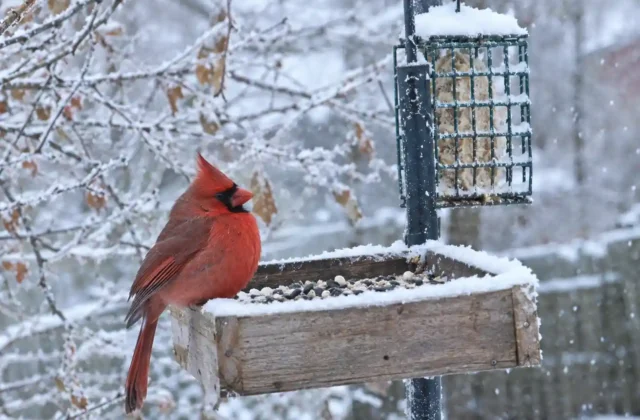
Winter Bird Feeding Guide: 9 Tips for Cold Months (2026)
Last updated: September 24, 2026 · 8 min read A first January with bird feeders teaches a humbling…
Read Article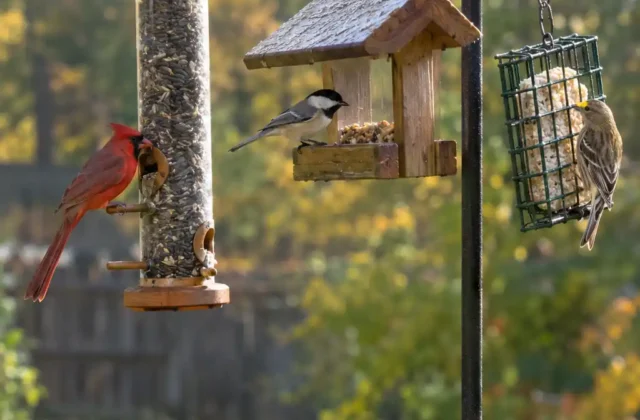
How to Feed Backyard Birds: Complete Beginner Guide (2026)
Last updated: September 24, 2026 · 9 min read Many beginners start with the cheapest mixed seed from…
Read Article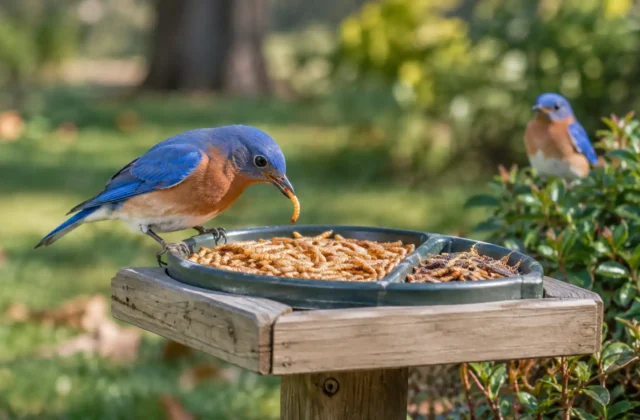
Best Mealworms for Backyard Birds: Live vs. Dried Guide
Last updated: September 24, 2026 · 7 min read The best mealworms for backyard birds are the missing…
Read Article