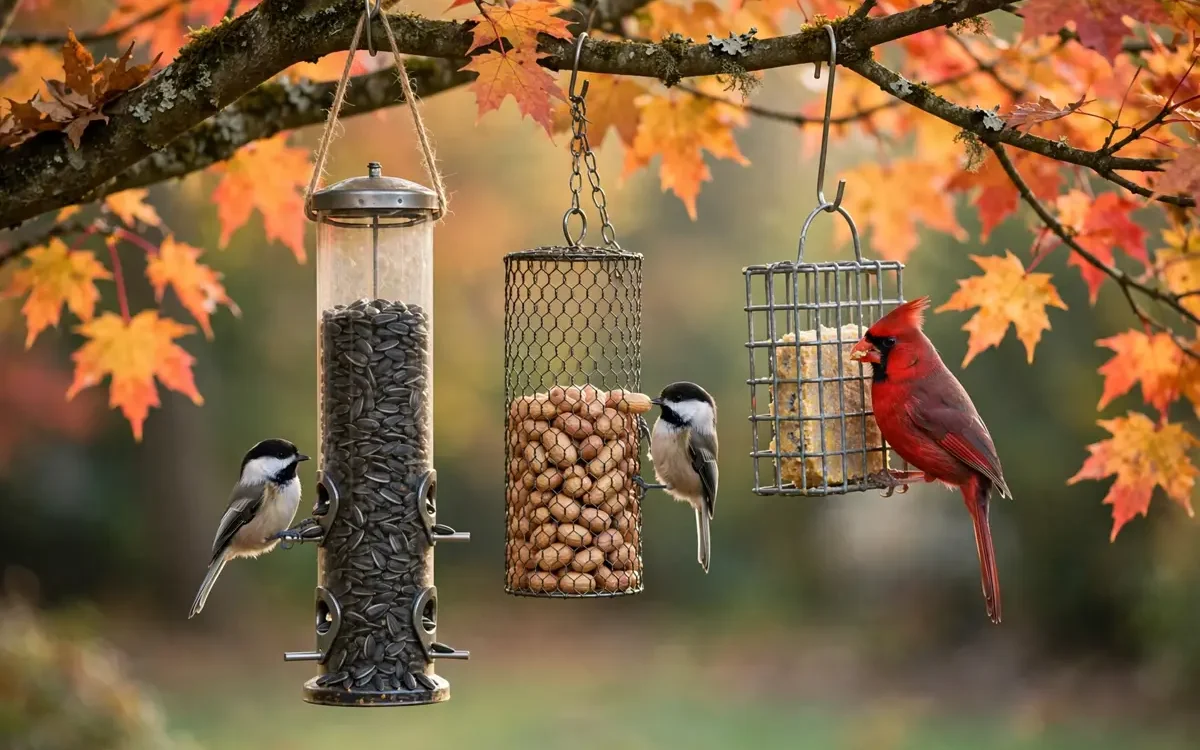
Every October, I stand at my back window and watch the feeder traffic change. The lazy summer regulars are still there, but now the pace is different. Downy woodpeckers hammer the suet cage with new urgency. White-throated sparrows drop in on the platform feeder, fattening up for a journey south that will take them hundreds of miles. Fall is the season when birds eat like it matters, because it does. Learning what to feed birds in fall is one of the highest-value things a backyard bird lover can do.
I used to treat fall as just more of the same: keep the tube feeder full, wait for winter. Then one October, a flock of dark-eyed juncos arrived from the north and barely touched my stale summer seed mix. They picked through it, ate almost nothing, and moved on. The next week I rebuilt my fall feeding setup around high-energy foods, and the difference was immediate. Juncos, white-throated sparrows, a late warbler, even a migrating hermit thrush that landed on my platform feeder for two days straight.
Fall feeding is not about volume. It is about calories. Birds are growing winter feathers, stacking fat for migration, or both, and the right foods make your yard the restaurant they remember. Here are the seven foods I put out every fall, and exactly how I offer each one. If you are starting from zero, my beginner feeding guide walks through the whole setup; this post is the fall menu upgrade.
🍂 Your Fall Menu in 30 Seconds
- Black oil sunflower — the one seed that feeds almost everybody
- Peanuts — protein + fat; only unsalted, from trusted suppliers
- Suet — start in October, not December
- Mealworms — molting-season protein; soak dried ones first
- Fall fruit — what the migrants notice most
- Nyjer seed — for goldfinches, siskins & redpolls
- White proso millet — for the ground-feeding sparrow crew
📋 In This Guide
Food 1: Black Oil Sunflower Seed (the fall workhorse)
If I could only offer one seed this fall, it would be black oil sunflower, no contest. The thin shells crack open easily for small-beaked birds, the oil content is high, and nearly every feeder bird in North America will eat it. Chickadees, titmice, nuthatches, cardinals, finches, and even woodpeckers take it.
In fall I buy it by the bag and use it as the base of everything. I fill my main tube feeder with it exclusively, no cheap filler mixes. Filler seeds like red milo sit uneaten, get wet, and go moldy in October weather. A straight black oil sunflower tube stays fresh because the birds empty it. My bird seed buying guide breaks down which seeds are worth the money and which are barely worth the bag they come in.
Food 2: Peanuts (protein-packed, bird-tested)
Peanuts are the power food most beginners underestimate. They are rich in both protein and fat, and they are a magnet for blue jays, chickadees, titmice, nuthatches, and woodpeckers. In fall, when birds are building fat reserves, a peanut feeder becomes one of the busiest spots in the yard.
Offer them three ways, depending on your audience. Shelled peanut hearts (the small chips) are best for small birds, since everything from chickadees to goldfinches can handle them. Whole peanuts in the shell are a blue jay and woodpecker show; jays will cache them for winter, which is delightful to watch. A wire-mesh peanut feeder is the tidy option that keeps whole nuts dry and accessible.
Penn State Extension is direct about this in their feeding guide: peanuts attract jays, chickadees, titmice, and woodpeckers, and they can be offered shelled, in the shell, or as peanut hearts. I also buy peanuts late in the season and never offer old, shriveled stock, because moldy peanuts can carry aflatoxin, which is toxic to birds.
Food 3: Suet (start it in October, not December)
Suet is the fall food everyone associates with winter, and that is exactly the mistake. Autumn is the perfect month to start offering it. The extra fat helps birds stock up on energy while the weather is still mild, and starting early trains your local woodpeckers, nuthatches, and chickadees to treat your suet cage as a reliable stop before winter even arrives.
I hang my first suet cake the first week of October. Downy and red-bellied woodpeckers find it within days. By November the cage has a daily rotation, and by the first freeze it is as busy as any feeder in the yard. Put the cage in the shade if October still has warm spells, because suet softens and goes rancid above about 70 degrees. In mild fall weather, buy rendered suet cakes rather than raw fat scraps; they hold their shape better.
Keep the suet fresh the way you keep seed fresh: check it weekly, and toss any cake that smells off or looks moldy. If starlings swarm your suet (and they will), use an upside-down suet feeder that clinging birds can use but perching starlings cannot. For the full breakdown of which cakes are worth buying, see my best suet guide.
Food 4: Mealworms (fall molting fuel)
Most of the insects birds hunted all summer are gone or going, but the birds still need the protein. Fall is prime molting season: your robins, bluebirds, wrens, and chickadees are growing fresh feathers, and feathers are built from protein. Dried mealworms bridge the gap when natural insects get scarce.
I keep a small platform tray near my robins’ favorite perch and offer a modest handful of dried mealworms each morning. In peak migration weeks I bump that to twice a day, because a passing warbler or a late bluebird can burn a surprising amount of fuel in one stopover. Robins, bluebirds, and wrens are the first customers, but catbirds and even migrating thrushes show up too.
Do not overdo the quantity. A small amount that gets eaten in a day is far better than a pile that sits in the rain. My mealworm guide covers the dried-versus-live question and the serving sizes that actually work.
Food 5: Fall Fruit (apples, raisins, cranberries)
This is the fall food most feeders skip, and it is the one migrants notice most. Thrushes, waxwings, bluebirds, robins, and orioles are fruit eaters, and in October they are actively hunting berry patches. You can replicate that feast on a platform feeder with fruit from your own kitchen.
Chopped apples and pears are the easy win: cut them into small cubes and set them on a platform feeder or a bird table. Soaked raisins are another classic; soak them for an hour so they plump up and soften. Fresh or dried cranberries (unsweetened, no added sugar) are a fall specialty that thrushes take readily. Freeze-dried berries from the bird section of the pet store work too.
In peak migration I scatter a small amount on a platform feeder where my robins already look for food; my robin guide has the full play on keeping them fed through the cold months. One orange half impaled on a spike can also still catch a late oriole or catbird passing through in early October.
Food 6: Nyjer Seed (for the fall finches)
October is when goldfinches trade their bright summer plumage for olive winter feathers and start feeding in bigger, hungrier flocks. Pine siskins and redpolls begin drifting south too. All of them go for nyjer (thistle) seed, the tiny, oil-rich black seed that finches love.
Hang it somewhere sheltered from rain, because nyjer goes stale fast when wet, and stale nyjer is one of the most common reasons a finch feeder goes quiet. Buy fresh seed each fall and only fill the feeder halfway.
When the first flock of goldfinches finds a fresh nyjer feeder in October, they do not leave. My goldfinch guide covers feeder placement and the patience this particular setup rewards. A nyjer feeder also doubles as your early warning system: when siskins show up on it, you know the boreal irruption season has started, and that is a winter worth watching.
Food 7: White Proso Millet (for the ground-feeding migrants)
The last food on the list serves the birds too many feeders ignore: the ground feeders. Fall migration brings juncos, white-throated sparrows, song sparrows, doves, and towhees, and most of them would rather forage on the ground than cling to a tube.
White proso millet is the seed for them. Scatter it on a low platform feeder or on a clean patch of ground under your hanging feeders, where spilled sunflower already creates a foraging floor. Keep it simple: a tray feeder with a mesh bottom drains October rain and keeps the millet dry. Sweep or rake the area regularly so hulls and droppings do not build up, because ground-feeding zones go stale fast in wet weather.
A small bag of plain white proso millet, scattered lightly each morning, will pull in the sparrow flock that transforms an ordinary fall morning into something worth standing at the window for.
Quick Comparison: All 7 Fall Foods
| Food | Best For | Feeder Type | Key Rule |
|---|---|---|---|
| Black oil sunflower | Almost all feeder birds | Tube feeder | Buy fresh, keep tube half full |
| Peanuts | Jays, chickadees, woodpeckers | Mesh peanut feeder | Unsalted only; no old stock |
| Suet | Woodpeckers, nuthatches | Suet cage (shade) | Start early October |
| Mealworms | Robins, bluebirds, wrens | Platform tray | Soak dried worms; small amounts |
| Fall fruit | Thrushes, waxwings, orioles | Platform feeder | Remove uneaten fruit by evening |
| Nyjer seed | Goldfinches, siskins, redpolls | Nyjer sock / finch tube | Fresh each fall; shelter from rain |
| White proso millet | Juncos, sparrows, doves | Ground / low tray feeder | Not red milo! |
🍂 Bringing It All Together This October
Here is the fall menu I run from early October until the first hard freeze, every year:
- Black oil sunflower in the main tube
- Peanuts in the mesh feeder
- Suet in the shaded cage
- A morning handful of soaked mealworms on the platform
- Fruit cubes when migrants are passing through
- Nyjer in the finch sock
- White proso millet scattered for the ground crew
- Clean water in the birdbath alongside all of it
The reward shows up fast. Within two weeks of switching my yard to this fall menu, the traffic changed completely: more species, busier mornings, and the steady, satisfying rhythm of birds eating like the season depends on it. Because it does. If you want the deeper seasonal strategy for attracting the fall travelers, my fall migration guide pairs perfectly with this menu.
Start this weekend. Swap in one or two of these foods, keep everything dry and fresh, and let me know which species show up first. Fall feeding done right is the most rewarding month of the year at the window.
Frequently Asked Questions
Will feeding birds in fall stop them from migrating?
No. Audubon is explicit: migratory birds leave on their own schedule, regardless of food availability, so continued feeding will not prevent birds from migrating as they should. What fall feeding does is give them a full tank of fuel for the journey.
When should I start putting out suet in fall?
Start in early October. The extra fat helps birds build energy reserves while the weather is still mild, and it trains local woodpeckers, nuthatches, and chickadees to treat your suet cage as a reliable stop before winter arrives. In warm fall spells, hang the cage in the shade and use rendered suet cakes.
Do I need to change my seed mix in fall?
Switch toward high-energy options: black oil sunflower as your base, plus peanuts, suet, nyjer for finches, and white proso millet for ground-feeding migrants. Avoid filler-heavy mixes (red milo) that sit uneaten and go moldy in October rain.
How often should I clean feeders in fall?
Every two weeks at minimum, and after every heavy rain dump any clumped or damp seed, scrub with hot soapy water, soak 10 minutes in a 1:9 bleach solution, rinse, and dry completely before refilling. Fall rain makes feeders go moldy fast.
What foods should I never offer birds in fall?
Salted or roasted snack peanuts (dangerous for birds), bread (low nutrition, molds quickly), old shriveled peanuts that may carry aflatoxin, and anything moldy or sour-smelling. When in doubt, throw it out — moldy seed is not safe to offer birds.

Related Articles
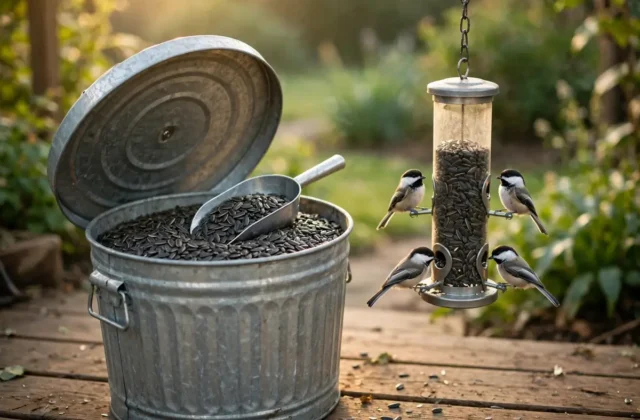
How to Store Bird Seed (Keep It Fresh All Year)
Last March I found the perfect deal: a 50-pound bag of black-oil sunflower seed at half the usual…
Read Article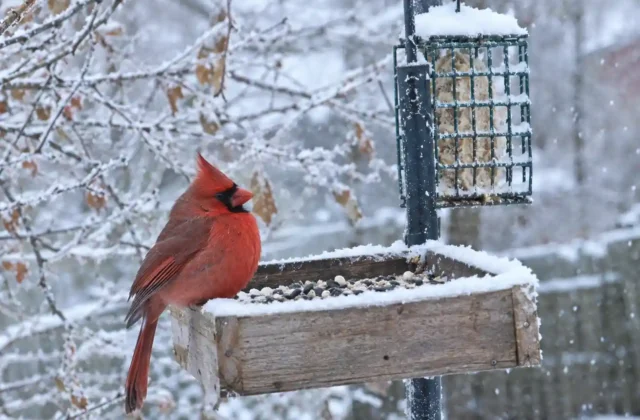
Winter Bird Feeding Guide: 9 Tips for Cold Months (2026)
Bird Feeding Note: This article is for general informational purposes. Keep feeders clean, provide fresh food and water,…
Read Article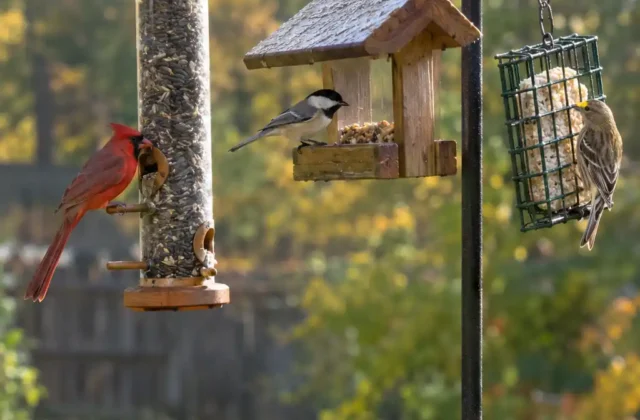
How to Feed Backyard Birds: Complete Beginner Guide (2026)
Bird Feeding Note: This article is for general informational purposes. Keep feeders clean, provide fresh food and water,…
Read Article