Short Answer
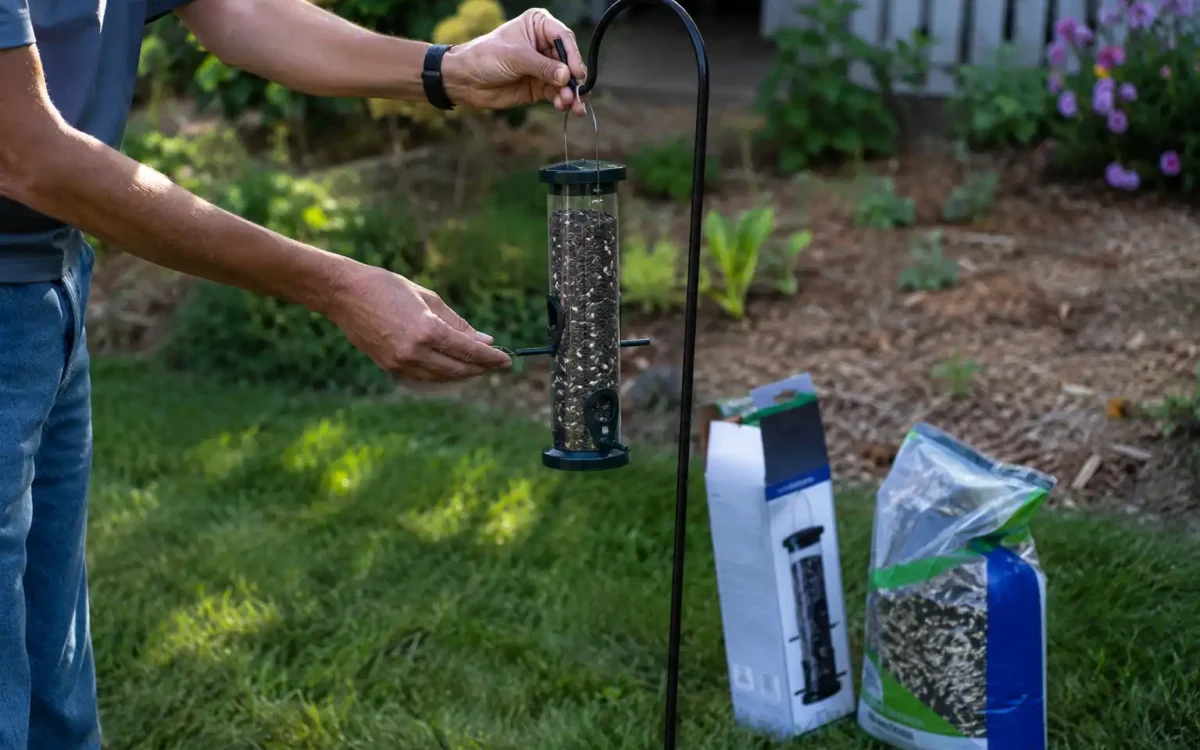
most first-month problems have one of four causes: stale or wrong seed, a feeder in the wrong spot, a feeder that keeps moving, or a dirty feeder. Fix the cause, then give the birds a week.
Bird Feeding for Beginners: Fixing Your First Month
Your feeder is up, the seed is in — and then… nothing. Or squirrels. Or wet, mouldy seed. The first month is when most beginners quit, not because feeding birds is hard, but because nobody tells them which problems are normal, which take five minutes to fix, and which mean something must change.
In This Guide
Diagnose First: The Five-Minute Check
Before changing anything, check these five things:
- Is the seed fresh? Smell it. Musty or sour seed gets ignored, and mouldy seed can make birds ill. Tip it out and refill.
- Has the feeder moved? Every move makes birds start their search over.
- Is there cover nearby? Birds will not cross open lawn to a feeder with nowhere to hide. A shrub or tree within about 10 feet changes everything.
- Is there water? A shallow dish draws in birds — robins and thrushes among them — that may never visit a seed feeder.
- Is the feeder clean? Old, wet seed caked inside is a feeder birds avoid. If you cannot remember the last clean, that is the problem.
If all five check out, the answer is usually patience. If one fails, fix that one thing first — only that one — so you know what worked.

No Birds After Two Weeks
This is the most common first-month complaint, and most of the time it is not a problem at all. In most yards, birds take a few days to a couple of weeks to find a new feeder. A feeder in a bare yard takes longer to be discovered than one near trees full of birds.
Moving the feeder every few days because nothing has shown up is the single most common beginner mistake. Every move resets the discovery process. Pick the best spot you can, then leave the feeder there for at least two full weeks before you judge it.
What does help while you wait: scatter a little seed on the ground beneath the feeder, keep it full, and check the seed is fresh. If two weeks pass with no visitors, move the feeder once — closer to cover — and leave it alone again. Our guide on where to place a bird feeder covers the distances that matter.
Birds Visit but Won’t Eat Your Seed
Birds landing, looking, and leaving usually means the food is wrong, not the feeder. Cheap mixed seed is the usual suspect: most mixes are bulked with red milo, wheat, and oats that common feeder birds will not eat. Switch to plain black-oil sunflower seed and watch what changes.
The other cause is stale seed. Nyjer in particular loses its appeal as its oils go rancid; if goldfinches suddenly ignore a nyjer feeder, the seed is probably stale. Buy small bags, use them within four to six weeks, and store seed airtight in a cool, dry place. If you are unsure what each bird eats, start with our guide to what backyard birds eat.
Squirrels Empty the Feeder Overnight
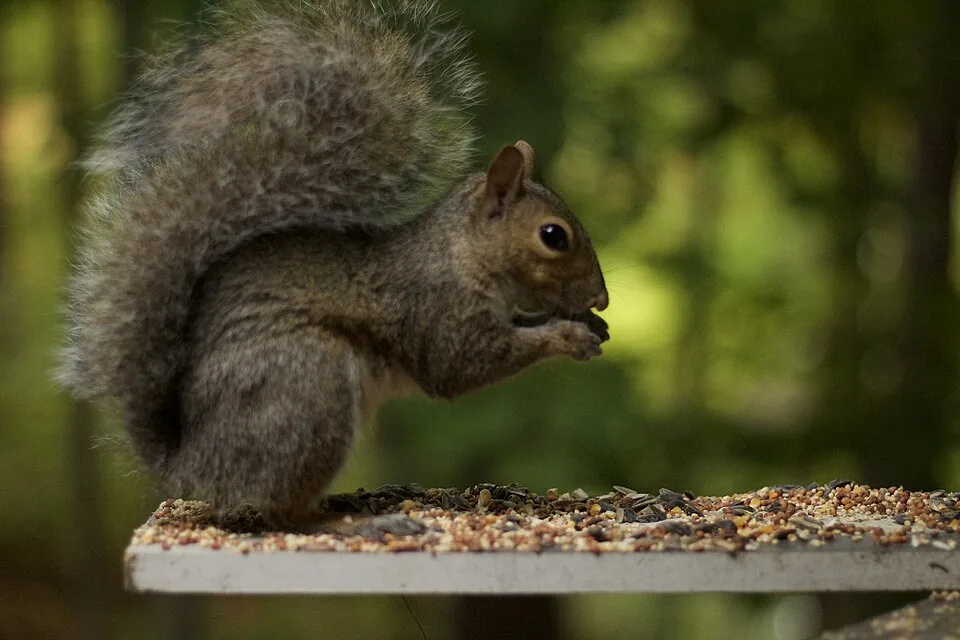
If the seed vanishes overnight, it is usually squirrels — or raccoons. Three fixes work, in this order. First, change the seed: squirrels dislike safflower and usually leave it alone, while cardinals love it. Second, put a baffle on the feeder pole and keep the pole at least 8 to 10 feet from any roof, fence, or branch a squirrel can jump from. Third, take the feeder down at night if raccoons are the problem.
What does not work: greasing the pole, which can coat feathers and fur, and buying a “squirrel-proof” feeder without fixing the placement.
Seed Goes Wet and Mouldy
Wet seed is a health problem, not just a mess. Mouldy seed can carry toxins and spread disease, so a soggy feeder needs fixing the same day.
Fix it in three steps. Tip out all the wet seed — never “dry it out and reuse it.” Clean the feeder with a weak bleach solution (one part bleach to nine parts water, as Audubon recommends), rinse well, and let it dry before refilling. Then stop it coming back: fill only part-full in wet weather, and use a feeder with drainage holes or a domed cover. See our guide on how to clean bird feeders.
Birds Came — Then Vanished
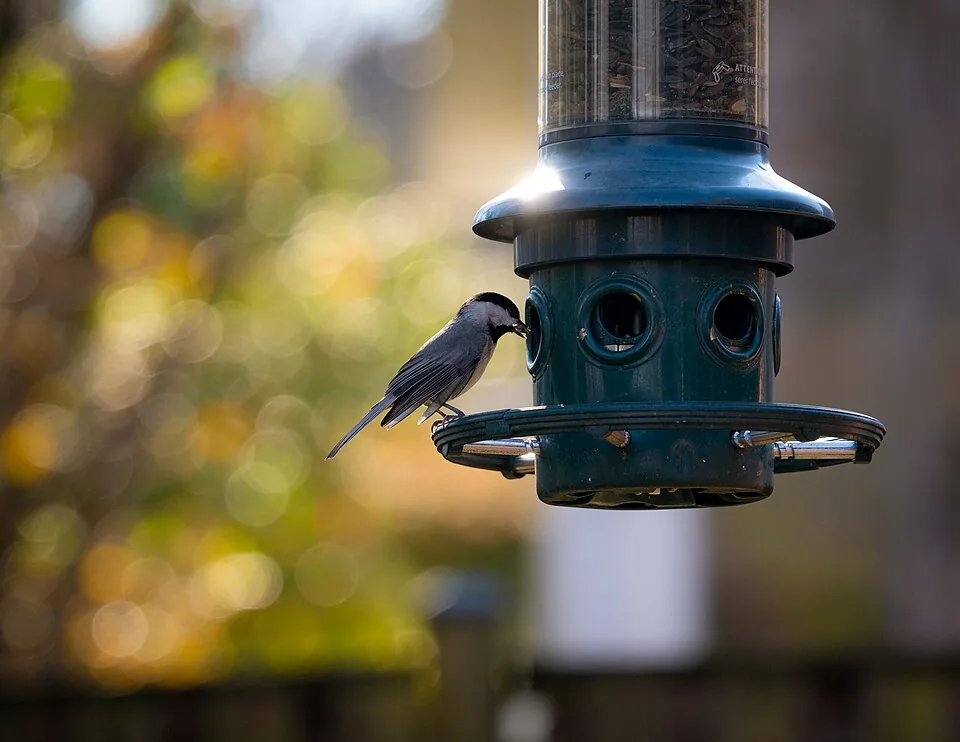
A feeder that was busy last week and empty this week usually has a boring explanation. A hawk may have moved in — birds go quiet for a few days after a hawk visit, then return. Or the season changed: in spring, nesting birds switch to insects and visit seed feeders less, and in autumn a heavy berry crop can pull birds away. Check the feeder before blaming the birds: an empty feeder teaches birds not to come back, and so does dirty seed or a cat sitting underneath it. Refill with fresh seed, clean the feeder, and give it a week.
Worried About Window Strikes
If your feeder is close to a window, this worry is worth taking seriously: birds fleeing a feeder can hit glass they cannot see. The fix is a distance rule used by Cornell Lab and others: place feeders either within 3 feet of a window (too close to build up speed) or more than 30 feet away. The danger zone is the middle distance, roughly 5 to 20 feet out. Move the feeder to one end of the range or the other.
Change It or Wait It Out?
| Symptom | First fix | How long to wait after the fix |
|---|---|---|
| No birds at all | Check seed freshness; scatter seed on the ground | Two weeks, feeder unmoved |
| Birds visit, won’t eat | Switch to plain black-oil sunflower | One week |
| Squirrels empty it | Safflower seed + baffle | A few days |
| Wet, mouldy seed | Clean with 1:9 bleach solution; fill part-full | Fix it the same day |
| Birds vanished | Refill with fresh seed; check for cats or hawks | One week |
| Near a window | Move to within 3 feet or beyond 30 feet | Move it once, then leave it |
Beginners who change the seed, the spot, and the feeder all in one weekend never learn which change mattered.
If your first month is a cold one, you have picked a good time to start. In winter, insects and soft fruit largely disappear, so birds rely on feeders more, and a new feeder is often found faster than in summer. Our winter bird food guide covers which foods hold up when it freezes, and the Feeding Tools winter checklist is a quick way to check your setup.
- Week 1: one feeder, black-oil sunflower, spot near cover, water dish out.
- Week 2: same spot; top up seed; first quick clean.
- Week 3: note which birds visited; fix one problem only, if any.
- Week 4: full clean, fresh seed; add a second feeder only if the first is working.
First-Month Bird Feeding FAQs
How long does it take for birds to find a new feeder?
Usually a few days to a couple of weeks. If nothing has visited after two weeks, check the seed is fresh, scatter a little on the ground, and move the feeder once — closer to cover.
Should I move my feeder if no birds come?
Not right away. Moving it resets the discovery process. Leave it in one good spot for at least two weeks before moving it, and move it only once at a time.
How often should I clean a new feeder?
A quick rinse every week or two, and a full clean with a 1:9 bleach solution whenever seed looks wet or mouldy.
Do bird feeders make birds dependent?
No — feeders supply only part of a wild bird’s diet, and birds keep foraging naturally. Feeders matter most in winter, when natural food is scarce.
Still stuck? Start from the full setup
Troubleshooting works best when the basics are right. For the complete setup in one place — feeders, seed, placement, water, and cleaning — read our complete beginner’s guide to feeding backyard birds. It is the setup manual; this guide is the repair manual. Project FeederWatch also has research-backed advice on feeding and feeder care.
Related guides: How to Feed Backyard Birds: Complete Beginner Guide (2026) · Birds Not Coming to Your Feeder? 9 Reasons & Fixes (2026)

Related Articles
How to Help Birds in a Winter Storm
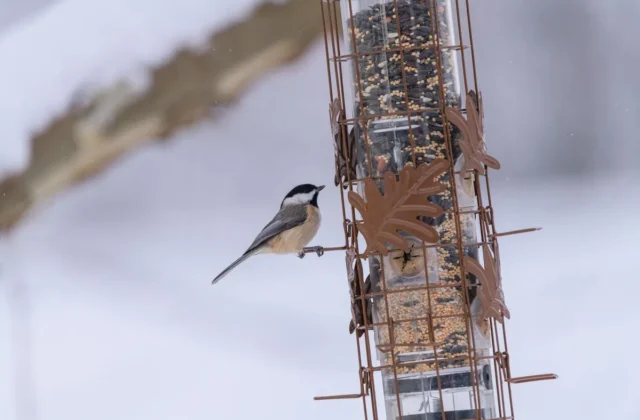
Fill your feeders before the storm, offer suet and sunflower seed, and keep water open — a small…
Read Article
Do Birds Use Birdhouses in Winter?
Yes — chickadees, bluebirds, titmice, wrens and nuthatches roost in birdhouses on cold nights. Clean yours out this…
Read Article
What Do Juncos Eat in Winter? (And How to Attract Them to Your Feeder)
In winter, juncos eat seeds — almost nothing else. White millet on the ground is their first choice.…
Read Article