Short Answer
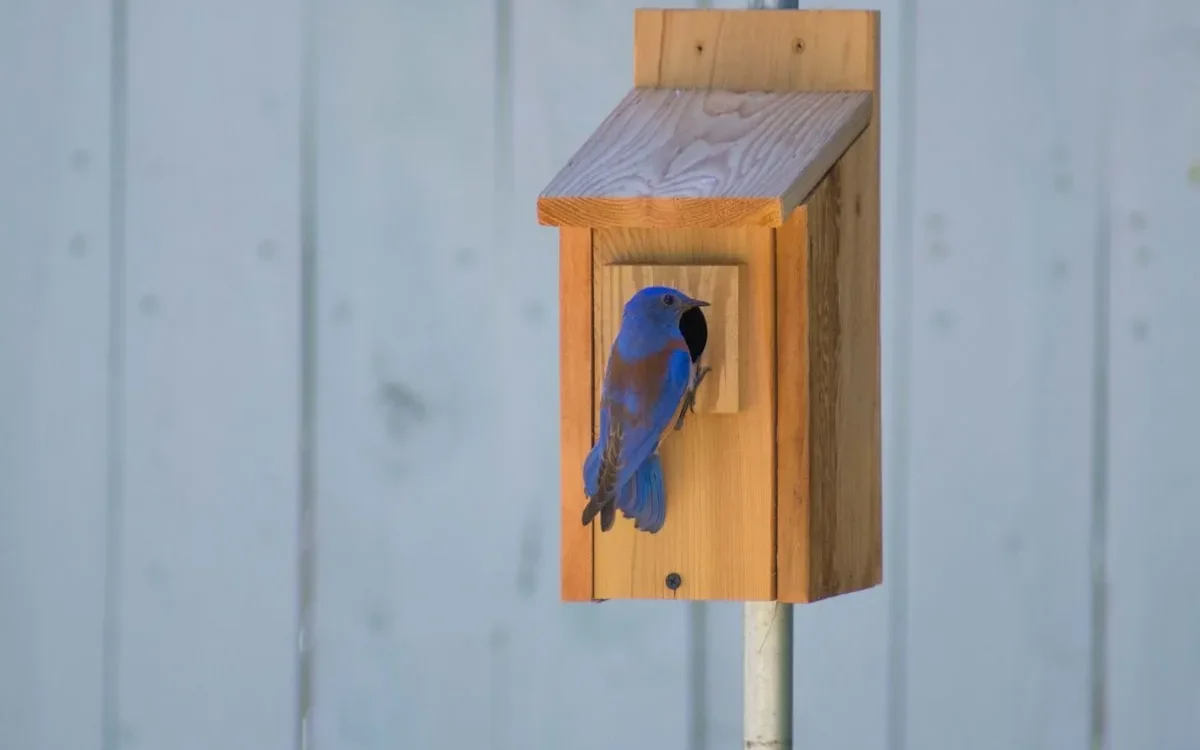
Yes. Chickadees, bluebirds, titmice, wrens, and nuthatches sleep inside birdhouses on cold nights. A clean, empty box with the entrance hole low and the vents partly blocked stays warmer than the open air. For a tiny bird, that warmth can decide whether it survives the night. Clean your boxes out this fall and leave them up.
The Night I Realised My Birdhouse Had a Second Job
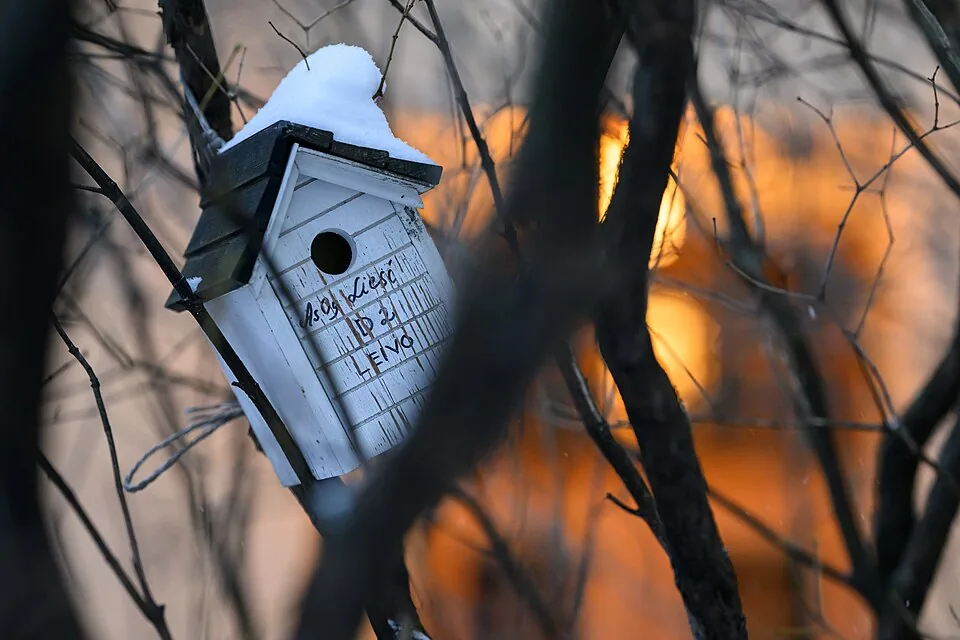
For years, I treated my birdhouses as spring-only furniture. Every autumn I took the boxes down, cleaned them, and stored them in the garage until March. It felt tidy. It was also a mistake.
The boxes were never just nurseries. On a cold night, a small bird loses heat fast, and an empty box is the warmest bedroom in the yard. The Cornell Lab puts it plainly: “You’ll never find a warmer spot to sleep than in your own down feathers, nestled in a nook small enough that you can warm it up with any extra heat that does escape.”
Which Birds Actually Sleep in a Birdhouse in Winter?
Not every bird uses a box. Cardinals, goldfinches, and robins roost in dense evergreens and brush piles instead. But the cavity-nesting birds that raised their young in your boxes are the ones that come back to sleep in them.
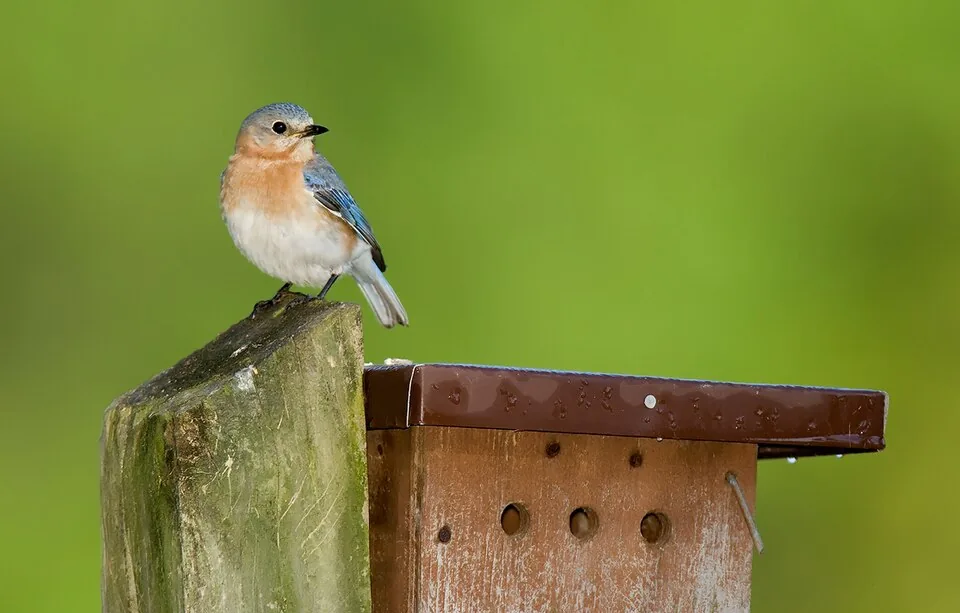
Bluebirds are the best-known winter roosters. On bitter nights they pile into a single box together, sometimes ten or more in one cavity, sharing body heat. Chickadees, titmice, wrens, and nuthatches use boxes too, usually alone or in pairs, and screech owls and some woodpeckers will take one on a cold night.
A black-capped chickadee weighs less than half an ounce. Cornell researcher Susan Smith found that on freezing nights chickadees let their body temperature fall 12 to 15 degrees below their normal 108°F, saving about a quarter of the energy they would burn each hour. The Cornell Lab’s guide to how birds survive the cold describes the same trick: some small birds drop into controlled hypothermia overnight. Even so, they still need shelter. My guide to how birds stay warm in winter covers the rest of their cold-night tricks.
Nest Box vs. Roost Box
A roost box is not a different product. It is the same box, set up differently: the entrance hole low, so warm air stays inside, and perches fitted for birds to grip. Bluebirds are the exception: they sleep in a heap on the floor and need no perches.
| Feature | Summer nest box | Winter roost box |
|---|---|---|
| Entrance hole | High, near the top | Low, near the bottom |
| Inside | Open floor for a nest | Perches or sticks to grip |
| Ventilation | Vents open for airflow | Large vents partly blocked |
| Cleaning | Cleaned after the brood fledges | Cleaned in fall, left empty |
| Mounting height | Five to six feet | Ten feet or more |
| What’s inside | Nest material built by the birds | Bare floor, maybe a few sticks |
Winter Roosting Beyond the Box
A birdhouse is only one bedroom in the yard. Most birds that never use a box still need shelter on a cold night, and they find it in dense evergreens, thick hedges and brush piles — anywhere the wind cannot reach them. Audubon’s winter feeding guidance says the same: shelter from winter storms in the form of brush piles or nest boxes, which double as winter roosting boxes. So before you tidy the garden this autumn, leave one brush pile standing and the dense evergreens unpruned. The birds that roost in them — cardinals, goldfinches, robins, sparrows — never use a birdhouse. What they use is the cover you did not cut down. (Audubon, Guide to Winter Bird Feeding)
If You Find a Bird Roosting
Sooner or later you will open the garden gate at dusk and see a bird slip into your box, or hear a rustle from the brush pile. Do nothing. Do not open the box or shine a light in. A roosting bird that flushes into the cold night loses the heat it spent the evening saving, and it may not find a second shelter before dark. Check your boxes from the outside, in daylight, and only when no bird is using them. Watch the entrance at dusk from a window if you want to know whether a box is occupied.
One Box or Several?
If you have room, put up more than one box. Bluebirds may pile into one box together, sharing body heat, while chickadees roost alone in their own cavity. Several boxes at different heights and facing different directions give each bird a choice, and a spare box means a bird that finds its first choice occupied does not have to spend the night in the open. Face entrances away from the prevailing wind and toward the nearest tree or shrub, so birds have cover on their way in. One warm box on a freezing night can still be the difference for the bird that finds it. Check plans and dimensions for your area at NestWatch: NestWatch, All About Birdhouses.
How to Turn Your Nest Box Into a Winter Roost Box
Do this in November, before the first hard freeze. It takes about twenty minutes per box.
- Clean it out. Remove the old nest. The Cornell Lab’s NestWatch programme advises scrubbing the inside with a mild detergent and water, and one part bleach to ten parts water if the box is soiled. Let it dry. Never clean a box while birds are still using it.
- Lower the entrance hole. Flip the front panel so the hole sits near the bottom. North Carolina State University’s Cooperative Extension recommends exactly this, plus a roosting ladder or diagonal sticks inside for birds to grip.
- Add perches. A few rough sticks, wedged diagonally from floor to wall, give roosting birds something to hold. Bluebirds do not need them; chickadees and titmice do.
- Block the big vents. Cover large ventilation holes with foam weatherstripping, but do not seal the box tight. A little airflow stops condensation inside on cold nights.
- Mount it high, on a metal pole. Roosting birds prefer boxes ten feet or more above the ground, and a metal pole keeps out cats, raccoons, and rats better than a wooden post or tree trunk. Face the entrance toward the nearest tree or shrub, so birds have cover on their way in.
- Leave it up all winter. NestWatch is direct: “You can leave your box up over the winter and allow it to be used as a roosting place for birds, mice, or squirrels.”
The Mistake I Made: Waiting Until Spring
November is the right month. The last broods have fledged, the box is empty, and the cold has not yet settled in. Clean it now and it works all winter, then again as a nest box in spring. One cleaning, two seasons of use.
November Roost-Box Checklist
Run through this once per box, before the first hard freeze:
- Old nest removed, box scrubbed and dry
- Entrance hole near the bottom, not the top
- Perches or sticks fitted inside
- Large vents partly blocked, small airflow left
- Mounted ten feet or more high on a metal pole
- Entrance facing the nearest tree or shrub
- Feeder nearby stocked with black-oil sunflower seed and suet
- Water available and kept unfrozen
Frequently Asked Questions
Do birds use birdhouses in winter if the box still has an old nest in it?
Usually not. Old nests hold parasites and mould, and most birds will not roost in a dirty box. Remove the nest and scrub the box before winter.
Will mice or squirrels use the box too?
Yes, sometimes. NestWatch notes that a box left up over winter may be used as a roosting place by mice or squirrels as well as birds. A metal pole and a baffle make it harder for them.
Should I put food inside the birdhouse?
No. Food belongs in a feeder, not inside a roost box. Seed inside a box draws mice, gets damp, and spoils. Put the food a few feet away in a feeder instead.
Do I need a special roost box, or will my nest box work?
Your nest box will work. A purpose-built roost box is simply a nest box with the entrance hole low and perches inside.
Can I peek inside the box in winter? No. Check from the outside in daylight, and watch the entrance at dusk from a window. Opening a box with a bird inside flushes it into the cold.
When should I clean the box out?
In fall, after the last brood has fledged and no birds are using the box. November is ideal — early enough to beat the first hard freeze, late enough that breeding is finished.
Run the Winter Checklist in Feeding Tools before the first freeze.
Related guides: How Do Birds Stay Warm in Winter? · How to Attract Bluebirds to Your Backyard (A Nest-Box-First Guide)

Related Articles
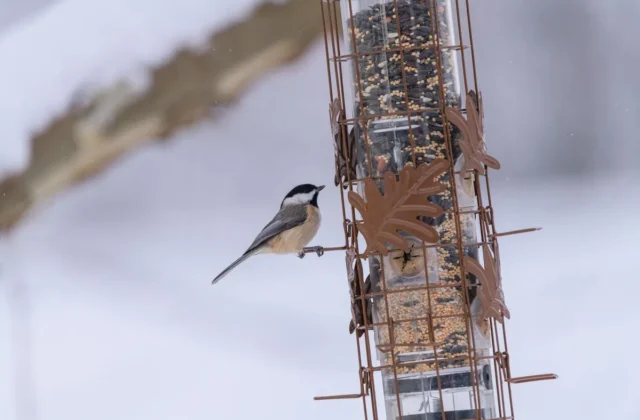
How to Help Birds in a Winter Storm
Fill your feeders before the storm, offer suet and sunflower seed, and keep water open — a small…
Read Article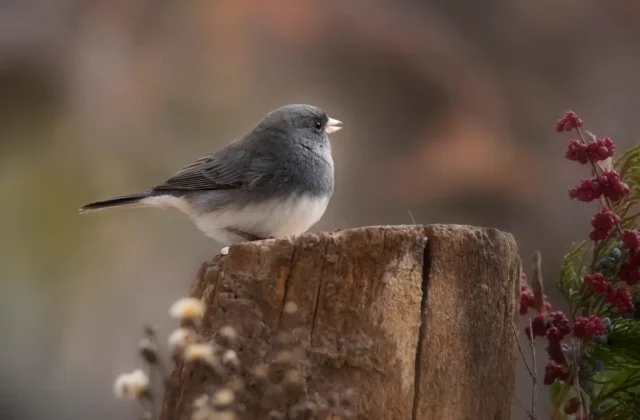
What Do Juncos Eat in Winter? (And How to Attract Them to Your Feeder)
In winter, juncos eat seeds — almost nothing else. White millet on the ground is their first choice.…
Read Article
Do Hummingbirds Need Food in Winter?
Most hummingbirds migrate, but the few that stay — above all Anna's Hummingbird — need food every day.…
Read Article