
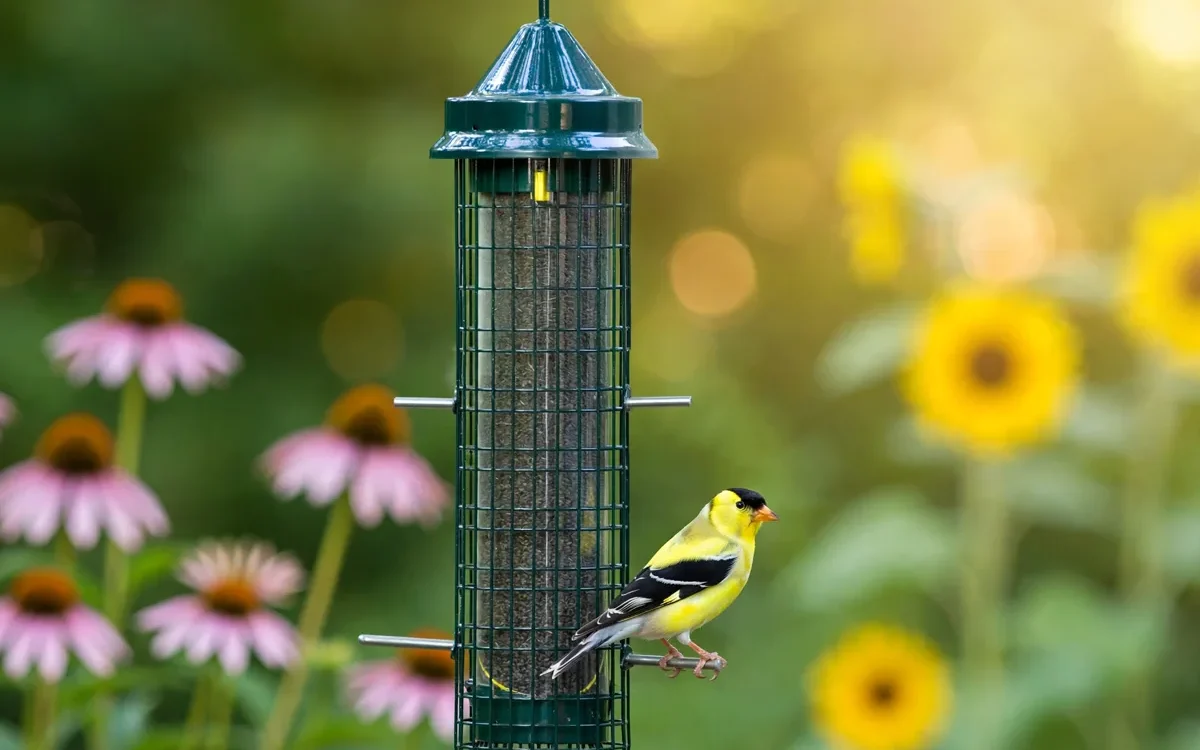
How to Attract Goldfinches to Your Backyard: 7 Proven Tips (2026)
There is a moment every backyard bird lover remembers: the first flash of bright yellow at the feeder. One second your nyjer tube is empty, and the next, a tiny sunbeam with wings is clinging to it, calling po-ta-to-chip to its friends. If you want to learn how to attract goldfinches to your backyard — and turn that one lucky visit into a daily habit — you are in the right place.
American goldfinches are among the most cheerful birds you can host, but they are also picky, nomadic, and quick to abandon a feeder that does not meet their standards. The first spring I hung a nyjer sock feeder, I checked it every morning for three weeks. Nothing. Then one Tuesday I glanced out the kitchen window and there they were — six of them, bright yellow confetti with wings, squabbling over the ports like they had been coming for years. Everything below is what I learned getting from that empty sock to a full-time goldfinch crowd.
Why Goldfinches Are Worth the Effort
Goldfinches (Spinus tristis) are unusual birds, and understanding their quirks is half the battle. They are strict vegetarians — in fact, as the Cornell Lab of Ornithology notes, they are the only North American songbirds that feed their nestlings seeds exclusively, no insects at all. They molt twice a year, which is rare: males glow bright yellow with a black cap in summer, then fade to a soft olive-brown for winter. And they nest late — most goldfinches do not even start building until July or August, timing their babies to the peak of thistle and wildflower seed season.
They are also wanderers. Goldfinch flocks roam in search of seed crops, which means they can vanish from your yard for weeks and then reappear overnight in a gang of twenty. Do not take it personally — and do not put up a birdhouse for them, because goldfinches simply do not use nest boxes. Everything they need, you provide with food, water, and plants.
1. Start With Fresh Nyjer Seed
If there is one food that defines how to attract goldfinches to your backyard, it is nyjer (sometimes sold as thistle) seed. These tiny black seeds are a goldfinch’s absolute favorite, and a dedicated nyjer feeder is the fastest way to get their attention.
But here is the part most guides gloss over: nyjer goes stale. It is an oily seed, and once the oils turn, goldfinches will not touch it — which is the number one reason people tell me “I put out nyjer and nothing came.” Buy it in small bags, store it somewhere cool and dry, and sniff before you fill: fresh nyjer smells faintly nutty, stale nyjer smells like nothing at all. If your feeder has sat untouched for a month, dump the old seed and start fresh before you assume the birds are not interested.
2. Back It Up With Sunflower
Nyjer is the headliner, but black oil sunflower seed is the reliable opening act. Goldfinches crack sunflower easily, and hulled sunflower chips suit their small beaks — with no shells, there is no mess under the feeder either.
What you should not serve is the cheap mixed bag from the hardware store. Filler seeds like cracked corn, milo, and wheat are ignored by goldfinches and rot on the ground, which only invites the birds you do not want. If you are rethinking your whole seed strategy, my breakdown of the best bird seed for backyard birds covers exactly which bags are worth your money and which are mostly filler.
3. Use a Feeder Built for Tiny Beaks
Goldfinches have small, pointed bills designed for extracting tiny seeds — and standard feeder ports are simply too big for the job. Pour nyjer into a regular tube feeder and half of it ends up on the ground. You need either a tube feeder with small, nyjer-specific ports or a mesh sock feeder that lets goldfinches cling and pick seed straight through the fabric.
I started with a sock feeder because it is cheap and goldfinches love clinging to it, then upgraded to a metal-port tube feeder once the flock became regulars. Whichever you choose, hang it where you can watch: a nyjer station full of goldfinches is genuinely one of the prettiest sights in backyard birding. And if you have been enjoying the chickadees at your feeders, you will be happy to know chickadees happily share nyjer stations too.
4. Hang an Upside-Down Feeder
Here is a trick that feels like cheating: goldfinches are natural acrobats. In the wild they hang upside down from seed heads all the time, so a feeder that requires upside-down feeding — ports below the perch, so birds must flip over to eat — is pure goldfinch paradise. Most other feeder birds cannot be bothered, which means your goldfinches get the whole thing to themselves.
Upside-down finch feeders are sold ready-made, and they double as bully-bird protection: heavier birds like starlings and grackles are terrible at clinging upside down. If pushy birds have been a problem at your station, my guide on keeping starlings away from bird feeders pairs perfectly with this tip — the same upside-down trick frustrates starlings at suet feeders too.
5. Plant a Goldfinch Garden
Feeders bring goldfinches in, but plants make them stay. In the wild, goldfinches feed heavily on the seeds of composite flowers — the daisy family — so the single best long-term investment you can make is a patch of seed-producing natives: purple coneflower, black-eyed Susan, sunflowers, cosmos, asters, and real thistle.
The critical part is what you do in fall: nothing. Leave the dried seed heads standing through autumn and winter instead of cutting everything back. Those brown, “messy” stalks are a goldfinch buffet from October through March, and birds will perch right on the stems picking at them for weeks. Native plants beat store-bought ornamentals for birds every single time.
6. Add Water — Shallow Is the Secret
Goldfinches drink a surprising amount of water for their size, and a good water source can be the thing that turns a flyover into a regular stop. The key word is shallow: these are tiny birds, and they prefer baths no more than one to two inches deep with a gently sloping edge they can wade into.
To supercharge it, add movement. A simple dripper or small solar fountain creates sound and sparkle that birds notice from far away — moving water can genuinely double the distance at which birds detect your yard. Keep the bath clean and filled, and consider a heater in freezing weather; winter water is scarce, and birds remember which yards provide it. As with feeders, where you place your feeders and baths matters — put the bath within sight of the nyjer station so goldfinches find both in one trip.
7. Be Patient and Think Like a Flock
This is the tip nobody wants to hear, but it is the most important one. Goldfinches are nomadic — a flock follows the seed crops, and your yard is one stop on a wandering route. It can take two to four weeks for scouts to find a new feeder, and the flock may vanish for a stretch even after they do. That is normal. Keep the seed fresh and the feeders full, and they will be back.
When they do come, they come in numbers: hang two nyjer feeders instead of one, spaced a few feet apart, to cut down on squabbles. And keep feeders clean — nyjer ports clog with oily dust, and disease spreads fast in a flock species. A quick weekly brush of the ports, plus the full routine from my guide to cleaning bird feeders, keeps your station safe as well as busy.
Quick-Reference: Goldfinch Attractants at a Glance
Here is the complete toolkit for how to attract goldfinches to your backyard in one glance — stack as many of these as you can:
| Method | Why It Works | Best For |
|---|---|---|
| Fresh nyjer seed | #1 favorite food; tiny seed matches tiny bills | First-time goldfinch attempts |
| Black oil sunflower + hulled chips | High-energy backup every goldfinch eats | Year-round feeding |
| Small-port tube or sock feeder | Stops waste; sized for finch beaks | Nyjer feeding stations |
| Upside-down feeder | Matches natural acrobatic feeding; excludes bullies | Dedicated finch stations |
| Seed-head garden (coneflower, aster, thistle) | Natural food + nesting material; late-season buffet | Long-term residents |
| Shallow bath + dripper | Moving water doubles discovery distance | New yards, hot summers |
| Multiple feeders + patience | Flocks arrive in numbers; scouts need weeks | Turning visits into habits |
5 Mistakes to Avoid
1. Buying nyjer in bulk and letting it go stale. A giant bag that sits in a hot garage for six months is money wasted. Buy small, store cool, and refresh feeders every few weeks.
2. Pouring nyjer into a regular mixed-seed feeder. The ports are too big, the seed spills, and you will conclude goldfinches are not interested — when the real problem is the hardware.
3. Deadheading every flower in October. Those brown seed heads you want to tidy up are winter food and spring nesting material. Leave at least one patch standing.
4. Offering only a deep birdbath. A three-inch-deep bath with steep sides is a swimming pool to a goldfinch. Shallow edges or a sloped saucer get far more use.
5. Giving up after ten days. Goldfinch flocks roam. An empty feeder in week two does not mean failure — it means the scouts have not found you yet. Fresh seed and patience win this game.
What is the best food to attract goldfinches?
Fresh nyjer (thistle) seed is the number one attractant, followed closely by black oil sunflower seed and hulled sunflower chips. Serve nyjer in a small-port tube feeder or mesh sock, keep it fresh, and avoid cheap mixes with corn and milo filler that goldfinches ignore.
Why aren’t goldfinches coming to my nyjer feeder?
The three most common reasons are stale seed (nyjer goes rancid in weeks once the oils turn), the wrong feeder (ports too big for tiny bills), and simple timing — nomadic flocks can take two to four weeks to discover a new feeder. Refresh the seed, check your feeder style, and give it time.
Do goldfinches use birdhouses?
No. American goldfinches do not use nest boxes at all. They build open cup nests in shrubs and trees, usually in July or August, using plant fibers and thistle down. If you want to help them nest, plant dense shrubs and leave thistle and milkweed standing for nesting material.
What flowers attract goldfinches?
Goldfinches love seed-producing natives in the daisy family: purple coneflower, black-eyed Susan, sunflowers, cosmos, asters, and thistle. Plant them, and crucially, leave the dried seed heads standing through fall and winter instead of cutting them back.
Do goldfinches stay in winter?
Many do. American goldfinches molt into dull olive winter plumage, so you may not recognize your summer visitors, but flocks often overwinter wherever food is reliable. Keep nyjer and sunflower out through the cold months — winter goldfinches are some of the most loyal feeder birds you will ever host.
The Bottom Line
Learning how to attract goldfinches to your backyard comes down to thinking like a goldfinch: tiny fresh seeds, feeders built for tiny beaks, a garden left a little wild, and shallow moving water. It will not happen overnight — these are wandering birds, and they make you earn it. But the morning that first flash of yellow turns into six, then sixteen, then a whole chattering flock working your nyjer tubes upside down, you will understand why people plan entire gardens around them. If bluebirds are the crown jewels of the backyard, as I wrote in my bluebird guide, goldfinches are the confetti — and every yard is better with confetti.

Related Articles
How to Attract Dark-Eyed Juncos to Your Backyard: 7 Proven Tips (2026)
How to Attract Dark-Eyed Juncos to Your Backyard: 7 Proven Tips (2026) The first time I saw one,…
Read Article
How to Attract Chickadees to Your Backyard: 7 Proven Tips (2026)
How to Attract Chickadees to Your Backyard: 7 Proven Tips (2026) If there is one bird that can…
Read Article
How to Attract Bluebirds to Your Backyard: 7 Proven Tips (2026)
The first time I saw a bluebird in my backyard, I nearly spilled my coffee. Early March, thin…
Read Article