Short Answer
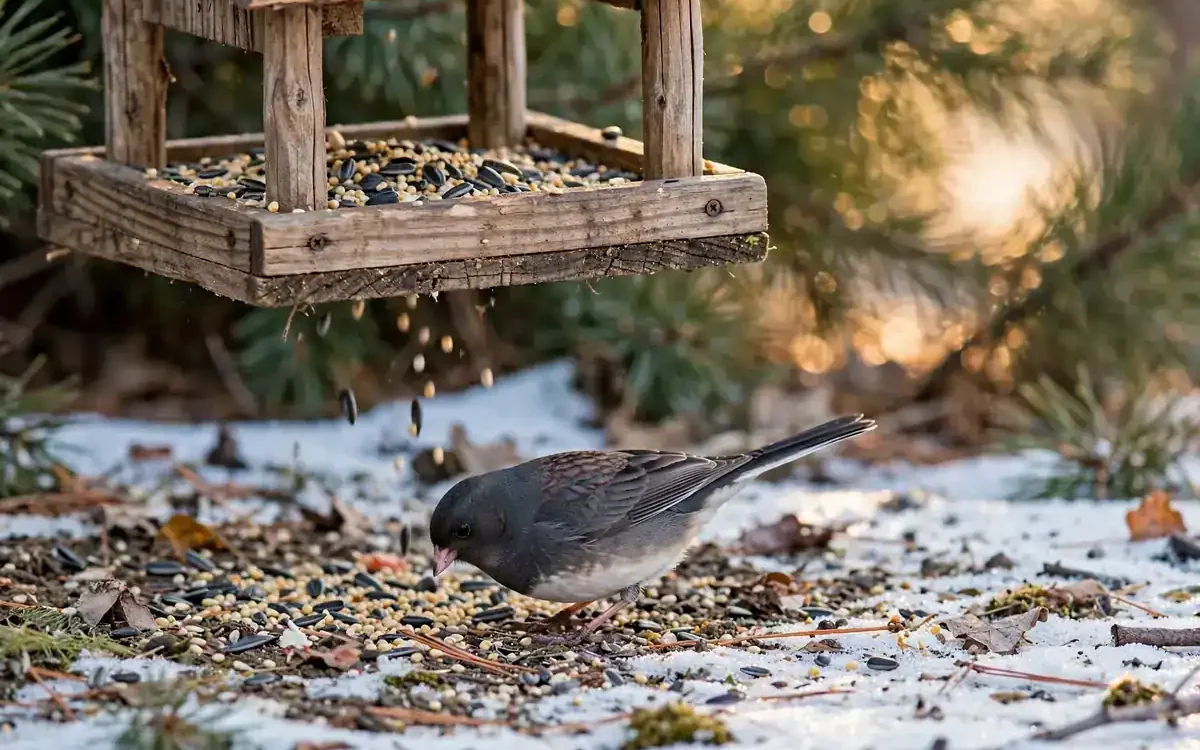
Think ground, not sky. Dark-eyed juncos are winter ground birds: serve white proso millet, cracked corn and sunflower hearts in a low platform feeder or scattered on cleared ground, leave the leaf litter alone, add a heated birdbath, and keep the food coming from October through April. Flocks return to the same yards winter after winter — if the food never runs out.
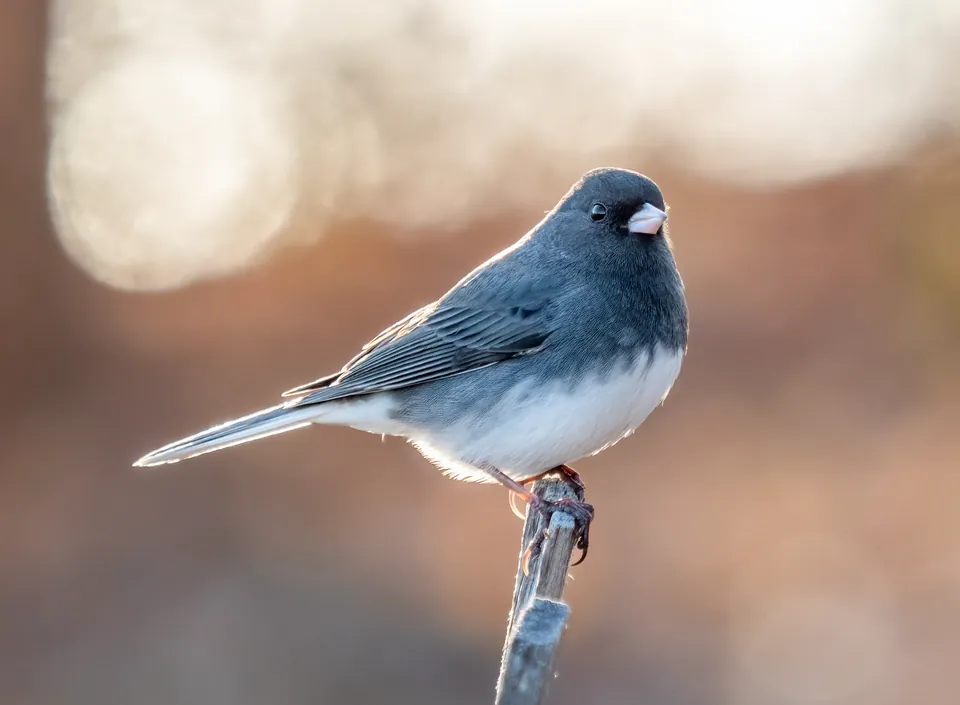
The dark-eyed junco is the bird that arrives just as the yard goes quiet. Every fall, these neat little sparrows sweep down from Canada and the high mountains and spend the whole winter in backyards across North America, from October through April. The Cornell Lab ranks them among the most abundant forest birds on the continent. They are easy to recognize: slate-gray above, crisp white below, a pale pink bill, and bright white outer tail feathers that flash in flight. One fact explains most mistakes with them — juncos are birds of the ground first, and everything else second.
A dark-eyed junco, by the numbers
| Measure | Figure |
|---|---|
| Length | 5.5–6.3 in (14–16 cm) |
| Weight | 0.6–1.1 oz (18–30 g) |
| Wingspan | 7.1–9.8 in (18–25 cm) |
| Year-round diet | About 75% seeds — chickweed, buckwheat, lamb’s quarters, sorrel and similar |
| Feeder preference | Millet over sunflower seeds, at feeders |
| Clutch | 3–6 eggs, 1–3 broods a year |
| Winter flocks | Fairly large flocks, with a pecking order — earlier arrivals rank higher |
| World population | About 220 million; down about 31% since 1966 |
Source: Cornell Lab of Ornithology, Dark-eyed Junco life history and identification; National Audubon Society field guide.
Two rows in that table decide the whole feeding plan. First, juncos are seed-eaters whose small bills are built for tiny seeds — and at feeders they prefer millet over sunflower. Second, they winter in flocks with a pecking order, and the same flocks return to the same yards year after year.
Millet first — the food juncos actually choose
Most people get this one backwards and fill every feeder with black-oil sunflower seed, then wonder why the juncos barely visit. The Cornell Lab’s life-history notes say juncos at feeders seem to prefer millet over sunflower seeds — and white proso millet is the single best seed for attracting them. It is cheap, widely available, and exactly what their small bills are built for. A workable blend is roughly half millet, a quarter cracked corn and a quarter black-oil sunflower. Our guide to millet for backyard birds covers which millet to buy and which birds share it.
Cracked corn is the classic second choice — juncos love it, and it is inexpensive enough to scatter generously. Black-oil sunflower seeds, and especially sunflower hearts (the hulled chips), round out the spread. The natural diet points the same way: juncos feed heavily on weed and grass seeds in winter, so the feeder menu should match that profile of small, high-energy seeds. See what juncos eat in winter for the full menu, including suet as a bonus food.
Feed them low, or don’t feed them at all
Juncos are ground birds, full stop. A tall tube feeder might as well be on the moon as far as they are concerned. The best options are seed scattered directly on a cleared patch of ground, or a low platform (tray) feeder positioned no more than a foot or two off the ground. Open hopper feeders with wide trays work too. Getting the height right is the single biggest factor in attracting juncos — it matters more than any seed choice.
Leaf litter is a second feeder
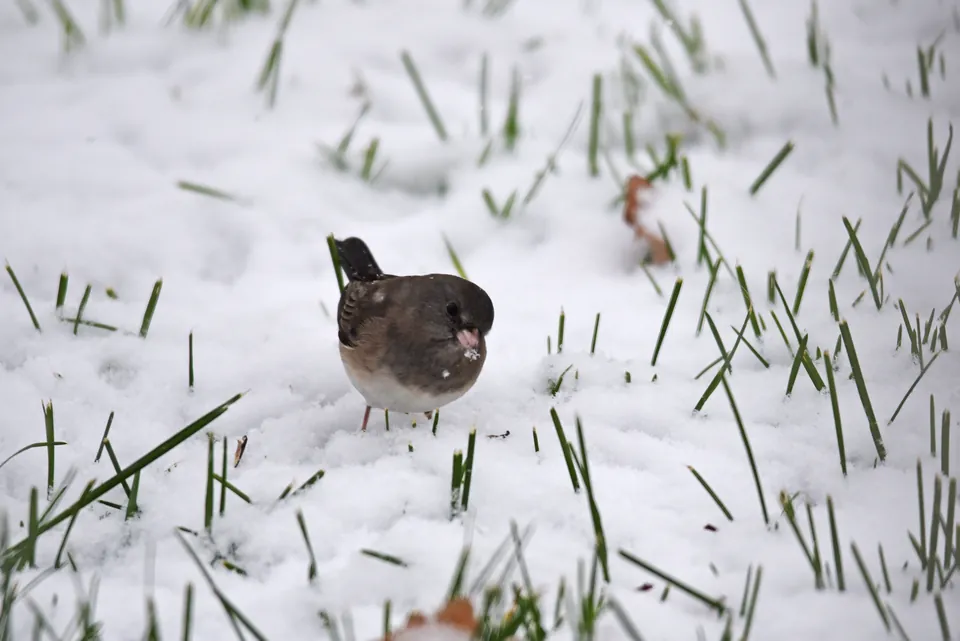
A yard raked spotless every fall offers juncos nothing between feeder visits. Juncos forage by hopping on the ground, pecking and scratching at leaf litter — Audubon notes they sometimes scratch with their feet in leaf litter or snow — and leaves under shrubs and along the fence line hide fallen seeds, insects and grubs. Leave the leaves there all winter. The double-footed hop juncos use, kicking leaves backward to expose what is underneath, is a sign the birds feel at home: a tidy lawn with one lonely feeder gets occasional visitors, while a yard with messy edges and a full feeder gets residents.
Winter water, kept low and open
When every puddle and birdbath in the neighborhood is frozen solid, open water becomes the most popular spot on the block — and juncos drink and bathe daily, even in January. A heated birdbath is the single best addition after the millet itself. Place the bath low, ideally within sight of the feeding area but a few feet away so seed debris does not foul the water, and clean it every few days with a stiff brush. Winter water gets dirty fast, and healthy birds are returning birds.
Cover close by, cats kept away
Juncos roost in conifers at night and dive for cover when a hawk appears, so the yard layout matters as much as the menu. The most productive feeding spot is about ten feet from a row of evergreens — close enough for a quick escape, open enough that the birds can see danger coming. Without evergreens, a brush pile does the same job: stack fallen branches and pruned limbs loosely in a corner of the yard, and juncos, wrens and sparrows will treat it like shelter all day.
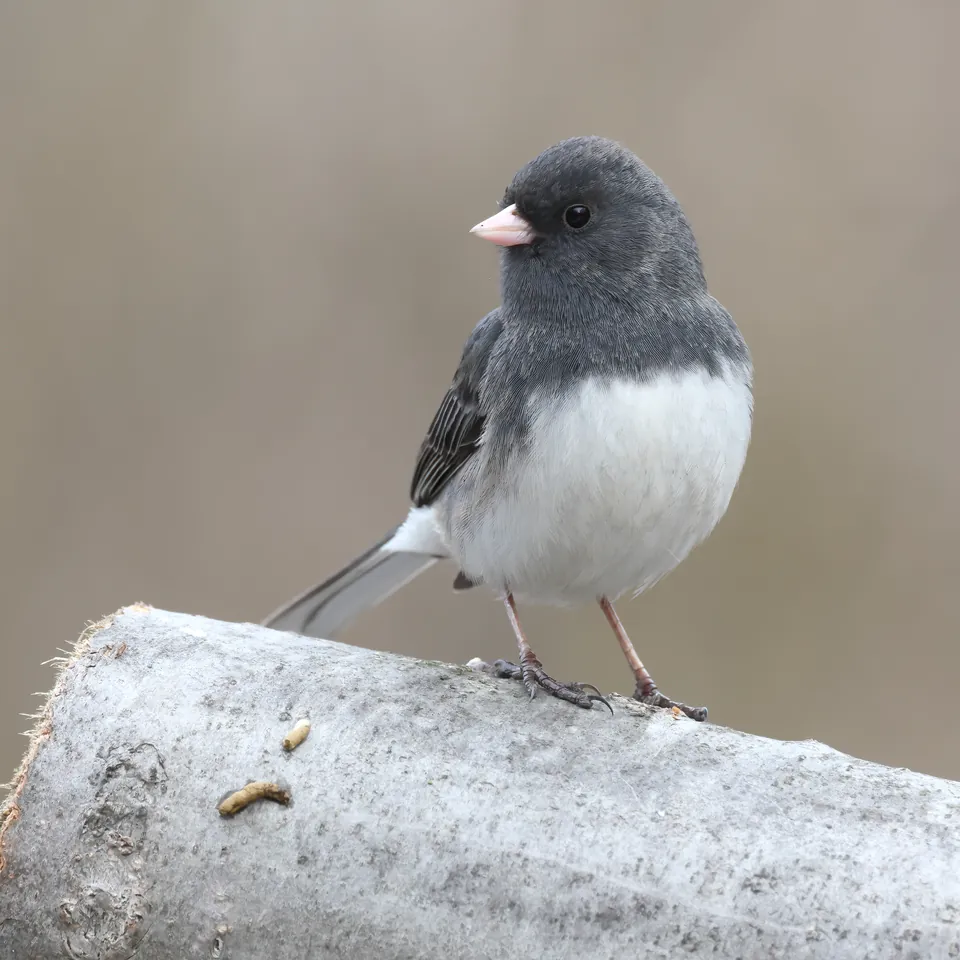
Ground feeding has one serious risk: cats. A ground-feeding bird is a cat magnet, and a low wire fence ring around the feeding area plus keeping pet cats indoors removes most of the danger. Raccoons are the night shift — they will raid a low ground feeder after dark, so taking the platform tray in at night removes the temptation entirely. Our guide to helping birds in a winter storm covers emergency cover and water when a storm hits mid-season.
The mistake that costs a whole winter
The most common junco mistake is not the food — it is the height. Feeders hung five feet off the ground leave juncos picking at spill below while the owner looks up, wondering why the birds never come. Ground-level feeding is not optional for juncos; it is the whole game. The second mistake is the bargain bag: cheap economy mixes are mostly milo and red millet, which juncos pick through and leave — a smaller bag of quality millet blend feeds more birds than a giant bag of filler. The third is the February gap: a feeder that goes empty for a week in midwinter teaches the whole flock to eat elsewhere, and flocks that find a reliable yard come back every season. Fix the height, buy the millet, and never let the tray sit empty.
October to April: the season that rewards consistency
Start the junco menu in early October, before the main flocks arrive, so the first scouts find food waiting. Keep it going consistently through April, because late migrants and northbound birds still need fuel — and the birds that wintered in the yard remember where they were fed. That is the payoff for a whole winter of reliability — October brings a gray-and-white welcoming committee that stays until spring.
Quick answers
When do dark-eyed juncos arrive at backyard feeders? Most juncos arrive in October as snowbirds moving down from Canada and the mountains, and they stay through April. Start the junco menu in early October so the first scouts find food waiting.
What is the best food to attract dark-eyed juncos? White proso millet is their number one feeder food — Cornell notes juncos prefer millet over sunflower seeds. Cracked corn, black-oil sunflower seeds and sunflower hearts are strong seconds. Avoid cheap mixes heavy on milo, which juncos will not eat.
Do dark-eyed juncos use regular bird feeders? Not tall tube feeders — juncos are ground birds. They feed on scattered seed, low platform or tray feeders, and open hopper feeders placed a foot or two off the ground, always near cover.
Do dark-eyed juncos stay all winter? Yes. They winter in flocks and return to the same yards year after year, as long as the food stays reliable from October through April.
Put out the millet, keep it low, give them water and cover, and stay consistent. Plan the ground-feeding routine with the Feeding Tools planner — October will bring a gray-and-white welcoming committee that stays all winter.
Sources: Cornell Lab of Ornithology, Dark-eyed Junco overview, life history and identification; National Audubon Society, Dark-eyed Junco field guide.
Related guides: Backyard Bird Species Guides · What Do Juncos Eat in Winter? (And How to Attract Them to Your Feeder) · How to Attract Goldfinches to Your Backyard (A Flock-First Guide)

Related Articles
How to Help Birds in a Winter Storm
Fill your feeders before the storm, offer suet and sunflower seed, and keep water open — a small…
Read Article
Do Birds Use Birdhouses in Winter?
Yes — chickadees, bluebirds, titmice, wrens and nuthatches roost in birdhouses on cold nights. Clean yours out this…
Read Article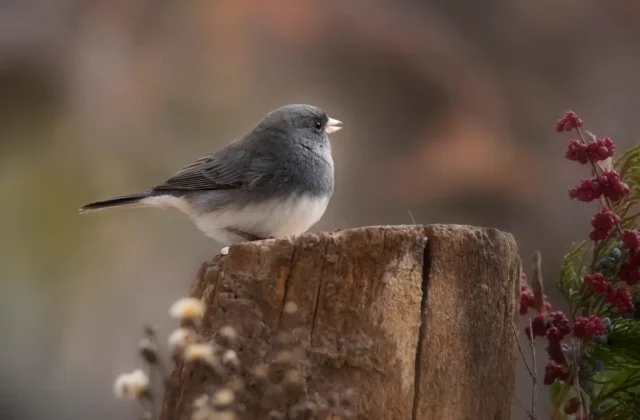
What Do Juncos Eat in Winter? (And How to Attract Them to Your Feeder)
In winter, juncos eat seeds — almost nothing else. White millet on the ground is their first choice.…
Read Article