How to Attract Nuthatches to Your Backyard: 7 Proven Tips (2026)
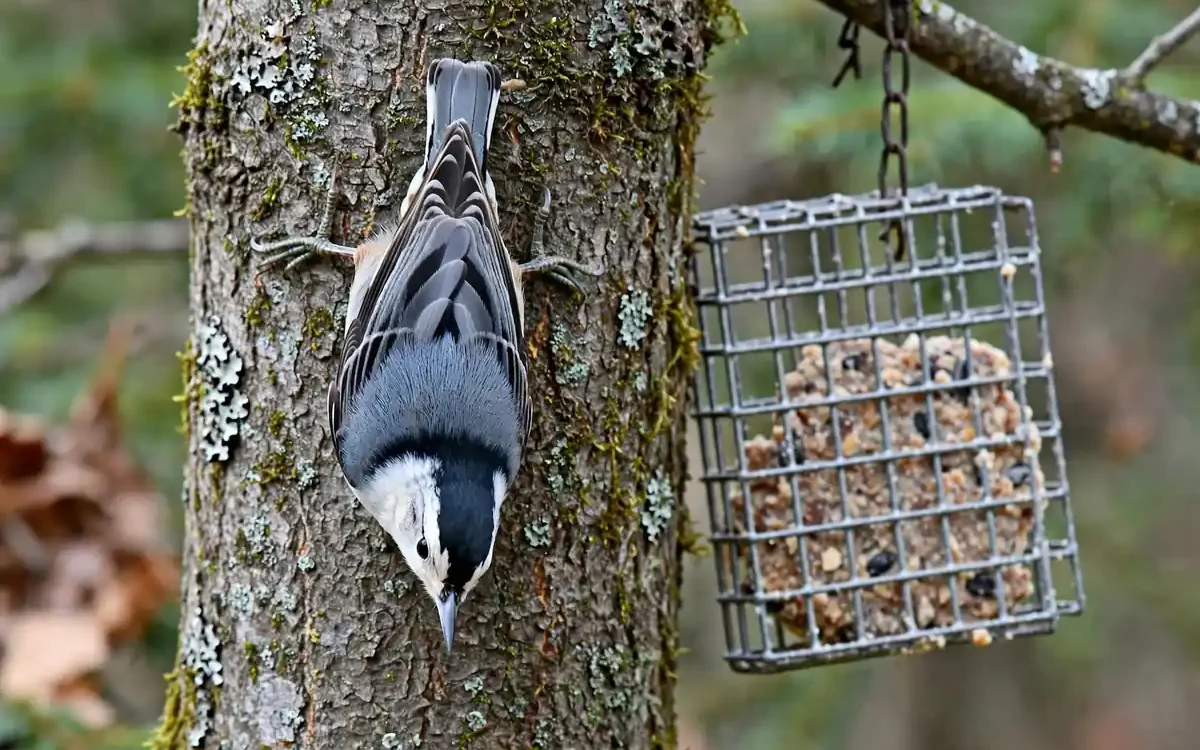
The first time I really paid attention to one, I was refilling a suet cage in a corner of my yard. A blue-gray bird landed on the tree trunk above the feeder — and then walked straight DOWN the bark, headfirst, like gravity was a rumor. It grabbed a chunk of suet, wedged it into a bark crack a few feet up, and hammered it open with its bill. Learning how to attract nuthatches to your backyard taught me that some birds make you rethink the whole setup: feed up a trunk, not just at a hanging station.
Nuthatches are among the most entertaining regulars you can earn. The white-breasted nuthatch — the species most backyards will see — is a year-round resident across much of North America. It forages by creeping along trunks and branches, prying insects and seeds out of bark crevices, and hoarding food in cracks for later. The Cornell Lab’s white-breasted nuthatch overview calls this headfirst, upside-down lifestyle its signature move — and it is the reason generic feeding advice so often misses them.
The seven tips below are what has worked in my yard, learned the slow way. They build on each other: food, habitat, water, nesting, and consistency. Get them right and a nuthatch pair can become year-round characters in your backyard.
🌲 The Nuthatch Formula, Up Front
- Feed the trunk. Suet cage hung on or near bark + peanuts — nuthatches cling, they don’t perch politely.
- Keep the bark wild. Mature trees with furrowed bark are a year-round grocery store; skip the insecticides.
- Add water and a nest box. Moving water near trees + a small-cavity box turns visitors into residents.
- Stay consistent. These resident birds remember which yards feed reliably — keep suet and peanuts coming year-round.
7 tips below — from suet cages to squirrel-proofing.
📋 In This Guide
- Why Nuthatches Are Worth Attracting
- 7 Proven Ways to Attract Nuthatches
- 1. Hang a Suet Cage
- 2. Offer Peanuts
- 3. Keep Mature Trees
- 4. Add Mealworms in Nesting Season
- 5. Moving Water Near Trees
- 6. Nest Box in Early Spring
- 7. Outsmart Squirrels, Stay Consistent
- What to Feed Nuthatches: Comparison
- 3 Mistakes I Made
- Your Yard, Upside Down
- FAQs
Why Nuthatches Are Worth Attracting
Before the how, here is the why — because nuthatches sell themselves once you actually watch one:
- They stay all year. Nuthatches do not migrate. Once a pair adopts your yard, they are yours through every season. Most feeder species visit in waves; nuthatches become neighbors.
- They defy gravity. Woodpeckers only climb up. Nuthatches go both ways, and watching one walk headfirst down a trunk never gets old.
- They hoard like tiny bankers. The name “nuthatch” comes from wedging nuts into bark crevices and hatching them open with the bill. I have watched a single bird stash dozens of sunflower seeds up and down one trunk in an hour — a winter pantry in plain sight.
- They bring the flock with them. In fall and winter, nuthatches travel in mixed flocks with chickadees and titmice. Attract one and you often get the whole crew. For the chickadee side of that deal, see my guide on how to attract chickadees to your backyard.
7 Proven Ways to Attract Nuthatches to Your Backyard
1Hang a Suet Cage — Their Signature Feeder
If nuthatches have one feeder food, it is suet. In the wild they hammer at bark for insects all day; a suet cage is the feeder version of that exact lifestyle — cling on, hammer away. Mine visits the suet cage more than every other feeder combined some weeks.
Placement is what matters. Hang the cage on or within a few inches of a tree trunk, or flat against a large branch — nuthatches are trunk birds, not open-air danglers. A cage with a tail prop (an extended board below the cage) works even better, since they brace their tails when feeding. Buy plain, high-quality suet; skip the gimmicky fruit blends until the birds are regulars. My breakdown of what is worth buying is in the best suet for backyard birds guide.
2Offer Peanuts — Shelled, Halved, or Straight Into the Bark
Peanuts are the other nuthatch superfood. These birds are peanut specialists: they grab a nut, fly to a favorite bark crack, wedge it in, and hammer it open — exactly the “hatch” their name describes. Raw or roasted, always unsalted and unflavored, peanuts are the fastest way I know to turn a passing nuthatch into a daily visitor.
You can offer them three ways: a wire-mesh peanut feeder (forces the bird to cling and extract nuts one at a time), shelled or halved peanuts in a platform feeder, or pressed directly into rough bark crevices near the suet cage — watch them get found within the hour. Peanuts are energy-dense, and in cold months that fat is what carries these small birds through long winter nights.
3Keep Mature Trees and Leave the Bark Alone
Here is the tip that costs nothing: nuthatches need bark. A mature tree with deeply furrowed bark is a year-round grocery store — insects, larvae, and spiders hide in every crevice, and the bird’s whole body is built to extract them. A yard of young saplings and smooth-barked ornamentals offers a nuthatch almost nothing to forage.
So do not peel, scrub, or pressure-wash your tree trunks, and think twice before removing a mature tree that hosts bark-foragers. If you garden, skip the broad-spectrum insecticides on and around the trees — every grub you poison is a meal off the nuthatch’s table. The Audubon field guide notes that insects dominate the white-breasted nuthatch’s natural diet in the warm months; your yard should offer the live version of that menu, not just the feeder version.
4Add Mealworms When Nesting Season Starts
From late winter into spring, nuthatch priorities shift from fat to protein — they are feeding fast-growing nestlings, and nothing delivers protein like mealworms. A small dish of dried mealworms in a tray feeder near the trunk gets discovered fast once breeding season starts.
I offer them from late winter through early summer. Dried mealworms are convenient and cheap in bulk; live ones are irresistible but more work. Keep portions small — mealworms spoil in rain, so only put out a day or two’s worth. Pair this with the suet still hanging nearby and your pair has everything they need to raise a brood without leaving the yard. My full rundown on types and storage is in the best mealworms for backyard birds guide.
5Give Them Moving Water Near the Trees
Nuthatches drink and bathe like every other bird, but they are especially drawn to water that moves — a dripper, a mister, or a small bubbler in a bath near the trees they forage. The motion catches their eye from the trunk, and a bird already working that tree will drop down for a drink on its way past.
Place a shallow bath within sight of the main foraging tree, with some overhead cover so the birds feel safe approaching it. In winter, keep the water open with a small heater — your yard becomes the only drink in town when everything else is frozen. The full setup I use is covered in my guide on how to attract birds with water.
6Put Up a Nest Box in Early Spring
White-breasted nuthatches are cavity nesters — in the wild they use natural tree holes, often abandoned by small woodpeckers. A well-placed nest box on a mature tree can turn a visiting pair into a breeding pair, and a breeding pair into permanent residents.
Use a box sized for small cavity nesters, with an entry hole around 1.25 to 1.5 inches — small enough to keep out starlings. Mount it 10 to 20 feet up on a tree trunk, facing away from the prevailing wind, by late winter so prospecting pairs find it in time. No perch under the hole — perches help predators, not nuthatches. A pair that raises young in your yard will defend that territory for years.
7Outsmart the Squirrels and Stay Consistent
Fair warning: everything nuthatches love, squirrels love too. A peanut feeder is a squirrel magnet, and an unprotected suet cage will be stripped overnight — sometimes by raccoons rather than squirrels. Getting the food right means nothing if the wrong animals eat it first.
Use baffles on the pole or line holding your peanut and suet feeders, and place feeders at least ten feet from anything a squirrel can launch from — roofs, fences, overhanging branches. My full playbook is in the guide to keeping squirrels away from bird feeders. At night, consider bringing the suet cage into a shed or garage — raccoons are methodical about stripping cages, and my raccoon deterrent guide covers the rest of that battle.
Then stay consistent — that reliability is the real secret of how to attract nuthatches to your backyard for good. Nuthatches are resident birds: they live in your neighborhood all year and remember which yards feed reliably. Keep the suet and peanuts coming year-round and the same birds will work your trees daily. Since these feeders get heavy traffic, hygiene matters: my bird feeder cleaning guide covers the simple bleach-solution routine that keeps a busy station healthy.
What to Feed Nuthatches: A Quick Comparison
Not every feeder food pulls its weight for nuthatches. Here is how the main options stack up, from what I have seen in my own yard:
| Food | Nuthatch Appeal | How to Offer It | Watch Out For |
|---|---|---|---|
| Suet | Excellent — top pick | Cage feeder on or near a tree trunk | Melts and goes rancid in summer heat; use no-melt dough |
| Peanuts | Excellent | Wire-mesh peanut feeder, or pressed into bark crevices | Always unsalted and unflavored; shelled is easiest |
| Black oil sunflower | Very good | Platform feeder or mixed into a quality blend | They will wedge seeds into bark to “hatch” them |
| Mealworms | Very good — nesting season | Shallow dish in a tray feeder, late winter through summer | Spoil in rain; offer only a day or two’s worth |
| Cracked corn | Low | Skip it for nuthatches | They will pick around it for better options |
| Safflower | Poor | Avoid for nuthatches | Fine for cardinals, but nuthatches ignore it |
⚠️ 3 Mistakes I Made (So You Don’t Have To)
- Mistake 1: Hanging only a perch-style tube feeder. My first setup was a classic tube feeder with little perches, and the nuthatches ignored it completely. Nuthatches cling; they do not perch politely. The week I hung a suet cage flat against the trunk, a nuthatch found it within two days. Feed the bird you want, not the bird you have.
- Mistake 2: Letting the suet go stale in the heat. My first summer with a suet cage, I left the same cake hanging through a heat wave. It melted, dripped, and went rancid — and the birds vanished for weeks. Now I switch to no-melt suet dough in warm weather and hang the cage in afternoon shade. Fresh suet smells like nothing; rancid suet smells like a mistake you will not repeat.
- Mistake 3: Giving up after ten days. My peanut feeder sat untouched for over a week and I was ready to take it down. Then one morning the mesh was half-empty and a nuthatch was wedging nuts into the oak bark like it had lived there for years. Nuthatches are cautious about new objects — they watch from the canopy for days before committing. Put the food out, keep it fresh, and give it three weeks before you judge.
Your Yard, Upside Down
There is a moment every nuthatch host knows: you are watching the feeders, and then the trunk beside you moves — a gray-blue bird walking straight down the bark toward your hand-level suet, utterly unconcerned with gravity. That moment is the payoff for feeding the trunk as well as the hook. Hang the suet, offer the peanuts, keep the bark wild, add water and a nest box, outsmart the squirrels — and stay with it season after season. In one sentence: consistency is how to attract nuthatches to your backyard for good. The birds that claim your trees will be there in January and in July, working the bark headfirst, stashing seeds in cracks you never noticed. If this guide helped, share it with a friend who feeds birds — and tell me in the comments when a nuthatch first walked down a tree in your yard. I will be watching mine.
Frequently Asked Questions
What is the best food to attract nuthatches?
Suet and peanuts are the top two — nuthatches are trunk-clinging birds built for hammering. Offer suet in a cage feeder hung on or near a tree trunk, and peanuts (raw or roasted, always unsalted) in a wire-mesh peanut feeder. Black oil sunflower seeds and mealworms are strong seconds.
Do nuthatches come to bird feeders?
Yes, but not to perch-style tube feeders. Nuthatches need cling surfaces: suet cages, wire-mesh peanut feeders, and platform or tray feeders. Hang suet feeders on or within a few inches of a tree trunk, where they prefer to feed.
Do nuthatches migrate?
No. White-breasted nuthatches are year-round residents — they do not migrate, so a pair that adopts your yard stays through every season. Keep food out in all seasons to hold them.
What kind of nest box will nuthatches use?
White-breasted nuthatches nest in natural cavities, so use a small-cavity box with a 1.25 to 1.5 inch entry hole (small enough to exclude starlings). Mount it 10 to 20 feet up on a tree trunk, facing away from the prevailing wind, by late winter.
Why do nuthatches climb headfirst down trees?
Climbing down lets them see bark crevices from a fresh angle that upward-climbing birds like woodpeckers miss. They spot insects and cached seeds others overlook, then wedge food into cracks and “hatch” it open with their bills — the habit behind the name “nuthatch.”

Related Articles
Do Birds Need Water in Winter? (The Surprising Truth)
Bird Feeding Note: This article is for general informational purposes. Keep feeders clean, provide fresh food and water,…
Read Article
How to Do October Big Day From Your Backyard: A Beginner’s 1-Day Plan (2026)
Bird Feeding Note: This article is for general informational purposes. Keep feeders clean, provide fresh food and water,…
Read Article
How to Attract Wrens to Your Backyard: 7 Proven Tips (2026)
Bird Feeding Note: This article is for general informational purposes. Keep feeders clean, provide fresh food and water,…
Read Article