
Last updated: September 24, 2026 · 7 min read
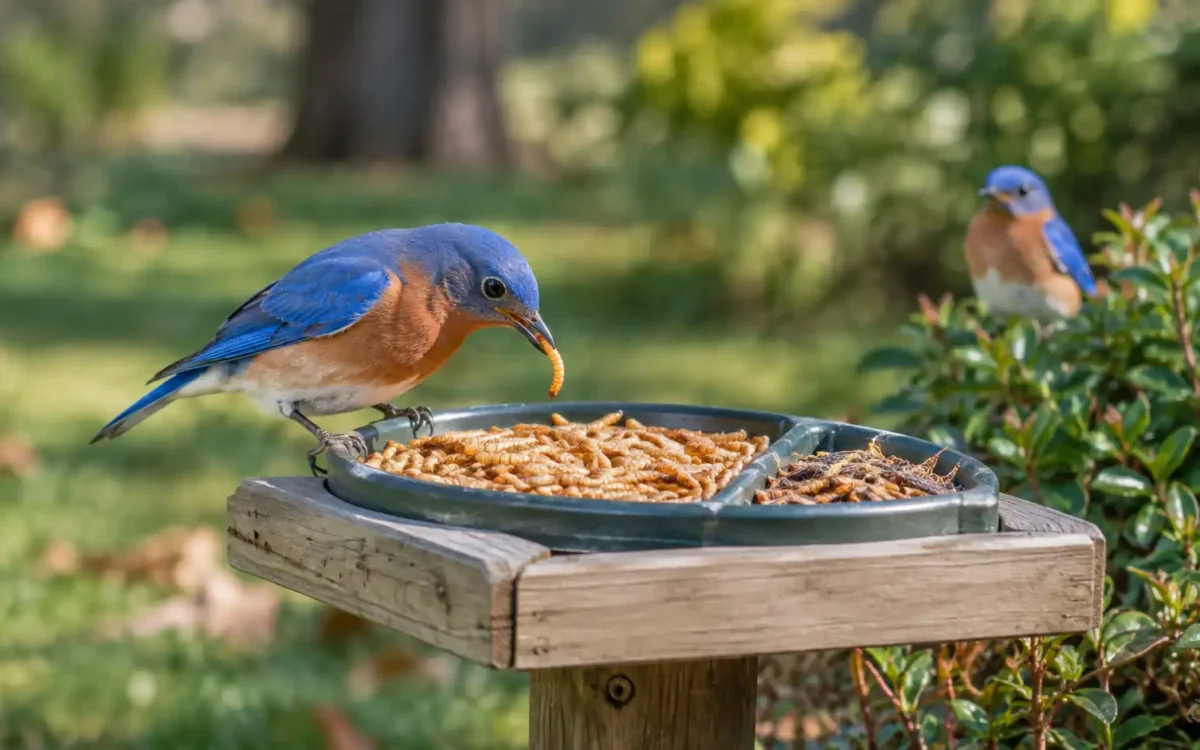
The best mealworms for backyard birds are the missing key for insect-eating birds — bluebirds, robins, wrens, and mockingbirds — that ignore seed feeders entirely. A small dish of mealworms can unlock the insect-eating half of your backyard that seed alone never reaches.
Disclosure: Bird Feedly is reader-supported. When you buy through links on our site, we may earn an affiliate commission at no extra cost to you.
Which Birds Eat Mealworms?
The insect-eaters and omnivores that mostly ignore seed feeders: eastern and western bluebirds, American robins, Carolina and house wrens, northern mockingbirds, gray catbirds, brown thrashers, and blue jays. During nesting season, even seed-eaters like chickadees will take mealworms — protein for growing chicks.
If your goal is specifically bluebirds, pair mealworms with proper housing — our bluebird guide covers nest box specs that get used.
Mealworms for Backyard Birds: Dried vs. Live Comparison
| Dried mealworms | Live mealworms | |
|---|---|---|
| Bird appeal | Good (great when soaked) | Excellent — movement triggers strikes |
| Cost | $ (bulk bags cheap) | $$$ (ongoing colony or orders) |
| Convenience | Shelf-stable, pour and go | Need care: bedding, moisture, cool storage |
| Best for | Everyday feeding, beginners | Nesting season, winning over skeptics |
| Downside | Can be ignored unsoaked | Escapees, maintenance, squeamishness |
Our take: start dried. They’re cheap, easy, and effective — especially with the soaking trick below. Graduate to live during nesting season.
The Soaking Trick
Dried mealworms straight from the bag are crunchy and desiccated; birds prefer them plump. Soak a day’s portion in warm water for 20–30 minutes, drain, and serve. Soaked worms get eaten much faster than dry. In hot weather, don’t leave soaked worms out more than a day — they spoil.
How to Serve Them
- Use a dish or tray feeder with sides — mealworms (especially live) wander.
- Start small. A quarter-cup is plenty while birds learn the dish exists.
- Place near cover. Insect-eaters are warier than finches; a dish 10 feet from shrubs beats one in open lawn.
- Beat the starlings. Starlings Hoover mealworms. A caged dish feeder or a feeder with a small entrance hole lets bluebirds and wrens in while excluding bigger bullies — more tactics in bully-bird control.
- Nesting season is prime time. April through July, protein demand peaks and parents will visit relentlessly.
Raising Your Own (Briefly)
A mealworm colony is genuinely easy: a plastic tub, wheat bran bedding, and carrot or potato for moisture, kept at room temperature. The beetles do the rest. It takes 2–3 months to become self-sustaining, and it cuts live-worm costs to near zero.
Mealworms for Backyard Birds: FAQs
Are dried mealworms as good as live for birds? Live wins on appeal — movement triggers feeding instincts, especially for nesting parents. But soaked dried mealworms are close behind and far more convenient. For most backyard purposes, dried (soaked) is the sweet spot of cost and results.
Will mealworms attract unwanted pests? Offered in a dish and eaten promptly, no. Problems come from scattering handfuls on the ground or leaving spoiled worms. Feed modest amounts, use a tray, and clean up uneaten worms daily in warm weather.
Can baby birds eat mealworms? Parent birds feed insects — including mealworms — to nestlings naturally; it’s ideal protein. Never hand-feed a baby bird yourself, though. If you find one, see what to do with a sick or injured bird instead of intervening.
How should I store dried mealworms? Cool, dry, sealed — same as seed (see storage guide). They’re shelf-stable for months. Discard if they smell off or show mold. Live mealworms keep weeks in the refrigerator in bran bedding.
Do mealworms attract starlings? Unfortunately, yes — starlings love them. Use caged or small-entrance dish feeders to exclude larger birds, feed modest amounts that get eaten quickly, and bring the dish in if starlings take over.
Mealworms are the cheat code for the birds seed can’t reach. Start with a bag of dried, soak them, set out a dish near your bluebird box — and watch a whole new cast discover your yard.
Keep Reading
- attracting bluebirds
- complete bird food guide
- storing bird food
- keeping starlings out
- beginner’s feeding guide

Related Articles
Winter Bird Feeding Guide: 9 Tips for Cold Months (2026)
Last updated: September 24, 2026 · 8 min read A first January with bird feeders teaches a humbling…
Read Article
How to Feed Backyard Birds: Complete Beginner Guide (2026)
Last updated: September 24, 2026 · 9 min read Many beginners start with the cheapest mixed seed from…
Read Article
5 Homemade Suet Recipes Birds Love (Easy & Cheap)
Last updated: September 24, 2026 · 7 min read Homemade suet recipes are cheap and easy — but…
Read Article