Short Answer
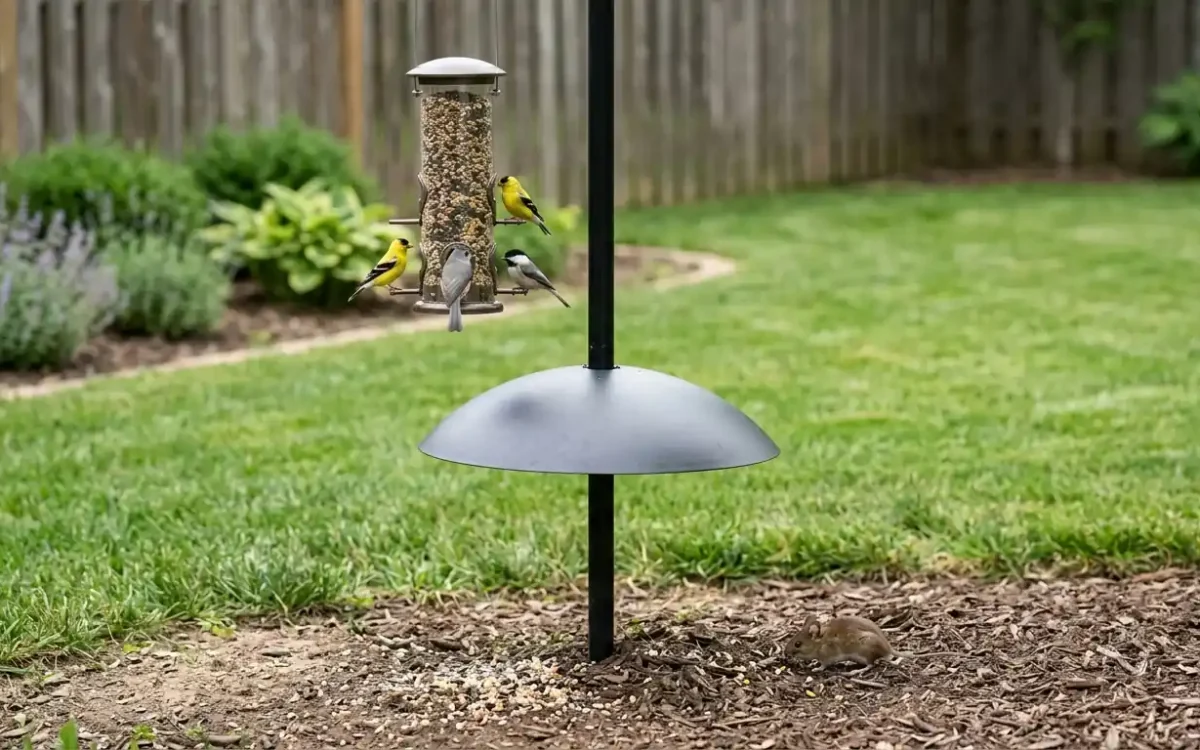
Rats and mice come for two things: steady food and nearby shelter. Take both away and the feeder stops being worth the trip. Sweep up spilled seed every few days, switch to no-mess seed such as hulled sunflower hearts, store all seed in sealed metal containers, and mount feeders on smooth metal poles with baffles at least 10 feet from trees and fences. Weight-sensitive feeders stop rats; mice are too light for them, so cleanup matters most for mice.
Nobody sets out to feed rats. Yet a feeder that has been up for a few weeks can quietly turn into exactly that. Keeping rats and mice away from bird feeders comes down to understanding why they show up in the first place, then removing that reason rather than chasing them off after the fact. A feeder scatters seed on the ground, knocked loose by feeding birds or leaking from a worn seam — exactly the easy, reliable food rats and mice are built to find.
Rat or mouse? Know which visitor you have
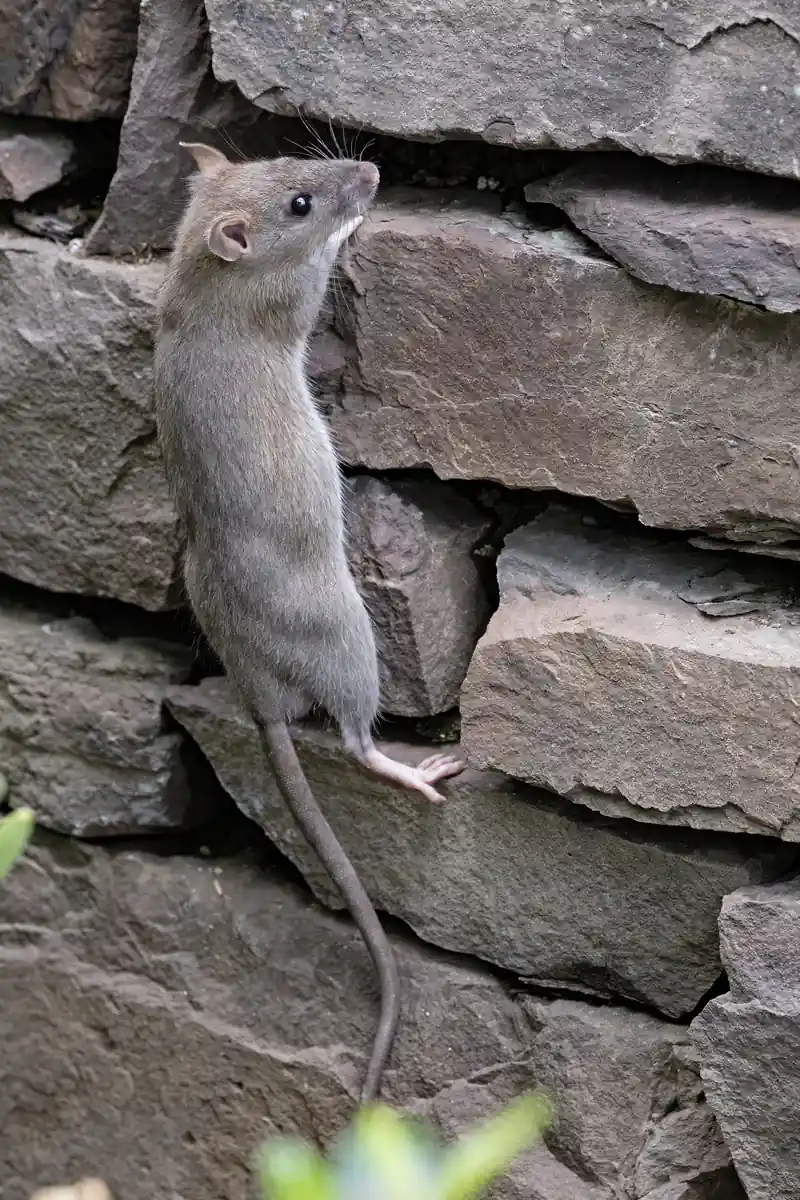
Three commensal rodents — animals that live in close association with humans — cause nearly all feeder trouble: the Norway rat, the roof rat, and the house mouse. None is native to North America; all arrived with European settlers. They behave differently, and the fix depends on which one is visiting.
| Visitor | What to know |
|---|---|
| Norway rat (Rattus norvegicus) | 13–18 in long including a 6–9 in tail; burrows under buildings, slabs, and foundations; enters through a hole about ½ inch wide |
| Roof rat (Rattus rattus) | Climbs wires, cables, vines, and trees to enter high, often through the roofline; nests above ground |
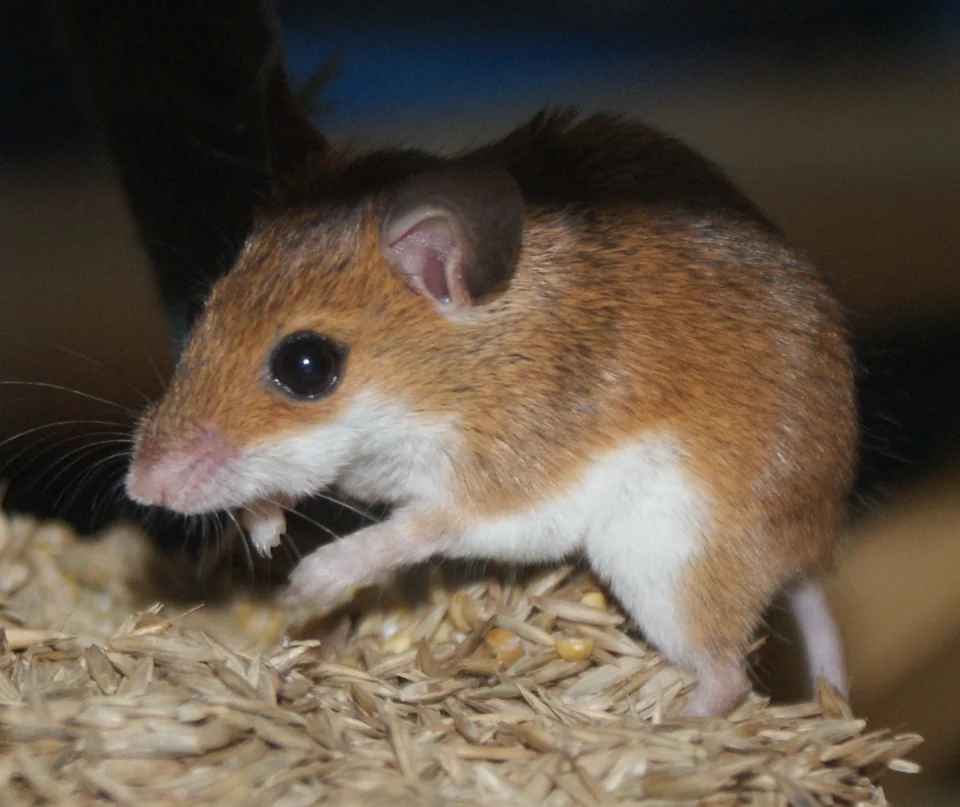
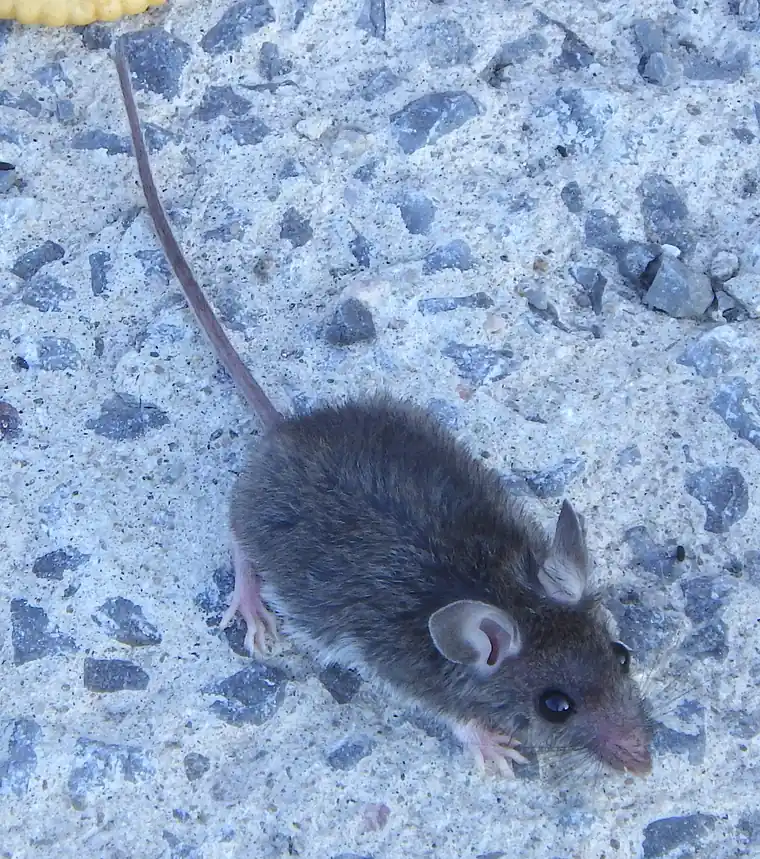
| House mouse (Mus musculus) | 5½–7½ in long including a 3–4 in tail; weighs less than 1 ounce; squeezes through a gap about ¼ inch wide — roughly a pencil’s width |
Sizes and habits: Alabama Cooperative Extension; Summit County Public Health.
Spilled seed is the invitation
The most impactful habit is also the simplest: sweep or lightly rake under the feeder every few days. A quick sweep removes the food source before it becomes a reliable meal for anything nocturnal. A catch tray mounted beneath the feeder collects dropped seed in one contained spot, and keeping the weekly rhythm matters more than any single deep clean. The guide to keeping bird feeders clean and safe covers the routine that works for seed feeders too.
Do not compost spilled seed in an open pile — it attracts the same rodents the cleanup is meant to discourage. Sweep it into a sealed bin or the trash instead.
Switch to no-mess seed
No-mess seed addresses the problem at its source rather than trying to block access after the fact. Hulled sunflower hearts, shelled peanuts, and similar no-shell options leave almost nothing behind for a bird to discard, which means far less waste on the ground below. The best bird seed guide covers which seed types minimize ground debris — less mess means less reason for rodents to stick around in the first place.
Lock the pantry
The problem does not always start outside. A paper or thin plastic bag left in a garage or shed is an easy target for mice to chew through, and a gnawed bag can draw rodents into storage long before they ever reach the yard. Store all seed in sealed metal or heavy-duty plastic containers. University of Georgia Extension puts it plainly: removing food and shelter is the core of keeping rats and mice out.
Make the pole unclimbable
Rats and mice are genuinely capable climbers, comfortable on wood, brick, and even rough stone, which rules out assuming “high enough” is automatically safe. A smooth metal pole is far harder for them to grip than a wooden post, and a baffle removes most of the remaining opportunity. Keep the pole at least 10 feet from trees, fences, or anything else a rodent could use as a launch point — the same distance rule that stops squirrels, covered in the squirrel-proofing guide.
Take away the hiding places
Food alone does not keep rodents around for long — shelter is the other half of the equation. Dense ground cover, woodpiles, and thick shrubs close to a feeder give rats and mice somewhere safe to retreat between feeding trips. Trim back low vegetation and keep a clear, open buffer zone around the base of the feeder.
Weight triggers stop rats, not mice
A weight-sensitive feeder works on the same principle used against squirrels: rats are close enough in weight to squirrels that a mechanism designed to close feeding ports under a squirrel’s weight does the same job against rats. Mice are the exception: light enough to slip past most weight triggers, so a secondary approach still matters for them specifically — and that approach is the cleanup and storage above, not a heavier trigger.
Spice works — up to a point
A light dusting of cayenne pepper mixed into seed, or a capsaicin gel applied to the pole, is one of the more effective natural deterrents. Birds are barely affected because their heat receptors respond far less to capsaicin than a mammal’s do, so treated seed is genuinely unpleasant to rodents after a try or two while birds eat it normally. One limit is worth knowing: Audubon reports that at extreme spice levels, around 500,000 Scoville units, even birds start eating less. Stick to standard cayenne-level products, not ghost-pepper extremes, and treat spice as one layer among several — it will not solve a serious infestation on its own. Peppermint oil around the pole base adds a mild extra layer.
The mistake that keeps them coming back
The most common mistake is reaching for poison or traps first while the seed pile and the open bag stay put. Traps remove today’s rodents; the food brings tomorrow’s. Alabama Cooperative Extension states the order plainly: rodent control is best achieved by combining exclusion with a strong program of sanitation. In other words, seal the gaps, sweep the ground, and lock the seed store first — only then think about trapping. Traps, where poisons are unwanted, are best placed under cover or next to a wall, and any rodenticide must be used exactly as its label directs.
A note for autumn and winter
Rodent pressure rises as temperatures drop, so in autumn, rats and mice look harder for food and shelter — the season to seal the seed store, check the pole and baffle, and clear the buffer zone before winter sets in. Rats and mice are also primarily nocturnal, so bringing feeders in after dusk and putting them back out in the morning removes easy access during the hours rodents are most active. If birds are not coming to the feeder at all once the rodent problem is handled, the guide to why birds are not coming to a feeder works through the other common reasons. Plan the cleanup routine with the Feeding Tools planner, and keep it going through the cold months.
Quick answers
Do bird feeders attract rats to your house?
They can, especially if spilled seed is allowed to accumulate near the house or close to potential entry points. Keeping feeders a reasonable distance from the home and staying on top of cleanup reduces this risk significantly.
Should I bring my bird feeder in at night?
It can help, since rats and mice are primarily nocturnal. Bringing feeders in after dusk and putting them back out in the morning removes easy access during the hours rodents are most active.
Can spicy bird seed keep rodents away?
Yes, to a meaningful degree. Cayenne or capsaicin-treated seed is genuinely unpleasant to rodents while having no effect on birds at ordinary levels, though it works better as one part of a broader approach than as a standalone fix.
How do I know if rats are nesting near my feeder?
Small burrow holes near the base of a pole, gnaw marks on nearby wood, and droppings scattered close to the feeding area are the most common signs worth watching for.
Sources: Alabama Cooperative Extension (Controlling Rats and Mice Around Your Home); University of Georgia Extension (Rats and Mice: Get Them Out of Your House and Yard); UC IPM (Rats and Mice); National Audubon Society (Hot Take — Seems Like Birds Can Taste Spice After All).
Related guides: How to Clean Bird Feeders: 7 Easy Steps (2026) · How to Store Bird Seed (Keep It Fresh All Year)

Related Articles
How to Join Project FeederWatch: Count the Birds at Your Feeder This Winter
Project FeederWatch's 40th season runs 1 Nov 2026-30 Apr 2027. Join for $18, count birds at your feeder…
Read Article
How to Feed Birds While You’re on Vacation
Your birds won't starve while you're away — feeders are only about a quarter of their winter diet.…
Read Article
How to Stop Birds Fighting at Your Feeder
One feeder is one territory, so one bully bird can own it. Spread two or three different feeders…
Read Article