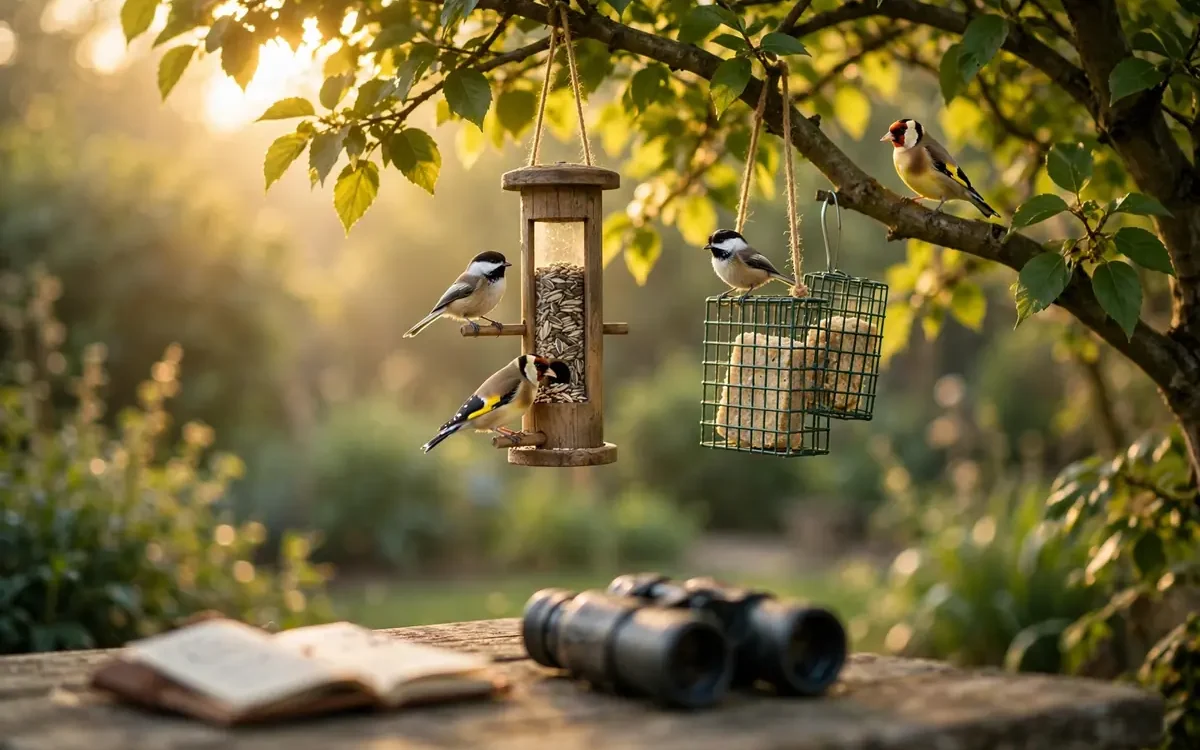
Every October, hundreds of thousands of people around the world spend a single day counting birds. On the last October Big Day, nearly 748,000 people went birding with eBird and Merlin, submitting over 99,000 checklists and recording 7,849 species across 202 countries — in a single day. That is the scale of the event sitting on your calendar.
Here is the part I love most: you do not need to travel anywhere. eBird says it plainly — participate from anywhere, even from home. A stocked backyard feeder, fifteen focused minutes, and the free eBird or Merlin app are genuinely enough to make your birds count. October Big Day happens every year on the second Saturday of October (and there is a second global event, Global Big Day, every May). What follows is the exact 1-day plan I would hand to a friend who has never submitted a bird checklist in their life — plus one technique most beginner guides never mention.
🌅 Your Big Day at a Glance
- When: second Saturday of October, midnight to midnight (your time zone) — plus Global Big Day every May
- You need: the free eBird app, a stocked feeder, and 15 focused minutes
- Prep: 3-day countdown — clean & stock, add variety & scout, set the stage
- Best hours: first 2 hours after sunrise + last 2 before sunset
- Secret weapon: the pishing technique (below) — pulls hidden songbirds into view
- Submit checklists within 3 days of the event
Last October Big Day: 748,000 birders · 7,849 species · 202 countries · one day.
What October Big Day Actually Is
October Big Day is eBird’s global birding event, run by the Cornell Lab of Ornithology. For 24 hours — midnight to midnight in your own local time zone — birders everywhere watch birds and log what they find. You report your sightings through eBird or Merlin, and every checklist feeds one giant worldwide snapshot of a single day of birding.
The date is no accident. October Big Day coincides with World Migratory Bird Day, and October sits at the height of fall migration, so even an ordinary backyard can host travelers that were not there a week ago.
The official how-to is refreshingly simple, straight from eBird’s October Big Day page: get a free account, go birding on the day (even ten minutes from home counts), and share what you find. Your observations also become community science — real data researchers use to track migration timing and population trends.
The 3 Things a Backyard Birder Actually Needs
Forget the gear lists. For a backyard Big Day you need exactly three things:
1. The free eBird Mobile app (or Merlin Bird ID) and a free account. The same account works for both apps. Install it days ahead, not on the morning, and poke around for five minutes so the “start checklist” button feels familiar. Merlin’s Sound ID is a wonderful training wheel for beginners — more on that below.
2. A stocked feeder — or better, two or three. Species count follows food variety. If your feeders have sat empty since summer, the prep week is the time to fill them. Birds need a few days to rediscover a refilled station.
3. Fifteen focused minutes. Not a whole day. Two short, sharp sessions — one early, one late — will beat a distracted hour. Put them in your calendar now.
That is the whole kit. No spotting scope, no life list, no expertise required.
Your 3-Day Prep Countdown
Three days is the perfect runway. Count backward from Big Day Saturday:
3 days out — clean and stock. Scrub your feeders before refilling them — dirty feeders spread disease, and a fresh start matters when you want maximum traffic on Saturday (here is how I clean my bird feeders the fast, safe way). Fill a sunflower-seed feeder, hang a good suet block, and put out a small tray of mealworms. Install the eBird app, create your free account, and run a practice: stand at your window for five minutes and try logging everything you see. It will feel clumsy the first time. That is the point of practicing now.
2 days out — add variety and scout. Variety is what turns a 6-species yard into a 14-species yard. Add a nyjer sock for goldfinches, scatter some peanuts for jays, and set up moving water if you can — a simple dripper on a birdbath works wonders (moving water attracts birds like nothing else, especially migrants). Then scout: watch your feeders for ten minutes in the morning and ten in the evening. Note which hours are busiest. Pick your observation spot — the chair, the window, the porch corner — where you will sit on Saturday.
1 day out — set the stage. Charge your phone. Lay out binoculars if you own a pair (you do not need them, but they help). Top off every feeder in the late afternoon — birds hit feeders hardest at first light, and you want a full buffet waiting. Decide your two 15-minute windows now: one within the first two hours after sunrise, one in the late afternoon. Tell your family the plan so nobody schedules over it.
Morning vs Evening: When Your Backyard Birds Peak
Timing is the closest thing to a cheat code on Big Day. After years of watching the feeders outside my kitchen window, I can tell you the rhythm never changes:
Early morning is prime time. The first one to two hours after sunrise are the busiest of the day. Birds have fasted all night and fuel up urgently — this is when you will see the most species and the most individuals at once. If you only do one session, make it this one.
Midday is the lull. By late morning, most birds are resting and digesting. Do not judge your yard at 1 p.m.; a quiet feeder at noon means nothing.
Late afternoon brings the second rush. In the last two hours before sunset, birds feed heavily again to stock up for the night. This session often turns up different birds than the morning one — ground feeders like doves and sparrows, for example, tend to be bolder late in the day.
October adds a bonus layer: fall migration. Warblers, thrushes, kinglets, and other migrants are moving through right now, and a yard with food, water, and cover can pull in travelers that would ignore it in summer. Watch for unfamiliar faces at the water dish especially — migrants find moving water first. And keep an ear out: chickadees, nuthatches, and wrens announce themselves long before you see them, which is exactly why the Merlin app’s Sound ID earns its place on Saturday.
🔊 The Pishing Technique: Your Secret Species Multiplier
Here is the technique almost no beginner Big Day guide mentions — and it can add 2–4 species to a backyard list in minutes.
Pishing is the art of making soft, repetitive “pish-pish-pish” sounds (teeth together, like a whispered scold) to pique birds’ curiosity. It works because the sound resembles the scold calls of chickadees and tits — when songbirds hear a scold, they come in to investigate the potential threat. Scientists use the same technique to boost the effectiveness of bird diversity surveys. It costs nothing, needs no equipment, and takes about thirty seconds to learn.
How to do it: sit still at your observation spot, make quiet “pish… pish… pish” sounds for 20–30 seconds, then go silent and watch. Curious chickadees, titmice, wrens, kinglets, and warblers will often pop out of cover to investigate. If nothing appears after a minute, try one more round — then stop.
How to Log a Checklist Without Overthinking It
This is where beginners freeze, so let me unfreeze it. A Big Day checklist is just an honest list of what you saw or heard from one spot over a set time. Here is the whole method:
1Pick “stationary” and start the timer. Sit at your observation spot, start a checklist in the eBird app, and watch for at least 15 minutes. Fifteen minutes is the sweet spot eBird recommends for checklists that can be compared year to year — and it is short enough to stay sharp.
2Count every bird you can identify, by sight or sound. Heard a chickadee but never saw it? It counts, if you are sure. The rule is simple: log birds you confidently identified, alive and unrestrained. Give real counts — “6” not “X.” eBird asks for complete checklists with counts of everything you could identify to the best of your ability, and those numbers are what make the data scientifically useful.
3Use Merlin Sound ID as a helper, not a judge. Hold your phone up and let Merlin suggest what is singing — then confirm with your own eyes or ears before logging it. Do not log a species you only half-heard once through the app. When in doubt, leave it out; an honest short list beats a padded one.
4Run more than one checklist. Morning session, evening session, maybe a bonus one if a mixed flock rolls through at lunch. Each checklist stands on its own — there is no penalty for submitting three short lists instead of one long one. In fact, multiple complete checklists through the day are exactly what eBird hopes for.
5Hit submit within 3 days. Drafts sitting in your app do not count. Submit each checklist the same day if you can.
One more reassurance: nobody sees your list and laughs. Some of the most valuable checklists in eBird are short, complete, boring backyard lists — because boring and complete is what science needs.
Feeder Setups That Pull In More Species on the Day
On the day, your yard is the venue. Here is how to make it irresistible:
Spread food across stations, not one feeder. Different foods pull different birds. A tube feeder with black-oil sunflower covers chickadees, finches, and titmice. A nyjer sock is a goldfinch magnet. A suet cage brings in woodpeckers, nuthatches, and wrens. A low tray of mealworms will tempt robins and bluebirds. Scatter a little seed on the ground for juncos, sparrows, and doves. Five modest stations beat one deluxe feeder every time.
Run moving water. If you do one upgrade in prep week, make it this. A dripper, wiggler, or small solar fountain on a birdbath catches the eye — and ear — of every bird in earshot, including migrants just passing over. Still water is fine; moving water is a magnet.
Give them cover nearby. Shy birds stage in dense shrubs or a brush pile before committing to a feeder. If your feeders hang in the middle of a bare lawn, a nearby evergreen or brush pile will measurably increase both visits and species. Birds that feel safe linger — and lingering birds get counted.
Protect the buffet. Nothing deflates a Big Day morning like discovering squirrels emptied every feeder overnight. Top feeders off the evening before and make sure your squirrel defenses are in place — baffles on, feeders away from launch points.
5 Beginner Mistakes to Avoid
| # | Mistake | Do This Instead |
|---|---|---|
| 1 | Logging “X” instead of counts | Estimate: 4 chickadees, 11 goldfinches. “X” weakens the science. |
| 2 | Identifying by hope | Log what you know. Honesty beats length. |
| 3 | Double-counting in one session | Count the max seen at one time, per species, per checklist. |
| 4 | Forgetting to submit | Submit same-day. Drafts do not count. |
| 5 | Judging by species total | A complete honest 8-species list beats a sloppy 30. |
📅 Two Big Days a Year — Mark Both
Missed October? You get another shot every spring:
- October Big Day — second Saturday of October (fall migration)
- Global Big Day — second Saturday of May (spring migration, eBird’s biggest day)
The same backyard plan works for both. May brings warblers in breeding plumage, orioles, and grosbeaks — arguably the showier of the two days.
After the Big Day
Submit any remaining checklists within 3 days to make the official results. Then watch eBird’s October Big Day page as observations roll in from 200+ countries — there is something genuinely moving about seeing your little backyard dots join a planetary map. Share a photo of your setup with #OctoberBigDay if you like; eBird features birder stories from around the world throughout the day.
And then keep the feeders stocked. The migrants will keep moving through October whether or not it is Big Day, your resident chickadees will keep coming all winter, and you now know how to log a checklist — a skill that makes every ordinary morning at the window a small contribution to science.
Three days to prep, fifteen minutes to participate, one checklist to submit. Your backyard has been a birding hotspot all along — Big Day is just the day you prove it.
Frequently Asked Questions
Do I need to be an expert to join October Big Day?
No. If you can identify the birds at your feeders — with the free Merlin app’s help if you like — you can submit a checklist. Even 10 to 15 minutes of backyard birding counts.
When is the next October Big Day?
October Big Day falls on the second Saturday of October every year, midnight to midnight in your local time zone. There is also Global Big Day on the second Saturday of May — the same backyard plan works for both.
Do I have to leave my yard?
No. Backyard “stationary” checklists are exactly what eBird wants. A stocked feeder station with a few food types and water is a legitimate Big Day site.
What if I only see 5 species?
That is a complete, valuable checklist. Most backyard October lists run 8 to 20 species. eBird’s goal is participation, and short complete lists with real counts are scientifically useful.
What is pishing, and is it okay to do?
Pishing means making soft, repetitive “pish” sounds to mimic chickadee scold calls, which piques songbirds’ curiosity and draws them out of cover. Used gently — a couple of short rounds, never near nests or hunting hawks — it is a widely used, legitimate birding technique.
When is the deadline to submit my checklists?
Submit within 3 days of the event to be included in the official results. Same-day submission is best — drafts sitting in the app do not count.

Related Articles
Do Birds Need Water in Winter? (The Surprising Truth)
Bird Feeding Note: This article is for general informational purposes. Keep feeders clean, provide fresh food and water,…
Read Article
How to Attract Wrens to Your Backyard: 7 Proven Tips (2026)
Bird Feeding Note: This article is for general informational purposes. Keep feeders clean, provide fresh food and water,…
Read Article
How to Attract Nuthatches to Your Backyard: 7 Proven Tips (2026)
Bird Feeding Note: This article is for general informational purposes. Keep feeders clean, provide fresh food and water,…
Read Article