
Last updated: September 26, 2026 · 8 min read
For two straight springs, I watched robins hop across my lawn every morning — and never once touch my feeders. I refilled the seed, I bought the “songbird mix,” I waited. Nothing. Then a neighbor told me the truth that changed everything: robins are not seed birds. No seed on earth will bring them to a hanging tube feeder, because that was never their food. Once I stopped feeding them like finches and started feeding them like robins, I had a pair nesting under my eaves within a month. Here are the 7 things that actually work.
Disclosure: Bird Feedly is reader-supported. When you buy through links on our site, we may earn an affiliate commission at no extra cost to you.
Tip 1: Feed Mealworms — Not Seed — to Attract Robins to Your Backyard
This is the single biggest mistake people make. Robins are insectivores first: earthworms, grubs, beetles, and caterpillars make up most of their spring and summer diet. A hanging feeder full of millet might as well be decoration.
What works: Put mealworms in a shallow dish or low platform tray on the ground or a low table — robins feed at ground level and rarely cling to hanging feeders. Dried mealworms are fine and cheap; soak them in warm water for 15–20 minutes first so they’re soft and easier to digest, especially in nesting season when parents are feeding chicks. Start with a small handful in the same spot every morning; consistency matters more than quantity.
My mistake: I scattered dried mealworms once, saw nothing for two days, and quit. Robins are cautious about new food — it took five consistent mornings before the first one tried the dish. Then it came back every single day.
Tip 2: Offer Fruit the Right Way (and Skip the Bread)
Outside breeding season, fruit and berries become a huge part of a robin’s diet — in fall and winter, flocks can strip a berry bush clean in days. This is your second-best offering after mealworms.
What works: Chopped apples, halved grapes, blueberries, and raisins soaked in warm water until soft — served on a platform feeder, a flat rock, or a low dish. A spoonful of grape jelly in a small dish also works (orioles love it too). What to skip: bread, crackers, and processed scraps. They fill robins up with empty calories and can cause real harm — the same reason I never put bread out for any bird.
Tip 3: Add a Shallow Birdbath — the #1 Robin Magnet
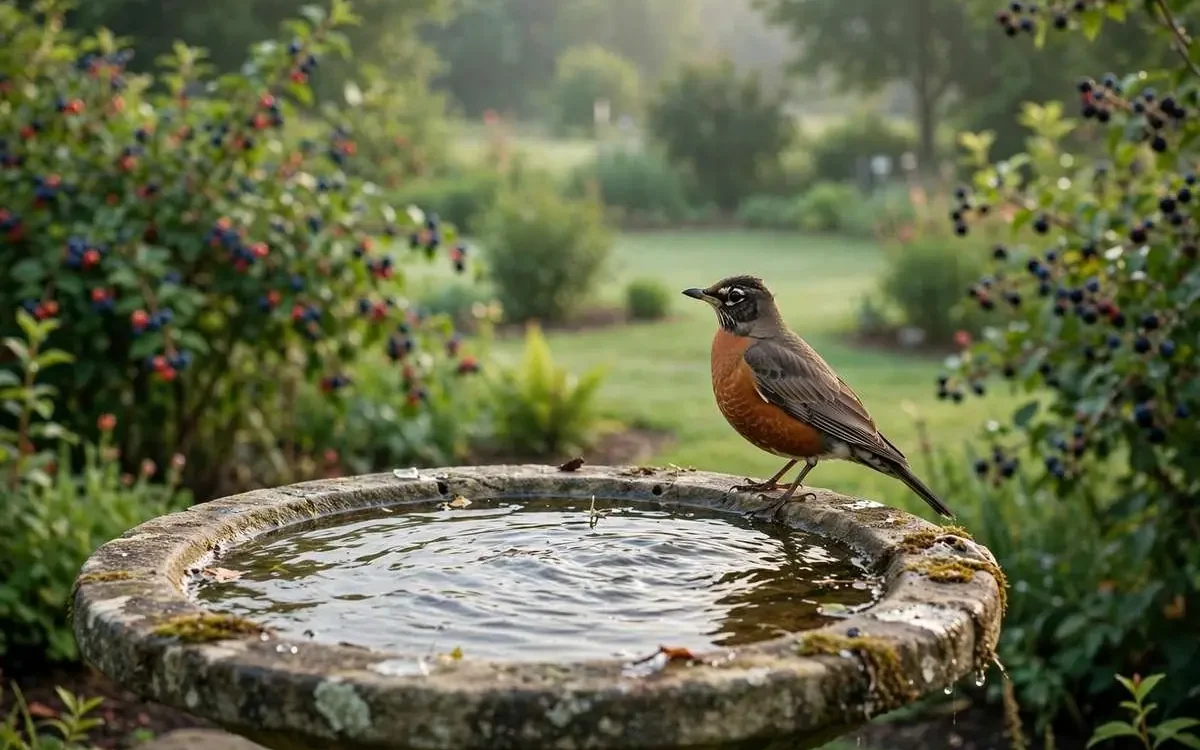
If I could only pick one thing to attract robins to a backyard, it would be water — not food. Robins are enthusiastic bathers and drinkers, and a reliable water source pulls in birds that ignore every feeder you own. This is the tip most “attract robins” guides mention in passing and then move on from. Don’t move on from it.
What works: A shallow bath, 1–2 inches of water, with a rough-textured surface so their feet grip. Place it near a shrub or small tree so they have a quick escape route — but not inside dense cover where cats can hide. Moving water (a dripper or small solar fountain) gets noticed dramatically faster than still water. Clean it every 2–3 days; robins avoid stagnant, slimy water. In freezing weather, a heated birdbath can be the only open water for blocks — and robins will remember who provided it.
Tip 4: Plant Native Berry Bushes for Fall and Winter Robins
Here’s what separates yards that get robins in April from yards that get them in December: planted food. When the ground freezes and worms vanish, robins switch almost entirely to fruit. A yard with berry bushes becomes a winter refueling station for entire flocks.
What works: Native shrubs that hold fruit into winter — serviceberry, flowering dogwood, elderberry, winterberry holly, juniper, and crabapple are all robin favorites. Even one or two bushes make a difference, and they double as shelter and nesting cover. This is a long game (bushes take a season or two to establish), but it’s the highest-leverage permanent change you can make.
Tip 5: Leave a “Wild Corner” — Leaf Litter Is Robin Food
The most robin-hostile thing in modern yards is the immaculate lawn. A perfectly clean, chemical-treated lawn is a food desert: no leaf litter means no insects, no grubs, no worms near the surface — which means no reason for a robin to stay.
What works: Leave one corner of the yard a little wild: let leaf litter accumulate under a tree or along a fence, leave a small patch of grass unmowed, or keep a modest brush pile. Leaf litter is habitat for the exact insects and invertebrates robins hunt. Watering the lawn early in the morning also brings earthworms closer to the surface — free robin breakfast, and the classic reason robins follow sprinklers.
Tip 6: Stop Spraying Pesticides — You’re Starving Them
This one is uncomfortable but non-negotiable: if you spray your lawn and garden for grubs and insects, you are eliminating the robin’s primary food source — and the poisoned insects that remain can poison the robins that eat them. A yard can have the perfect bath, the best mealworms, and berry bushes, and still stay robin-free if it’s chemically sterile.
What works: Cut out broadcast pesticides, especially grub killers. Spot-treat only genuine problems, and let the birds handle the rest — a robin family eats thousands of insects per season. My yard’s insect “problems” noticeably shrank the year the robins moved in. The pest control was free.
Tip 7: Give Nesting Robins Mud and a Shelf in Spring
Robins build their nests from mud and grass — and in a dry spring, mud can be the hardest building material to find. A robin pair choosing between two yards will pick the one where nesting is easy.
What works: In March and April, keep a small patch of bare soil damp (a shallow muddy puddle edge is perfect), and mount a simple nesting shelf — a small wooden platform — under an eave, on a shed wall, or on a sturdy tree trunk, 6–10 feet up and sheltered from rain and wind. Don’t prune dense shrubs in spring; robins nest in them. Once a pair successfully raises chicks in your yard, they often return year after year — and their offspring may nest nearby too.
What to Offer Robins by Season
| Season | Robins are eating | Your best offering |
|---|---|---|
| Spring | Earthworms, insects, grubs | Soaked mealworms in a ground dish; damp mud patch for nesting |
| Summer | Insects, caterpillars, early berries | Mealworms; chopped fruit; clean birdbath (critical in heat) |
| Fall | Shifting to fruit and berries | Native berry bushes; chopped apples and soaked raisins |
| Winter | Almost entirely fruit | Berry bushes holding fruit; heated birdbath; suet with fruit |
Mistakes That Keep Robins Away
- Only offering seed. Robins will walk past a full tube feeder without a glance. Seed is for finches — robins need insects and fruit.
- A spotless, sprayed lawn. No leaf litter and heavy pesticides means no worms and no insects — a robin food desert.
- No water. The single most common missing piece. Many yards have food but no bath, and robins choose the yard that has both.
- Deep or slippery birdbaths. Robins want 1–2 inches of water they can stand in. A deep, slick basin gets ignored.
- Giving up after three days. Robins are cautious with new food sources. Give any new offering at least a week of consistency before judging it.
Frequently Asked Questions
Will robins eat birdseed?
Almost never. Robins are insectivores and fruit-eaters — they lack the beak structure for efficiently cracking most seeds. If you want robins, offer mealworms, chopped fruit, and berries instead of seed.
What is the best food to attract robins?
Live or soaked dried mealworms in a shallow ground-level dish are the most reliable robin attractant, followed by chopped apples, soaked raisins, and blueberries. In winter, native berry bushes and a heated birdbath outperform all feeders.
Do robins use birdhouses?
No — robins don’t use enclosed birdhouses. They build open cup nests from mud and grass on sheltered ledges. A flat nesting shelf mounted under an eave works far better than any birdhouse.
How do I attract robins in winter?
Focus on fruit and water: native berry bushes that hold fruit (holly, crabapple, juniper), chopped apples and soaked raisins on a platform, and a heated birdbath. Winter robin flocks are nomadic and remember reliable yards.
Why do robins follow lawn mowers and sprinklers?
Mowing and watering expose earthworms and insects near the soil surface — easy hunting. You can mimic this by watering a section of lawn early in the morning during dry spells.
Will robins scare other birds away from my feeders?
Rarely. Robins are ground and platform feeders that mostly ignore hanging seed feeders, so they coexist well with finches, chickadees, and cardinals. A territorial robin may chase birds from its bath or berry bush, but serious conflicts are uncommon.
How long does it take to attract robins?
With water plus mealworms offered consistently in the same spot, most yards see their first robin within 1–3 weeks in spring. Berry bushes take a season or two to pay off but then attract robins for years.
Keep Reading

Related Articles
How to Attract Dark-Eyed Juncos to Your Backyard: 7 Proven Tips (2026)
How to Attract Dark-Eyed Juncos to Your Backyard: 7 Proven Tips (2026) The first time I saw one,…
Read Article
How to Attract Goldfinches to Your Backyard: 7 Proven Tips (2026)
How to Attract Goldfinches to Your Backyard: 7 Proven Tips (2026) There is a moment every backyard bird…
Read Article
How to Attract Chickadees to Your Backyard: 7 Proven Tips (2026)
How to Attract Chickadees to Your Backyard: 7 Proven Tips (2026) If there is one bird that can…
Read Article