
There’s a common assumption that if woodpeckers are showing up in your neighborhood, your house is automatically at risk. That’s not really how it works. Learning how to attract woodpeckers to your backyard successfully often has almost nothing to do with your siding, and everything to do with what your yard actually offers in terms of food, water, and shelter.
In fact, a yard that’s genuinely set up to meet a woodpecker’s needs tends to see less house-pecking, not more, because the birds have better options nearby. Here’s what actually draws them in, species by species, and what to do if pecking becomes a problem anyway.
None of this requires a big yard or a wooded property to work. Even a modest suburban backyard with one mature tree and a well-placed suet feeder can be enough to bring woodpeckers around consistently once the basics are in place.
Types of Woodpeckers in Your Backyard
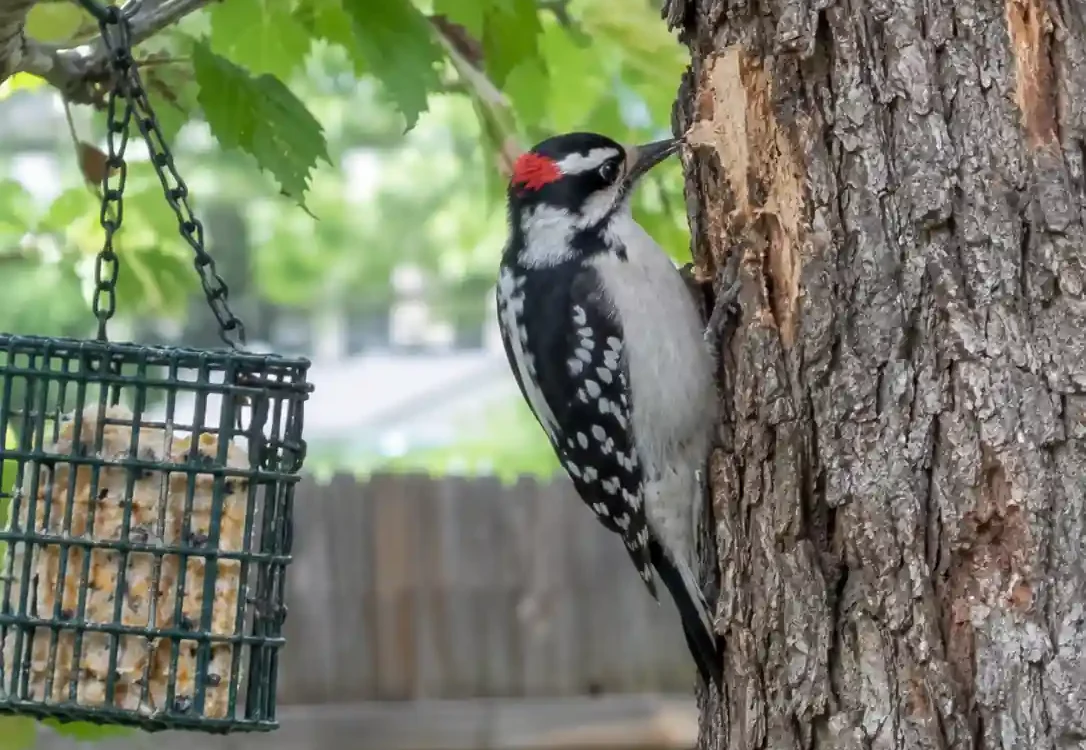
Not every region attracts the same species, but a handful of types of woodpeckers in your backyard show up consistently across most of North America. The downy woodpecker is the smallest and most common visitor, while the hairy woodpecker looks similar but is noticeably larger.
Homeowners wondering how to attract downy woodpeckers specifically will find they’re fairly easy guests, since they adapt well to smaller yards and suburban settings. Red-bellied woodpeckers are bigger, bolder, and increasingly common further north than they used to be, and learning how to attract red-bellied woodpeckers usually just means offering suet and letting mature trees stay put.
Depending on where you live, you might also see northern flickers foraging on the ground for ants rather than clinging to tree trunks, or pileated woodpeckers — the largest species most people will ever spot in a backyard — drawn in by standing dead trees on larger, wooded properties. Knowing roughly which species are common in your area helps set realistic expectations before you start setting anything up, since a suburban yard with young trees will attract a very different mix than a property backing onto mature woodland.
Best Food for Woodpeckers
Getting the best food for woodpeckers right is the single biggest lever you have. Suet, peanuts, and black oil sunflower seed cover most of what these birds are looking for, and all three hold up well across seasons.
People often ask what do backyard woodpeckers eat beyond feeder food — the answer is mostly insects, larvae, and tree sap in the wild, which is exactly why keeping some dead or dying tree limbs around (where safe to do so) makes a yard more attractive than feeders alone ever could.
Peanuts, whether whole or in halves, tend to disappear fastest once a woodpecker discovers them, and a small dish or feeder dedicated to peanuts alongside a suet cage often does more than adding yet another seed blend to an already-full feeding station.
Do Woodpeckers Eat Suet?
Yes — and it’s worth answering the question do woodpeckers eat suet directly, because it’s genuinely one of the most reliable foods for bringing them in consistently. Suet cakes give woodpeckers a dense, high-fat food source that mimics the insects and larvae they’d naturally be hunting for under tree bark.
No-melt suet blends hold up better once temperatures climb, which matters if you’re setting up a feeding station that needs to work across more than one season without constant maintenance. Regular suet, by contrast, is a better fit once cooler weather sets in and melting isn’t a concern.
Best Woodpecker Feeder Setup
The best woodpecker feeder setup usually means a suet cage with a tail-prop, since woodpeckers naturally brace against tree trunks while feeding and appreciate having something similar to grip. A best suet feeder for woodpeckers doesn’t need to be fancy — a simple wire cage mounted at a comfortable height on a pole or tree works fine.
If you already have a general seed setup, our guide on the best suet for backyard birds covers which blends and cage styles perform best, and pairs naturally with whatever seed feeders you’re already running.
Mounting height matters more than people expect — most woodpeckers feel more comfortable feeding at chest height or above, closer to how they’d naturally approach a tree trunk, rather than at a low platform feeder shared with ground-feeding birds.
Woodpecker Nest Boxes and Shelter
Beyond food, woodpecker nest boxes give these birds a reason to stay rather than just visit. Unlike many backyard species, woodpeckers prefer deeper, narrower boxes mounted higher up, mimicking the tree cavities they’d carve out naturally.
Dead or dying trees, where they don’t pose a safety risk, are honestly more effective than any nest box — woodpeckers are drawn to soft, decaying wood because it’s easier to excavate and often already holds insects.
If a dead tree genuinely isn’t an option in your yard, a properly sized wooden nest box filled with wood shavings can still work, though it usually takes woodpeckers longer to accept an artificial cavity than it does chickadees or wrens.
A relative of mine dealt with a woodpecker steadily working through the wood trim on their garage for most of one spring. What finally worked wasn’t a scare tactic — it was adding a suet feeder and a dead tree stump near the tree line at the back of the yard. Within a couple of weeks, the pecking on the garage stopped almost entirely, seemingly because the bird had a better option nearby.
How to Stop Woodpeckers From Pecking Your House
If you’re past the attracting stage and need how to stop woodpeckers from pecking your house specifically, the first question is why do woodpeckers peck on houses in the first place. Usually it’s one of three reasons: insects hiding in the siding, an attempt to build a nest cavity, or simple territorial drumming during spring.
Learning how to keep woodpeckers away from house siding starts with checking for pest activity, since removing the food source often solves the problem on its own. Reflective tape, wind chimes, or a hanging faux predator near the affected spot can redirect their attention without harming the bird, and all of these are legal, humane options under most regional wildlife protections.
If pecking is happening in the same spot repeatedly, filling old holes with wood putty once the bird has moved on prevents the area from becoming an easy target again, since exposed or weakened wood tends to draw them back. Timing also matters — most house-pecking peaks in spring, so a temporary deterrent during that window is often enough to break the habit for the rest of the year.
Creating a Woodpecker-Friendly Yard Overall
Learning how to build a woodpecker friendly yard is really about layering all of the above rather than picking just one fix. The best trees to attract woodpeckers tend to be mature natives with some dead or dying limbs, since that’s where their natural food supply actually lives.
Water matters too — yes, do woodpeckers need a water source, and a shallow birdbath tucked near shrubs or trees gives them somewhere to drink and occasionally bathe without feeling exposed. If you’re already thinking about your yard’s food setup more broadly, our complete guide to feeding backyard birds ties suet, seed, and placement together in one place.
None of these additions need to happen all at once. Adding a suet feeder this month and a birdbath next season still moves a yard steadily toward being genuinely woodpecker-friendly, without turning it into a big project.
| Before | After Setup |
|---|---|
| No suet or high-fat food available anywhere in the yard | Suet cage with tail-prop mounted on a pole or tree trunk |
| Dead limbs removed for tidiness | Non-hazardous dead wood left standing as a natural food source |
| No water source nearby | Shallow birdbath placed near shrubs or tree cover |
| Woodpecker activity concentrated on house siding | Activity redirected toward feeders and trees, away from the house |
How Long It Takes and What to Expect
How long does it take to attract woodpeckers is one of the most common follow-up questions, and the honest answer is that it varies — some yards see visitors within days of putting out suet, while others take a few weeks, especially if there isn’t much existing tree cover nearby. Patience matters more than constantly changing your setup.
Consistency tends to matter more than any single trick. Keeping suet fresh, water available, and a feeding station in the same spot gives woodpeckers time to notice and return, rather than treating your yard as a one-time stop.
Frequently Asked Questions
What is the best food to attract woodpeckers?
Suet is generally the most effective single food, followed by peanuts and black oil sunflower seed, since all three provide the fat and calories woodpeckers need.
Do woodpeckers eat suet?
Yes, suet is one of their favorite feeder foods, closely mimicking the fat content of the insects and larvae they naturally hunt.
How do I stop woodpeckers from pecking my house?
Identify whether they’re after insects, building a nest, or drumming territorially, then address the underlying cause — removing pests, covering the area, or using humane deterrents like reflective tape.
Will feeding woodpeckers attract them to my house siding?
Generally the opposite is true — a well-fed yard with suet and natural food sources tends to reduce house-pecking, since the bird has better options nearby.
What time of year are woodpeckers most active?
Spring tends to bring the most activity and noise, since that’s breeding and territorial drumming season, though many species stay active year-round.
Do woodpeckers use birdhouses?
Some will use deep, narrow nest boxes mounted high up, but many still prefer natural cavities in dead or decaying trees when they’re available.
Which Yard Sounds More Like Yours?
Think about your own backyard for a second — does it already have some of what woodpeckers look for, or is it missing almost everything on this list?
How to Attract Woodpeckers to Your Backyard: Key Takeaways

Related Articles
How to Attract Dark-Eyed Juncos to Your Backyard: 7 Proven Tips (2026)
How to Attract Dark-Eyed Juncos to Your Backyard: 7 Proven Tips (2026) The first time I saw one,…
Read Article
How to Attract Goldfinches to Your Backyard: 7 Proven Tips (2026)
How to Attract Goldfinches to Your Backyard: 7 Proven Tips (2026) There is a moment every backyard bird…
Read Article
How to Attract Chickadees to Your Backyard: 7 Proven Tips (2026)
How to Attract Chickadees to Your Backyard: 7 Proven Tips (2026) If there is one bird that can…
Read Article