
Last updated: September 24, 2026 · 8 min read
A first January with bird feeders teaches a humbling lesson about winter bird feeding. After feeding casually through fall, a cold snap can hit, life gets busy, and the feeders sit empty for a week. When they are finally refilled, the chickadees come back — but it takes days. Winter feeding isn’t just a hobby upgrade; for resident birds burning enormous energy to stay warm, your feeders can be a genuine lifeline. This guide is about feeder prep and maintenance — getting your feeders, water, shelter, and cold-weather routine ready. For what to actually serve, see our Best Bird Food for Winter guide.
Disclosure: Bird Feedly is reader-supported. When you buy through links on our site, we may earn an affiliate commission at no extra cost to you.
Why Winter Bird Feeding Matters So Much
A chickadee weighing less than half an ounce can lose a significant share of its body weight on a single freezing night just staying warm. Come morning, it needs calories — fast. Natural food is at its scarcest in late winter: berries are gone, insects are dormant, and snow can bury ground forage for days.
That’s where you come in. The Cornell Lab of Ornithology considers black-oil sunflower seed the best all-around winter attractant, and notes that offering a variety of high-energy foods can improve winter survival for resident birds. You won’t make birds “dependent” in a harmful way — research consistently shows supplemental feeding supports birds rather than weakening them — but consistency matters, which we’ll get to.
Tip 1: Lead With High-Energy Foods
Winter feeding is an energy game. Fat is the currency birds spend to stay warm, so prioritize foods packed with it:
| Food | Why it wins in winter | Best offered in |
|---|---|---|
| Black-oil sunflower seed | Highest calories per bite; thin shells; loved by the most species (Cornell Lab’s top pick) | Hopper or tube feeder |
| Suet (beef fat) cakes | Pure energy; woodpeckers, nuthatches, chickadees devour it | Suet cage |
| Shelled peanuts / peanut pieces | High fat and protein; jays and titmice stash them | Platform feeder or peanut feeder |
| Nyjer (thistle) seed | Keeps goldfinches, siskins, and redpolls coming all winter | Finch tube or sock |
| Dried mealworms | Protein for bluebirds, robins, wrens on warmer days | Platform feeder |
| White proso millet + cracked corn | Ground-feeding juncos, doves, sparrows | Ground or platform feeder |
Cornell’s own suggested homemade mix — 25 pounds of black-oil sunflower, 10 pounds of white proso millet, 10 pounds of cracked corn — is an economical base you can blend yourself.
Skip the cheap filler bags. Mixes bulked with red milo and wheat get ignored, rot in winter wet, and grow mold. Our full rankings are in the best bird food for backyard birds guide.
Tip 2: Make Suet Your Secret Weapon
If only one thing could be added to a winter feeding station, it would be suet. Plain beef suet from a butcher counter is cheap and phenomenally energy-dense. Commercial suet cakes (often blended with seeds, peanuts, or mealworms) work too — and “no-melt” dough formulas hold up on the occasional warm winter day.
Hang suet in a simple wire cage, ideally with a tail-prop extension so woodpeckers can brace their stiff tail feathers while feeding — they’ll stay longer and come back more often. Find homemade versions in our homemade suet recipes guide.
Tip 3: Water Beats Seed in Freezing Weather
Here is what surprises many birders most: in deep winter, liquid water can attract more birds than food. Natural sources freeze solid, and birds need water for drinking — and for bathing, since clean, well-maintained feathers insulate far better than matted ones.
A heated birdbath (with a thermostat-controlled de-icer) is the single best winter upgrade you can buy. Keep it shallow — no deeper than 2–3 inches — with a rough surface for grip, and change or top up the water regularly. No heater? A dark-colored shallow dish in a sunny spot buys you a few extra unfrozen hours, but honestly, the heater is worth it.
Tip 4: Stay Consistent — Don’t Start and Stop
This is the tip that matters most that first January. Birds memorize reliable food sources and build their daily foraging routes around them — in winter, that routine can be the difference between thriving and struggling. Once you start winter feeding, keep feeders filled through the season. If you travel, ask a neighbor to top them up or take feeders down cleanly rather than letting them sit empty for weeks.
Tip 5: Give Them Shelter, Not Just Food
Food keeps birds fueled; cover keeps them alive between meals. If your yard lacks evergreens, a brush pile (stacked fallen branches) or a roost box gives birds somewhere to escape wind and hawks. Position feeders where birds feel safe — near cover, out of prevailing wind — and you’ll notice far more activity than with the same feeder standing alone in the open.
Tip 6: Clean More Often in Winter
Winter crowds mean more birds touching the same perches — and damp, cold conditions let disease linger. Clean feeders every two weeks in winter (weekly during thaws or heavy use): hot soapy scrub, a 1:9 bleach soak for ten minutes, thorough rinse, complete air-dry. Rake up hulls and droppings underneath too. The full protocol is in our guide to keeping feeders clean through winter.
Tip 7: Store Seed Like You Mean It
Nothing kills winter feeding momentum like a bag of moldy seed. Moisture is the enemy: store seed in airtight, waterproof containers, and metal beats plastic — mice and squirrels chew straight through plastic bins. A galvanized trash can with a tight lid in the garage is rodent-proof and holds a 25-pound bag easily. Buy no more than you’ll use in a month or two, and sniff before filling — musty seed goes in the trash, never in the feeder.
Tip 8: Expect a Changing Cast of Visitors
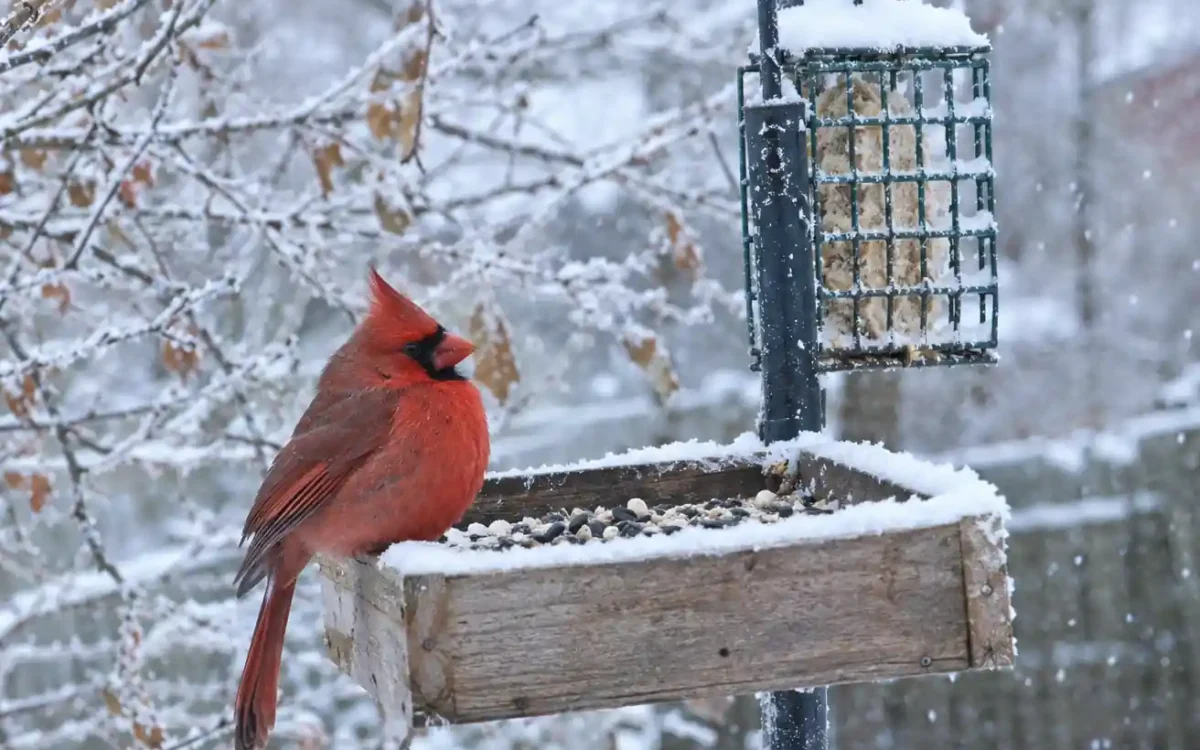
Winter brings birds you won’t see in summer. Watch for dark-eyed juncos (“snowbirds”) hopping under feeders, pine siskins and common redpolls swarming nyjer tubes in irruption years, and cardinals flocking to winter feeders in their brightest plumage against the snow. Keep a simple list — many feeder watchers report their sightings to Cornell’s Project FeederWatch, which runs November through April and turns your hobby into real science.
Tip 9: Know the Exceptions (Bears and Thaws)
Two honest caveats. Bear country: if bears are active in your area, don’t feed at all outside deep hibernation season — Cornell’s FeederWatch is explicit that feeding where bears associate food with homes is dangerous for everyone, bears included. Bring feeders in at night or skip feeding until bears den.
Warm spells: suet can turn rancid and seed can mold during midwinter thaws. On unseasonably warm days, offer smaller amounts, check for spoilage, and switch to no-melt suet dough.
Winter Feeding Checklist
- [ ] Black-oil sunflower seed stocked (plus suet, peanuts, nyjer)
- [ ] Heated birdbath or de-icer installed, water fresh
- [ ] Feeders placed near cover, out of prevailing wind
- [ ] Brush pile or roost box for shelter
- [ ] Metal, airtight seed storage
- [ ] Cleaning routine on the calendar (every 1–2 weeks)
- [ ] Commitment to stay consistent through the season
Start now — late fall is the perfect time to get feeders up so birds find them before the hardest weather arrives. For the full year-round picture, see our complete beginner’s guide to feeding backyard birds.
Winter Bird Feeding: FAQs
Should I feed birds in winter at all? Yes — winter is when supplemental feeding helps most. Natural food is scarcest and birds burn huge energy staying warm. The Cornell Lab of Ornithology identifies black-oil sunflower seed as the best all-around winter food, and consistent feeding supports resident birds through the hardest months.
What is the best food for birds in winter? Black-oil sunflower seed first — it attracts the greatest number of species per the Cornell Lab. Add suet for high-fat energy, shelled peanuts, nyjer seed for finches, and white proso millet or cracked corn for ground-feeding birds like juncos and doves.
Is it bad to stop feeding birds in winter once you start? It’s not ideal. Birds build daily foraging routes around reliable feeders, so an abrupt mid-winter stop can leave them scrambling during the hardest weather. If you must stop, do it gradually — or better, arrange for someone to keep feeders filled while you’re away.
Do birds need water in winter? Absolutely — liquid water may be scarcer than food when everything freezes. A heated birdbath with a thermostat-controlled de-icer is one of the best winter investments; birds need water for drinking and for keeping insulating feathers clean.
When should I put out winter bird feeders? Late fall, well before the first hard freeze. It takes birds 2–4 weeks to discover new feeders, so hanging them in October or November means your station is an established stop when winter truly hits.
Should I feed birds if I have bears in my area? No — not while bears are active. Cornell’s Project FeederWatch advises against feeding in bear country outside hibernation season, since bears that associate homes with food become dangerous and often end up euthanized. Resume only when bears are denned.
Keep Reading

Related Articles
How to Feed Backyard Birds: Complete Beginner Guide (2026)
Last updated: September 24, 2026 · 9 min read Many beginners start with the cheapest mixed seed from…
Read Article
Best Mealworms for Backyard Birds: Live vs. Dried Guide
Last updated: September 24, 2026 · 7 min read The best mealworms for backyard birds are the missing…
Read Article
5 Homemade Suet Recipes Birds Love (Easy & Cheap)
Last updated: September 24, 2026 · 7 min read Homemade suet recipes are cheap and easy — but…
Read Article