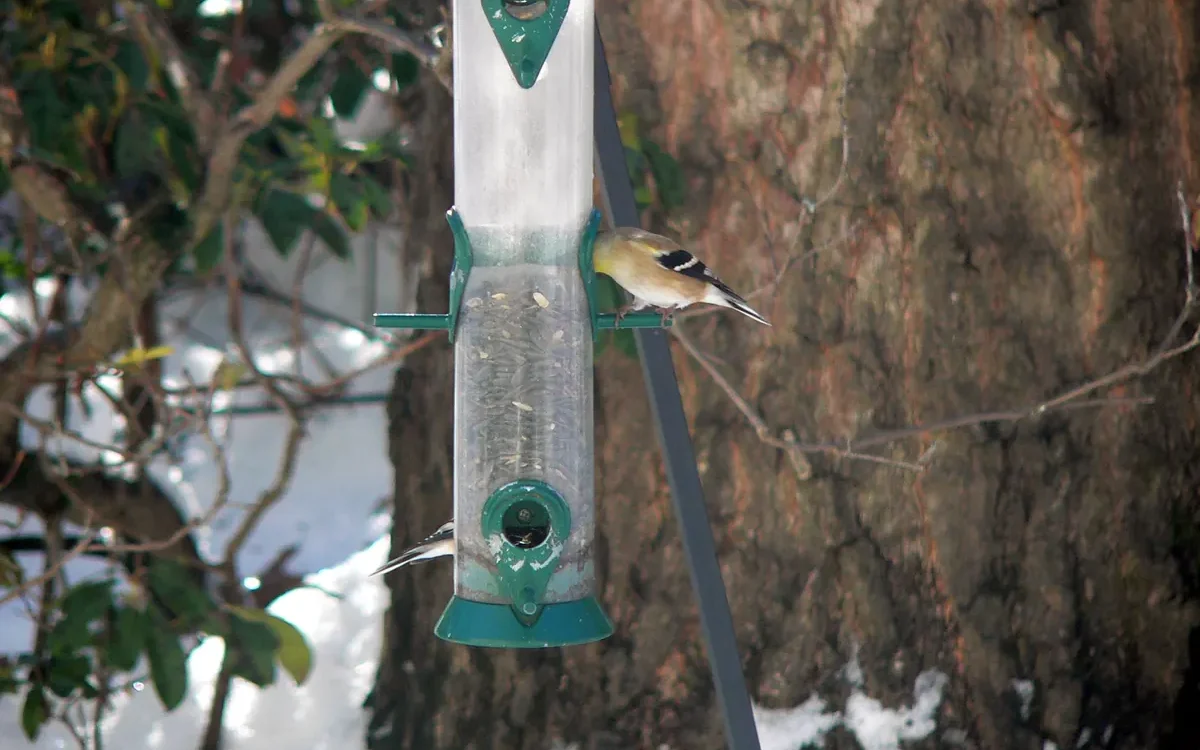
A full feeder is not always a healthy feeder. A tube feeder left uncleaned can turn into a disease hotspot within weeks — and the birds that depend on it pay the price. That is the hard truth about how to clean bird feeders — or rather, what happens when you don’t. (For the deeper story on which diseases spread at feeders and the research behind the bleach method, see our feeder hygiene guide.)
Here’s what nobody tells beginners: a dirty feeder is a disease hotspot. Moldy seed hulls, droppings caked on perches, and damp corners breed salmonella, trichomoniasis, and finch eye disease, and birds pass them to each other beak-to-perch every single day. The good news? The fix takes 20 minutes and a bucket. Here is the exact 7-step routine. A dirty feeder can also put birds off visiting at all: if birds are not coming to your feeder, dirt is one of the first things to check.
🧽 The 20-Minute Fix, Up Front
- Dirty = disease. Salmonella, trichomoniasis, and finch eye disease spread beak-to-perch daily.
- The recipe: 1 part bleach to 9 parts water, 10-minute soak — research-backed.
- Rinse like you mean it. Zero chemical smell left, or it goes back under the tap.
- Bone dry before refill. A damp feeder grows mold faster than a dirty dry one.
- At least weekly in winter. Same day each week — 20 minutes for three feeders once it’s habit. (RSPB, Oct 2026)
7 exact steps below — the routine that brought my birds back.
📋 In This Guide
New for winter 2026: the RSPB’s updated guidance
The UK’s Royal Society for the Protection of Birds (RSPB) updated its garden bird feeding advice on 30 October 2026, after research into trichomonosis — a parasite spread in saliva on shared food and water that has helped drive the UK greenfinch population down by about 65% over three decades. The new rules are simple: clean and disinfect feeders at least once every seven days; stop using traditional flat bird tables and other flat feeding surfaces, where contaminated food collects; offer only enough seed and peanuts to be eaten within one or two days, and suet within seven days; and feed the full range of foods from 1 November to 30 April, when the risk of the disease spreading is lower. BTO ornithologist Susan Jones confirmed the November-to-April window when the guidance was published. (RSPB guidance, 30 Oct 2026, via the Great Park Gazette; BTO ornithologist Susan Jones on the November feeding window.)
🦠 Why Cleaning Your Bird Feeders Matters
Birds don’t get sick from “dirty” the way we think of it — they get sick from concentrated contact. In the wild, birds spread out. At your feeder, dozens of birds rub their faces on the same few feeding ports, stand in each other’s droppings, and pick through the same damp seed. That crowding is what turns a feeder into a transmission point.
The big three feeder diseases are worth knowing by name: salmonellosis (spread through droppings), trichomoniasis (a parasite passed in saliva on shared food and water), and mycoplasmal conjunctivitis — “finch eye disease,” which causes crusty, swollen eyes. All three get worse when feeders go uncleaned, and all three decline when feeders are cleaned regularly. A filthy feeder can also quietly explain why birds suddenly stopped visiting your feeder — birds avoid feeders that smell of rot and decay.
How to Clean Bird Feeders in 7 Simple Steps
1Take the Feeder Down and Empty It Completely
Put on disposable gloves first — some bird bacteria can make humans sick too. Take the feeder down, dump every bit of old seed into the trash (never onto the ground, where it just feeds the problem), and knock out loose hulls and debris. If the seed smells musty or looks clumped, it was already growing mold — good riddance.
2Disassemble It Fully
Mold and droppings hide where you can’t see them: inside port holes, under trays, behind perches. Take the feeder apart as far as it goes — remove perches, trays, lids, and port covers. If a part won’t come off, at least make sure you can reach every surface with a brush. This single step is what separates a real cleaning from a cosmetic rinse.
3Scrub Off All Visible Debris
Before any disinfecting, dry-scrub everything with a stiff bottle brush or old toothbrush. Pay special attention to feeding ports and perches — that’s where birds rub their faces, so it’s where pathogens concentrate. Get every speck of caked seed, droppings, and webbing off. Disinfectants can’t do their job through a layer of grime, so don’t skip the elbow grease.
4Soak in a Disinfecting Solution
Here’s the step most people get wrong. Plain soap and water is fine for routine washing, but research found a diluted bleach soak more effective at removing bacteria than soap and water alone — feeders cleaned with only soap still carried enough salmonella to risk disease transmission.
My go-to recipe, straight from the Cornell Lab’s Project FeederWatch: 1 part household bleach to 9 parts water (a 10% solution), soak all parts for 10 minutes. Do it outside in a bucket, wearing gloves.
Prefer to avoid bleach? A vinegar-water soak method works as a gentler alternative — equal parts white vinegar and water, soak up to an hour. It’s less potent than bleach against heavy contamination, but fine for light, regular cleanings.
5Rinse Thoroughly — Then Rinse Again
This step is non-negotiable: rinse every part under running water until there is zero chemical smell left. Bleach residue is toxic to birds, and vinegar residue, while harmless, can put birds off the feeder. When you think you’re done rinsing, rinse once more. I hold each piece up and smell it — if I catch even a whiff of bleach, it goes back under the tap.
6Let It Air-Dry Completely
A damp feeder grows mold faster than a dirty dry one, so don’t rush this. Lay all parts on a clean towel in the sun if possible — sunlight is a natural disinfectant — and wait until everything is bone dry before reassembling. In humid weather this can take a few hours. I clean my feeders in the morning so they’re ready to hang by afternoon.
7Refill With Fresh Seed — and Clean the Ground Too
Refill with fresh seed, never the old stuff you dumped out. This is also the perfect moment to upgrade what you’re serving — I refill with the best bird seed for backyard birds I keep on hand, since fresh quality seed molds slower than cheap dusty mixes.
Then don’t forget the ground: rake or shovel up droppings, hulls, and spilled seed under the feeder. That waste layer is unhealthy for birds and pets, and it attracts rats and mice drawn to spilled seed — plus night raiders (see how I keep raccoons away from bird feeders). Project FeederWatch recommends moving feeders periodically so waste never builds up in one spot — my guide on where to place a bird feeder covers how I rotate mine. And if seed keeps ending up on the ground because birds throw seed out of the feeder, the fixes start with why they are tossing it.
Feeder Cleaning Schedule
| Feeder type | How often | Method |
|---|---|---|
| Seed / tube / hopper feeders | At least weekly in winter (more in heat or heavy use) | Disassemble, scrub, 10-min bleach soak, rinse, air-dry |
| Hummingbird feeders | Every 2–5 days / every nectar refill | Hot water + bottle brush, no soap residue; discard cloudy nectar |
| Suet feeders | At least weekly in winter | Scrape off old suet, scrub, bleach soak, rinse, dry |
| Bird baths | Weekly scrub; change water daily in winter | Scrub + 10% bleach solution, rinse well, refill with fresh water |
| Ground under feeders | Weekly | Rake/shovel droppings and hulls; rotate feeder location periodically |
My rule of thumb: if I can’t remember the last cleaning, it’s overdue. I do mine once a week — it takes 20 minutes for three feeders once it becomes a habit.
6 Common Mistakes to Avoid
- Using bleach straight from the jug. Undiluted bleach is overkill and dangerous — residue can kill birds. Always dilute 1:9 and always rinse thoroughly.
- Skipping the rinse. The most common mistake I see. If you can smell chemicals, so can the birds — and for them it’s toxic, not just unpleasant.
- Refilling while still damp. Moisture + seed = mold within days. Bone dry or don’t refill.
- Forgetting the ground below. You can sterilize the feeder perfectly and still have a disease problem if birds are foraging through droppings and moldy hulls underneath it.
- Dishwasher without checking. A hot dishwasher cycle works great — but only if the manufacturer says the feeder is dishwasher-safe. Heat warps cheap plastic and destroys wooden feeders completely.
- Seeing a sick bird and doing nothing. Puffy, crusty-eyed, or lethargic birds at your feeder are a red alert: take feeders down for at least two weeks, disinfect everything, and let the flock disperse. Doing nothing lets one sick bird infect dozens.
Key Takeaways
- Dirty feeders spread salmonella, trichomoniasis, and finch eye disease from beak to perch every day.
- Clean seed and suet feeders every two weeks (the 1st and 15th) with a 1:9 bleach soak for 10 minutes.
- Rinse every part until zero chemical smell remains — bleach residue is toxic to birds.
- Refill only when everything is bone dry — a damp feeder grows mold faster than a dirty dry one.
- If you spot a sick bird, take all feeders down for at least two weeks, disinfect everything, and rake the ground below.
Frequently Asked Questions
How often should I clean my bird feeders?
At least once a week for seed and suet feeders in winter — the RSPB’s updated guidance of 30 October 2026. More often during heat waves, heavy use, or damp weather. Hummingbird feeders need it every 2–5 days since sugar water grows bacteria fast. Bird baths: scrub weekly and change the water daily in winter. When in doubt, clean more often; there’s no such thing as a feeder that’s “too clean.”
Should I stop using a bird table?
Yes — the RSPB’s October 2026 guidance recommends hanging feeders only. Flat surfaces like bird tables and feeding trays let contaminated food and droppings collect where other birds eat them, and even daily cleaning may not remove the risk. Use tubular seed feeders or enclosed feeders designed to keep food from spilling instead.
What’s better for cleaning — bleach or vinegar?
For true disinfecting, diluted bleach wins: 1 part bleach to 9 parts water, 10-minute soak. Research shows it removes bacteria more effectively than soap and water alone. Vinegar (equal parts white vinegar and water, up to an hour soak) is a fine gentler option for light, regular cleanings — just rinse well either way.
Can I just use dish soap and water?
For a quick routine wash, yes — warm water and a drop of dish soap with a good scrub handles surface dirt. But soap alone doesn’t reliably kill pathogens; studies found salmonella surviving on feeders cleaned with only soap and water. Use soap for the scrub, then follow with a disinfecting soak for the real protection.
How do I clean a hummingbird feeder?
Take it apart completely and scrub every part with hot water and a bottle brush — no soap, or rinse extremely well, since residue contaminates nectar. Clean it every time you refill (every 2–5 days), and if the nectar looks cloudy or you see black mold spots, discard the nectar and clean immediately. Tiny port brushes or pipe cleaners reach the feeding holes.
What should I do if I see a sick bird at my feeder?
Act fast: take all feeders (and bird baths) down for at least two weeks, scrub and disinfect everything with a 10% bleach solution, and rake the ground below. Don’t try to catch or treat the bird yourself — only licensed wildlife rehabilitators can legally treat wild birds. Wear gloves handling feeders, and wash your hands after.
Can bird feeders go in the dishwasher?
Yes, on a hot cycle — but only if the manufacturer specifically says the feeder is dishwasher-safe. Many aren’t: heat warps thin plastic, melts glue joints, and ruins wooden feeders. When in doubt, hand-wash. Either way, make sure everything is fully dry before refilling.
Do I need to clean feeders in winter?
Absolutely — disease doesn’t take the winter off, and birds crowd feeders even more tightly in cold months, which increases transmission. Cold doesn’t sterilize anything. Keep your every-two-weeks rhythm year-round, and keep bird bath water fresh (or use a heater) so birds aren’t drinking from icy, contaminated basins.
The bottom line: you don’t need fancy products or a lot of time — a bucket, a brush, a 1:9 bleach soak, and 20 minutes twice a month. That’s the entire system. Since I started this routine, the sick birds disappeared from my yard, my regulars stayed all season, and I stopped dreading what I’d find clinging to the perches each morning. Your birds are worth the bucket. Cleaning keeps a sound feeder healthy, but it cannot fix a feeder that keeps breaking — that problem needs a different approach.
Plan your cleaning-and-feeding routine with the Feeding Tools planner.
Related guides: How to Clean a Hummingbird Feeder · Why Does My Bird Feeder Keep Breaking? (And How to Make It Last)

Related Articles
How to Join Project FeederWatch: Count the Birds at Your Feeder This Winter
Project FeederWatch's 40th season runs 1 Nov 2026-30 Apr 2027. Join for $18, count birds at your feeder…
Read Article
How to Feed Birds While You’re on Vacation
Your birds won't starve while you're away — feeders are only about a quarter of their winter diet.…
Read Article
How to Stop Birds Fighting at Your Feeder
One feeder is one territory, so one bully bird can own it. Spread two or three different feeders…
Read Article