Short Answer
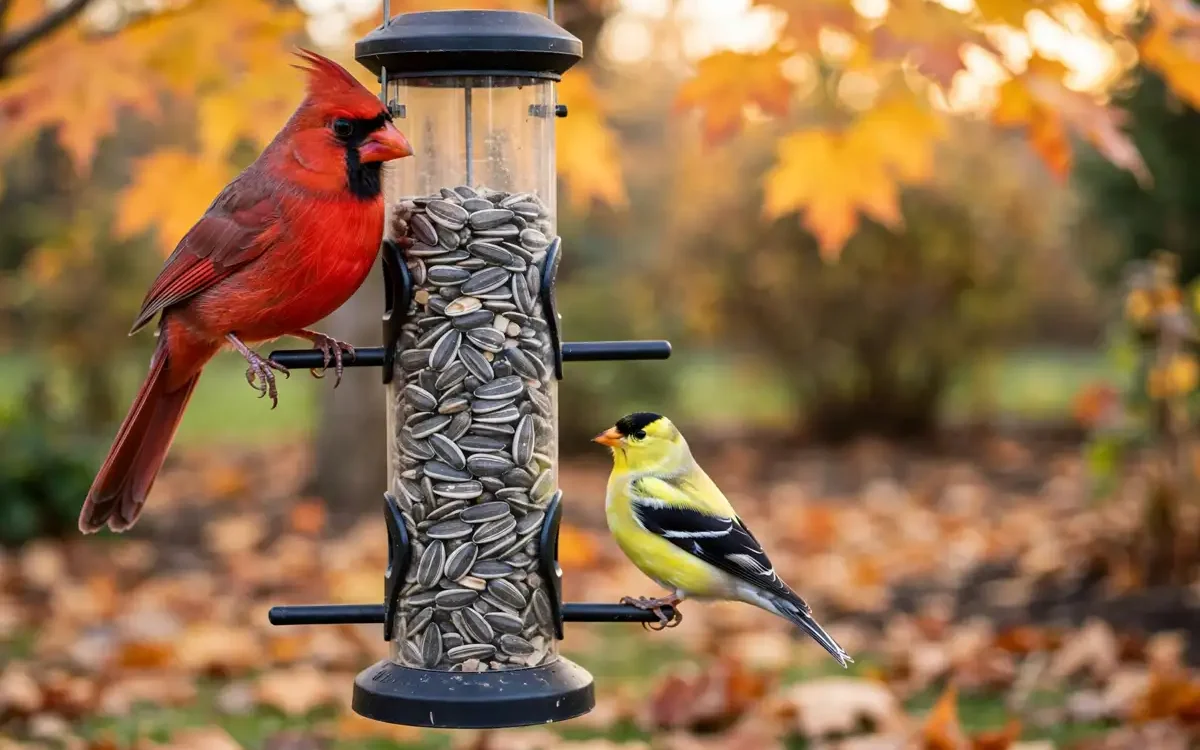
Black-oil sunflower seed is the best starting food for most yards: its thin shell suits small and large birds alike, and its kernel is rich in fat. Start with one clean tube or hopper feeder, fill it partway, and keep the seed dry. Choose hulled seed (hearts) only where shell mess is a problem, because hearts spoil faster.
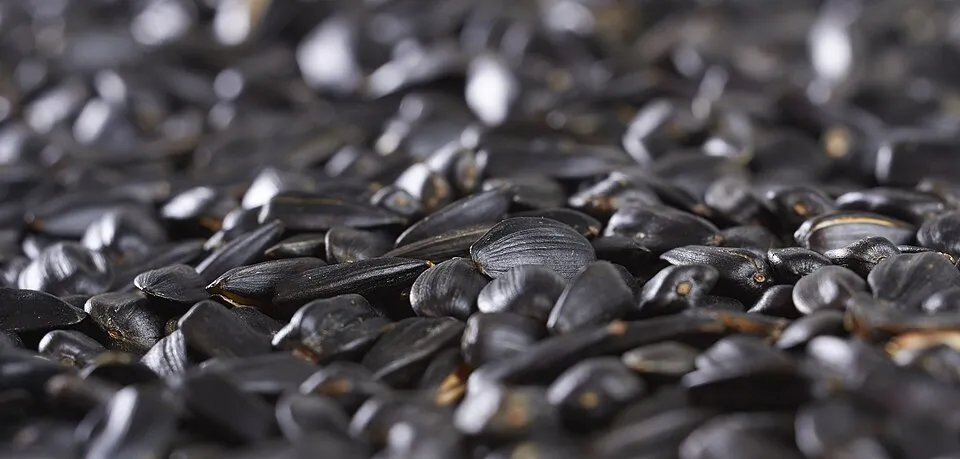
Cornell Lab calls sunflower “the seed that attracts the widest variety of birds, and so the mainstay for most backyard bird feeders.” Audubon’s winter-feeding list makes the same point, calling black-oil sunflower the “hamburger” of the bird world, because nearly every bird that stops by a feeder will eat it.
What matters is not the brand on the bag but the form of the seed. Shell thickness decides which birds can eat it, how much mess falls underneath, and how fast it spoils. Get the form right and the rest of the routine is simple.
Black oil or striped? The shell decides who can eat
Black-oil seed has a very thin shell, easy for virtually all seed-eating birds to crack, and the kernel inside has a high fat content, extremely valuable for winter birds, Cornell Lab notes. Striped sunflower seed has a thicker shell, much harder for small birds, house sparrows and blackbirds to crack. If a feeder is overrun with species that push other birds aside, switching to striped seed is one Cornell suggests.
| Form | Best for | Watch out for |
|---|---|---|
| Black-oil sunflower | A wide range of feeder birds, including small birds, in tube and hopper feeders | Shells pile up under the feeder |
| Striped sunflower | Larger birds with stronger bills, such as jays and grosbeaks | Thicker shells can be hard for small birds |
| Hulled sunflower (hearts) | Small birds, tray feeders, and yards where shell mess is a problem | Costs more, and kernels spoil faster once wet |
| Sunflower chips | Finches and other small birds, in fine-mesh feeders and trays | Small pieces can blow away or clump when damp |
When comparing bags, read the label, not just the picture. A bag may contain a large share of other grains birds toss aside. The seed bag checker in the Feeding Tools flags fillers before buying. For a full comparison with other foods, see the best bird seed for backyard birds and suet versus seed.
Sunflower seed, by the numbers
| Fact | Figure | Source |
|---|---|---|
| Fat in dried sunflower kernels, per 100 g | 51.5 g | USDA FoodData Central 170562 |
| Protein in dried sunflower kernels, per 100 g | 20.8 g | USDA FoodData Central 170562 |
| Energy in dried sunflower kernels, per 100 g | 584 kcal | USDA FoodData Central 170562 |
| Hulled hearts and chips: safe serving window | Only what birds eat in a day or two | Cornell Lab |
| Feeder types for sunflower in the shell | Tray, tube, hopper, and window feeders | Cornell Lab |
| Black-oil sunflower’s reach | “Nearly every bird that stops by your feeder will eat it” | Audubon |
Hearts and chips: less mess, shorter life
Hulled seed solves the shell problem and creates a freshness problem. Without the shell’s protection, sunflower hearts and chips quickly spoil, so Cornell Lab advises offering no more than can be eaten in a day or two. Hearts should not go in tube feeders where moisture can collect; a tray or fine-mesh feeder suits them better.
That makes hearts a good second choice rather than a default: use them where shells under a feeder are a problem, in small amounts, in a sheltered feeder, and check them often. In wet weather, skip hearts entirely until the feeder can stay dry.
One feeder, near cover, part-filled
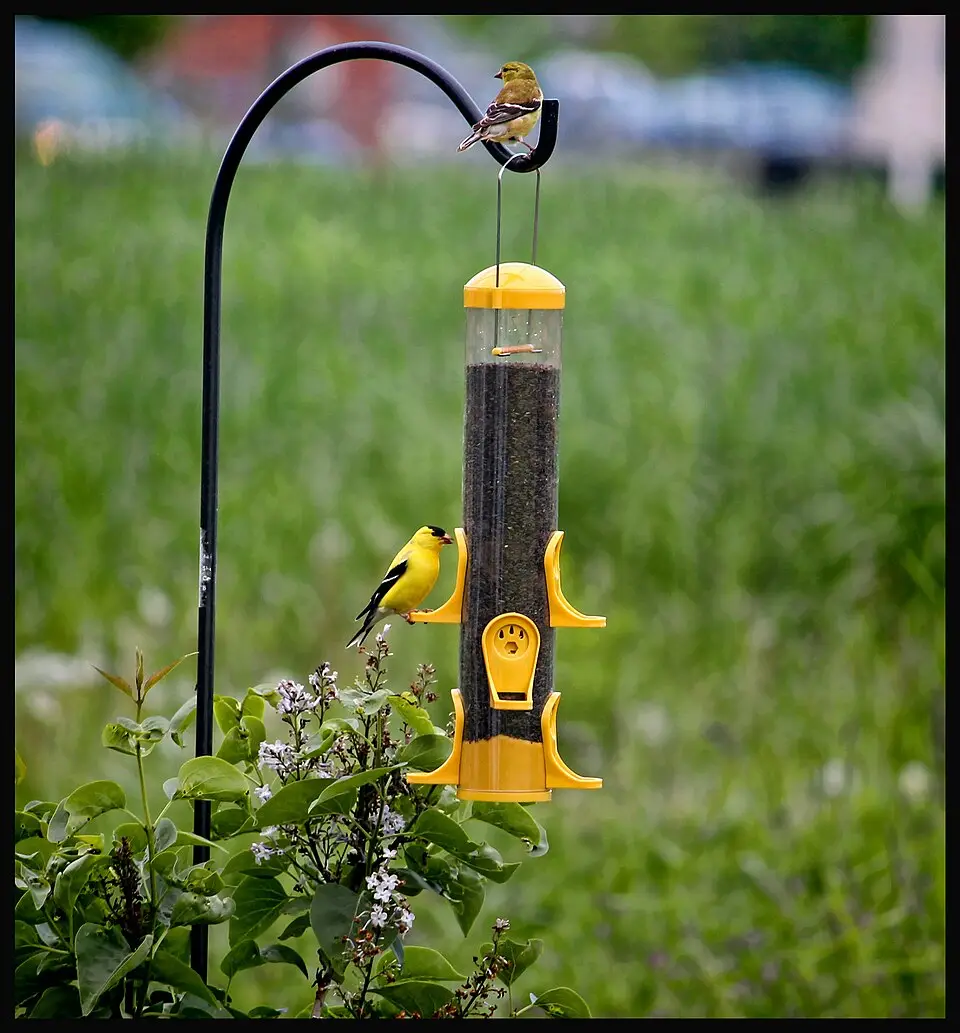
Sunflower seed works in tube, hopper, and tray feeders. A tube feeder suits finches and chickadees, and keeps seed fairly dry with a rain guard. A hopper feeder holds more seed and suits cardinals. A tray feeder suits ground-feeding visitors and hulled seed, but needs more frequent cleaning, as seed sits open to rain.
Put the feeder where it can be seen, where birds have nearby cover to retreat to, and where cats cannot hide close by. A spot near shrubs or a small tree often works well. Avoid placing a feeder right against a large window, and avoid a spot where seed falls into a path or flower bed. More detail is in the guide on where to place a bird feeder in your backyard.
Start with one feeder, not three. Fill it partway and watch for a few days. If seed stays wet or draws squirrels, change placement or amount before buying another feeder. A baffle can help, as explained in the guide on how to keep squirrels away from bird feeders. Clean feeders regularly and let them dry fully before refilling; see how to clean bird feeders.
Which birds actually show up
Cardinals suit sunflower seed well, especially in a hopper feeder with a comfortable perch: see how to attract cardinals to your backyard. Goldfinches often prefer a tube or fine-mesh feeder: see how to attract goldfinches to your backyard and how to attract finches to your backyard.
Chickadees often take one seed, fly to a branch, crack it, and return, and they suit tube and hopper feeders: see how to attract chickadees to your backyard. Woodpeckers may visit sturdy feeders, and blue jays may carry seeds away to store them: see how to attract woodpeckers to your backyard and how to attract blue jays to your backyard.
If birds are not coming, do not assume the seed is wrong. Check freshness, cleanliness, placement, and predators first. The guide on why birds are not coming to your feeder walks through those checks in order.
The mistake that wastes the most seed
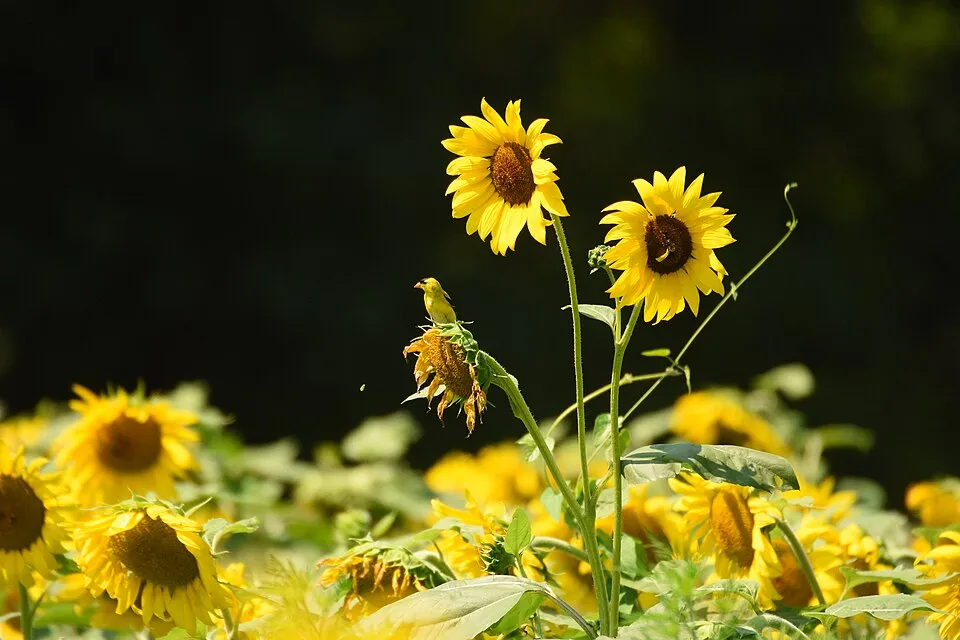
The costliest sunflower mistake is buying the biggest bag and filling the feeder to the top. A large bag can go stale before it is used, and a full feeder can hide damp seed at the bottom. Shells pile up underneath, block drainage, and hide old seed. The fix: buy only what can be used while still fresh, fill partway, refill more often, and clear the ground under the feeder regularly.
Storage follows the same rule. Keep seed in a cool, dry place, in a sealed container off a damp floor. Before refilling, check that seed looks dry, smells fresh, and pours freely. If it smells musty or clumps together, do not offer it. For containers and amounts, see how to store bird seed.
Sunflower through the seasons
In winter, sunflower seed earns its place: the high-fat kernel helps birds through long cold mornings, when natural food is scarce. For cold-weather planning, see the best bird food for winter. In warm weather, offer smaller amounts so seed does not sit too long in heat or damp, and check feeders after rain. In autumn, the same dry-and-sealed storage rule applies, with extra care after wet spells. Fresh seed matters more than a large quantity in every season.
Frequently asked questions
What is the best sunflower seed for backyard birds?
For most yards, black-oil sunflower seed is the best starting choice: its thin shell suits small and large birds alike, and its kernel is rich in fat. If shells under the feeder are a problem, hulled sunflower seed (hearts) is a good alternative, offered in small amounts.
Do goldfinches eat sunflower seeds?
Yes. Goldfinches eat sunflower seed, and they do best with hulled seed or chips in a tube or fine-mesh feeder. They also visit feeders with black-oil seed when they can perch comfortably and the seed stays dry.
Can I put sunflower seeds in a tube feeder?
Yes. Black-oil sunflower seed works well in most tube feeders. Hulled seed and chips suit a fine-mesh tube or a tray feeder better, because small pieces can fall through wide ports.
How do I keep sunflower seeds from going bad?
Buy a modest amount, store it in a sealed container in a cool, dry place, and fill feeders partway so seed does not sit for long. After rain, remove damp seed, let the feeder dry, and refill with fresh seed.
Will sunflower seeds attract squirrels?
Yes, squirrels visit sunflower seed feeders. A baffle, a feeder placed away from easy launch points, and small amounts at a time all help, although no feeder is fully squirrel-proof. Safflower seed is an alternative many squirrels avoid.
Sources: Cornell Lab, Feeding Birds: a Quick Guide to Seed Types; Audubon, 11 Tips for Feeding Backyard Birds and Top 10 Foods for Winter Bird Feeding; USDA FoodData Central 170562.
Related guides: White Proso Millet: The Small Seed Ground-Feeding Birds Actually Eat · Safflower Seed: The Squirrel-Resistant Seed Cardinals Love

Related Articles
White Proso Millet: The Small Seed Ground-Feeding Birds Actually Eat
White proso millet suits ground-feeding birds best: sparrows, juncos, doves, towhees, and quail. Learn which millet to buy,…
Read Article
Safflower Seed: The Squirrel-Resistant Seed Cardinals Love
Safflower seeds are a squirrel-resistant feeder food loved by cardinals, chickadees, and finches. Learn which birds eat them,…
Read Article
Peanuts at the Feeder: Whole, Shelled, or Butter — What Each Bird Can Actually Use
Peanuts for backyard birds: which form to buy, which birds love them, and the salted, stale and mouldy…
Read Article