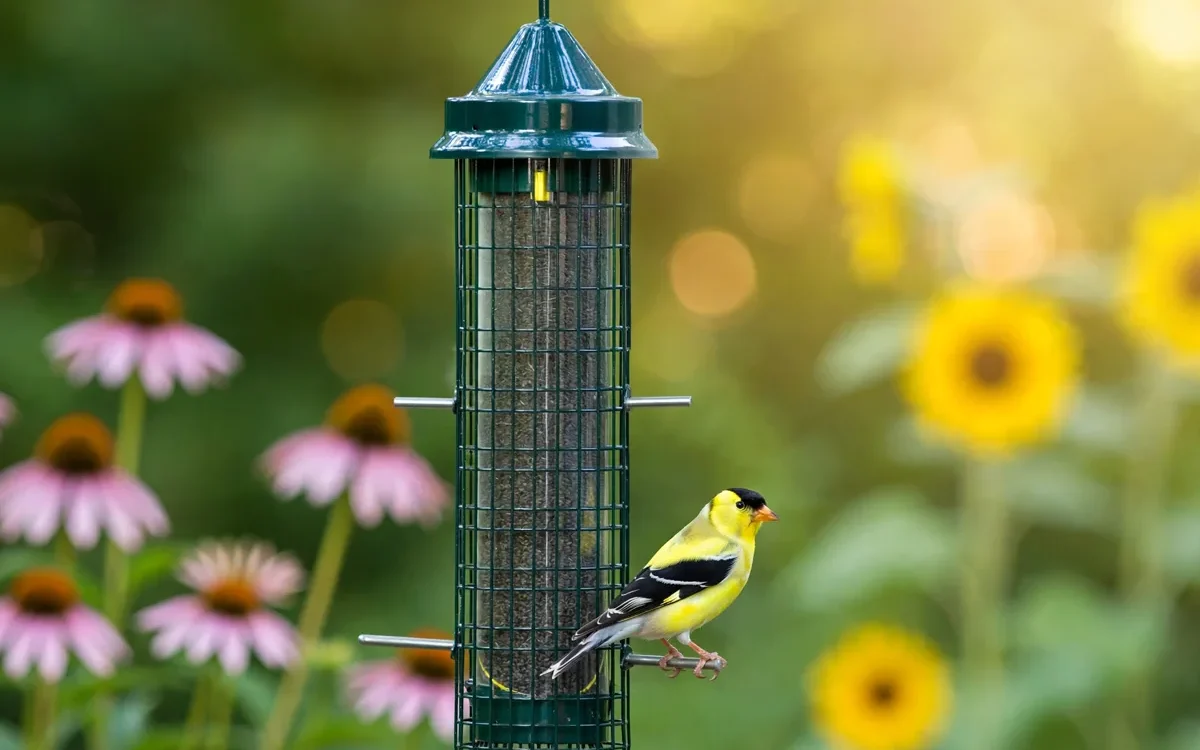
Every backyard bird lover remembers the first flash of bright yellow at the feeder, a tiny sunbeam with wings calling po-ta-to-chip to its friends. American goldfinches are among the most cheerful birds you can host — and also among the pickiest. They are nomadic, quick to abandon a feeder that does not meet their standards, and they eat like no other bird in your yard.
Short Answer
offer fresh nyjer (thistle) seed in a small-port tube or mesh sock feeder, back it up with black-oil sunflower seed, add an upside-down feeder to exclude bullies, leave seed-head plants standing through winter, offer shallow moving water, and give nomadic flocks 2–4 weeks to find you.
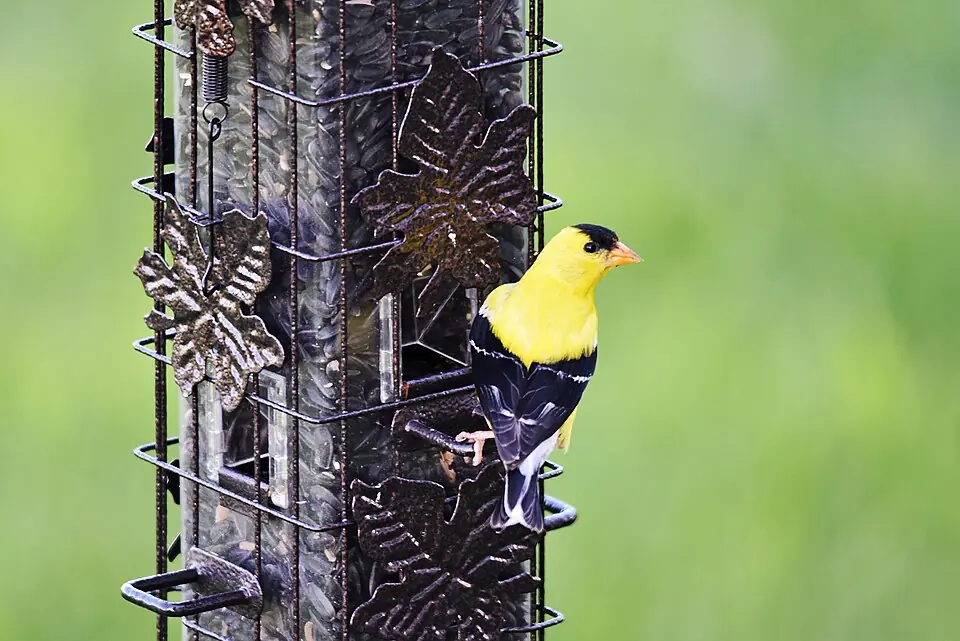
A goldfinch, by the numbers
Goldfinches run on a different calendar from every other bird in the yard, and the numbers explain why:
| Fact | What the research says | Source |
|---|---|---|
| Diet | Seeds almost exclusively — one of the strictest vegetarians in the songbird world | Cornell Lab; Audubon |
| Nestlings | Fed seeds, not insects — almost unheard of among songbirds | Audubon |
| Nesting season | July–August, one of the latest starts of any North American songbird | Audubon |
| Moult | Body feathers replaced twice a year — bright yellow in summer, dull olive in winter | Audubon |
| State bird | New Jersey, Iowa, and Washington | Cornell Lab |
| Feeder favourites | Sunflower seed and nyjer above all else | Cornell Lab |
First, goldfinches nest late — July or August — timing their chicks to the peak of thistle and wildflower seed season, and lining nests with thistle down. Second, they moult twice a year, so the dull olive bird at your winter feeder is the same animal as July’s lemon-bright male.

Fresh nyjer or nothing
If there is one food that defines how to attract goldfinches, it is nyjer (sometimes sold as thistle) seed. These tiny black seeds are a goldfinch’s absolute favourite.
But nyjer goes stale. It is an oily seed, and once the oils turn, goldfinches will not touch it — the number one reason people say “I put out nyjer and nothing came.” Buy it in small bags, store it somewhere cool and dry, and sniff before you fill: fresh nyjer smells faintly nutty, stale nyjer smells like nothing at all. If your feeder has sat untouched for a month, dump the old seed and start fresh.
Sunflower is the safety net
Goldfinches crack sunflower easily, and hulled sunflower chips suit their small beaks — with no shells, there is no mess under the feeder either.
What you should not serve is the cheap mixed bag from the hardware store. Filler seeds like cracked corn, milo, and wheat are ignored by goldfinches and rot on the ground, which only invites the birds you do not want. Our breakdown of the best bird seed for backyard birds covers which bags are worth your money and which are mostly filler.

Feeders sized for a tiny beak — including one upside down
Goldfinches have small, pointed bills designed for extracting tiny seeds, and standard feeder ports are simply too big for the job. Pour nyjer into a regular tube feeder and half of it ends up on the ground. You need a tube feeder with small, nyjer-specific ports or a mesh sock feeder that lets goldfinches cling and pick seed straight through the fabric.
Then add an upside-down feeder. Goldfinches are natural acrobats — in the wild they hang upside down from seed heads all the time — so a feeder with ports below the perch, forcing birds to flip over to eat, is pure goldfinch paradise. Most other feeder birds cannot be bothered, which means your goldfinches get the whole thing to themselves. Heavier birds like starlings and grackles are terrible at clinging upside down, so the same feeder doubles as bully-bird protection. If pushy birds are a problem, our guide to keeping starlings away from bird feeders pairs well with this setup.
Leave the garden messy on purpose
Feeders bring goldfinches in, but plants make them stay. In the wild, goldfinches feed heavily on the seeds of composite flowers — the daisy family — so the best long-term investment is a patch of seed-producing natives: purple coneflower, black-eyed Susan, sunflowers, cosmos, asters, and real thistle. Cornell’s advice matches: plant native thistles and other composite plants, as well as native milkweed.
The critical part is what you do in fall: nothing. Leave the dried seed heads standing through autumn and winter instead of cutting everything back. Those brown, “messy” stalks are a goldfinch buffet from October through March, and they double as nesting material — thistle down lines the late-summer nest.
Water, shallow and moving
Goldfinches drink a surprising amount of water for their size, and a good water source can turn a flyover into a regular stop. The key word is shallow: these are tiny birds, and they prefer baths no more than one to two inches deep with a gently sloping edge they can wade into. Add movement — a simple dripper or small solar fountain creates sound and sparkle that birds notice from far away. Keep the bath clean, and consider a heater in freezing weather; winter water is scarce, and birds remember which yards provide it. Put the bath within sight of the nyjer station so goldfinches find both in one trip.
Think like a flock
Goldfinches are nomadic — a flock follows the seed crops, and your yard is one stop on a wandering route. It can take two to four weeks for scouts to find a new feeder, and the flock may vanish for a stretch even after they do. That is normal. Keep the seed fresh and the feeders full, and they will be back.
When they do come, they come in numbers: hang two nyjer feeders instead of one, spaced a few feet apart, to cut down on squabbling. And keep feeders clean — nyjer ports clog with oily dust, and disease spreads fast in a flock species. Brush the ports weekly, rake the ground under the feeders (Cornell’s safe-feeding guidance stresses clean ground to protect goldfinches from contagious disease), and follow the full routine in our guide to cleaning bird feeders.
The mistake: buying nyjer in bulk
The single most expensive goldfinch mistake is the giant bag. Nyjer bought in bulk and left in a hot garage for six months is money wasted — by the time it reaches the feeder, the oils have turned and the birds will not touch it. Buy small, store cool and dry, and refresh feeders every few weeks. The same logic applies to the garden: deadheading every flower in October throws away winter food and nesting material, so leave at least one patch standing.
Winter is when goldfinches get loyal
Many goldfinches stay through winter — they just do not look like the birds you fed in July. After the autumn moult, males fade to a soft olive-brown, so the flock at your January feeder is easy to mistake for some other bird. They are not gone: they are your summer goldfinches, and winter goldfinches are some of the most loyal feeder birds you will ever host. Keep nyjer and sunflower out through the cold months, keep the water from freezing, and leave those seed heads standing.
Quick answers
What is the best food to attract goldfinches? Fresh nyjer (thistle) seed first, followed closely by black-oil sunflower seed and hulled sunflower chips. Serve nyjer in a small-port tube feeder or mesh sock, keep it fresh, and avoid cheap mixes with corn and milo filler.
Why aren’t goldfinches coming to my nyjer feeder? The three most common reasons are stale seed, the wrong feeder (ports too big for tiny bills), and timing — nomadic flocks can take two to four weeks to discover a new feeder.
Do goldfinches use birdhouses? No. American goldfinches do not use nest boxes at all. They build open cup nests in shrubs and trees, usually in July or August, using plant fibres and thistle down. To help them nest, plant dense shrubs and leave thistle and milkweed standing.
Start with one fresh bag of nyjer and a sock feeder this weekend. Then plan the seed-head garden with the Feeding Tools planner. For the full beginner setup behind these tips, start with our guide on how to feed backyard birds.
Sources: Cornell Lab of Ornithology, American Goldfinch; National Audubon Society, 10 Fun Facts About the American Goldfinch.
Related guides: Backyard Bird Species Guides · How to Attract Finches to Your Backyard (Food, Feeders & Tips) · How to Attract Chickadees to Your Backyard (A Small-Bird, Big-Personality Guide)

Related Articles
How to Help Birds in a Winter Storm
Fill your feeders before the storm, offer suet and sunflower seed, and keep water open — a small…
Read Article
Do Birds Use Birdhouses in Winter?
Yes — chickadees, bluebirds, titmice, wrens and nuthatches roost in birdhouses on cold nights. Clean yours out this…
Read Article
What Do Juncos Eat in Winter? (And How to Attract Them to Your Feeder)
In winter, juncos eat seeds — almost nothing else. White millet on the ground is their first choice.…
Read Article