Short Answer
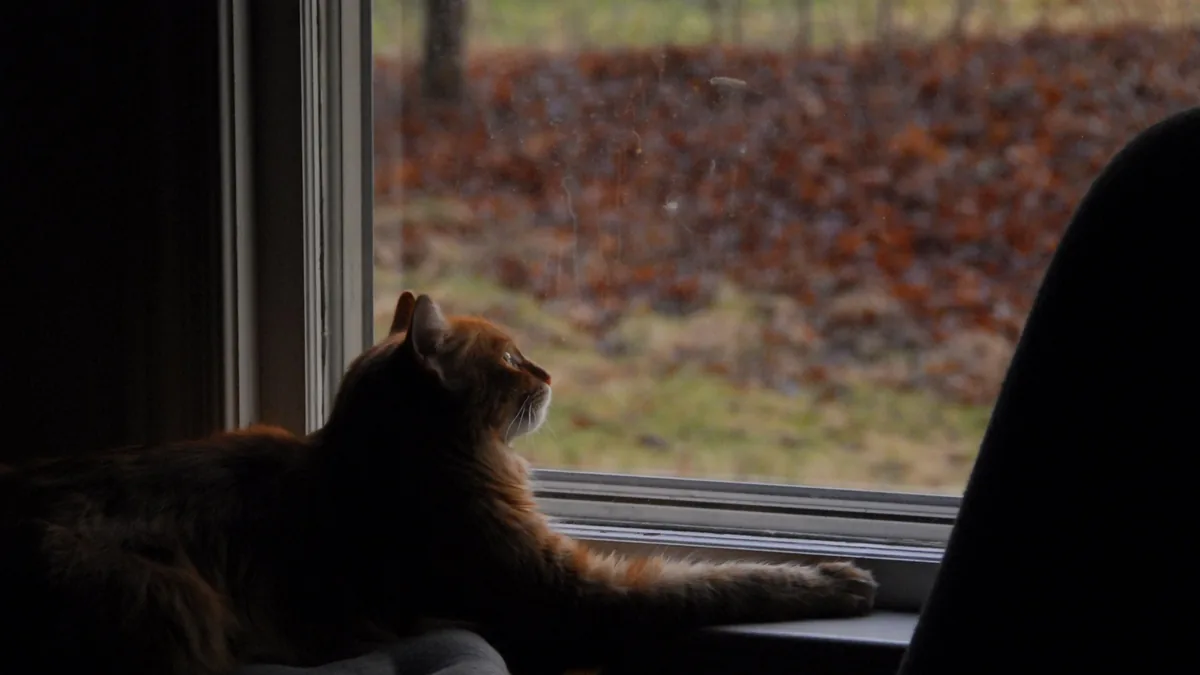
Cats kill an estimated 2.4 billion birds a year in the US, and a full food bowl does not switch off the hunting instinct. The humane fixes are design, not conflict: feeders 5–6 feet high with open ground around them, no ambush cover close by, and cats kept indoors or in a catio. A collar cover that blocks the pounce helps far more than a bell; mothballs and chemicals never belong near a feeder.
Free-roaming cats are the largest human-caused threat to birds in the United States — larger than window strikes, cars, or pesticides. It is a design problem: a feeder in the open, at the right height, with the right cover at the right distance, is a hard place for a cat to hunt. A feeder tucked against a bush at knee height is a trap.
The toll, by the numbers
A landmark 2013 study by researchers at the Smithsonian Conservation Biology Institute and the US Fish and Wildlife Service, published in Nature Communications, estimated that free-ranging domestic cats in the US kill 1.3 to 4.0 billion birds a year, with 2.4 billion as the central estimate — and 12.3 billion small mammals on top of that. The American Bird Conservancy calls cat predation the largest human-caused mortality threat to birds, and notes at least 40 bird species have been driven to extinction in the wild due, at least in part, to cats.
| The cat toll, by the numbers | Figure |
|---|---|
| Birds killed by cats in the US each year | About 2.4 billion (range 1.3–4.0 billion) |
| Small mammals killed each year | About 12.3 billion |
| Share of bird kills by unowned cats | 69% |
| Bird species driven to extinction, cats partly responsible | 40 or more |
| Average lifespan, indoor cat | 10–15 years |
| Average lifespan, outdoor cat | 2–5 years |
Sources: Loss, Will and Marra (2013) via the American Bird Conservancy; lifespan figures from the University of California, Davis, School of Veterinary Medicine.
Start with the feeder, not the cat
The cheapest fix costs nothing. Mount feeders on a pole 5–6 feet high, with 10 or more feet of open space around them. A cat hunts by concealment; open ground strips that away. Ground-feeding areas follow the same rule: scatter seed in the open, never against dense shrubs where a cat can sit unseen.
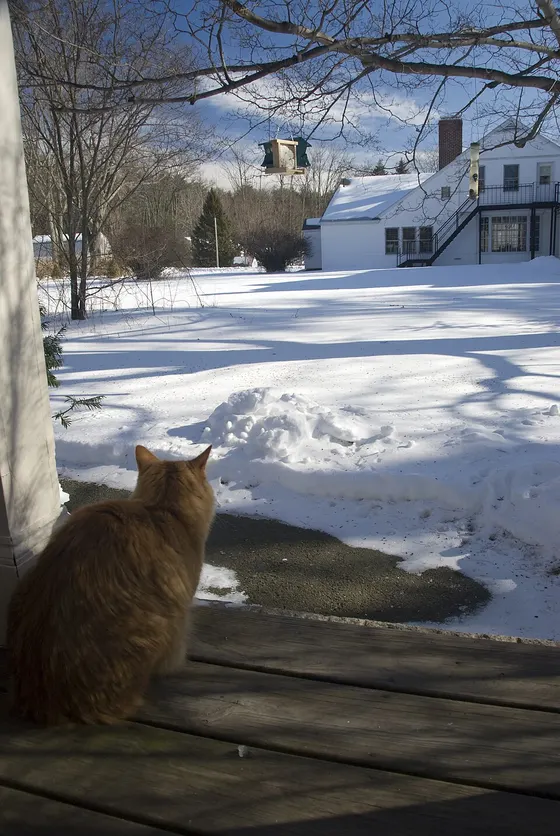
Height alone is not enough if the feeder hangs over a bush. A cat that cannot reach the feeder can still wait underneath it, where birds drop to pick up spilled seed. Sweep up spilled seed regularly too — it also keeps rats and mice away, as covered in the guide to keeping rats and mice away from bird feeders.
Trim the ambush, keep the escape
Cats need low cover within pouncing distance — roughly 10 feet. Trim low shrubs and dense ground cover inside that radius around feeding areas. But do not clear everything: birds need escape cover too. Keep taller shrubs and dense planting at 10–15 feet from the feeder — close enough for a startled bird to dive into, too far for a cat to launch from. No hiding place near the food; a safe place a short flight away. The feeder placement guide covers the same distances in detail.
Containment is the only near-total fix
Every other method reduces kills. One method nearly ends them: keeping cats indoors, or giving them a secure outdoor enclosure — a catio. The University of California, Davis, School of Veterinary Medicine puts the average indoor cat’s lifespan at 10–15 years, against 2–5 years for an outdoor cat. Traffic, disease, fights and predators cut outdoor lives short — and the same roaming that shortens a cat’s life puts birds at risk.
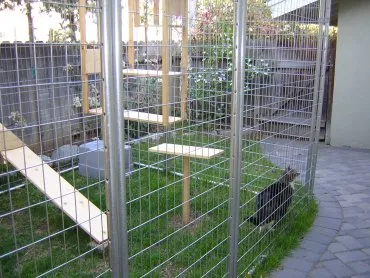
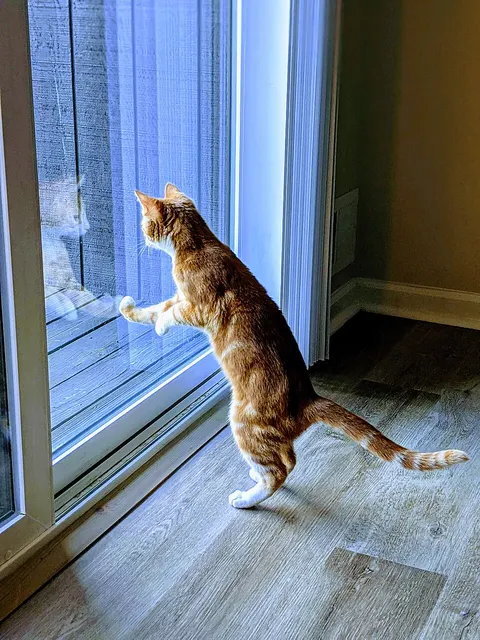
A catio can be as simple as a mesh enclosure on a patio with a shelf and a shaded corner. For indoor cats, a window perch, daily play, and a scratching post give the hunting instinct its outlet on a toy, not a fledgling.
Bells help a little; a collar cover helps a lot
A well-fed cat still hunts: hunting is instinct, not hunger, and a fed cat simply eats less of what it catches. A bell is not a solution either. In a UK trial of 89 cats (Nelson et al., 2005), bells cut the birds brought home by 41% — useful, but most kills still happened, because cats learn to stalk without ringing the bell.
The stronger device is a collar cover: a light neoprene flap, sold as a CatBib, that hangs from the collar and interferes with the pounce. In a controlled trial at Murdoch University in Perth, Australia, with 56 known hunting cats (Calver et al., 2007, published in Biological Conservation), the CatBib stopped 81% of cats from catching any birds at all, and adding a bell gave no extra benefit. The Conservation Evidence summary of the trial records both results. For a neighbor’s cat that cannot be contained, gifting a CatBib is a friendly, concrete ask.
Sprinklers, fences, and the neighbor conversation
Motion-activated sprinklers startle cats without harming them and work around the clock; aim them at the approaches to the feeder, not at the feeder itself. Roller-bar or angled-mesh fence toppers keep cats in or out, and harness walks give a cat supervised outdoor time.
Most cat owners genuinely do not know the scale of the toll. Lead with a shared love of animals, share the 2.4-billion figure briefly, then offer solutions — catio ideas, a gifted CatBib — rather than demands. Accusation hardens positions; collaboration changes behavior.
The mistake that hands cats the advantage
The most common error is also the most natural one: placing the feeder where it looks good to people, tucked against a hedge or dense shrub, with seed scattered beneath it. Birds feed with their backs to the cover, the cat sits unseen a few feet away, and the pounce is over before the bird looks up. Move the feeder into the open, even if the new spot looks less picturesque, and keep escape cover at 10–15 feet rather than arm’s length.
One warning: never use mothballs or chemicals to repel cats. Mothballs are toxic to birds, pets, and children, and they are registered pesticides whose labels permit use only in sealed indoor containers. Using them outdoors violates the label — and under federal pesticide law, the label is the law. The University of Florida’s extension service (EDIS PI289) states it plainly: outdoor use is illegal. Stick to physical and behavioral deterrents.
Spring is the season to be strictest
Late spring is the highest-risk time of the year. Fledglings leave the nest before they can fly well and spend days on the ground, where a cat needs no climbing skill at all. Dawn and dusk, when cats hunt most, are the worst hours. Keeping cats indoors through the nesting season — and feeders in the open all year — protects birds at their most vulnerable.
Quick answers
How many birds do cats kill each year?
The Smithsonian Conservation Biology Institute and the US Fish and Wildlife Service estimate free-ranging domestic cats kill 1.3–4.0 billion birds annually in the US, about 2.4 billion as the central estimate — the top human-caused threat to birds.
Do bells on cat collars prevent hunting?
Only modestly. In a UK trial, bells cut the birds cats brought home by 41%. A CatBib collar cover performed far better, stopping 81% of cats from catching birds in a controlled trial. Keeping cats indoors outperforms both.
How can a neighbor’s cat be kept out of the yard?
Combine deterrence with diplomacy: motion-sensor sprinklers, cat-proof fence toppers, and a friendly conversation offering solutions — catio ideas, or a gifted CatBib. Never trap or harm the cat; it is ineffective and poisons the relationship.
Is it safe to use mothballs or chemicals to repel cats?
No. Mothballs are toxic to birds, pets, and children, and their labels permit use only in sealed indoor containers — outdoor use violates the label and is illegal. Use physical and behavioral deterrents instead.
Design for both: contain the cats, open up the sightlines, and the feeder becomes a safe haven. Plan a cat-safe setup with the Feeding Tools planner, and see the bird bath placement guide for the same rules applied to water.
Related guides: How to Keep Raccoons Away From Bird Feeders · Squirrel-Proof Bird Feeders: Baffles, Placement, and the Safflower Switch

Related Articles
How to Join Project FeederWatch: Count the Birds at Your Feeder This Winter
Project FeederWatch's 40th season runs 1 Nov 2026-30 Apr 2027. Join for $18, count birds at your feeder…
Read Article
How to Feed Birds While You’re on Vacation
Your birds won't starve while you're away — feeders are only about a quarter of their winter diet.…
Read Article
How to Stop Birds Fighting at Your Feeder
One feeder is one territory, so one bully bird can own it. Spread two or three different feeders…
Read Article