
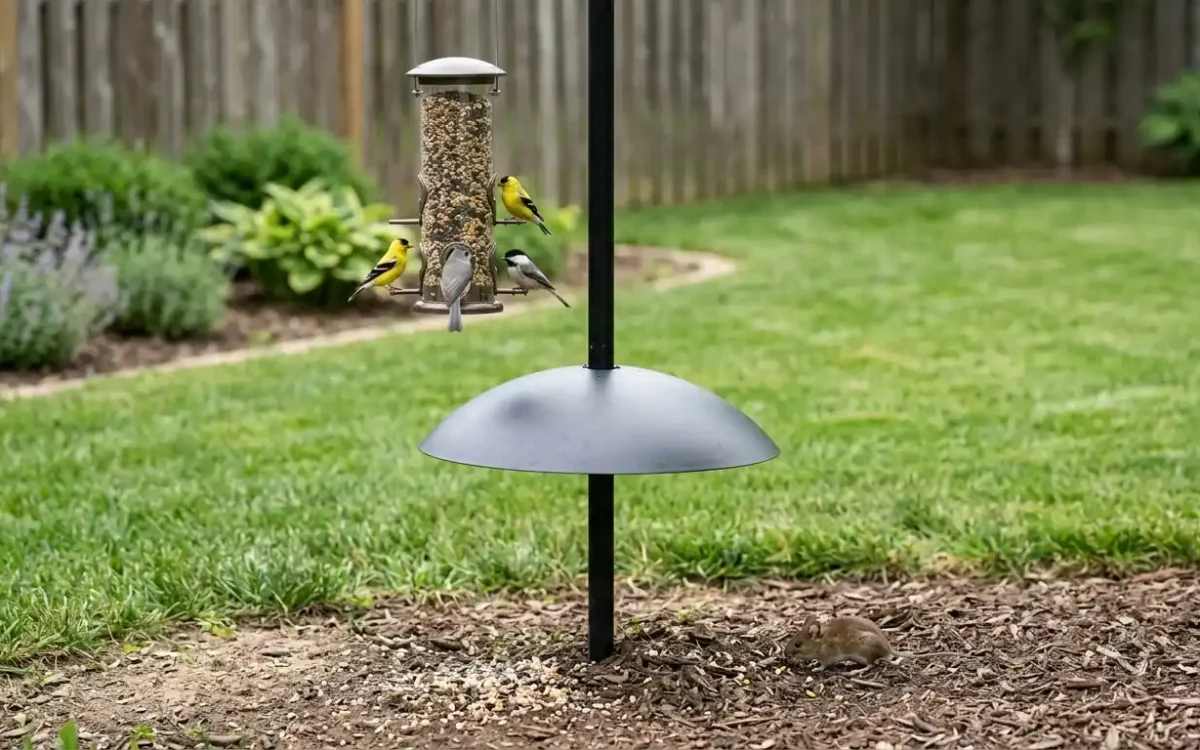
Nobody sets out to feed rats. Yet a feeder that’s been up for a few weeks without much thought can quietly turn into exactly that. Figuring out how to keep rats and mice away from bird feeders comes down to understanding why they show up in the first place, then removing that reason rather than chasing them off after the fact. This guide covers what actually works, based on how these animals behave rather than guesswork, and where the effort genuinely pays off.
Do Bird Feeders Attract Rats to Your Yard
Yes, plainly and directly. Any feeder scatters some seed on the ground, either from birds knocking food loose while feeding or from a feeder itself leaking around a worn seam. That scattered seed is exactly the easy, reliable food source rats and mice are built to find, often within days of a feeder going up in a new spot.
Rats and mice aren’t picky about the yard itself — they’re drawn specifically to consistent food and nearby shelter, both of which a typical feeding station can accidentally provide without anyone realizing it until the problem is already well underway.
Best Bird Feeder to Prevent Rodents
A weight-sensitive feeder for rats works on the same principle used against squirrels, and for good reason — rats are close enough in weight to squirrels that a mechanism designed to close feeding ports under a squirrel’s weight does the same job against rats. Mice are light enough to slip past most weight triggers, so a secondary approach still matters for them specifically.
Our guide on how to keep squirrels away from bird feeders covers baffle placement and pole height in detail, and almost everything in it applies directly here, since the physical barriers that stop a squirrel from climbing also stop a rat with very little extra effort required.
How to Stop Rats Climbing a Bird Feeder Pole
Rats and mice are genuinely capable climbers, comfortable on wood, brick, and even rough stone surfaces, which rules out a lot of assumptions people make about “high enough” being automatically safe. A smooth metal pole is significantly harder for them to grip than a wooden post, and adding a baffle removes most of the remaining opportunity.
Keeping a feeder pole at least ten feet from trees, fences, or anything else a rodent could use as a launch point matters just as much here as it does for squirrels, since rats can leap several feet horizontally without much trouble.
Removing Nearby Shelter Matters Just as Much
Food alone doesn’t keep rodents around for long — shelter is the other half of the equation. Dense ground cover, woodpiles, or dense shrubs positioned too close to a feeder give rats and mice somewhere safe to retreat to between feeding trips, which encourages them to settle in rather than pass through.
Trimming back low vegetation and keeping a clear, open buffer zone around the base of a feeder removes that sense of safety, making the area noticeably less appealing even if some spilled seed is still present.
Storing Bird Seed to Prevent a Mice Infestation
The problem doesn’t always start outside. Storing bird seed to prevent a mice infestation indoors matters just as much as anything happening around the feeder, since a paper or thin plastic bag left in a garage or shed is an easy target for mice to chew through.
A sealed metal or heavy-duty plastic container keeps stored seed completely inaccessible, removing an indoor food source that could otherwise draw rodents into a garage or storage area long before they ever make it to the yard itself.
No-Mess Bird Seed for Rodent Control
Switching to no-mess bird seed for rodent control addresses the problem at its source rather than trying to block access after the fact. Hulled sunflower hearts, shelled peanuts, and similar no-shell options leave almost nothing behind for a bird to discard, which means far less waste accumulating on the ground below.
Our full breakdown in best bird seed for backyard birds covers which seed types minimize this kind of ground debris, which matters here specifically because less mess genuinely means less reason for rodents to stick around in the first place, rather than just less reason to notice them.
Cleaning Up Spilled Seed: The Root Cause
How to clean up spilled bird seed to prevent rats is really the single most impactful habit in this entire guide. A quick sweep or light raking under the feeder every few days removes the food source before it has a chance to become a reliable meal for anything nocturnal.
A catch tray mounted beneath the feeder makes this dramatically easier, since it collects dropped seed in one contained spot rather than letting it scatter across the ground. Regular feeder upkeep matters here too — our guide on how to clean a hummingbird feeder covers cleaning habits that apply to keeping any feeding station tidy, not nectar feeders alone, and the same weekly rhythm works well for seed feeders too.
Natural Ways to Repel Mice From Bird Feeders
Among the more effective natural ways to repel mice from bird feeders is a light dusting of cayenne pepper mixed into seed, or a capsaicin gel applied to the pole itself. Birds can’t taste the heat the way mammals do, so it has no effect on them while genuinely discouraging rodents after a try or two.
Peppermint oil is another option worth trying, applied around the base of the pole rather than near the feeder itself. It won’t solve a serious infestation on its own, but combined with cleanup and proper feeder placement, it adds one more layer of deterrence without introducing anything harmful into the birds’ food.
What Also Works Against Squirrels Works Here Too
Since rats are close in size and weight to squirrels, most squirrel-deterrent methods carry over directly:
| Method | Works on Squirrels | Works on Rats |
|---|---|---|
| Pole baffle | Yes | Yes |
| Weight-sensitive feeder | Yes | Yes |
| 10-foot distance rule | Yes | Yes |
| Cayenne-treated seed | Yes | Partial (less effective on mice) |
Mice are the exception in most cases, since their small size lets them bypass weight-based defenses that work well against larger animals.
While comparing several sources for this guide, the same pattern kept showing up regardless of which site or forum it came from: nearly every method recommended for keeping squirrels off a feeder was also listed as effective against rats, almost word for word in some cases.
That overlap wasn’t something any single source pointed out directly, but noticing it while cross-checking advice made the whole topic feel far less complicated than it first seemed. Solving one problem, it turns out, solves most of the other by accident — which is honestly a relief for anyone already managing a squirrel-proofed setup and dreading a second, entirely separate project.
Frequently Asked Questions
Do bird feeders attract rats to your house?+
They can, especially if spilled seed is allowed to accumulate near the house or close to potential entry points. Keeping feeders a reasonable distance from the home and staying on top of cleanup reduces this risk significantly.
Should I bring my bird feeder in at night?+
It can help, since rats and mice are primarily nocturnal. Bringing feeders in after dusk and putting them back out in the morning removes easy access during the hours rodents are most active.
Can spicy bird seed keep rodents away?+
Yes, to a meaningful degree. Cayenne or capsaicin-treated seed is genuinely unpleasant to rodents while having no effect on birds, though it works better as one part of a broader approach than as a standalone fix.
Is it safe to compost spilled bird seed?+
It’s generally better avoided in an open compost pile, since it can attract the same rodents you’re trying to discourage. Sweeping spilled seed into a sealed bin or trash is the safer option.
How do I know if rats are nesting near my feeder?+
Small burrow holes near the base of a pole, gnaw marks on nearby wood, and droppings scattered close to the feeding area are the most common signs worth watching for.
When did you last check under the feeder?
Most rodent problems build up gradually, not overnight, which means a quick look at the ground below a feeder often reveals the issue before it becomes a real one. Keeping rats and mice away from bird feeders usually starts there — a two-minute check, done regularly, well before anything more drastic is needed.
How to Keep Rats and Mice Away From Bird Feeders: Key Takeaways

Related Articles
How to Keep Starlings Away From Bird Feeders: 7 Proven Tips (2026)
Nothing empties a bird feeder faster than a flock of European starlings. One minute your tube feeder is…
Read Article
How to Keep Deer Away From Bird Feeders: 7 Proven Ways (2026)
One October morning, coffee in hand, you walk to the back window expecting the usual rush of chickadees…
Read Article
When to Take Down Hummingbird Feeders: 7 Smart Rules (2026)
Every September, I find myself standing at the kitchen window, coffee in hand, staring at my hummingbird feeder…
Read Article