
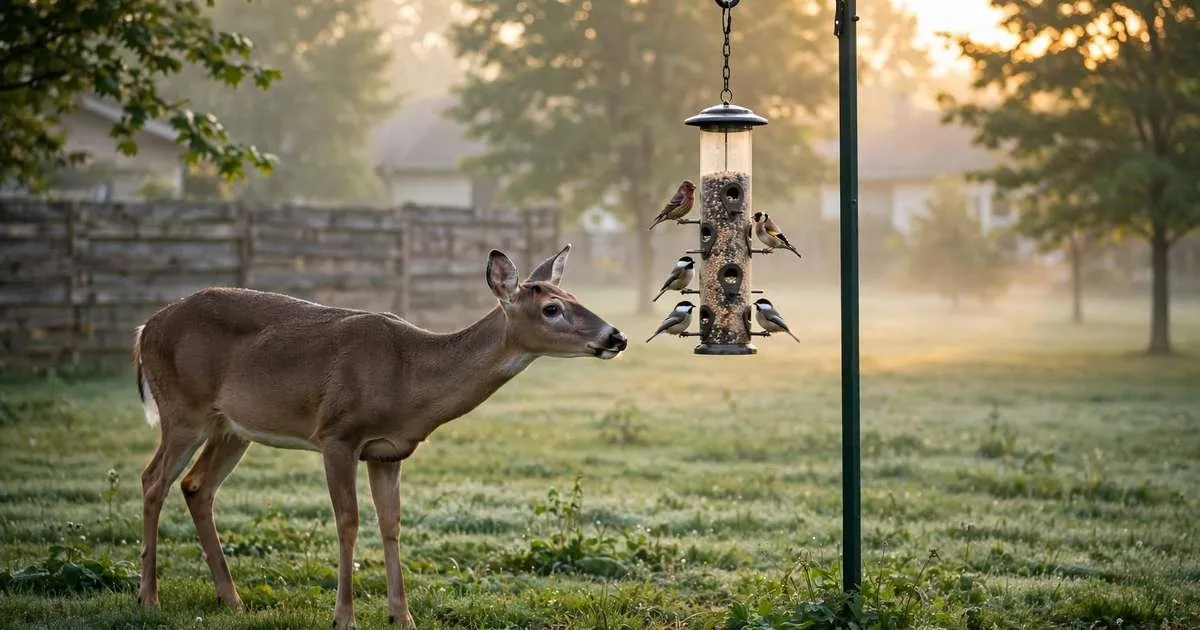
One October morning, coffee in hand, you walk to the back window expecting the usual rush of chickadees and finches. Instead, the tube feeder lies on its side in the grass, emptied of every seed, with two big cloven hoofprints in the soil underneath. The deer have found the feeders.
If you want to keep deer away from bird feeders, you are not alone. Deer can drain a feeder in a single night, snap hanging chains, and trample the ground beneath your station. The good news is you do not need anything drastic. These methods have proven effective over multiple seasons: start with the cheapest, and feeders managed this way stay deer-free. Here are the seven most effective ones.
1. Raise Your Feeders to Keep Deer Away (6 Feet Minimum)
This is the single cheapest fix, and it solves most of the problem by itself. A white-tailed deer can reach feeders up to about five feet off the ground when it stretches its neck and tongue upward, so six feet is the minimum and a little higher is better.
Moving a tube feeder from a low shepherd’s hook to a tall pole-mounted bracket at about seven feet, well away from deck railings deer use as steps, usually stops the raids within the same week. Keep the feeder far from fences, low tree limbs, and walls a deer could use as a launching pad, and remember that packed snow raises the effective ground level, so give yourself extra margin in cold months. Getting where to place a bird feeder right from the start saves you a move later, and higher placement also discourages cats stalking your feeding station.
2. Bring Feeders In at Night and Control Portions
Deer are most active at dawn, dusk, and through the night, exactly when your birds are asleep and not using the feeders. That schedule mismatch is your advantage. Every evening around sunset, take in the smaller hanging feeders and bring them back out at sunrise. It takes about two minutes, and it completely removes the midnight buffet.
If hauling feeders in every night feels like too much, use portion control instead. Only put out as much seed as your birds will finish in a day or two. A feeder that sits empty by evening gives a passing deer no reason to come back tomorrow. Sweeping up spilled seed under the feeding station each evening also helps, because spilled seed on the ground is what trains deer to treat your yard as a restaurant. A small hand broom by the back door makes this a thirty-second habit. Nighttime raids are not just a deer problem either; my guide on raccoons raiding at night covers the same bring-it-in tactic for another stubborn visitor.
3. Switch to Deer-Resistant Seed Choices
Deer are not picky when hungry, but they have preferences. They love corn, sunflower hearts, and cheap mixed blends, and they are far less fond of bitter-tasting seeds. Switching a main hopper feeder to straight safflower seed usually drops deer visits sharply while the cardinals, chickadees, and nuthatches keep coming.
Nyjer (thistle) seed is another good option that deer generally avoid, and it is a goldfinch magnet. Plain suet is also less attractive to deer than suet loaded with fruit, nuts, or corn, so check the ingredient list. Seed choice alone will not stop a determined deer, but it lowers the reward, and combined with the height and timing tricks above, it makes your yard a much less interesting stop. If you are rethinking your whole menu, my breakdown on choosing the right bird seed walks through what each seed attracts and what to skip.
4. Put Up a Fence Around Your Feeding Station
When height and habits are not enough, a physical barrier is the most reliable answer. A simple circle of sturdy woven-wire fencing, about four feet tall, around your feeding station stops deer from reaching through while letting every bird fly over freely.
For larger areas, wildlife agencies recommend fencing at least eight feet tall to truly exclude deer, since deer are strong jumpers (Michigan DNR deer guidance). Starting with a small ring around the station ends the problem completely at a fraction of the cost. Make sure the mesh openings are small enough that a curious deer nose cannot push through to the seed. Many squirrel-proof feeder designs pair well with this kind of protected station.
5. Install a Motion-Activated Sprinkler
Deer hate surprises. A motion-activated sprinkler delivers a sudden burst of water the moment a deer steps into range, and most deer decide after one or two soakings that your yard is not worth the trouble. Aiming one at the path deer use to enter the yard stops the hoofprints within a week.
These devices are harmless to birds, and most models let you adjust sensitivity so passing songbirds do not trigger them constantly. They need a garden hose connection, and you will bring them in before freezing weather, so this is a spring-through-fall solution. One caveat: a very bold or very hungry deer can eventually learn the sprinkler’s pattern, so treat this as a strong supporting player rather than your only line of defense.
6. Use Deer Repellent Sprays Responsibly
Commercial deer repellents, usually based on strong-smelling ingredients like garlic, peppermint, or predator scent, can make your feeding area unappealing to deer. Spray the repellent on the posts, poles, and ground around the feeders, never on the feeder itself or anywhere seed sits, so the birds are completely unaffected.
Two things to know before you buy. First, repellents wash off, so reapply after heavy rain or every couple of weeks. Second, deer get used to one scent, so rotate between two different types every few weeks. Read the label and follow the dilution exactly, and never improvise with homemade mixes near feeders.
7. Plant Deer-Resistant Landscaping Around Your Feeders
This is the slowest method, but it works year after year once established. Deer dislike plants with strong aromas, prickly leaves, or bitter tastes. Ringing a feeding station with lavender, rosemary, mint, and marigolds adds a scent barrier that makes the whole area less inviting (Mississippi State Extension on discouraging deer in gardens).
University extension services publish lists of plants deer rarely damage, including boxwood, American holly, barberry, butterfly bush, daffodils, and bee balm, while warning that favorites like hostas, daylilies, and tulips are basically deer candy. One honest note: no plant is truly deer-proof. A starving deer in late winter will sample almost anything, so treat landscaping as a long-term layer of defense, not a standalone fix, and put the plants deer love closest to your house where human activity makes them nervous.
Methods That Sound Good but Mostly Backfire
Folk remedies are worth skipping: hanging bars of soap and scattering human hair around the feeders are popular suggestions, but their effect ranges from brief to nonexistent. Deer in suburban areas are already used to human smells, so a bar of soap is more decoration than deterrent.
Ultrasonic gadgets get mixed reviews at best, and they are not considered a reliable way to protect a feeder full of seed. And one hard line: never use mothballs. They are toxic pesticides, they are illegal to use outdoors in most places, and they poison soil and water while doing nothing useful against deer.
A Quick Note on Safety and the Law
A few rules keep this hobby safe and legal. First, check your local regulations: some states and counties restrict feeding wildlife or require feeders to be designed and placed so deer cannot access them, especially in areas managing deer diseases. Intentionally feeding deer is illegal in some jurisdictions, so make sure your setup cannot be mistaken for a deer feeding station.
Second, never use anything that could harm wildlife, pets, or birds: no poisons, no glue traps, no homemade chemical sprays of unknown strength. Third, keep dogs leashed or securely fenced. Letting a dog chase deer can injure both animals and is treated as illegal wildlife harassment in some states. A secured dog still helps, because its scent and barking make deer think twice about your yard.
Frequently Asked Questions
How high should a bird feeder be to keep deer away?
At least six feet off the ground, measured from the ground (or packed snow) to the feeding ports. Deer can reach about five feet when stretching, so six feet is the minimum and seven is safer. Also keep feeders away from deck railings, fences, and low branches a deer could use as a step.
What bird seed do deer not like?
Safflower seed and nyjer (thistle) seed are the two best choices: most deer leave them alone while cardinals, chickadees, nuthatches, and goldfinches happily eat them. Deer are most attracted to corn and cheap mixed blends, so cutting those out lowers the reward for visiting.
Will deer damage my bird feeders?
Yes. Deer can knock hanging feeders down, snap chains and hooks, and crush lightweight feeders underfoot, and they trample the ground beneath feeding stations. Sturdy pole-mounted feeders hung high are much harder for deer to destroy than feeders dangling from low hooks.
Are deer repellents safe for birds?
Commercial deer repellents are safe for birds when used as directed: spray them on posts, poles, fencing, and the ground around the feeding area, never on the feeder or the seed itself. Reapply after rain, and never use anything toxic like mothballs near feeders.
Can I legally deter deer from my bird feeders?
In most places, yes. What can be restricted is feeding deer, and some areas with deer disease management programs have specific rules about feeder design and placement. Check your state wildlife agency’s current guidance for your county, and consider preparing your feeders for winter with local rules in mind.
Finding an empty feeder lying in the grass on an October morning is a discouraging sight for any bird lover. But keeping deer off your feeders is not about winning a war against wildlife. It is about small, smart adjustments: a higher hook, an evening routine, a seed switch, and a little patience. Deer may still pass through the yard sometimes. They just do not eat the birds’ dinner anymore.
What is the one deer trick you have tried that surprised you, the one that worked when nothing else did? I read every comment, and your experience might be exactly what another reader needs. For more step-by-step help, browse the feeding guides here on BirdFeedly.

Related Articles
How to Keep Starlings Away From Bird Feeders: 7 Proven Tips (2026)
Nothing empties a bird feeder faster than a flock of European starlings. One minute your tube feeder is…
Read Article
When to Take Down Hummingbird Feeders: 7 Smart Rules (2026)
Every September, I find myself standing at the kitchen window, coffee in hand, staring at my hummingbird feeder…
Read Article
How to Clean Bird Feeders: 7 Easy Steps (2026)
I used to think a full feeder was a healthy feeder — until the spring I noticed a…
Read Article