Short Answer
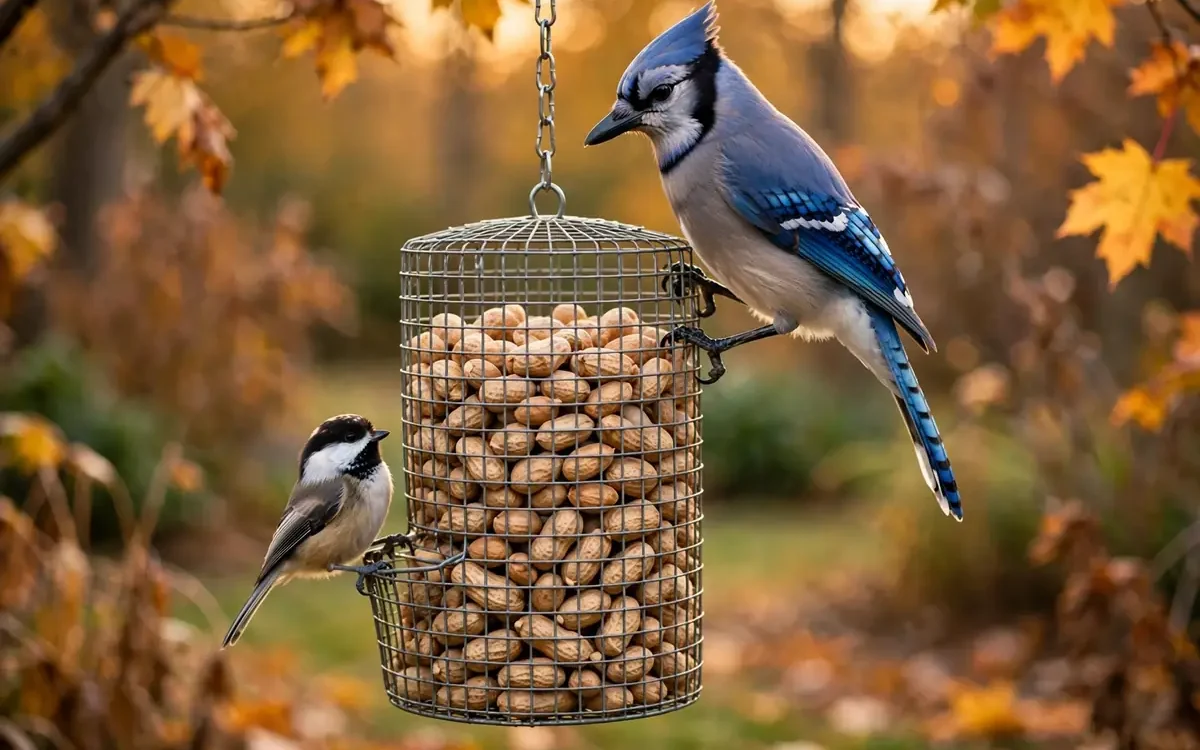
Peanuts are a high-energy treat, not a replacement for seed. Offer plain, unsalted peanuts: whole in the shell for jays and woodpeckers, shelled halves or pieces for chickadees, nuthatches, and titmice. Keep them dry, put out small amounts, and discard anything dusty, mouldy, or musty-smelling. Peanut butter works only as a thin, unsalted spread.

Cornell Lab describes peanuts as very popular with jays, crows, chickadees, titmice, woodpeckers, and other species. Audubon lists peanuts among its top 10 foods for winter bird feeding, calling them a high-protein, high-energy food. The same Cornell guide carries the warning that shapes the whole routine: peanuts have a high likelihood of harbouring aflatoxins, toxins produced by moulds, so they must be kept dry and used up fairly quickly.
Peanuts are excellent when fresh, dry, and unsalted, and a risk when damp, stale, or salted. The form matters too: a whole peanut is a feast for a jay, a frustration for a chickadee.
Whole, shelled, or butter: the bill decides
Peanut forms are not interchangeable, because bird bills are not interchangeable. A jay can crack and carry a whole peanut; a chickadee needs a piece it can wedge somewhere safe.
| Form | Best for | Watch out for |
|---|---|---|
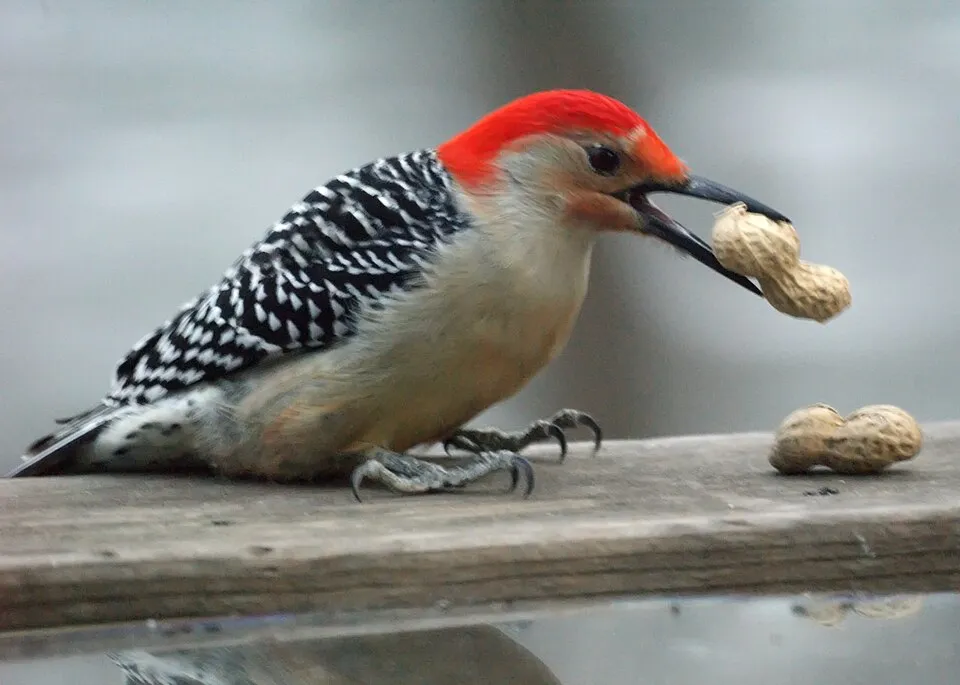
| Whole peanuts in the shell | Blue jays, crows, larger woodpeckers; jays carry several away and hide them | Small birds cannot open them easily; shells pile up as mess |
| Shelled peanut halves | Chickadees, titmice, nuthatches, woodpeckers, cardinals | Offer small amounts; halves in rain go mouldy fast |
| Peanut hearts and pieces | Safest everyday choice for small birds; best for a mesh feeder | Eaten quickly, so refill often; buy pieces, not dusty crumbs |
| Peanut butter | Woodpeckers, nuthatches, chickadees, wrens, spread thinly or mixed into a suet-style cake | Never salted, sweetened, flavoured, or with xylitol |
If buying one bag, start with shelled halves or pieces. They attract the widest range of birds with the least mess. For a full comparison with other foods, see the best bird seed for backyard birds and suet versus seed. To plan amounts, use the Feeding Tools planner.
Peanuts, by the numbers
| Fact | Figure | Source |
|---|---|---|
| Energy in raw peanut kernels, per 100 g | 567 kcal | USDA FoodData Central 172430 |
| Protein in raw peanut kernels, per 100 g | 25.8 g | USDA FoodData Central 172430 |
| Fat in raw peanut kernels, per 100 g | 49.2 g | USDA FoodData Central 172430 |
| Audubon’s winter list | One of the top 10 foods for winter bird feeding | Audubon |
| Aflatoxin risk | High likelihood of harbouring aflatoxins if damp; keep dry and use fairly quickly | Cornell Lab |
Which birds, and which form each one handles
Blue jays are the headline peanut birds. They cache food, taking whole peanuts in the shell and flying off to hide them. The guide to attracting blue jays covers the rest of the setup.
Woodpeckers, nuthatches, chickadees, and titmice are the mesh-feeder crowd. They cling, peck, and carry single pieces away to eat elsewhere. Shelled pieces suit them best: they can wedge one piece somewhere safe and hammer it apart without fighting a shell. A woodpecker that ignores seed may visit daily once peanuts appear.
Cardinals, wrens, and finches take peanut pieces too, especially in winter when insects are scarce, but they are guests rather than the target. Juncos, sparrows, and doves clean up dropped pieces below, so a tray underneath helps. If spilled food attracts unwanted visitors, the guide to keeping rats and mice away covers the clean-up habits.
Feeding peanuts without feeding the squirrels
The best peanut feeder depends on the form. Whole peanuts in the shell belong on a platform feeder, tray, or deck railing, where jays can pick them up and carry them away. Shelled pieces and hearts belong in a wire-mesh peanut feeder or a tray with drainage holes.
Hang the feeder a few feet from a tree or shrub so birds can retreat quickly, but not so close that squirrels can leap onto it. The guide to where to place a bird feeder covers distance and height.
Put out a small handful at a time, not a full bucket. Peanuts left in rain or humidity go mouldy — the one peanut mistake that can genuinely harm birds. In dry winter weather a mesh feeder might last a few days; in wet weather, empty it daily and refill. Clean feeders about every other week and dry them fully before refilling; see how to clean bird feeders.
Squirrels love peanuts. A baffle, a feeder hung well away from launch points, and small amounts at a time all help, but no peanut feeder is fully squirrel-proof. See the squirrel-proofing guide.
Peanut butter: thin, plain, and cool weather only
Peanut butter works when offered the right way, and turns into a sticky mess otherwise. Use only plain, unsalted peanut butter with no added sugar, no sweeteners, and no xylitol, which is toxic. Peanuts should be the only ingredient. Crunchy or smooth both work.
Spread it thin. A thin smear on bark, a pine cone, or a log feeder is easy to peck at, while a thick lump can stick to a small bird’s bill. Mixing peanut butter with cornmeal or oats makes it drier and less sticky, and it can go into a suet-style cake; see the guide to homemade suet recipes.
Offer peanut butter in small amounts, in cool weather, and clean the surface between refills. In hot weather it softens and spoils faster, so winter and cool autumn days are best. During nesting season, use crushed pieces and thin spreads: a parent bird can try to feed a whole peanut to a chick that cannot handle it.
The mistake that can actually harm birds
The serious peanut mistake is leaving peanuts out in rain until they go mouldy. Cornell Lab is blunt: peanuts have a high likelihood of harbouring aflatoxins, so keep them dry and use them up fairly quickly. Mould cannot be washed off reliably, so a bag that smells musty or looks dusty should never be fed to birds.
The same mistake takes other forms: filling a huge feeder and forgetting it for weeks in humid weather, buying salted or flavoured peanuts meant for people, and treating peanuts as the whole diet. Peanuts are a treat and a supplement, not a complete diet. Pair them with sunflower seed, and in winter with suet. The best winter bird food guide shows how the three fit together. Store peanuts as in the guide to how to store bird seed: sealed, dry, and cool, in a size that will be used within a month or two.

Peanuts through the seasons
Winter is peanut season. Birds burn fat fastest in cold weather and while raising young, so a dense food goes a long way, and peanuts sit alongside sunflower seed and suet, not replacing them.
In spring and summer, keep amounts small: heat softens peanut butter and humidity turns shelled pieces mouldy fast. In nesting season, offer crushed pieces and thin spreads only. In autumn, restock with a fresh bag.
Frequently asked questions
Can birds eat salted peanuts?
No. Offer only plain, unsalted peanuts. Salted, honey-roasted, and flavoured peanuts add salt, sugar, and coatings birds do not need, so check the label.
Should I offer peanuts in the shell or shelled?
Both, for different birds. Whole peanuts in the shell suit blue jays, crows, and larger woodpeckers, while halves and pieces suit chickadees, nuthatches, titmice, and smaller woodpeckers. Pieces are the best everyday choice.
Is peanut butter safe for birds?
Yes, when plain and unsalted, with no added sugar and no xylitol. Spread it thinly on bark or a pine cone, or mix it with cornmeal or oats, and offer small amounts in cool weather.
How do I store peanuts for birds?
Keep peanuts in a sealed, dry container in a cool place, out of direct sun, and buy only as much as will be used within a month or two. Discard any peanuts that look dusty or mouldy or smell musty.
Do peanuts attract squirrels?
Yes, squirrels love peanuts. Use a baffle on the pole, hang the feeder away from roofs, branches, and fences squirrels can leap from, and put out small amounts.
Keep reading: Best Bird Seed for Backyard Birds · Suet vs Seed · Best Mealworms for Backyard Birds · Sunflower Seeds for Backyard Birds
Sources: Cornell Lab, Feeding Birds: a Quick Guide to Seed Types; Audubon, Top 10 Foods for Winter Bird Feeding; USDA FoodData Central 172430.
Related guides: Sunflower Seeds for Backyard Birds: Black-Oil vs Striped vs Hulled · Best Mealworms for Backyard Birds: Live vs. Dried Guide

Related Articles
White Proso Millet: The Small Seed Ground-Feeding Birds Actually Eat
White proso millet suits ground-feeding birds best: sparrows, juncos, doves, towhees, and quail. Learn which millet to buy,…
Read Article
Safflower Seed: The Squirrel-Resistant Seed Cardinals Love
Safflower seeds are a squirrel-resistant feeder food loved by cardinals, chickadees, and finches. Learn which birds eat them,…
Read Article
Sunflower Seeds for Backyard Birds: Black-Oil vs Striped vs Hulled
sunflower seeds for backyard birds are a simple, reliable starting food — learn which form suits your visitors,…
Read Article