Last March I found the perfect deal: a 50-pound bag of black-oil sunflower seed at half the usual price. I set it on the garage floor and congratulated myself. Three months later I opened it to an attic-like smell, a clump of mold, and a flutter of tiny moths. The birds took one smell and stopped visiting for a week. That bargain bag didn’t save me a cent — it cost me the spring feeding season.
What I learned is that how to store bird seed matters almost as much as which seed you buy. Seed is food, and food spoils: heat, moisture, air, light, and pests all work on it from the day it leaves the warehouse. A handful of simple rules keeps every bag as fresh as the day you opened it, and they cost almost nothing. Here is exactly what I do now.
🫙 Key Takeaways
- The five enemies of stored seed are heat, moisture, air, light, and pests — beat them with a sealed container in a cool, dark spot.
- Buy with the seasons: a two-week supply in summer, a four-week supply in winter; finish your winter stock before warm weather arrives.
- Bugs in the bag? A five-day freeze kills grain moths and weevils — and the birds will happily eat the insects too.
- Never mix old seed with new, and discard anything moldy, rancid, or foul-smelling — spoiled seed is a genuine health hazard for birds.
Reading time: about 7 minutes
In This Guide
The Bargain Bag That Taught Me Everything
My mistake is one I see everywhere: seed in its original paper bag on a garage floor. Paper breathes, concrete sweats, garages get hot — within weeks my bag had dampness, heat, and open air working on it at once. That is the perfect recipe for mold and for Indian meal moths, whose larvae hatch inside stored seed. The moths aren’t a sign the seed is unusable, but the mold definitely was.
The second lesson came after I replaced the bag: the birds returned within days. Birds can taste quality, and stale seed is one of the quiet reasons feeders go silent — if birds aren’t coming to your feeder at all, check the bag in your garage before you blame the feeder in your yard.
The 5 Enemies of Stored Bird Seed
Every rule below fights one of these five. Beat them and you need no complicated system — just a container, a dark corner, and common sense.
Heat accelerates everything bad: oils turn rancid faster, insects breed faster, mold gets a head start. Birds & Blooms quotes Emma Greig of the Cornell Lab’s Project FeederWatch: store bird food cool and dark, and when it’s hot out, use the basement — or simply buy less in the summer.
Moisture is the mold trigger. Damp seed grows aspergillus and other fungi that can sicken and kill birds. Wild Birds Unlimited’s storage guidance is blunt: discard moldy, rancid, or foul-smelling seed because it can be a health hazard to birds.
Every hour seed sits open, its oils oxidize and its smell fades. A truly sealed container — not a rolled-down bag — is the difference between seed that lasts a season and seed that lasts a month.
Sunlight and steady bright room light break down oils and drain nutrients. This is why opaque containers beat clear ones, and why the best spot is a dark corner rather than a sunny porch.
Mice, rats, squirrels, weevils, and grain moths all treat your seed stash as a buffet, and the paper bag is defenseless. Store seed in rodent- and insect-proof containers, and secure the lids if containers live outdoors. My rat-and-mouse guide and squirrel-proofing methods start at the feeder — the garage stash deserves the same protection.
7 Rules for How to Store Bird Seed the Right Way
These are in the order that mattered most in my garage, starting with the one change that would have saved that 50-pound bag.
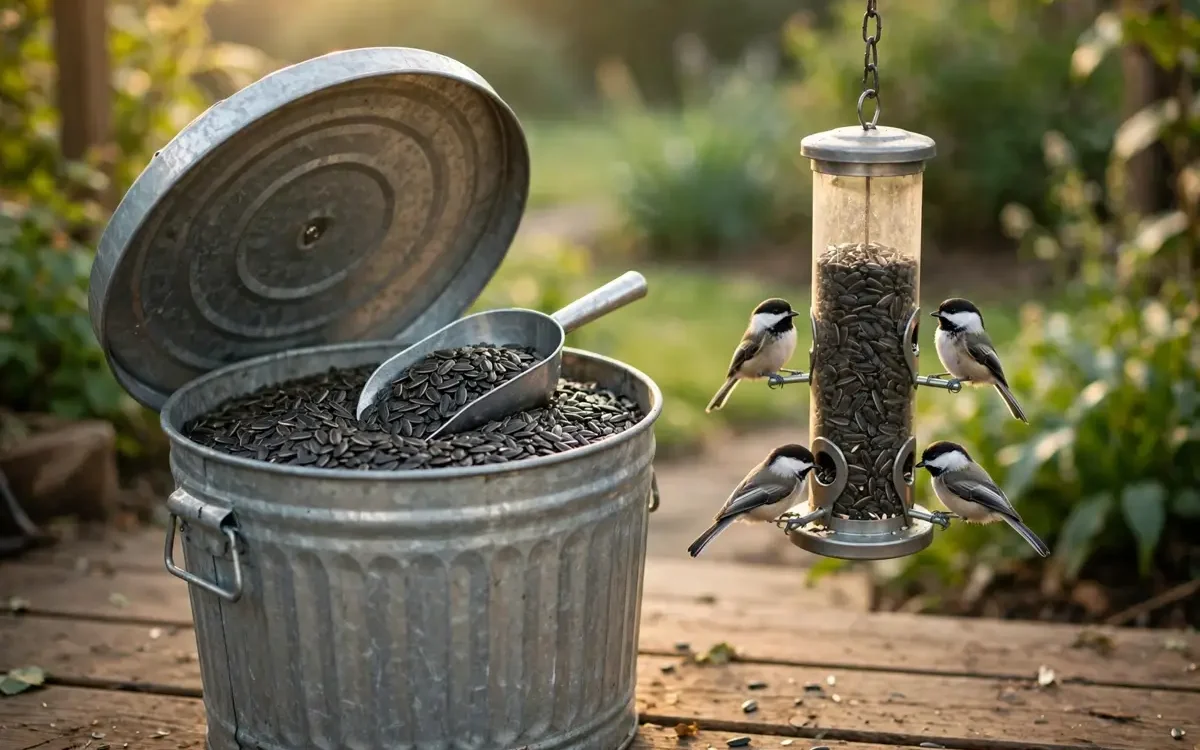
1. Get it out of the bag and into a sealed, rodent-proof container. This is the 80/20 rule. A galvanized metal trash can with a tight-fitting lid is the gold standard — mice can’t chew through it, and the lid keeps moths and humidity out. Heavy plastic totes are a good second choice. Keep the scoop inside the container. Buy with freshness in mind — my bird seed buying guide covers what to look for at the store.
2. Keep it cool and dark. Aim for below about 70°F (21°C) — a basement is ideal. A garage works only if it stays cool and dry; never lean the container against a sun-baked wall.
3. Buy with the seasons. Wild Birds Unlimited’s storage page gives the rule I now live by: in warm weather, keep no more than a two-week supply on hand; in winter, a four-week supply — and finish your winter stock before warm weather arrives.
4. Never mix old seed with new. Pouring fresh seed over a stale layer spoils the whole batch — first in, first out. The same applies at the feeder: dump old damp clumps before refilling, never top them off. Keeping seed dry in fall is twice as hard when each week starts with last week’s moisture.
5. Use the five-day freezer trick for bugs. Any seed can arrive with grain moths or weevils — unpleasant but not dangerous. Freeze the seed for five days: divide it into baggies, pull one out the day before you need it, and let it reach room temperature before filling feeders. Store infested seed outdoors while treating it, and scrub the container clean before refilling.
6. Keep the feeder’s supply fresh too. Storage doesn’t end at the container. Fill feeders with only a one- or two-day supply so seed is eaten quickly and stays fresh — especially in hot or wet weather. And grimy feeders shorten seed life, so regular feeder cleaning is part of the storage system.
7. Off the floor, off the wall, lids latched. Set containers on a pallet or bricks — never directly on concrete, which sweats moisture up. Leave air space behind the container, and latch the lid anywhere animals can reach it.
How Long Does Bird Seed Last? A Shelf-Life Table
Properly stored — sealed, cool, dark, dry — most seed stays fresh for six to twelve months, according to the Wild Bird Feeding Institute (via House Digest’s freshness guide):
| Seed | Stays fresh about | Watch out for |
|---|---|---|
| Black-oil sunflower (in shell) | 6–12 months | Buy seeds with hulls — the shell is nature’s freshness wrapper and holds up best in summer heat. |
| Striped sunflower | 6–12 months | Thicker shell, slightly longer keeping than black-oil. |
| White proso millet | 3–6 months | Small kernels dry out and go stale faster than sunflower. |
| Nyjer (thistle) | 2–3 months | Very high in oil — goes rancid fastest. Buy small bags; if finches suddenly ignore it, it’s probably stale. |
| Sunflower hearts (hulled) | 2–4 months | No hull protection, so they spoil faster — keep them extra cool. |
| Cracked corn | 3–6 months | Attracts weevils; freeze for five days if you spot bugs. |
| Peanuts (in shell) | ~6 months | The shell buys you time — another vote for buying seeds with hulls. |
| Mixed blends | 6–12 months | Fine on the shelf, but blends with milo and wheat filler get tossed out of the feeder anyway — freshness can’t fix filler. |
One buying tip from Birds & Blooms I use at every store: inspect bags for dust. A dusty bag has been sitting around and may be near the end of its freshness — pick the clean one behind it.
5 Signs Your Seed Has Gone Bad
Before I open a stored bag for the season, I run this check. Any single “yes” means the seed doesn’t go in the feeder:
1. It smells musty or “off.” Fresh seed smells faintly nutty; a musty or rancid smell means mold or oxidized oils — discard it.
2. It’s clumping or dusty. Clumps mean moisture got in; heavy dust means the seed is old and breaking down.
3. You see webbing, moths, or tiny beetles. Light infestations can be frozen and used (rule 5) — but moldy or foul-smelling seed goes in the trash.
4. It’s sprouting or discolored. Sprouted kernels or gray-green patches mean dampness and mold are already at work.
5. The birds suddenly ignore it. If birds stop visiting feeders they’ve always used, check the seed first — birds are the most honest freshness testers you have.
What to Do With Spoiled Seed
Don’t try to salvage it. Don’t feed it anyway — moldy seed is a health hazard for birds, full stop — and don’t scatter it under the feeder, where a rotting pile breeds rodents and mold exactly where your birds eat. Bag it, bin it, move on.
Then clean the container before the fresh bag goes in: scrub with hot soapy water, rinse, and let it dry completely — a damp container spoils new seed from day one. I do this every spring and fall; it takes ten minutes.
Short on Space? The Balcony-Friendly Version
No garage, no basement, no problem. Buy 5- to 10-pound bags, store them sealed in the coolest closet you have, and stick to blends your birds will finish fast. If you’re feeding from a small balcony or patio, the two-week summer rule matters even more. Match the food to your birds with my complete food guide so the small bag you store gets finished, not forgotten.
Frequently Asked Questions
How should I store bird seed in the summer?
Can I keep bird seed in the garage?
Does freezing bird seed really kill the bugs?
How do I know if bird seed is too old to feed?
That bargain bag was an expensive education, but it made me a better feeder. Now the metal can sits on bricks in the coolest corner, dated every time I fill it. The birds come every morning, and not a pound goes to the moths. Fresh in, fresh out.

Related Articles
What to Feed Birds in Fall: 7 Best Foods for Backyard Birds (2026)
Bird Feeding Note: This article is for general informational purposes. Keep feeders clean, provide fresh food and water,…
Read Article
Winter Bird Feeding Guide: 9 Tips for Cold Months (2026)
Bird Feeding Note: This article is for general informational purposes. Keep feeders clean, provide fresh food and water,…
Read Article
How to Feed Backyard Birds: Complete Beginner Guide (2026)
Bird Feeding Note: This article is for general informational purposes. Keep feeders clean, provide fresh food and water,…
Read Article