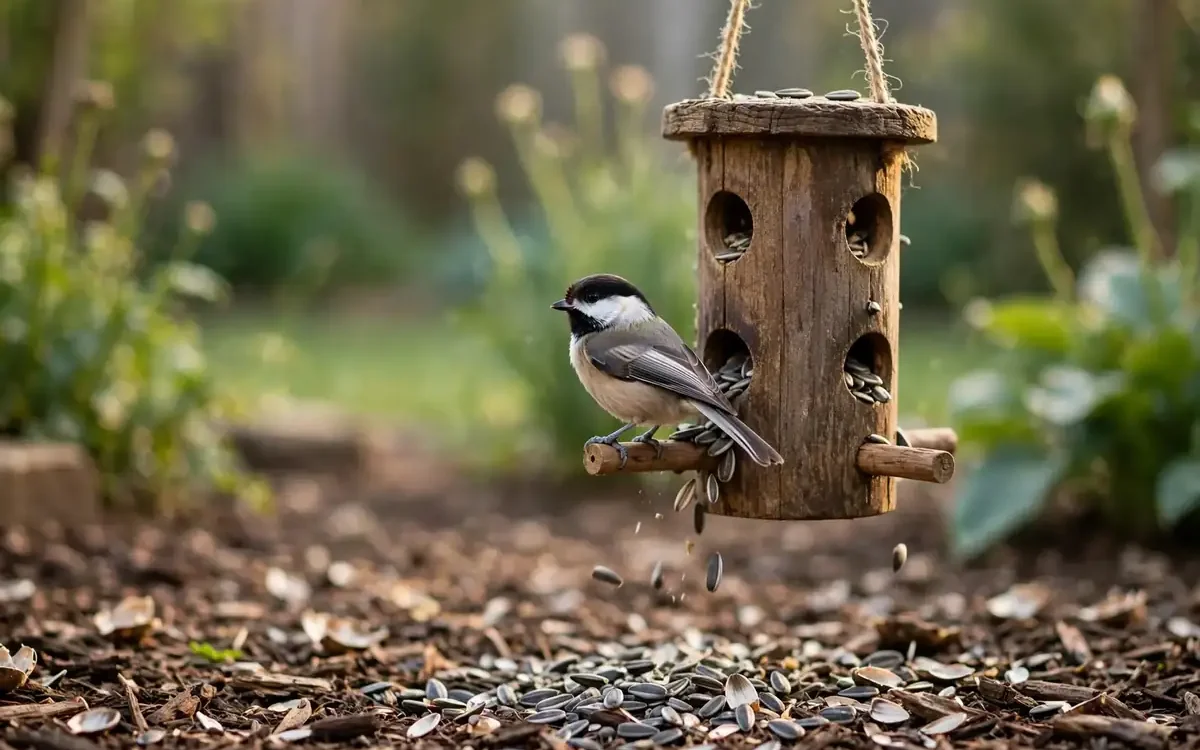
Last fall I stood under my tube feeder, stared at the two-inch carpet of seed and husks on the ground, and did some rough math. A shocking amount of every bag I bought was going straight past the birds and onto the lawn. The chickadees would land, flick-flick-flick seeds aside with their bills, crack one sunflower seed, and leave a dozen others scattered like confetti.
For a while I assumed my birds were just messy. Then I watched more carefully, changed what I buy and how I feed, and the waste dropped by more than half. Birds are not being wasteful when they throw seed out of the feeder — they are telling you something about your seed mix, your feeder, or both. Here is what their seed-tossing means, and the fixes that worked for me.
🌾 Key Takeaways
- Birds toss seed mostly to reach their favorites — black-oil sunflower tops almost every bird’s list.
- Cheap mixes full of milo, wheat, and red millet get rejected by most songbirds.
- The pile under your feeder is not harmless: it feeds rats and mice and grows mold that spreads disease.
- Fixes that work: quality seed with no filler, hulled “no-mess” blends, a catch tray, and filling feeders halfway.
In This Guide
Why Birds Actually Throw Seed Out of the Feeder
Once I stopped seeing seed-tossing as bad behavior and started seeing it as communication, everything got easier. Here are the five real reasons birds scatter seed — and what each one tells you.
1. They are hunting for their favorites. Birds are picky eaters, and they will shovel past the stuff they don’t want to reach the stuff they do. Black-oil sunflower is the undisputed champion — Cornell Lab’s Project FeederWatch notes it is the preferred food of cardinals, chickadees, finches, and sparrows alike. In a mixed bag, a chickadee will flick aside a dozen seeds to find that one sunflower seed. If your mix is mostly filler, most of the bag ends up on the ground.
2. They are de-husking. Watch a finch at a feeder: it picks up a seed, rolls it in its bill to crack the hull, drops the shell, and eats the kernel. Half of what falls is empty husks, not wasted seed. But with cheap mixes, plenty of whole rejected seeds fall alongside the husks.
3. They are jostling for position. Feeder pecking orders are real. A dominant finch lands, a subordinate grabs a beakful and flies to a branch to eat it in peace, dropping half its haul on the way. More birds at a crowded feeder means more flung seed — which is why the mess is worst during busy morning rushes.
4. The seed is stale or damp. Birds can taste quality. Seed that has absorbed moisture, gone dusty in the bag, or started to mold gets tossed. I once refilled a feeder after a rainy week without dumping the old clumped seed first, and the birds treated the whole tube like it was poison. They were right — damp seed grows mold fast.
5. The feeder design works against them. Tube feeders with large ports let birds rake seed out. Platform feeders invite scratching. Even a feeder hung where wind catches it shakes seed loose all day. Sometimes the problem is not the bird or the seed — it is the hardware.
Why the Mess Under Your Feeder Is a Bigger Deal Than It Looks
Here is the part nobody told me when I started: the seed on the ground creates three problems that get worse the longer you ignore them.
It feeds rodents. This one hit home when I spotted a rat trail leading straight to my feeding station. University of Nebraska-Lincoln’s extension service is blunt about it: spilled seed is one of the main reasons rats, mice, voles, and skunks set up camp in backyards. Their advice: buy seed birds actually eat (no milo filler), use hull-free “no-mess” seed, attach catch trays, and sweep up what falls. If you have ever wondered whether your feeders attract rats, start by looking at the ground underneath them — my rat-and-mouse guide covers the full fix.
It grows mold and spreads disease. Wet seed piles are a health hazard. Public-health guidance from King County, Washington notes that aspergillus fungus grows on damp feed and debris under bird feeders, and birds inhale the spores into their lungs and air sacs — it can be fatal. Salmonella, the most common feeder disease, also thrives in damp, crowded conditions. A carpet of rotting hulls is exactly the environment those pathogens love. This is why regular feeder cleaning matters — and the ground under the feeder deserves the same attention as the feeder itself.
It wrecks your lawn and sprouts weeds. Sunflower hulls contain compounds that suppress grass growth, leaving dead yellow patches, and spilled whole seeds sprout into weeds. I learned this when a ring of dead grass appeared under my platform feeder — moving it over a mulched bed solved it overnight.
9 Fixes That Actually Cut Seed Waste
These are in the order I would try them, starting with the single change that made the biggest difference.
1. Buy seed birds will actually eat — and skip the filler. This is the 80/20 fix. Audubon has covered the research going back decades: in feeding trials, milo, wheat, hulled oats, and rice were consistent losers almost no songbirds wanted, while black-oil sunflower was loved across the board. If milo or wheat are in the top three ingredients, put the bag back. My bird seed buying guide breaks down exactly what to look for.
2. Switch to hulled “no-mess” blends. Sunflower hearts, shelled peanuts, and hulled millet have no husks to drop, so nothing piles up below. They cost more per pound, but the bag lasts longer because you are not paying for shells the birds throw away.
3. Add a seed tray under tube feeders. A catch tray clipped to the bottom of a tube feeder catches an enormous amount of flung seed — and birds happily eat from the tray itself. Empty it every few days so it doesn’t become a soggy mold farm. This one add-on cut my ground waste roughly in half.
4. Fill feeders only halfway. A brimming feeder gives birds a deep pile to rake through, and every port becomes a seed cannon. Half-full means less to fling and fresher seed overall. I refill more often, but I throw away almost nothing now.
5. Match the feeder to the bird. Clingers like chickadees and nuthatches suit tube feeders; ground-feeding sparrows and juncos waste less at a low platform feeder. And if birds aren’t coming to your feeder at all, the feeder style may be part of the problem.
6. Rake or sweep under feeders every week. Ten minutes with a rake is the cheapest pest control there is. Project FeederWatch recommends raking away old seed and husks below feeders as standard hygiene. I do it Sunday mornings — in rainy stretches, do it more often; wet hulls are where mold starts.
7. Let the cleanup crew help — on your terms. Mourning doves, juncos, and native sparrows happily vacuum up spilled seed. A modest amount of spill is genuinely useful to them. The goal is not zero seed on the ground — it is no rotting pile.
8. Move feeders off the lawn and patio. Hang feeders over mulch beds or bare soil instead of grass or decking. Cleanup is easier and you won’t get dead patches. This matters even more on a small balcony or patio, where every spilled seed shows.
9. Offer suet for the messiest customers. Woodpeckers, nuthatches, and chickadees do great on suet cakes, which produce almost no waste. In winter I run one suet feeder alongside my seed feeder, and it takes pressure off the seed ports during busy hours. My suet recipes are cheap, and the birds prefer them over store-bought.
Seed Mix Showdown: What Gets Eaten vs. What Gets Tossed
Not all seed is created equal, and it shows up directly on the ground. Here is how common ingredients stack up, based on feeding trials covered by Audubon and Cornell Lab’s FeederWatch program:
| Seed | Who loves it | Waste level |
|---|---|---|
| Black-oil sunflower | Cardinals, chickadees, finches, sparrows — widest appeal of any seed | Low (thin shells, mostly eaten) |
| Sunflower hearts / chips | Nearly all seed-eaters | Low with ground feeders; tossed by perching birds |
| Safflower | Cardinals, grosbeaks, chickadees | Low |
| Nyjer (thistle) | Goldfinches, siskins, redpolls | Low in the right feeder; wasted in open trays |
| Cracked corn | Doves, jays, turkeys | Medium — ignored by small songbirds |
| Milo / red millet / wheat | Almost nobody | Very high — this is your lawn carpet |
The pattern is obvious once you see it: the cheap filler ingredients at the top of bargain bags are exactly the ones birds reject. Paying more for a bag that is mostly sunflower is not a luxury — it is the cheapest option per seed actually eaten. My complete food guide covers how to match foods to the birds in your yard.
Frequently Asked Questions
Why do birds throw seed out of the feeder instead of eating it?
Birds throw seed out of the feeder mainly to reach their favorites — they flick aside less-preferred seeds like milo or wheat to get to black-oil sunflower. They also drop empty husks while de-shelling, and jostling at crowded feeders knocks seed loose.
Is spilled bird seed bad for my yard?
Yes, in quantity. Thick piles attract rats and mice, grow mold that spreads salmonella and aspergillus to birds, and sprout into weeds. Sunflower hulls also kill grass, leaving dead patches. A light scattering is fine — doves and juncos clean it up — but rake heavy accumulations weekly.
What is the least messy bird seed?
Hulled “no-mess” blends — sunflower hearts, shelled peanuts, hulled millet — produce almost no waste because there are no husks to drop. They cost more per pound but last longer since birds eat nearly all of it. Suet cakes are another near-zero-waste option for woodpeckers, nuthatches, and chickadees.
Do seed trays under feeders really work?
Yes. A catch tray under a tube feeder catches a large share of flung seed, and birds eat from the tray itself. Extension services specifically recommend them for cutting ground waste and discouraging rodents. Empty the tray every few days so caught seed doesn’t get soggy.
That carpet of seed under my feeder used to embarrass me — it felt like proof I was doing the hobby wrong. Now I see it as a gauge. When the ground stays mostly clean, the seed is right, the feeder is right, and the birds are getting what they came for. When the pile starts growing again, something changed — usually the bag. Listen to what the birds are telling you, and the mess mostly takes care of itself.
If you found this useful, my winter feeding guide is worth a read next — cold months are when waste (and the rodents it attracts) peak. And if you are just getting started, the complete beginner guide covers the whole setup from scratch.

Related Articles
Do Bird Feeders Make Birds Dependent? The Honest Answer (2026)
Last February, watching a downy woodpecker work my suet feeder in a sleet storm, the guilty thought crossed…
Read Article
How to Keep Bird Seed Dry in Fall: 7 Proven Tips (2026)
Bird Feeding Note: This article is for general informational purposes. Keep feeders clean, provide fresh food and water,…
Read Article
How to Keep Starlings Away From Bird Feeders: 7 Proven Tips (2026)
Bird Feeding Note: This article is for general informational purposes. Keep feeders clean, provide fresh food and water,…
Read Article