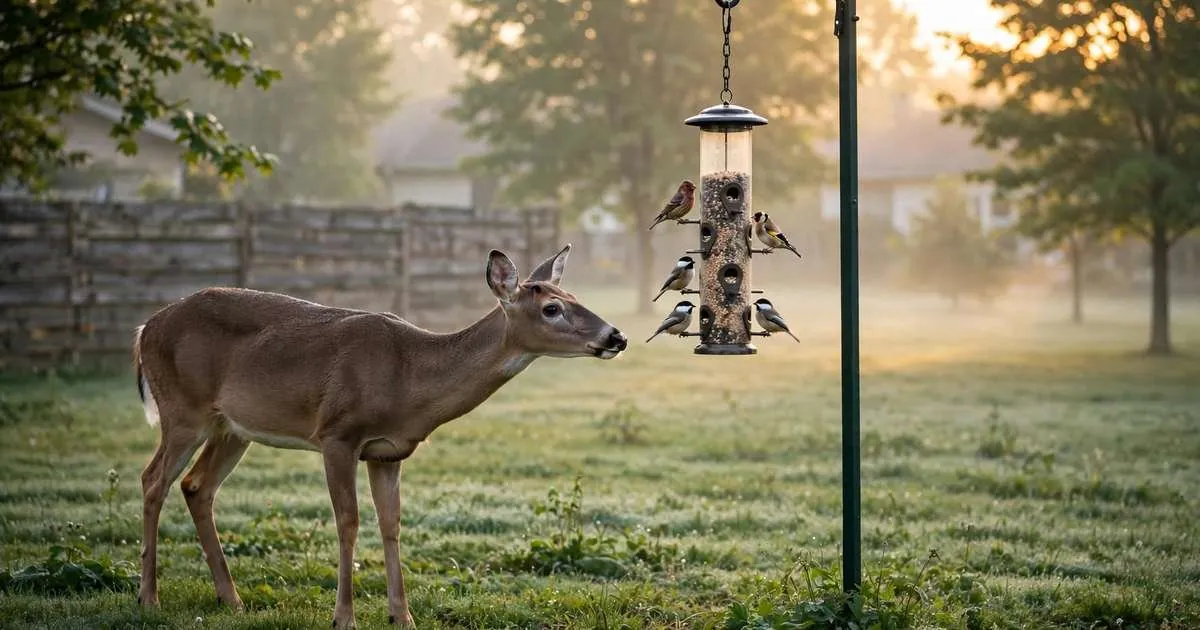
A deer at a bird feeder is not a burglar. It is a large browser eating 6 to 10 pounds of food a day, and a full feeder is a shrub that never runs out. The fix is three small adjustments: make the feeder unreachable, the menu unrewarding, and the station empty at the hours deer feed.
A white-tailed deer, by the numbers
| Fact | Detail |
|---|---|
| Shoulder height | 3 to 3.5 feet |
| Weight | 125–200 lb; males up to 300 lb |
| Speed and jumping | Up to 35–40 mph; can jump over an 8-foot fence |
| Daily food | Adults eat an average of 6–10 pounds per day |
| Heaviest feeding | Late spring, summer and fall |
| Active hours | Early morning and early evening, year-round |
| Fawns | One to three, born late spring to early summer |
Sources: NYSDEC, White-tailed Deer; Mississippi State Extension, Discouraging Deer in the Garden; Michigan DNR, Deer.
Height helps — but only as one layer
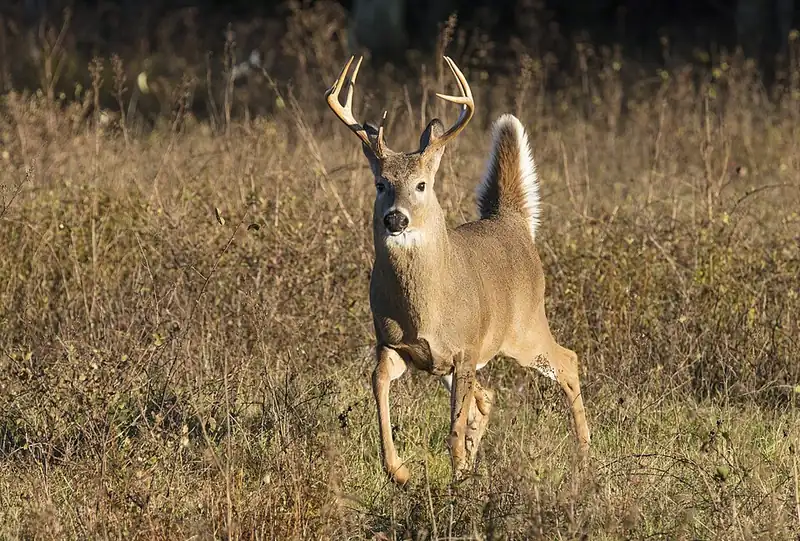
Six feet is the minimum height for a feeder in deer country, and higher is safer — but height alone is not a guarantee. Rearing on its hind legs, a deer reaches well past its 3 to 3.5 feet at the shoulder, and its long tongue reaches into openings a standing deer cannot. Packed snow raises the ground level too, so measure from the snow in winter and give yourself extra margin in cold months.
Just as important is what stands nearby: railings, fences, low limbs and walls all work as steps or launching pads, so keep feeders well away from them. A rope-and-pulley line from a high limb puts the feeder far above a deer’s standing reach, and lowers it for filling. See our guide on where to place a bird feeder.
Fence the station, not the yard
When height and habits are not enough, a physical barrier is the most reliable answer — and it does not need to cover the whole yard. A circle of sturdy woven-wire fencing, about four feet tall, around the feeding station stops deer from reaching through while letting every bird fly over freely. Use mesh small enough that a deer nose cannot push through.
For a whole garden, the standard is taller: Michigan DNR recommends sturdy fencing at least 8 feet high, and Mississippi State Extension agrees eight feet is usually sufficient — though deer can jump fences exceeding ten feet when determined. For small areas, Michigan DNR suggests two rows of 4-foot fencing spaced 3 feet apart to confuse a deer’s jump. A small ring around the station gives most of that benefit at a fraction of the cost.

The dusk rule: an empty feeder is a boring feeder
Deer are most active at dawn, dusk and through the night — early morning and early evening are the best times to watch for them, New York’s wildlife agency notes — exactly when birds are asleep. That schedule mismatch is the advantage: take in the smaller hanging feeders at sunset and bring them back out at sunrise. It takes about two minutes, and it completely removes the midnight buffet.
If hauling feeders in every night feels like too much, use portion control instead: only put out as much seed as the birds finish in a day or two, so an empty feeder gives a passing deer no reason to return. Sweep up spilled seed each evening too — it trains deer to treat a yard as a restaurant. The same routine stops the other great night raider: our guide on keeping raccoons away from bird feeders uses the same tactic. Plan the routine with the Feeding Tools planner.
Change the menu and lower the reward
Deer are not picky when hungry, but they do have preferences: they love corn, sunflower hearts and cheap mixed blends, and are far less fond of bitter-tasting seeds. Switching a main hopper feeder to straight safflower seed usually drops deer visits sharply while cardinals, chickadees and nuthatches keep coming. Nyjer seed is another option deer generally avoid, and it is a goldfinch magnet.
Seed choice alone will not stop a determined deer — it only lowers the reward, and Mississippi State Extension warns hungry deer will eat almost anything. Combined with height, fencing and the dusk rule, a less interesting menu makes a yard a much less interesting stop.
The scents and sounds that do not hold
Some deterrents sound good and mostly do not work. Soap bars and human hair are folk remedies whose effect ranges from brief to nonexistent — suburban deer are already used to human smells. Ultrasonic gadgets are not a reliable way to protect a feeder full of seed. Mothballs are a hard no: toxic pesticides, illegal to use outdoors in most places, poisoning soil and water while doing nothing useful against deer.
Commercial repellents sit in the middle: they work by taste or odour, but Mississippi State Extension notes they must be applied regularly and rotated every 3 to 4 weeks, and Michigan DNR warns their effectiveness is often brief. Spray repellent on posts, poles and the ground around the feeders, never on the feeder or the seed. Motion-activated sprinklers are stronger — a sudden burst of water startles deer without harming them — but they are a spring-through-fall tool, needing a hose connection and a trip inside before freezing weather.

Winter is when the pressure peaks
Late winter is the hardest season. Natural browse is scarce, snow has raised the ground level under every feeder, and hungry deer sample almost anything — including plants and seeds they ignored all summer. Re-check feeder height against the snow, keep portions small, and keep the ground swept.
A few rules keep the hobby safe and legal. Check local regulations first: some states and counties restrict feeding wildlife or require feeders deer cannot access, especially in areas managing deer diseases. Intentionally feeding deer is illegal in some jurisdictions, so make sure a setup cannot be mistaken for a deer feeding station. Never use anything that could harm wildlife, pets or birds — no poisons, no glue traps, no homemade sprays of unknown strength. Keep dogs leashed or securely fenced: letting a dog chase deer can injure both animals and is treated as illegal wildlife harassment in some states.
Quick answers
How high should a bird feeder be to keep deer away?
Six feet is the minimum, and higher is safer — but height alone is not a guarantee. A deer rearing on its hind legs reaches further than its shoulder height, and packed snow raises the ground level, so measure from the snow and keep feeders away from railings, fences and low branches a deer can use as a step.
What bird seed do deer not like?
Safflower and nyjer (thistle) seed are the two best choices: deer usually pass them over while cardinals, chickadees, nuthatches and goldfinches eat them happily, while corn and cheap mixed blends attract deer most. No seed is truly deer-proof, though — a hungry deer in late winter will sample almost anything.
Will deer damage my bird feeders?
Yes. Deer can knock hanging feeders down, snap chains and hooks, and crush lightweight feeders underfoot, and they trample the ground beneath feeding stations. Sturdy pole-mounted feeders hung high are much harder to destroy than feeders dangling from low hooks.
Can I legally keep deer away from my bird feeders?
Deterring deer is fine in most places. What can be restricted is feeding them: intentionally feeding deer is illegal in some jurisdictions — Michigan bans it in the Lower Peninsula — and some areas with deer disease programmes have rules about feeder design and placement. Check your state wildlife agency’s current guidance for your county.
Sources: NYSDEC, White-tailed Deer; Mississippi State Extension, Discouraging Deer in the Garden; Michigan DNR, Deer; BirdWatching HQ, 8 Ways to Keep Deer Away from Your Bird Feeders (safflower and nyjer preferences).
Related guides: How to Keep Raccoons Away From Bird Feeders · Squirrel-Proof Bird Feeders: Baffles, Placement, and the Safflower Switch

Related Articles
How to Join Project FeederWatch: Count the Birds at Your Feeder This Winter
Project FeederWatch's 40th season runs 1 Nov 2026-30 Apr 2027. Join for $18, count birds at your feeder…
Read Article
How to Feed Birds While You’re on Vacation
Your birds won't starve while you're away — feeders are only about a quarter of their winter diet.…
Read Article
How to Stop Birds Fighting at Your Feeder
One feeder is one territory, so one bully bird can own it. Spread two or three different feeders…
Read Article