
Last updated: September 24, 2026 · 7 min read
Homemade suet recipes are cheap and easy — but a first batch can melt all over the cage on a freak 70-degree February day, drip onto the patio, and teach a harsh lesson about the difference between winter suet and warm-weather suet. After dozens of batches, the pattern is clear — birds genuinely prefer kitchen-made versions over most store cakes, and each batch costs a fraction of the price. Here are five reliable homemade suet recipes, plus the mistakes to avoid.
Disclosure: Bird Feedly is reader-supported. When you buy through links on our site, we may earn an affiliate commission at no extra cost to you.
What Is Suet, Exactly?
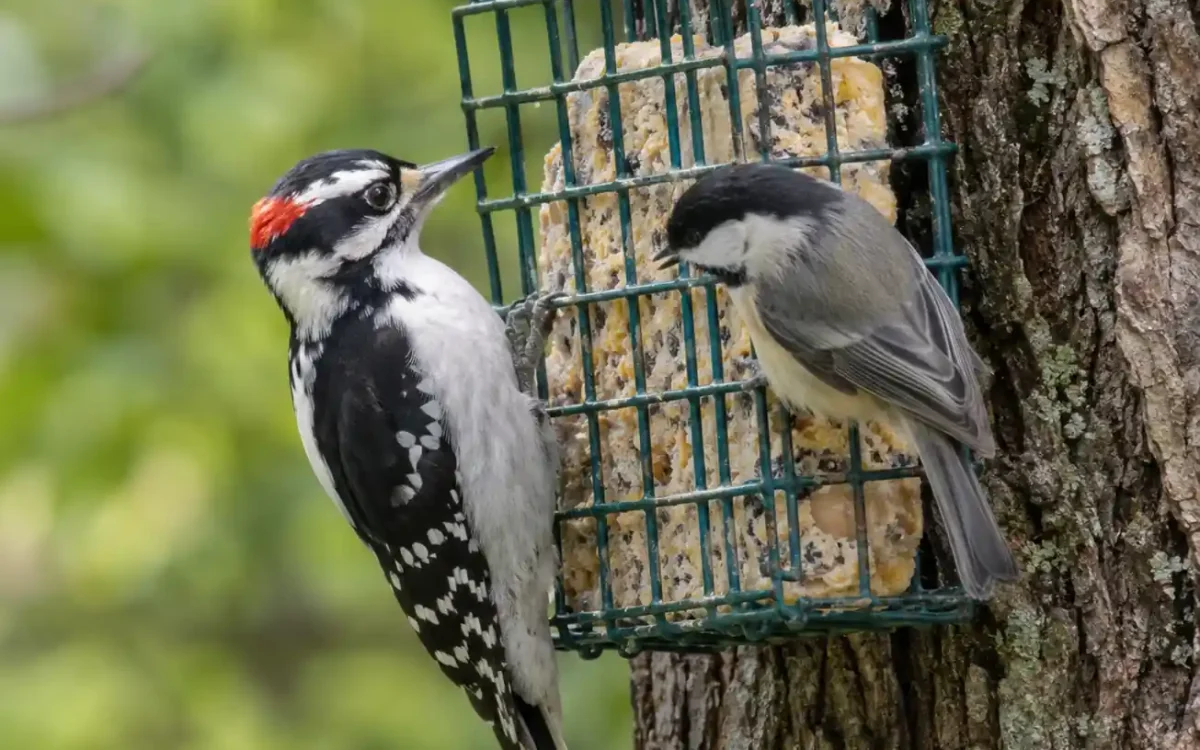
Suet is raw beef fat — the hard fat from around a cow’s kidneys — and it’s one of the most energy-dense bird foods on earth. Insect-eating birds that ignore seed feeders (woodpeckers, nuthatches, wrens, chickadees) flock to it, especially in fall and winter when insects vanish and every calorie counts toward surviving freezing nights.
You can buy plain beef suet cheaply from most butcher counters, render it yourself (gently melt and strain it), or use the recipes below built on lard or peanut butter — no rendering required.
The Golden Rules (Read Before You Mix)
- Fall and winter are suet season. Pure-fat cakes melt and turn rancid above ~70°F (21°C). In warm weather, use the no-melt recipe (#5) or commercial no-melt dough.
- Never use bacon grease. It’s far too salty, and the nitrates and seasonings aren’t safe for birds.
- Never use margarine or vegetable shortening spreads marketed as “buttery” — many contain additives and low actual fat content. Plain lard or rendered suet only.
- Unsalted ingredients only. Salt is hard on birds’ kidneys — unsalted peanut butter, raw or dry-roasted unsalted nuts.
- Keep it chunky, not sticky. Peanut butter alone can stick to birds’ bills; always cut it with dry ingredients (cornmeal, oats, flour) so the mix is crumbly.
Recipe 1: Classic Rendered Suet Cake (the gold standard)
The closest thing to what birds find in nature — pure energy.
- 1 cup rendered beef suet (gently melted and strained, or ask your butcher)
- 1 cup black-oil sunflower seeds
- ½ cup chopped unsalted peanuts
- ½ cup dried mealworms or raisins
Method: Melt suet on low heat, stir in dry ingredients, pour into a muffin tin or square container lined with wax paper. Refrigerate until solid (2–3 hours), then pop out and cut to fit your cage. Attracts: downy and hairy woodpeckers, nuthatches, chickadees, wrens.
Recipe 2: Easy Peanut Butter Suet (no rendering)
The go-to recipe — five minutes, no stove beyond melting.
- 1 cup creamy unsalted peanut butter
- 2 cups cornmeal or quick oats
- ½ cup black-oil sunflower seeds
- ¼ cup chopped unsalted peanuts
- 2 tablespoons flour (helps it hold shape)
Method: Melt peanut butter gently, stir in dry ingredients until crumbly-doughy, press into a lined container, refrigerate until firm. Attracts: chickadees, titmice, nuthatches, peanut-loving birds like cardinals, jays.
Recipe 3: Berry & Fruit Suet (for robins and bluebirds)
Fruit-eaters often ignore plain suet — this one brings them in.
- 1 cup rendered suet or lard, melted
- 1½ cups cornmeal
- ½ cup dried cranberries or blueberries (unsweetened, no added sugar)
- ½ cup chopped dried apple
- ¼ cup sunflower hearts
Method: Mix, mold, chill as above. Offer on a platform feeder as well as in cages — robins and bluebirds prefer open trays. Attracts: robins, bluebirds, waxwings, mockingbirds, plus the usual woodpeckers.
Recipe 4: High-Protein Mealworm Suet (nesting season boost)
For late winter into spring, when birds need protein for breeding condition.
- 1 cup lard or rendered suet, melted
- 1 cup dried mealworms
- 1 cup quick oats
- ½ cup crushed eggshells (baked at 250°F for 20 minutes, then crushed fine — a calcium boost laying females need)
Method: Mix, mold, chill. The eggshells disappear into the mix; the calcium doesn’t go unnoticed by nesting birds. Attracts: wrens, chickadees, bluebirds, robins.
Recipe 5: No-Melt Summer Dough (warm-weather safe)
The answer to a February meltdown — a dough that holds its shape in heat.
- 1 cup creamy unsalted peanut butter
- 2 cups cornmeal
- 1 cup flour
- ½ cup quick oats
Method: Mix without melting anything — just blend into a stiff dough, press into containers, and refrigerate. The high dry-ingredient ratio keeps it solid well above 70°F. It won’t match pure suet’s energy density, but it’s safe when real suet isn’t. Attracts: same crowd as Recipe 2, safely, all summer.
Homemade Suet Recipes: Which Recipe for Which Bird?
| Recipe | Star visitors |
|---|---|
| 1 — Classic rendered | Woodpeckers, nuthatches, chickadees |
| 2 — Peanut butter | Titmice, chickadees, jays, cardinals |
| 3 — Berry & fruit | Robins, bluebirds, waxwings |
| 4 — Mealworm + calcium | Wrens, bluebirds, nesting birds |
| 5 — No-melt dough | Summer feeding for the whole crew |
Storage & Shelf Life
- Refrigerator: 2–3 weeks in a sealed container.
- Freezer: up to 3 months — freeze batches in cage-sized portions and thaw as needed.
- In the feeder: pure suet cakes last 1–2 weeks in cold weather; replace sooner if they smell off or look slimy. In warm weather, only offer the no-melt dough, and pull it at the first sign of rancidity.
Offer suet in a wire cage (a suet cage with tail prop is ideal for woodpeckers), and pair it with the high-energy lineup in our winter feeding guide.
Homemade Suet Recipes: FAQs
What is the best homemade suet recipe for birds?
The classic: 1 cup rendered beef suet mixed with 1 cup black-oil sunflower seeds, ½ cup chopped unsalted peanuts, and ½ cup dried mealworms or raisins. Chill until solid. It attracts woodpeckers, nuthatches, chickadees, and wrens — the birds that need high-fat food most.
Can I use bacon grease to make suet for birds?
No. Bacon grease is far too salty and contains nitrates and seasonings that are not safe for birds. Use plain rendered beef suet, plain lard, or unsalted peanut butter (always mixed with dry ingredients) instead.
Is peanut butter safe for birds?
Yes, with two rules: use unsalted peanut butter only, and always mix it with dry ingredients like cornmeal or oats so it is crumbly rather than sticky. Straight sticky peanut butter can gum up birds’ bills; the dry mix eliminates the risk.
When should I put out suet for birds?
Fall through early spring is prime suet season — birds need the fat calories most when insects are gone and nights are cold. In warm weather (above ~70°F), pure suet melts and spoils; switch to a no-melt peanut-butter dough recipe instead.
How long does homemade suet last?
2–3 weeks refrigerated in a sealed container, up to 3 months frozen. In a cold-weather feeder, a cake lasts 1–2 weeks — discard it sooner if it smells rancid or looks slimy, and never offer spoiled fat.
Which birds eat suet?
Woodpeckers (downy, hairy, red-bellied), nuthatches, chickadees, titmice, wrens, jays, and with fruity recipes, robins and bluebirds. It is the single best food for attracting insect-eating birds that ignore seed feeders.
Keep Reading

Related Articles
Winter Bird Feeding Guide: 9 Tips for Cold Months (2026)
Last updated: September 24, 2026 · 8 min read A first January with bird feeders teaches a humbling…
Read Article
How to Feed Backyard Birds: Complete Beginner Guide (2026)
Last updated: September 24, 2026 · 9 min read Many beginners start with the cheapest mixed seed from…
Read Article
Best Mealworms for Backyard Birds: Live vs. Dried Guide
Last updated: September 24, 2026 · 7 min read The best mealworms for backyard birds are the missing…
Read Article