
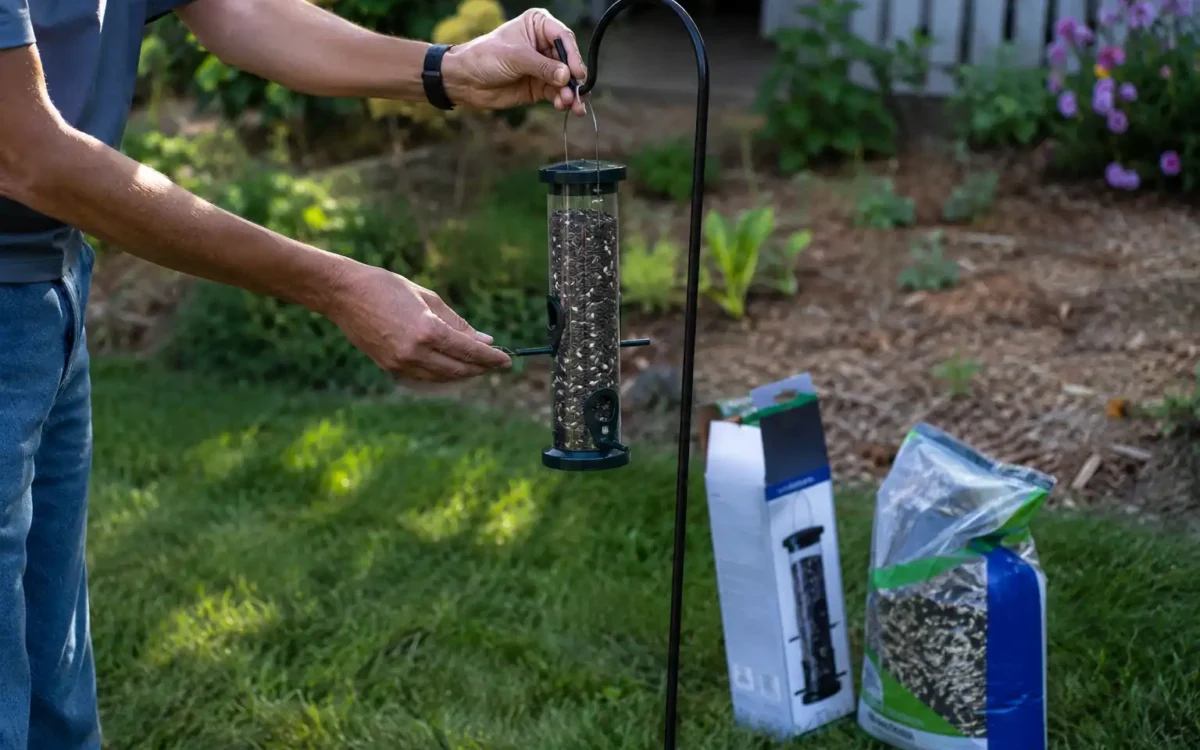
Where do you actually start? That’s the question almost everyone asks before buying their first feeder, and it’s usually followed by a dozen more — which seed, which spot, how many feeders, how soon will anything show up. Bird feeding for beginners doesn’t need to be complicated, but it does help to follow a rough order rather than buying everything at once and hoping it all works out. This guide walks through that order, step by step, without overwhelming a first attempt with more than it needs.
Pick One Feeder to Start
The best first bird feeder for beginners is almost always the simplest option: a single tube or hopper feeder holding one seed type. Trying to answer how many feeders should a beginner start with is easy once framed this way — just one, until it’s clear which birds are actually showing up.
Adding more feeders later is simple. Untangling a crowded, half-used setup that never quite worked is a much bigger hassle to walk back from. A single feeder also makes it far easier to notice patterns — which birds show up, when, and whether the current spot is actually working well.
Choose a Beginner-Friendly Seed
The best beginner bird seed is black oil sunflower, without much competition. It appeals to the widest range of common backyard species, has a thin shell most birds can crack easily, and avoids the low-value filler grains that come in cheap mixed bags.
Our full breakdown in best bird seed for backyard birds covers other seed types worth trying once the first feeder is up and running well, but sunflower alone is a genuinely solid place to begin, without needing to mix or experiment right away.
Get the Placement Right From Day One
Solid beginner bird feeder placement tips save a lot of frustration later. Height, distance from windows, and nearby cover all matter more than most first-time feeders expect, and getting these basics right from the start avoids the most common early mistakes.
Our detailed guide on where to place a bird feeder in your backyard covers the exact distances worth following, including the window-safety rule that trips up a surprising number of new feeders — a detail almost every beginner overlooks entirely on their first attempt.
Know What to Expect (Patience Is Part of It)
A common early frustration is not knowing how long it takes for birds to find a new feeder. In most yards, it’s somewhere between a few days and a couple of weeks, depending on how many birds already frequent the area and how visible the feeder happens to be.
Resisting the urge to move the feeder every few days actually matters here — constant relocation resets the discovery process rather than speeding it up, which is one of the more common bird feeding mistakes beginners make without realizing it. It’s a hard instinct to fight when nothing seems to be happening, but it genuinely pays off to wait it out.
Build a Simple Cleaning Routine Early
Good bird feeding basics include a maintenance habit from the very beginning, not just after something goes wrong. A quick rinse every week or two, and a fuller clean if seed ever looks wet or moldy, keeps a first feeder in good enough shape that it never becomes a bigger project later on down the line.
This one habit alone prevents most of the pest and mess issues that discourage beginners from sticking with the hobby past the first season and into the following year.
How to Bird Watch From Home for Beginners
Learning how to bird watch from home for beginners doesn’t require binoculars or a field guide right away. Simply noticing which species show up, what time of day they’re most active, and which foods they seem to prefer builds real observation skills over time, without any special equipment needed to get started.
Keeping even a loose mental note — or a quick notes-app entry — of new visitors turns a basic feeder into something closer to an ongoing hobby rather than a one-time setup project that gets forgotten after the first few weeks.
Bird Feeding for Kids and Beginner Families
Bird feeding for kids beginners can be genuinely engaging when the setup stays hands-on and simple enough for a child to feel actual ownership over it. Letting a child help fill the feeder, choose its spot, or keep a simple tally of which birds show up turns the whole process into an ongoing activity rather than something only adults maintain.
A single feeder within easy view of a window works especially well for younger kids, since it means watching doesn’t require going outside or standing still for long stretches of time, and it fits naturally into an already busy family routine.
Branch Out Once You’re Comfortable
Once the first feeder feels manageable, expanding is a natural next step. A second feeder type — like a nectar feeder for hummingbirds — is a popular choice, since it draws an entirely different set of visitors than a standard seed feeder and adds variety without complicating the existing routine.
Our guide on how to attract hummingbirds to a feeder covers everything needed to add that second setup without starting completely from scratch.
How to Start Bird Feeding on a Budget
Learning how to start bird feeding on a budget doesn’t mean settling for a worse experience or a smaller welcome from local birds. A basic feeder, a simple pole or window mount, and a bag of black oil sunflower seed cover the essentials without any of the extras that tend to inflate a first purchase unnecessarily.
Skipping decorative extras, specialty feeders, and premium seed blends at the start keeps costs low while still setting up something that genuinely works — those additions are easy to justify later, once there’s already proof the basics are drawing birds in and the hobby feels worth investing further into.
The Roadmap at a Glance
| Step | What to Do | Why It Matters |
|---|---|---|
| 1. Feeder | Start with one tube or hopper feeder | Easier to manage and evaluate |
| 2. Seed | Black oil sunflower seed | Appeals to the widest range of species |
| 3. Placement | Correct height and window distance | Prevents the most common early mistakes |
| 4. Patience | Leave the feeder in place 1–2 weeks | Constant moving resets discovery time |
| 5. Maintenance | Clean every 1–2 weeks | Avoids pests, mold, and mess buildup |
This is a starting order, not a strict rulebook — plenty of setups succeed with small variations on this same basic path.
A friend who’d just moved into a house with an actual yard for the first time asked me almost word-for-word, “where do I even start with this?” She’d already looked at four different feeder styles online and gotten more confused with each one.
The advice that actually helped was ignoring most of that research and just buying one basic feeder and a bag of sunflower seed. Within a week and a half she had regular visitors, and only then did she start asking about a second feeder — which turned out to be a much easier decision once she’d already seen what showed up the first time. She’s since added a second feeder and a small water dish, but neither felt overwhelming because they came one at a time instead of all at once, spread out over a couple of months.
Frequently Asked Questions
What’s the easiest bird feeder for a beginner?+
A simple tube or hopper feeder is the easiest starting point, since it’s straightforward to fill, holds seed well, and works for a wide range of common species right away.
How much does it cost to start feeding birds?+
A basic feeder, pole or hook, and a bag of sunflower seed typically runs somewhere between $20 and $40 total, making it one of the more affordable hobbies to try.
Do beginners need to clean feeders often?+
Every one to two weeks under normal conditions is enough for most beginner setups, with a deeper clean anytime seed looks wet, clumped, or moldy.
What’s the biggest beginner mistake in bird feeding?+
Moving the feeder too often out of impatience is one of the most common mistakes, since it resets the discovery process rather than speeding it up.
How soon will birds find a new feeder?+
Usually somewhere between a few days and two weeks, depending on how many birds are already active nearby and how visible the feeder is from natural cover.
Think about which step you’re actually on
Most people overcomplicate bird feeding for beginners by trying to solve every step at once instead of working through them in order. Figuring out which one of these six you’re currently stuck on is usually a faster path forward than starting over with a completely different setup from scratch.
This roadmap is your 30-day learning plan — one step at a time, from your first feeder to a working routine. Once you’ve worked through it, our complete guide to feeding backyard birds covers the whole system in depth — the setup manual and shopping list to return to all year.
Bird Feeding for Beginners: Key Takeaways

Related Articles
How to Attract Dark-Eyed Juncos to Your Backyard: 7 Proven Tips (2026)
How to Attract Dark-Eyed Juncos to Your Backyard: 7 Proven Tips (2026) The first time I saw one,…
Read Article
How to Attract Goldfinches to Your Backyard: 7 Proven Tips (2026)
How to Attract Goldfinches to Your Backyard: 7 Proven Tips (2026) There is a moment every backyard bird…
Read Article
How to Attract Chickadees to Your Backyard: 7 Proven Tips (2026)
How to Attract Chickadees to Your Backyard: 7 Proven Tips (2026) If there is one bird that can…
Read Article