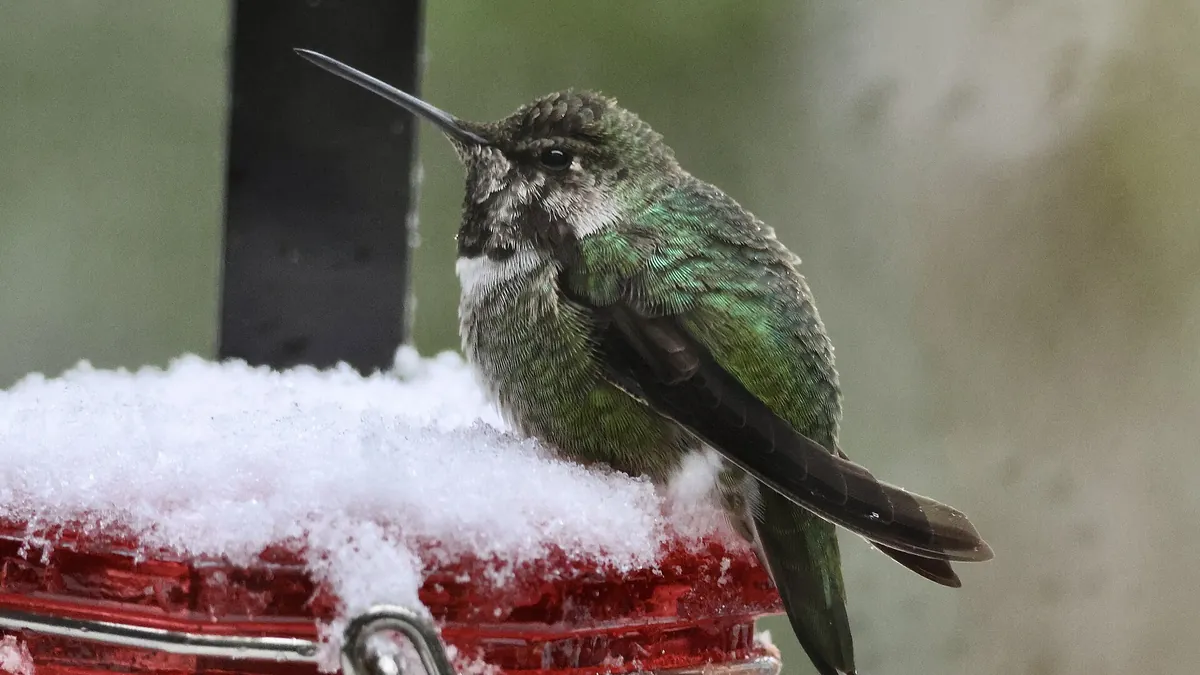
The Bird That Will Wait for Your Dawn
Anna’s Hummingbirds are the winter hummingbirds of the West. They will stay through frost and snow along the Pacific coast. Anna’s Hummingbirds were once birds of western California alone, and they expanded their range north in recent decades.
On a cold night, a hummingbird will drop into torpor, a nightly shutdown that will cut body temperature and heart rate to a bare minimum. BirdNote describes torpor as nightly hibernation: an Anna’s will drop from near 107°F to as low as 48°F, and its heart rate will fall from more than 400 beats per minute to around 50. In December 2022, a photographer in Vancouver found a female Anna’s in torpor at minus 8°C, with the nectar frozen solid beside her.
That story will explain the dawn deadline: a bird will wake from torpor with its fuel nearly gone, so thawed nectar will be out 30 minutes before sunrise, the most critical feeding time of the day, according to Boise State’s Intermountain Bird Observatory.
Freeze Line One: 32 to 29°F
A light frost will threaten the ports first, so you will move the feeder to the sheltered side of the house, under an eave or against a wall. A bigger volume of liquid will hold its heat longer, so you will fill a larger feeder, bring it in at dusk, and put it back out before dawn. Feeding Tools will keep your feeder math in one place.
Freeze Line Two: 28 to 20°F
A hard freeze will beat shelter and a night indoors, because the mix will start to freeze around 29°F and the nectar will turn to slush by day as well as at night. You will rotate two feeders, and you will check the ports first, because the BC SPCA warns that hummingbirds are most commonly injured when the feeding ports freeze. A saucer style feeder freezes slower than a tall bottle feeder.
Freeze Line Three: Below 20°F
A deep freeze will leave only one reliable fix: a heated feeder or a feeder heater that will stay on overnight. Switch the heater on before the nectar freezes, because a heater will not thaw one that has already frozen, and check it every day, because warm nectar spoils faster than cold nectar, and clean it once a week in cold weather.
The Recipe Will Stay One to Four
You will not change the recipe to fight the cold. The regular nectar recipe is 1 part white sugar to 4 parts water, and Birds Connect Seattle recommends that mix all winter, because a stronger mix may damage kidneys and liver. Extra sugar will lower the freezing point by only a few degrees.
Use white sugar and water only, and leave honey, brown sugar, maple syrup, red dye, alcohol, and any antifreeze out of the feeder. Birds Connect Seattle published its winter hummingbird guidance in December 2022, and it has held the same 1:4 line ever since.
Which Fix Will Fit Your Freeze Line
No single fix will fit every freeze.
| Fix | Freeze line | What you will do |
|---|---|---|
| You will bring it in at night | 32 to 29°F | You will bring it in at dusk and put it out 30 minutes before sunrise. |
| You will rotate two feeders | 28 to 20°F | You will swap them whenever the outdoor one starts to freeze. |
| You will heat the feeder | Below 20°F | You will leave it on overnight and check the nectar daily. |
| You will shelter and insulate it | 32 to 29°F | You will hang it under an eave and wrap it in a sock or lights. |
Your Nightly Routine
- Check the overnight low and pick your fix.
- You will move the feeder to the sheltered side.
- Fill it with fresh 1:4 nectar and check the ports.
- You will bring the feeder in at dusk, or switch the heater on before dark.
- Set an alarm for 30 minutes before sunrise.
- You will put thawed nectar out before first light.
Three Mistakes That Will Cost a Bird Its Breakfast
You will not switch a heater on in the morning and expect a thaw, because a heater will not melt one that has already frozen. You will not leave a frozen feeder hanging, and you will not trust insulation alone, because a wool sock will only slow freezing. A frozen feeder is a locked pantry, not a slow one.
When the Cold Will Arrive
The first hard freeze will reach the valleys of the Pacific Northwest in mid-November to early December, according to the Farmers’ Almanac guide, which draws on NOAA 1991-2020 normals. Have your heater or your second feeder ready before that first freeze, not after it. Georgia’s wildlife agency reported 50 to 100 rufous hummingbirds in the state each winter. The first confirmed rufous in Georgia was documented in Athens on 6 August 1978. In the Southeast, the rufous will need the same thawed nectar at dawn. The attract guide will help you place the feeder.
Once a Bird Will Count on You
A winter hummingbird that will find a reliable feeder will build its day around it. Boise State’s observatory recommends keeping the feeder up until temperatures are back above freezing. In 2019, Boise State’s observatory asked Idaho residents to report any hummingbird seen between November and March. You will report a winter hummingbird to eBird, and Project FeederWatch will take your counts too. You will ask a neighbour to handle the morning feeder if you will be away.
Questions You Will Ask
Will hummingbird nectar freeze at 30°F?
A feeder will hold liquid nectar at 30°F. The mix will start to freeze around 29°F.
Will a stronger mix keep nectar from freezing?
A stronger mix will lower the freezing point by only a few degrees.
Will a hummingbird feed at night?
Hummingbirds will not feed at night. Bring the feeder in at dusk and put it back out 30 minutes before sunrise.
Will a heated feeder work in single digits?
Boise State’s observatory tested a heated feeder into single-digit temperatures.
Will taking the feeder down hurt a hummingbird?
You will not take a feeder down once a wintering bird has committed to it.

Related Articles
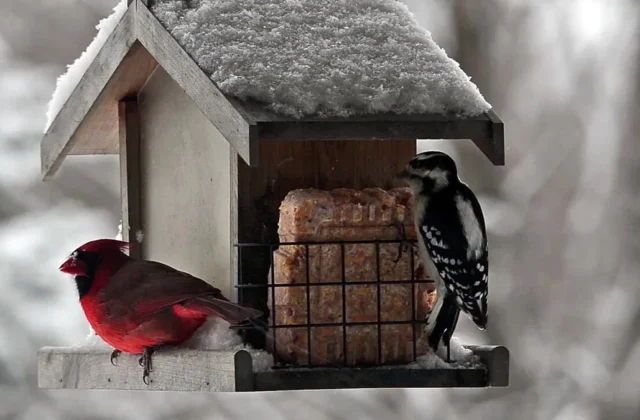
How to Keep Bird Seed From Freezing
Frozen seed blocks your feeder while birds go hungry. Learn the frost-lock check, the feeder-by-feeder fixes, and the…
Read Article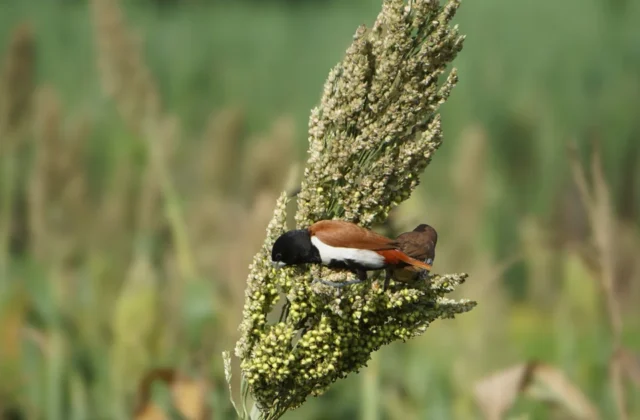
Millet Seed for Birds: White Proso Millet Ground-Feeding Birds Actually Eat
White proso millet suits ground-feeding birds best: sparrows, juncos, doves, towhees, and quail. Learn which millet to buy,…
Read Article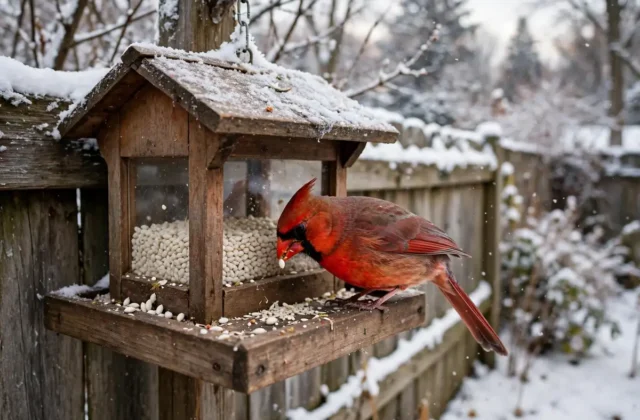
Safflower Seed: The Squirrel-Resistant Seed Cardinals Love
Safflower seeds are a squirrel-resistant feeder food loved by cardinals, chickadees, and finches. Learn which birds eat them,…
Read Article