
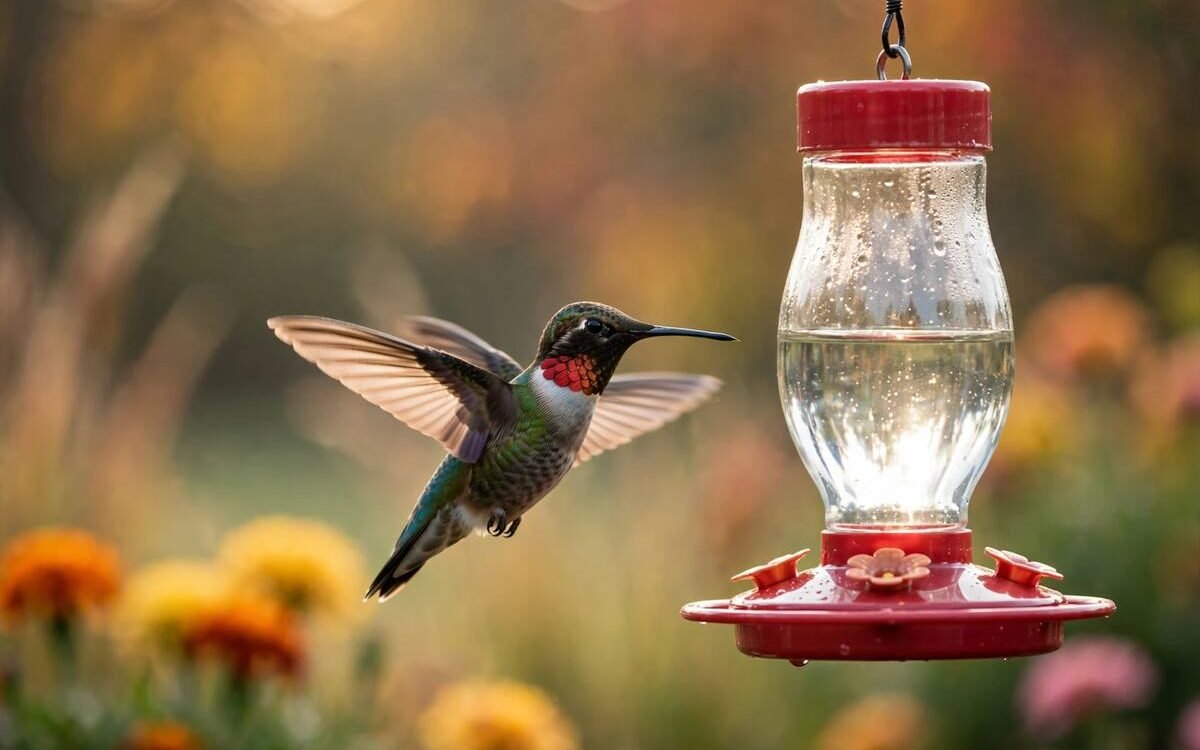
Every September, I find myself standing at the kitchen window, coffee in hand, staring at my hummingbird feeder the way I stare at a pot that won’t boil. The frantic summer traffic has slowed to a trickle — maybe one quick visit at dawn, then nothing all day. And the same question pops into my head that pops into yours: is it time? If you’re wondering exactly when to take down hummingbird feeders, you’re not alone. I asked myself the same thing every fall for years, and I got it wrong more than once.
The year I took my feeder down the day after Labor Day still bothers me. A week later, a lone female ruby-throat showed up, hovered where the feeder used to hang, and moved on. She was a late migrant, running on empty, and I’d removed her refueling stop because the calendar told me summer was over. That mistake taught me the single most important lesson about fall feeder timing: the birds don’t read calendars. Here’s what I do now instead.
Rule #1: Stop Watching the Calendar — Watch the Birds Instead
There is no magic date for taking down a hummingbird feeder, and anyone who gives you one is guessing. Hummingbird migration is driven by shortening daylight, not by temperature or by your schedule. In my yard, the bulk of the ruby-throats leave in early September, but I’ve had stragglers well into October. A neighbor two streets over once reported one in early November.
So my first rule is simple: let the birds tell you when the season is over, not the calendar. Keep the feeder up and clean as long as hummingbirds are visiting — even if visits drop to one or two a day. I’ve been tracking fall migration patterns in my own backyard for years, and the tail end of the season is always longer and messier than I expect.
Rule #2: When to Take Down Hummingbird Feeders — My Two-to-Three-Week Rule
Here’s the practical answer to when to take down hummingbird feeders: wait two to three weeks after your last confirmed sighting, then take it down. That buffer is the whole game.
Why the wait? Because the last bird you see is rarely the last bird passing through. Late migrants — juveniles making their first trip south, or birds pushed off course by weather — travel behind the main wave. Cornell Lab’s Bird Academy experts give the same advice: if you’re still seeing hummingbirds, keep the feeder up, and even after visits stop, leaving it a while longer costs you almost nothing and can genuinely help a tired traveler.
I keep a cheap little notebook by the window and jot down the date of my last sighting each fall. Two to three quiet weeks after that date, the feeder comes down. It takes the guesswork completely out of it.
Rule #3: Adjust for Your Region — the South Plays by Different Rules
Where you live changes everything about feeder timing. A friend in Minnesota takes hers down in October; a friend in coastal Texas barely takes his down at all. Here’s my regional cheat sheet based on what I’ve learned and what the experts say:
| Region | Typical last sightings | My takedown rule |
|---|---|---|
| Northeast & Midwest | Late September to mid-October | 2–3 weeks after last sighting; usually down by late October |
| Southeast | October into November | 2–3 weeks after last sighting; watch for overwintering birds |
| Gulf Coast & Texas | November through winter | Many keep feeders up all winter; bring in at night if freezing |
| Southwest & Arizona | Year-round residents | Year-round feeding is fine with regular cleaning |
| Pacific Coast | Year-round (Anna’s hummingbirds) | Year-round; Anna’s don’t migrate much |
As experts interviewed by Southern Living point out, in places like Florida and the Gulf Coast, overwintering hummingbirds — plus the occasional rare western vagrant — can make a year-round feeder genuinely worthwhile. If you’re in the North, though, don’t copy the South’s playbook. Match your timing to your birds.
Rule #4: Don’t Let the First Frost Rush You
This is the mistake I see most often, and I made it myself that Labor Day year — sort of. People feel the first cold snap and assume the hummingbirds need the feeder gone, or that the birds will freeze if the feeder is still up. Neither is true.
Hummingbirds don’t decide to migrate based on temperature; they go by day length, a signal no cold snap can fake. And a feeder can’t trap them either (more on that myth in a moment). A light frost doesn’t mean the season is over — I’ve had active feeders a full month after our first frost. Wait for the birds to actually stop coming, then start your two-to-three-week countdown.
One practical note: if you do get a hard freeze while the feeder is still up, the nectar can freeze and crack a glass feeder. On nights below freezing, I bring the feeder inside and put it back out at dawn. It takes thirty seconds and saves the feeder.
Rule #5: Keep Cleaning Like It’s July
Here’s the unglamorous truth about fall feeding: the work doesn’t get easier just because the birds are fewer. Warm early-fall days can spoil nectar just as fast as August heat, and a feeder with only one visitor a week is easy to forget. Don’t.
I stick to the same routine I use in summer, which follows how I clean my hummingbird feeder all season: fresh nectar every 2–3 days, a full scrub at least weekly, and an immediate dump-and-clean the moment nectar looks cloudy. Fall’s temperature swings make this even more important — a warm afternoon after a cool morning is prime spoilage weather.
And keep the recipe honest. Late in the season I see people tempted to make the nectar stronger “to give them extra energy for the trip.” Don’t. Stick with my simple hummingbird nectar recipe — one part plain white sugar to four parts water, no dye, no honey, no extras. Too-sweet nectar can actually harm their kidneys, and the standard 1:4 ratio already matches natural flower nectar. If ants discover your late-season feeder, here’s my guide to keeping ants out of a hummingbird feeder before they take over.
Rule #6: When to Take Down Hummingbird Feeders Without Guilt — Busting the Big Migration Myth
Let’s kill the worry that keeps so many people up at night: leaving your feeder up will not stop hummingbirds from migrating. I believed this myth for my first two years of feeding, and it made me take the feeder down too early out of misplaced kindness.
The science is clear and comforting. Hummingbirds are genetically programmed migrants; they leave based on changes in day length and the angle of the sun, not on whether your feeder is full. Audubon’s hummingbird feeding FAQs state it plainly: your feeder won’t make them stay too late, and keeping it up can help late migrants or out-of-range species that show up into early winter.
So when you finally decide on your takedown date, do it without guilt. You didn’t delay anyone’s journey — you ran a refueling station, and you ran it well.
Rule #7: Take It Down Clean — Store It Right for Spring
When your two-to-three quiet weeks are up, don’t just unhook the feeder and toss it in the garage. Old nectar residue left to sit all winter turns into a moldy mess that you’ll be scrubbing off in April — I know, because I’ve done exactly that.
My takedown routine takes ten minutes: discard every drop of leftover nectar, take the feeder fully apart, scrub every port and crevice with hot water and a bottle brush, rinse thoroughly, and let it air-dry completely before storing. I store mine disassembled in a paper bag in a dry closet, which keeps dust and spiders out of the ports.
Then I do one more thing: I write next spring’s hang date on a sticky note and put it where I’ll see it. Hummingbirds remember reliable food sources and return to them year after year, so having your feeder up and fresh for attracting hummingbirds to a feeder next spring — about a week before they normally arrive in your area — sets you up for an even better season.
5 Mistakes I See Every Fall (Learn From Mine)
- Taking the feeder down on a calendar date. Labor Day, the first frost, Halloween — none of these are migration signals. Watch the birds, not the date.
- Quitting the cleaning routine early. A neglected fall feeder with spoiled nectar is worse than no feeder at all. If you can’t keep it clean, take it down.
- Sweetening the nectar “for the journey.” Extra sugar doesn’t help and can harm. The 1:4 ratio is the recipe — in September just like in June.
- Adding red dye for late migrants. The dye was never necessary and the chemicals may be harmful. Clear nectar in a feeder with red parts works perfectly.
- Storing a dirty feeder. Take it apart, scrub it, dry it fully. Your April self will thank you.
Frequently Asked Questions
Will leaving my feeder up stop hummingbirds from migrating?
No. Hummingbirds migrate based on day length and internal biological cues, not feeder availability. Your feeder is a refueling stop, not a trap — it can’t override their instincts or delay their departure.
When should I take down hummingbird feeders in the fall?
Wait until two to three weeks after your last hummingbird sighting, then take the feeder down. There’s no single calendar date — it depends on your region and when your local birds actually finish passing through.
Should I take my hummingbird feeder down after the first frost?
Not necessarily. A light frost doesn’t end the migration season, and hummingbirds may still be passing through for weeks afterward. On freezing nights, bring the feeder indoors overnight and put it back out at dawn.
Can I leave my hummingbird feeder up all winter?
In the Gulf Coast, southern Arizona, south Florida, and the Pacific Coast, yes — hummingbirds overwinter in these areas and a maintained feeder helps them. Everywhere else, take it down a few weeks after your last sighting and store it clean.
How often should I clean the feeder in fall?
Keep your summer schedule: fresh nectar every 2–3 days and a full scrub at least weekly, more often in warm spells. Dump and clean immediately if the nectar looks cloudy, no matter when you last filled it.
What should I do with leftover nectar when I take the feeder down?
Discard it — never save old nectar for spring. Take the feeder apart, scrub everything with hot water, rinse well, air-dry completely, and store it disassembled in a dry place.
So here’s my question for you as the season winds down: when did you see your last hummingbird this year — and did you give it those extra two to three weeks? I started keeping my little window notebook three falls ago, and it’s turned feeder timing from a yearly guess into a simple routine. Try it this season, keep that nectar fresh for the stragglers, and your spring hummingbirds will remember the favor.

Related Articles
How to Keep Starlings Away From Bird Feeders: 7 Proven Tips (2026)
Nothing empties a bird feeder faster than a flock of European starlings. One minute your tube feeder is…
Read Article
How to Keep Deer Away From Bird Feeders: 7 Proven Ways (2026)
One October morning, coffee in hand, you walk to the back window expecting the usual rush of chickadees…
Read Article
How to Clean Bird Feeders: 7 Easy Steps (2026)
I used to think a full feeder was a healthy feeder — until the spring I noticed a…
Read Article