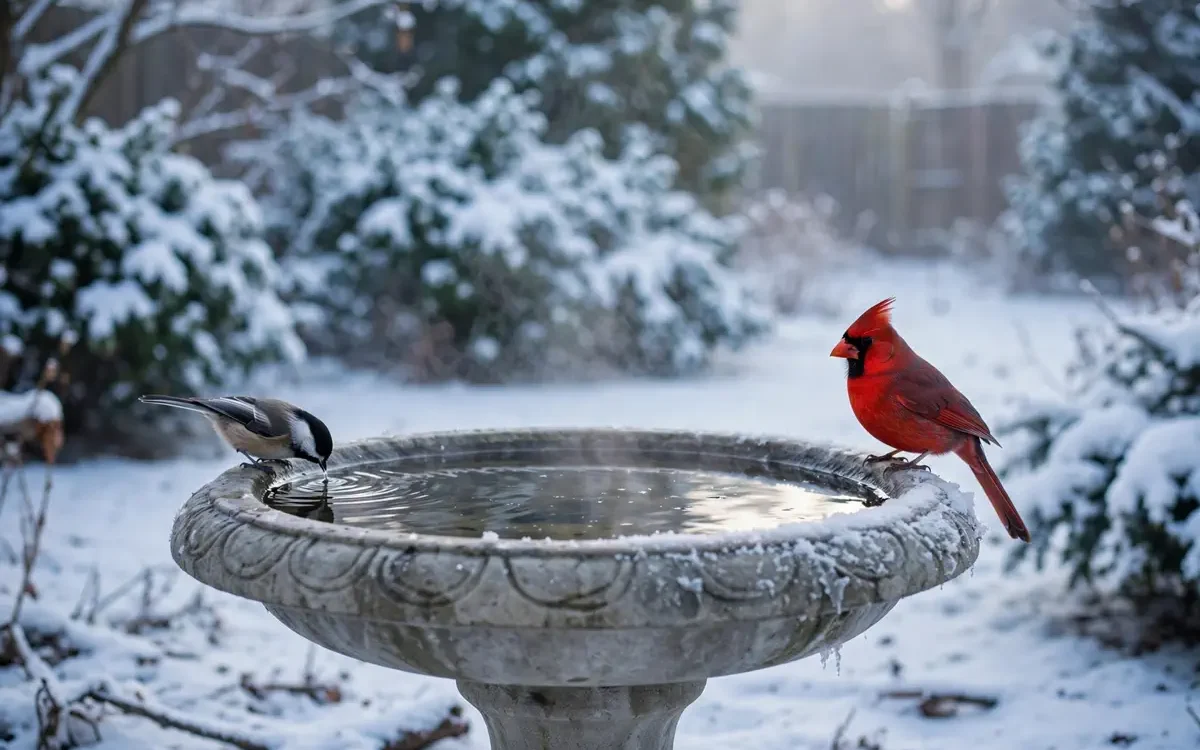
Do Birds Need Water in Winter? (The Surprising Truth)
Short answer: yes — absolutely. And here is the surprising part: in deep winter, liquid water can matter more than extra seed. There is an old birding saying that you can attract more birds with open water in winter than with seed alone — and once you understand what is happening inside a bird’s body on a freezing night, you will never look at your birdbath the same way again.
Most people focus on food when temperatures drop. Food matters, of course. But every winter, countless backyard birds face a quieter crisis: everything liquid has turned to ice, and the only “water” available is snow — which costs them precious energy to melt. Do birds need water in winter? They need it every single day, for drinking and for bathing. Below is the science most guides skip, plus seven practical ways to give it to them — with or without electricity.
💧 The Winter Water Answer, Up Front
- Yes, daily. Birds need liquid water every day in winter — dehydration can threaten them even more than hunger.
- Snow is a bad deal. Eating snow forces birds to burn calories melting it to body temperature — calories they need to survive the night.
- Bathing is survival. Clean feathers insulate; dirty, matted feathers leak body heat. Birds bathe even in deep cold.
- Never add salt or antifreeze. They are toxic and destroy the waterproofing on feathers. Only ever plain water — or a proper heater.
7 methods below — from a $15 de-icer to zero-electricity tricks.
📋 In This Guide
- Why winter water matters more than you think
- The science most guides skip
- Heated birdbath / de-icer
- The warm-water routine (no power)
- Sun, black basins & tennis balls
- Placement rules
- Depth, rocks & frost-proof basins
- Winter cleaning routine
- Misters off, drippers on
- What NEVER to add
- Method comparison
- Mistakes to avoid
- FAQs
Why Winter Water Matters More Than You Think
Ask “do birds need water in winter” and most people picture a bird sipping politely from a bath. The reality is rawer. A chickadee weighs less than half an ounce — about three pennies in your palm — and survives frigid nights almost entirely on the energy of what it foraged that day. Some birds can lose up to 10% of their body weight on a single bitter night. Every calorie is budgeted.
Now add the water problem. With ponds and streams frozen, a bird has two choices: fly a long distance to find open water — burning the very energy it needs for the night — or eat snow. Snow works, technically. But melting snow to body temperature inside the body costs energy and lowers body temperature, which then demands even more food to recover. It is a tax on an already overdrawn account. That is why dehydration can be an even bigger threat to birds than starvation in winter, and why a yard with open water draws crowds that a seed-only yard never sees.
Then there is bathing — which sounds like a summer luxury until you learn the feather physics. Birds coat their feathers with oil from a gland near the base of the tail (the uropygial gland). That oil repels water and snow and keeps the feather layer fluffy — and fluff is insulation. But oil attracts dirt, and dirty feathers do not repel moisture well. A bird that cannot bathe ends up with gaps in its insulation, leaking body heat all night. So when you see a bird splashing in a heated bath at 20°F, it is not playing. It is doing maintenance that keeps it alive.
🔬 The Science Most Guides Skip
- Their feet have a heat-exchange trick. Ever wonder why a bird can stand on ice without freezing its feet? The blood vessel carrying warm blood out to the toes runs right alongside the vessel bringing cooled blood back — they exchange heat along the way, so almost no warmth is wasted on the feet. There are no muscles out there to keep warm, just tendons. Elegant, ancient engineering.
- Bathing triggers re-oiling. After a bath, birds methodically re-oil every feather from that tail gland. Watch a bird after it bathes: the long preening session is the point, not an afterthought.
- Torpor is the night shift. Chickadees and some other small birds drop their metabolism into a light, controlled torpor at night to conserve energy. Waking from it and rewarming costs fuel — which is one more reason the previous day’s calories (and hydration) matter so much.
- Moving water freezes slower. A gentle dripper or small pump does not just attract birds with sound — the movement itself delays ice formation. In mild freezes, motion alone can keep a bath open.
7 Ways to Give Birds Water in Winter
1Get a Heated Birdbath or Drop-In De-icer
This is the gold standard and far cheaper to run than people assume. A thermostatically controlled de-icer switches on around 32°F and off well before the water gets warm — it only prevents freezing; it does not heat the water like a kettle. Most units draw 50 to 200 watts, and many run only a fraction of the day. At typical electricity rates, a 200-watt unit costs on the order of a penny or two per hour of actual runtime — a few dollars a month to keep a neighborhood of birds hydrated.
You can buy a birdbath with the heater built in, or drop a de-icer into your existing bath. The National Audubon Society’s birdbath guidance suggests updating your bath for winter by adding a heater. For the setup itself, experts widely recommend a plastic bath with a built-in heater on a pedestal — freeze-proof, easy to clean, and the height also reduces cat risk. Always plug into an outdoor-rated outlet with ground-fault (GFCI) protection, and never run a heater dry.
2Run a Warm-Water Routine — No Power Needed
No outlet near the bath? You can still be the most popular yard on the block. Once or twice a day — morning is best — pour warm (not hot) water into the bath to melt the overnight ice. Do it at roughly the same time each day: birds are fast learners and will start showing up on schedule. A heavy-duty dark plant saucer works as a cheap, sturdy winter basin; when it freezes solid, just flex it, dump the ice disk, and refill.
This takes five minutes and costs nothing. In milder cold snaps it is genuinely all you need.
3Use the Sun, a Black Basin, and a Tennis Ball
Three folk tricks that actually help, especially combined:
- Move the bath into the sun. Even weak winter sun on a dark basin adds real warmth. Dappled sun is ideal — full blazing sun grows algae, but that is barely a winter problem.
- Go dark. A black or dark-colored basin absorbs solar heat far better than white concrete. It is a small edge, but winter is a game of small edges.
- Float a tennis ball. It sounds silly, but a ball bobbing in the breeze keeps the surface disturbed, which delays ice formation. It will not save you in a deep freeze, but it buys hours on marginal nights.
4Place It Like It Matters — Because It Does
Location rules for winter water, distilled from years of expert advice:
- Near cover, not inside it. Within a few feet of shrubs or branches so a wet bird can flutter straight to safety — but not buried in dense foliage where cats can hide and ambush.
- Never under feeders. Falling seed and droppings soil the water fast. Water station and food station should be separated.
- Close to the house. In winter, convenience wins: you will actually maintain a bath you can reach without trudging through deep snow — and you get the show from your window.
- Near power, if heated. Plan the heater’s cord path before the ground freezes; avoid extension cords lying across walkways.
5Keep It Shallow, Add Rocks, Retire the Concrete
Two inches of water over a gently sloped basin is the sweet spot — small birds can drink without swimming, and shallow water is easier to keep ice-free. Toss in a few flat rocks that break the surface: they give tiny birds secure footing and a place to stand if the level drops.
And a seasonal warning: concrete and ceramic baths are the most likely to crack when water freezes and expands inside their pores. If your bath is concrete or ceramic and not rated for freezing, empty it completely and store it before the first hard frost — or swap in a cheap plastic basin for the winter months. Plastic is lighter, will not crack, and is easier to sanitize.
6Clean It on a Winter Schedule
Cold does not mean clean. Refresh the water every two to three days, fish out leaves and seed husks daily, and give the basin a real scrub weekly — Audubon’s recipe is nine parts water to one part white vinegar, no synthetic soaps (soaps can strip the essential oils off birds’ feathers). Rinse thoroughly. My full year-round routine, including the disease-prevention angle, is in my bird feeder cleaning guide — the same hygiene logic applies to water.
7Turn Misters Off — Keep Drippers On
If you run a mister or fine spray in summer, switch it off once temperatures stay below freezing: fine airborne droplets can freeze onto feathers, which is the opposite of helpful. A slow, gentle dripper is different — larger droplets, less airborne mist — and the movement helps delay icing while the sound keeps pulling birds in. In the coldest snaps, even the dripper can ice up; that is what the heater (or your warm-water routine) is for. My full water-attraction setup is covered in how to attract birds with water.
Method Comparison: Cost vs. Effort vs. Reliability
| Method | Upfront Cost | Daily Effort | Reliability | Best For |
|---|---|---|---|---|
| Heated birdbath (built-in) | Medium–high | Near zero | Excellent — automatic | Set-and-forget winter water |
| Drop-in de-icer | Low (~$15–40) | Near zero | Excellent — automatic | Upgrading your existing bath |
| Warm-water routine | Free | 5 min, 1–2× daily | Good in mild cold | No outdoor outlet |
| Sun + black basin + tennis ball | Near free | Minimal | Fair — marginal nights only | Boosting any other method |
| Gentle dripper | Low | Minimal | Fair in mild freezes | Attraction + mild climates |
Mistakes That Leave Birds Thirsty
- Assuming snow is enough. It keeps them alive the hard way — melting it internally burns the calories they need for the night.
- Adding salt or antifreeze “just to stop freezing.” Toxic, and it destroys feather waterproofing. Never.
- Putting the bath under the feeder. Seed and droppings foul the water within days.
- Leaving the concrete bath out to crack. Ice expansion splits porous concrete and ceramic — store them or swap to plastic.
- Running the mister all winter. Fine spray can freeze on feathers; switch to a gentle dripper or still heated water.
- Forgetting it entirely. A frozen, filthy bath is worse than none — it teaches birds your yard is unreliable. If you cannot maintain it, take it in for winter.
Pair winter water with winter food and the effect multiplies: high-fat foods like suet give birds the calories to survive the night, and open water saves the calories they would have burned melting snow. My suet guide and fall feeding guide cover the food side. But if you do one thing this week, do the water — do birds need water in winter? Ask the chickadee queuing at the bath at dawn. It already knows.
Frequently Asked Questions
Do birds really need water in winter, or is snow enough?
They genuinely need liquid water. Birds can eat snow, but melting it to body temperature burns precious calories and lowers body temperature — a bad trade on nights when some birds lose up to 10% of their body weight. Dehydration can threaten winter birds even more than hunger.
Will birds bathe when it is freezing outside?
Yes — and they should. Bathing lets them clean and re-oil their feathers, and clean, fluffy feathers are their insulation. Birds coat feathers with oil from a gland near the tail; dirty feathers lose their water-repelling ability and leak body heat.
How much does a heated birdbath cost to run?
Very little. Most de-icers draw 50–200 watts and only run when temperatures demand it, thanks to built-in thermostats (typically on around 32°F). Expect on the order of pennies per hour of runtime — a few dollars a month.
Can I put salt in the birdbath to keep it from freezing?
Never. Salt, antifreeze, glycerin, and chemical de-icers are toxic to birds and strip the waterproofing oils from their feathers — which can be fatal in freezing weather. Use a proper birdbath heater or refresh with warm water instead.
How deep should winter birdbath water be?
About two inches over a gently sloped basin. Shallow water is safer for small birds, easier to keep ice-free, and cheaper to heat. Add a few flat rocks breaking the surface for secure footing.
Where should I put a birdbath in winter?
Within a few feet of shrubs or branches (quick escape cover), never directly under feeders (droppings foul the water), in a sunny spot if possible, and close enough to the house that you will actually maintain it. If heated, keep the cord run short and use a GFCI outlet.

Related Articles
How to Do October Big Day From Your Backyard: A Beginner’s 1-Day Plan (2026)
Bird Feeding Note: This article is for general informational purposes. Keep feeders clean, provide fresh food and water,…
Read Article
How to Attract Wrens to Your Backyard: 7 Proven Tips (2026)
Bird Feeding Note: This article is for general informational purposes. Keep feeders clean, provide fresh food and water,…
Read Article
How to Attract Nuthatches to Your Backyard: 7 Proven Tips (2026)
Bird Feeding Note: This article is for general informational purposes. Keep feeders clean, provide fresh food and water,…
Read Article