How to Attract Wrens to Your Backyard: 7 Proven Tips (2026)
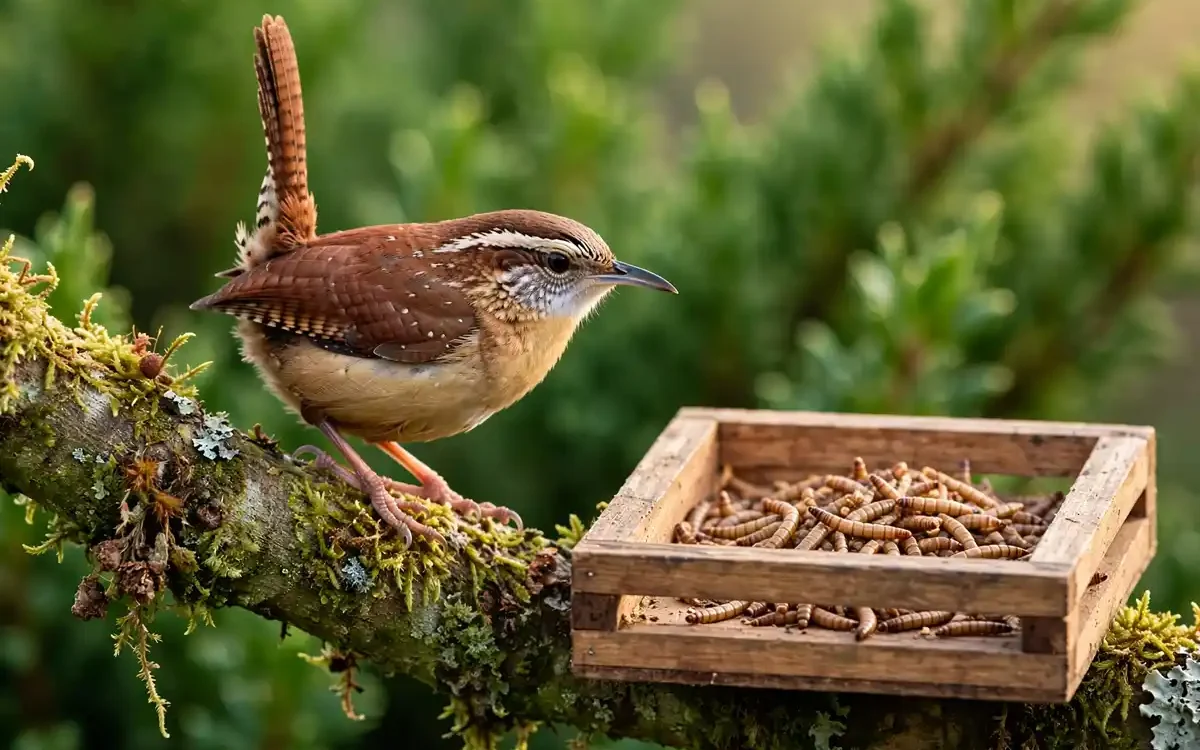
For three straight springs, a deafening teakettle-teakettle-teakettle rang out of the same azalea bush in my yard — and I never once saw the singer. I assumed the voice belonged to something big. Then one morning I finally spotted it: a bird smaller than a golf ball, warm cinnamon-brown, with a bold white eyebrow stripe and a tail stuck straight up like an exclamation point. Learning how to attract wrens to your backyard taught me something no other backyard bird has: for wrens, habitat beats hardware. The brush pile matters more than the feeder.
The bird behind that voice was a Carolina wren — the wren most eastern backyards will meet, with the house wren covering much of the rest. Wrens are primarily insectivores: insects, spiders, beetles, and caterpillars make up the core of the Carolina wren’s natural diet, per the Cornell Lab. That single fact is why generic seed-feeder advice fails with wrens so completely — and why a yard full of tube feeders can sit wren-free for years while the “messy” yard next door echoes with song.
The seven tips below are what finally worked in my yard, learned the slow way — plus four wren secrets most guides never mention, including one about house wrens you should know before you hang that nest box. They are ordered by impact: the feeder foods wrens actually take, the cover they require, the nesting help that converts visitors into residents, and the year-round habits that keep a pair singing from every season.
🌿 The Wren Formula at a Glance
- Mealworms — the one feeder food that actually works
- Suet + peanut butter — winter insurance when insects vanish
- Brush pile — cover first, always; the highest-impact move
- Dense native shrubs + leaf litter — grow their grocery store
- Right nest box — small hole, low, facing cover
- Shallow moving water — a dripper beats a deep still bath
- Consistency + safety — residents reward reliable yards
Plus: winter roost boxes, dummy nests, the house wren warning, and the 20-song repertoire — below.
📋 In This Guide
Why Wrens Are Worth Attracting
- They stay all year. Carolina wrens do not migrate. Once a pair adopts your yard, they are yours through every season — the same voices singing from the same shrubs in January and July. (House wrens in northern ranges do head south; know which wren your yard hosts.)
- They are free pest control. A single wren pair works your shrubs, bark, and leaf litter all day, gleaning beetles, spiders, caterpillars, and ants. My garden’s aphid pressure dropped noticeably the first full year wrens nested here — no spray required.
- The song is unreal. Wrens have the loudest voice per ounce of any backyard bird I know. One Carolina wren can out-sing a whole dawn chorus from inside a single shrub, and you will usually hear yours weeks before you ever see it.
- They are fearless little characters. Wrens investigate everything — new feeders, garden tools, open shed doors. Where nuthatches work the trunks and chickadees work the canopy, wrens own the undergrowth, popping in and out of shrubs like they are everywhere at once.
7 Proven Ways to Attract Wrens to Your Backyard
1Serve Mealworms — The One Feeder Food That Actually Works
If wrens have one feeder food, it is mealworms. These are insect-eating birds, and a wriggling mealworm is the closest a feeder comes to their natural menu. I put out a shallow dish of dried mealworms in a tray feeder near the shrubs, and the first wren found it within two days — after years of ignoring every seed feeder I owned.
Live mealworms are the gold standard and irresistible in nesting season, but dried ones work fine day to day and are far less hassle. Serve them in a shallow dish or tray feeder at shrub height, not in a tube feeder — wrens are hoppers and creepers, not clingers. Keep portions small: mealworms spoil fast in rain, so put out only a day or two’s worth. My full breakdown of live versus dried, sourcing, and storage is in the best mealworms for backyard birds guide.
2Hang Suet and Smear Peanut Butter — Winter Insurance
When cold weather thins the insect supply, wrens switch to high-fat backup foods — and suet is the big one. A plain suet cage hung at the edge of dense shrubs gets steady wren traffic in my yard from the first cold snap through early spring. No-melt suet dough holds up better if your winters run warm.
The trick I wish I had learned years earlier: smear a spoonful of plain peanut butter directly onto rough tree bark near the shrubs. Wrens forage bark crevices naturally, and a bark smear gets found fast — it is one of the most reliable wren lures I know. Use plain, unsalted peanut butter with no added sweeteners. My rundown of what is worth buying is in the best suet for backyard birds guide.
3Build a Brush Pile — Cover Comes First
Here is the tip that costs nothing and matters most: wrens choose cover before food. A brush pile — layered branches, twigs, and yard clippings in a quiet corner — gives wrens everything they are wired to want: hiding spots from hawks and cats, insects living in the decaying layers, and nesting material within hopping distance.
Build it loose, not compacted: crisscross larger branches at the base, pile smaller twigs and clippings on top, and aim for something roughly four to six feet across. Tuck it against a fence or behind dense shrubs where it feels sheltered. I resisted this for years because it looked “messy” — then the wrens arrived within a month of my first pile, and I have never looked back. The pile also shelters the insects your wrens eat, so it feeds them twice over.
4Plant Dense Shrubs and Go Native — Grow Their Grocery Store
Brush piles work best as part of a bigger plan: a yard with real undergrowth. Wrens forage low — in shrubs, leaf litter, and the base of plants — so dense, layered plantings beat open lawn every time. Native shrubs are the best investment because they host the native insects wrens evolved to eat; berry-producers like beautyberry and blackberry pull double duty as winter food.
Two habits make or break this tip. First, leave the leaf litter under your shrubs instead of raking it bare — wrens flip leaves hunting insects all winter, and bare mulch is a food desert to them. Second, skip the broad-spectrum insecticides on and around your plantings. Every bug you poison is a meal off the wren’s table, and a yard sprayed clean of insects will never hold wrens no matter how many feeders you hang. The Audubon field guide lists insects and spiders as the core of the Carolina wren’s year-round diet — your yard should grow the live version of that menu.
5Put Up the Right Nest Box — Small Hole, Low and Sheltered
Wrens are cavity nesters, but they are picky in a very specific way: they want small, tight, sheltered spaces. A box with an entry hole around one to one-and-a-quarter inches keeps out starlings while admitting wrens comfortably. Skip the perch under the hole — perches help predators and house sparrows, not wrens.
Mount the box five to ten feet up on a post or tree at the edge of dense cover — not out in the open lawn — with the entrance facing toward the shrubs so the birds have a quick escape route. Put boxes up by late winter so prospecting pairs find them in time for spring. Carolina wrens will also nest in wonderfully odd spots: hanging baskets, brush piles, old boots in the shed. I leave one corner of my potting shed undisturbed every spring, and a pair has claimed it three years running.
6Add Moving, Shallow Water
Wrens drink and bathe like every other bird, but they are especially drawn to water that moves. A dripper or mister over a shallow bath catches their eye from the shrubs — the motion and sound pull in birds that would ignore a still, silent birdbath entirely. Mine found the dripper before they found the mealworms.
Keep it shallow: an inch or two of water over a gently sloped basin is ideal, since wrens are small and wary of deep water. Place it within a few feet of dense cover so they can dart in and out, and keep it clean — a slimy bath repels the very birds you are trying to attract. My full setup, including the dripper rig I use, is in the guide on how to attract birds with water.
7Stay Consistent and Keep the Station Safe
Here is the part most people skip: everything above only works if it stays put. Carolina wrens are residents — they live in your neighborhood all year and learn which yards are reliable. Keep the mealworm dish filled, the suet cage stocked through winter, and the brush pile standing, and the same pair will work your shrubs daily for years.
Two guardrails protect that investment. First, hygiene: a busy feeding station needs regular cleaning, and my bird feeder cleaning guide covers the simple routine that keeps it healthy. Second, baffles on any feeder poles — everything wrens love, squirrels love too, and my squirrel-proofing guide covers the full playbook. And keep cats indoors or supervised: a wren foraging at shrub height is exactly the bird an outdoor cat catches first.
🤫 4 Wren Secrets Almost Nobody Mentions
- They roost together in winter. On freezing nights, Carolina wrens pile into the same cavity — sometimes half a dozen birds in one box — sharing body heat. A roost box (like a nest box but with the entrance hole near the bottom so warm air stays trapped at the top, plus interior perches) hung in fall gives your resident pair a winter survival shelter. It is the single best cold-season gift you can offer wrens.
- One male, 20+ songs. A male Carolina wren does not have one song — he has a repertoire of twenty or more distinct variations, and he sings them year-round, even in January snow. If your “one wren” sounds like three different birds across the week, it is probably the same male cycling his playlist.
- Pairs duet — and stay together. Carolina wren pairs are strongly bonded, often for life, and the female answers the male’s song with her own chatter calls. That dawn duet from the azaleas is a mated pair, not a solo.
- Know the house wren’s dark side. House wrens (the migratory cousins) are notorious for puncturing the eggs of other cavity-nesters — chickadees, bluebirds, even other wrens — to eliminate competition. If you also host bluebird or chickadee boxes, space wren boxes well away from them (100+ yards is the usual guidance) or accept the tradeoff. Do not site a house wren box right beside a bluebird box and act surprised in May.
What Wrens Will Actually Eat: A Quick Comparison
| Food | Wren Appeal | How to Offer It | Watch Out For |
|---|---|---|---|
| Mealworms | Excellent — top pick | Shallow dish in a tray feeder at shrub height | Spoil in rain; offer only a day or two’s worth |
| Suet | Very good — winter | Plain cage hung at the edge of dense shrubs | Use no-melt dough in warm weather |
| Peanut butter | Very good | Smeared on rough bark near cover | Plain and unsalted only; never any with xylitol |
| Chopped berries | Good — winter backup | Tray feeder; native berry shrubs better | Fresh fruit spoils fast in heat |
| Black oil sunflower | Low | They will pick around it | Wrens ignore seed for mealworms almost every time |
| Mixed seed | Poor | Skip it for wrens | A seed-only station is why people think wrens are rare |
Mistakes That Keep Wrens Away
I made every one of these before the wrens showed up. Learn from my slow start:
- Offering only seed in a tube feeder. Wrens are insectivores, not seed-eaters. A yard with nothing but tube feeders is invisible to them — mealworms, suet, and peanut butter are the feeder foods that count.
- The manicured, cover-free yard. Open lawn with a lone feeder pole and pruned-to-the-trunk shrubs gives a wren nowhere to hide and nothing to forage. They want the messy corner, not the showcase bed.
- Spraying for insects. Broad-spectrum insecticides wipe out the exact food web wrens depend on. Tolerate the harmless bugs and the wrens will handle the harmful ones.
- A nest box in the wrong spot. A box ten feet up in open lawn with a big entry hole invites starlings and sparrows, not wrens. Low, sheltered, small hole, entrance facing cover.
- Deep, still birdbaths. A deep basin of motionless water reads as a hazard to a small bird. Shallow, moving water near cover is what pulls them in.
- Giving up after two weeks. Wrens are cautious about new setups. My brush pile sat quiet for nearly a month before the first inspection — then the pair moved in like they had always lived there.
The messy corner of my yard that I almost cleared out “properly” is now the busiest few square feet I own — wrens darting through the brush pile at dawn, that teakettle song rolling out of the azaleas before I have finished my coffee. These tiny birds rewired how I see the whole yard: it is not a display to be tidied, it is a habitat to be stocked. Get the cover right, keep the mealworms coming, skip the spray, and how to attract wrens to your backyard stops being a question you ask and becomes the soundtrack you wake up to.
Frequently Asked Questions
What is the best food to attract wrens?
Mealworms are the top feeder food — live is best, dried works fine. Serve them in a shallow dish or tray feeder at shrub height, in small portions that won’t spoil in rain. Suet and plain peanut butter are strong backups, especially in winter when insects are scarce.
Do wrens come to bird feeders?
Rarely to seed feeders — wrens are insectivores and mostly ignore seed. They will visit tray feeders for mealworms, suet, and peanut butter, but habitat matters more than feeders: brush piles, dense shrubs, and nest boxes do the real attracting.
Do wrens migrate?
Carolina wrens are year-round residents and do not migrate — a pair that adopts your yard stays through every season. House wrens in northern ranges do migrate south for winter, so know which wren your yard hosts.
What kind of nest box will wrens use?
A small-cavity box with a 1 to 1.25 inch entry hole (small enough to exclude starlings), mounted 5 to 10 feet up at the edge of dense cover with the entrance facing the shrubs. No perch under the hole. Put it up by late winter.
Why don’t I see wrens even though I have feeders?
Because wrens need cover and insects first. A tidy yard with only seed feeders gives them nothing — add a brush pile, leave leaf litter under shrubs, stop spraying insecticides, and offer mealworms. Give a new setup a month; wrens are cautious about new habitat.
Will wrens bother my bluebird or chickadee nest boxes?
House wrens can puncture the eggs of other cavity-nesters, including bluebirds and chickadees. Space wren boxes well away from other nest boxes (100+ yards is the usual guidance) or accept the tradeoff if you want both species.

Related Articles
Do Birds Need Water in Winter? (The Surprising Truth)
Bird Feeding Note: This article is for general informational purposes. Keep feeders clean, provide fresh food and water,…
Read Article
How to Do October Big Day From Your Backyard: A Beginner’s 1-Day Plan (2026)
Bird Feeding Note: This article is for general informational purposes. Keep feeders clean, provide fresh food and water,…
Read Article
How to Attract Nuthatches to Your Backyard: 7 Proven Tips (2026)
Bird Feeding Note: This article is for general informational purposes. Keep feeders clean, provide fresh food and water,…
Read Article