
How to Attract Dark-Eyed Juncos to Your Backyard: 7 Proven Tips (2026)
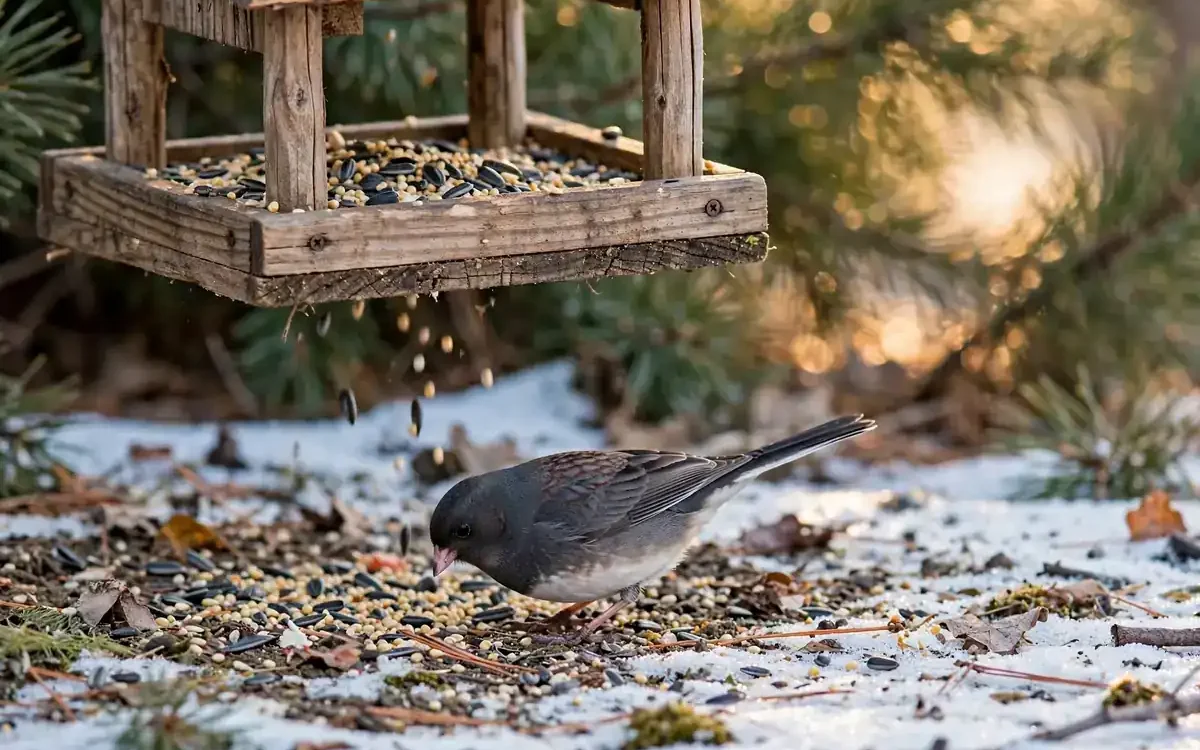
The first time I saw one, I almost missed it entirely. It was a gray October morning, and a small slate-colored bird was hopping through the leaf litter under my platform feeder, picking at spilled seed. When it flew up into the pines, two white tail feathers flashed like a signal — and I knew the juncos had arrived. Learning how to attract dark-eyed juncos to your backyard changed how I think about my feeding station, because these birds play by different rules than the perching songbirds I was used to.
Dark-eyed juncos are the classic “snowbirds” of North America — they sweep down from Canada and the high mountains every fall and spend the whole winter with us, from October through April. Cornell Lab of Ornithology ranks them among the most abundant birds you can find at a winter feeder, and the Cornell Lab’s junco overview notes they are birds of the ground first and everything else second. That one fact explains most of the mistakes people make with them.
The tips below are what I have learned over several winters of trial and error. Follow them and your yard can become a regular winter stopover for whole flocks of juncos.
Why Dark-Eyed Juncos Are Worth Attracting
Before the how, let me sell you on the why — because juncos are easy to overlook until you actually watch them:
- They show up exactly when the yard goes quiet. Most of my summer birds are gone by late October. Juncos arrive right on schedule to fill the silence, and they stay through the coldest months.
- They come in flocks, not singles. A single junco is nice; a flock of twenty hopping around your yard like gray wind-up toys is pure entertainment. Juncos winter in flocks averaging six to thirty birds, and they return to the same yards winter after winter.
- They are cleanup crew. Juncos vacuum up spilled seed under your feeders, which cuts waste and reduces the seed piles that attract less welcome visitors.
- They are easy to identify. Slate-gray above, crisp white below, pale pink bill, and those flashing white outer tail feathers in flight. Once you know the look, you will never confuse them with anything else.
7 Proven Ways to Attract Dark-Eyed Juncos to Your Backyard
1. Serve White Proso Millet — Their Number One Food
This is the tip most people get backwards, and it took me a whole winter to learn it. My first year, I filled every feeder with black oil sunflower seeds and wondered why the juncos barely visited. Then I read the research: Cornell’s life history notes say juncos at feeders actually prefer millet over sunflower seeds.
White proso millet is the single best seed for attracting dark-eyed juncos. It is cheap, widely available, and exactly what their small bills are built for. Mix it into your ground or platform feeder at a generous ratio — I use roughly half millet, a quarter cracked corn, and a quarter black oil sunflower. The juncos will sort out their favorites in minutes. If you want to go deeper on what is actually in the bag you are buying, see my guide to the best bird seed for backyard birds.
2. Feed Them Low — Ground and Platform Feeders Beat Tube Feeders
Juncos are ground birds, full stop. A tall tube feeder might as well be on the moon as far as they are concerned. My first setup had three beautiful tube feeders and zero juncos; the day I put a low platform feeder out, the flock arrived within a week.
Your best options: scatter seed directly on a cleared patch of ground, or use a low platform (tray) feeder positioned no more than a foot or two off the ground. Open hopper feeders with wide trays work too. Getting this low-feeding setup right is the single biggest factor in how to attract dark-eyed juncos to your backyard — it matters more than any seed choice.
3. Add Cracked Corn and Sunflower Hearts to the Mix
Once the millet brings them in, a varied menu keeps them coming back. Cracked corn is the classic second choice — juncos love it, and it is inexpensive enough to scatter generously. Black oil sunflower seeds and especially sunflower hearts (the hulled chips) round out the spread.
One word of caution from my own yard: cheap “economy” seed mixes are mostly milo and red millet, which juncos will pick through and leave. They are not being picky — those fillers are genuinely low-value for them. Buy a quality mix or blend your own. The Audubon field guide notes that juncos feed heavily on weed and grass seeds in winter, so their natural diet is small, high-energy seeds — your feeder menu should match that profile.
4. Leave the Leaf Litter Alone
This one felt wrong the first time I tried it. Every fall I used to rake my yard spotless. Then I learned that juncos energetically forage through leaf litter for fallen seeds, insects, and grubs — and a scrubbed-bare yard offers them nothing between feeder visits.
Now I leave the leaves under my shrubs and along the fence line all winter. The juncos spend hours scratching through them with that funny double-footed hop they do, kicking leaves backward to expose what is underneath. It gives them a second food source and, just as importantly, it makes them feel safe and at home. A tidy lawn with one lonely feeder gets occasional visitors; a yard with messy edges and a full feeder gets residents.
5. Give Them Winter Water
Here is the secret weapon that doubled my junco visits: a heated birdbath. I added one in December my second year, and the change was immediate. When every puddle and birdbath in the neighborhood is frozen solid, open water becomes the most popular spot on the block — and juncos drink and bathe daily, even in January.
Place the bath low, ideally within sight of the feeding area but a few feet away so seed debris does not foul the water. Juncos seem to prefer water close to the ground, which suits a ground-level or pedestal bath on a sturdy base. A small heater or a purpose-built heated bath keeps it open all winter. Clean it every few days with a stiff brush — winter water gets dirty fast, and healthy birds are returning birds. For the full details, read my guide on how to attract birds with water.
6. Provide Evergreen Shelter Near the Feeders
Juncos roost in conifers at night and dive for cover when a hawk appears, so the yard layout matters as much as the menu. My most productive feeding spot is about ten feet from a row of arborvitae — close enough for a quick escape, open enough that they can see danger coming.
If you do not have evergreens, a brush pile does the same job beautifully. Stack fallen branches and pruned limbs loosely in a corner of the yard and watch what happens: juncos, wrens, and sparrows will treat it like a five-star hotel, darting in and out all day. You can also plant native shrubs that hold their seed heads through winter — coneflowers, black-eyed Susans, and native grasses feed juncos naturally for months. The Champaign County Audubon chapter notes that juncos are easiest to find from November through December, which is exactly when shelter matters most.
7. Be Reliable From October Through April
Here is the final lesson, and the one that ties everything together: juncos remember who feeds them. These birds return to the same wintering areas year after year — and flocks that find a reliable yard will come back every season, sometimes with more friends.
Start your junco menu in early October, before the main flocks arrive, so the scouts find food waiting. Keep it going consistently through April, because late migrants and northbound birds still need fuel. A feeder that goes empty for a week in February teaches the whole flock to eat elsewhere — and they will. If you have ever wondered whether it is worth the effort, try it once: watching twenty juncos return to your yard the second winter, like old guests arriving for the season, is one of the great joys of bird feeding.
What to Feed Juncos: A Quick Comparison
Not all seed is equal when juncos are the target. Here is how the main options stack up, from my own yard notes:
| Food | Junco Appeal | How to Offer It | Watch Out For |
|---|---|---|---|
| White proso millet | Excellent — top pick | Scatter on ground or low platform feeder | Buy whole seed, not dusty old bags |
| Cracked corn | Very good | Ground or platform feeder | Goes stale fast in damp weather; buy small bags |
| Black oil sunflower | Good | Platform feeder or mixed with millet | Juncos prefer it hulled or as chips |
| Suet | Moderate — bonus energy | Low suet cage near the feeding area | Use no-melt dough in warm spells; see best suet for backyard birds |
| Nyjer seed | Low | Skip it for juncos | Save nyjer for finches instead |
| Cheap economy mixes | Poor | Avoid | Mostly milo fillers juncos will not eat |
3 Mistakes I Made Learning How to Attract Dark-Eyed Juncos to My Backyard (So You Do Not Have To)
Mistake 1: Hanging everything high. My first winter, all my feeders hung five feet off the ground, and I wrote juncos off as “not interested in my yard.” They were interested — they were down below picking at spill while I looked up. Ground-level feeding is not optional for juncos; it is the whole game.
Mistake 2: Buying the cheapest seed. A forty-pound bag of bargain mix looked like a deal until I watched the juncos kick the red milo aside and fly off hungry. A smaller bag of quality millet blend feeds more birds than a giant bag of filler.
Mistake 3: Forgetting the cats. Ground-feeding birds are cat magnets, and I lost count of how many times I found a neighbor’s cat crouched by my ground feeder that first winter. I solved it with a low wire fence ring around the feeding area and a serious talk with the neighbor — plus the full set of deterrents in my guide to keep cats away from your bird feeder. Also worth a look: my notes on keeping raccoons away from bird feeders, because raccoons will absolutely raid a low ground feeder at night — I now bring the platform feeder in after dark. And like every feeder, the junco station needs regular cleaning: my bird feeder cleaning guide covers the bleach-solution routine I use. Chickadees, by the way, often join junco flocks in winter — my chickadee guide covers the tube-feeder side of a mixed winter station.
Your Yard This Winter
There is something deeply reassuring about dark-eyed juncos. While half the bird world flees south, these tough little sparrows fly toward the cold, trusting that yards like ours will keep them fed. Put out the millet, keep it low, give them water and cover, and stay consistent — and October will bring you a gray-and-white welcoming committee that stays all winter. If this guide helped, share it with a friend who feeds birds, and tell me in the comments when your first junco of the season shows up. I will be watching for mine.
When do dark-eyed juncos arrive at backyard feeders?
Most juncos arrive in October as “snowbirds” moving down from Canada and the mountains, and they stay through April. Start your junco menu in early October so the first scouts find food waiting.
What is the best food to attract dark-eyed juncos?
White proso millet is their number one feeder food — Cornell Lab notes juncos prefer millet over sunflower seeds. Cracked corn, black oil sunflower seeds, and sunflower hearts are strong seconds. Avoid cheap mixes heavy on milo, which juncos will not eat.
Do dark-eyed juncos use regular bird feeders?
Not tall tube feeders — juncos are ground birds. They feed on scattered seed, low platform/tray feeders, and open hopper feeders placed a foot or two off the ground, always near cover.
Do dark-eyed juncos stay all winter?
Yes. They winter in flocks of six to thirty birds and return to the same yards year after year, as long as the food stays reliable from October through April.
What scares juncos away from feeders?
Hanging all feeders high, empty feeders, roaming cats near ground feeding areas, and raccoons raiding low feeders at night. Fix the height, stay consistent, and deter cats and raccoons.

Related Articles
How to Attract Goldfinches to Your Backyard: 7 Proven Tips (2026)
How to Attract Goldfinches to Your Backyard: 7 Proven Tips (2026) There is a moment every backyard bird…
Read Article
How to Attract Chickadees to Your Backyard: 7 Proven Tips (2026)
How to Attract Chickadees to Your Backyard: 7 Proven Tips (2026) If there is one bird that can…
Read Article
How to Attract Bluebirds to Your Backyard: 7 Proven Tips (2026)
The first time I saw a bluebird in my backyard, I nearly spilled my coffee. Early March, thin…
Read Article