
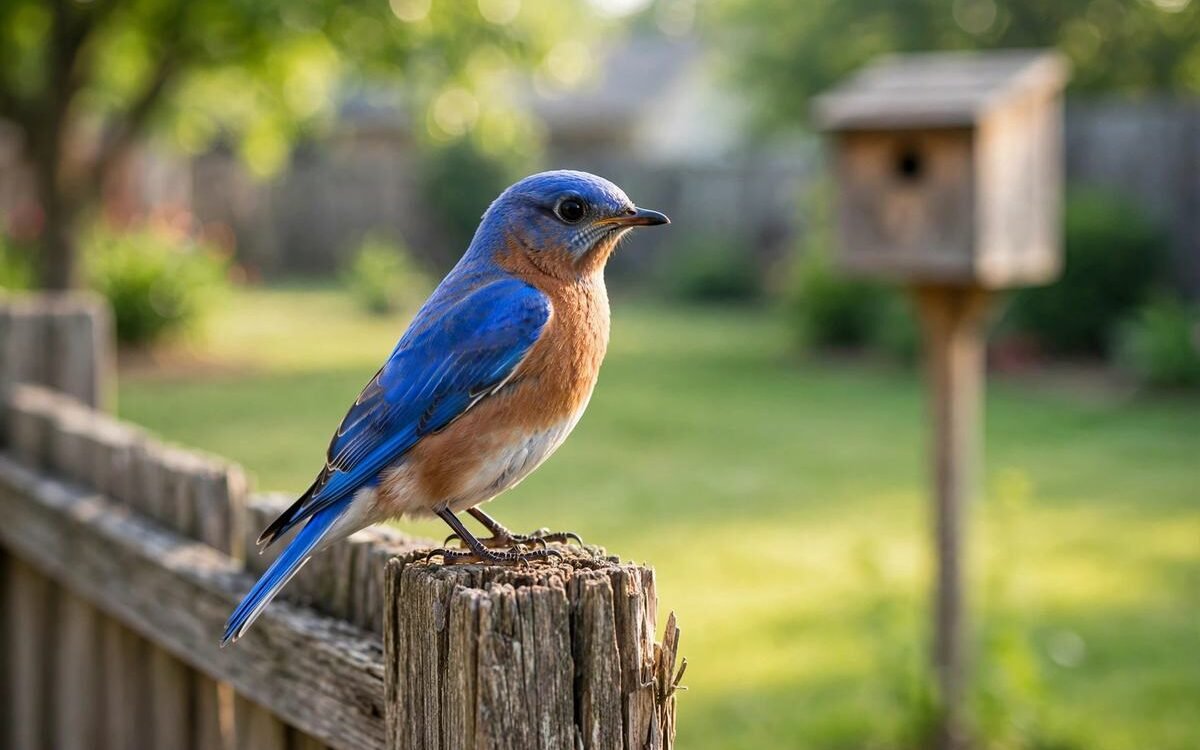
The first time I saw a bluebird in my backyard, I nearly spilled my coffee. Early March, thin gold light — and there he was, a male Eastern Bluebird, back impossibly blue, breast rust-colored, perched on my fence like he’d been photoshopped in. Ten seconds, then gone. I spent the next three springs trying to get him back. If you’ve been wondering how to attract bluebirds, I know exactly how that feels — and I finally cracked it.
The breakthrough came when I stopped thinking like a seed-feeder person and started thinking like a bluebird. Roughly two-thirds of their diet is insects — caterpillars, beetles, grasshoppers — snatched from the ground after a swoop from a low perch. A tube feeder full of sunflower seed is, to a bluebird, basically furniture. Once I understood that, everything changed. Here are the 7 proven tips that finally brought bluebirds back to my yard to stay.
Tip #1: Put Up a Proper Bluebird Nest Box — Nothing Matters More
If you do exactly one thing on this list, make it this one. Eastern Bluebirds are cavity nesters, and they take to man-made nest boxes readily — it’s the single fastest way to turn a drive-by sighting into a resident pair. But the box has to be right, because a wrong box is worse than no box: it becomes a house sparrow or starling apartment.
Here’s my bluebird-box cheat sheet, and I check every box I buy against it:
- Entrance hole exactly 1½ inches. The magic number — big enough for an Eastern Bluebird, too small for a starling. The North American Bluebird Society’s nestbox factsheet confirms it. If squirrels chew it bigger, patch it with a metal hole guard.
- No perch under the hole. Bluebirds fly straight in; a perch only helps sparrows and predators. I learned this the hard way (more below).
- On a smooth metal pole, 4–6 feet high, in an open area with a clear flight path — never on a tree or fence, which are predator highways.
- Entrance facing east or southeast, away from prevailing winds and harsh afternoon sun.
- Up by late February or early March, before scouting starts. A box that goes up in May is next year’s box.
The first bluebird box I ever bought was the pretty one — white picket-fence styling, a cute little perch, and a hole you could’ve rolled a golf ball through. A house sparrow moved in within a week and evicted the bluebirds I’d been hoping for. Pretty boxes are for humans. Bluebirds want plain wood, a 1½-inch hole, and no perch.
Tip #2: Serve Mealworms — the Bluebird Magnet
Here’s the food that changed everything for me: mealworms. Cornell Lab’s Eastern Bluebird life history guide notes that insects caught on the ground are a bluebird’s main food for much of the year — and a dish of mealworms is the backyard shortcut to exactly that.
Live mealworms in a smooth, steep-sided dish (so they can’t crawl out) on a low platform feeder will pull bluebirds in faster than anything else I’ve tried. The movement catches their eye. Dried mealworms work too once the birds learn what they are — I start with a live/dried mix to train them, then shift mostly to dried for convenience. During nesting season I offer them once or twice a day rather than free-choice, since growing chicks need dietary variety — a point experts quoted by Better Homes & Gardens emphasize as well.
One placement rule I follow strictly: keep the mealworm feeder at least 20 feet from the nest box, and never directly in front of the entrance. The nesting pair appreciates the food source nearby but doesn’t want the commotion of a busy feeder right on their doorstep. This is the same logic behind my feeder placement rules — distance gives birds confidence.
Tip #3: Give Them Open Lawn and Hunting Perches
Watch a bluebird hunt and you’ll see the whole strategy: perch, scan, swoop, return. They hunt from perches about 3 to 6 feet high — fence posts, shepherd’s hooks, dead branches — dropping to the ground to grab insects, then flying back up. A bluebird can spot an insect from 20 feet away, so give them the stage: a mowed lawn with scattered perches, not a dense thicket. I pounded a few 4-foot stakes into my lawn about 20 feet apart and keep that zone mowed short. If your yard is all deep shade and heavy shrubs, bluebirds will admire it from the neighbor’s yard instead.
Tip #4: Add Moving Water They Can Trust
Like most birds, bluebirds are drawn to the sound and sparkle of moving water far more than to a still bowl. A birdbath with a small dripper or solar bubbler pulls them in from surprisingly far — they’ll hear it before they see your yard. Keep it shallow (about an inch), scrub it every few days, and always refresh the water — the same routine as how I clean my feeders. In winter, a heated birdbath keeps water open when everything else freezes, and winter bluebird flocks remember exactly which yard had it.
Tip #5: Plant Berry Bushes and Skip the Pesticides
In fall and winter, bluebirds switch heavily to fruit — sumac, dogwood, wild holly, juniper, blueberries. A yard with berry-producing native shrubs is a yard with winter bluebirds. I planted a small cluster along my back fence three years ago, and winter visits went from zero to regular.
And this one’s non-negotiable: cut back the pesticides. A lawn sprayed for grubs is a desert to an insect-eating bird — bluebirds eat the very insects most people spray for. Going lighter on chemicals was one of the best bird decisions I ever made, and the fireflies came back too.
Tip #6: Keep the Bullies Out — Sparrows, Starlings, and Wrens
Here’s the uncomfortable truth about how to attract bluebirds: half the job is attracting bluebirds, and the other half is excluding their competitors. House sparrows are the worst — they claim bluebird boxes, destroy eggs, and even kill nesting adults. Starlings can’t fit through a proper 1½-inch hole, which is exactly why that hole size is sacred.
My anti-bully routine:
- Check the box weekly during nesting season and remove house sparrow nests immediately (their nests are messy domes of trash and feathers — nothing like a bluebird’s neat grass cup). Never remove a native bird’s nest — only house sparrows and starlings, which aren’t protected.
- Plug the hole temporarily if sparrows are harassing the box, until they move on.
- Space boxes generously — at least 100 yards between bluebird boxes, since pairs are territorial. (A second box 20 feet away is fine, but expect tree swallows in it, which is a lovely consolation prize.)
- Skip the perch — worth repeating, since perches help sparrows and predators, not bluebirds.
This is the same vigilance mindset I use for keeping squirrels away from my feeders — the feeder (or box) you defend is the one the birds trust.
Tip #7: Guard the Box — Predators and Placement Details
The last tip is the one people skip, and it’s the one that decides whether your bluebirds raise chicks or become a cautionary tale. Raccoons, cats, snakes, and squirrels all raid nest boxes — and a box on a wooden fence post is an open invitation. Use a smooth metal pole (raccoons can’t climb what they can’t grip) plus a predator baffle — an inverted cone or stovepipe sleeve — below the box. Keep the box away from overhanging branches that cats use as launch pads, and face the entrance toward open lawn so the parents can see trouble coming.
One more placement note: a little human activity nearby is fine — bluebirds tolerate us well — but don’t put the box right next to a busy patio or a dog run. Give the pair a calm corner, and they’ll reward you with something unforgettable: four to six pale blue eggs, and weeks of watching both parents shuttle food to the chicks.
Bluebird Foods Compared: What Works and What Doesn’t
| Food | Bluebird appeal | My verdict |
|---|---|---|
| Live mealworms | ★★★★★ — movement triggers instant interest | The fastest way to get their attention; best during nesting season |
| Dried mealworms | ★★★★ — learned food, very convenient | My daily driver once the birds are trained; soak briefly to soften |
| Suet crumbles | ★★★ — taken in winter | Good cold-weather backup; offer crumbled, not in hard blocks |
| Berries & chopped fruit | ★★★★ in fall/winter | Plant the shrubs for the real payoff; offer blueberries and raisins as a supplement |
| Mixed birdseed | ★ — mostly ignored | Skip it for bluebirds; they fly straight past a full tube feeder |
Notice the pattern: everything bluebirds love is insect or fruit. If your whole strategy is seed, you’re fishing in the wrong pond — which is also why attracting robins, their fellow thrush cousins, works with such a similar playbook.
5 Mistakes I See Every Spring
- Buying the decorative box. Perches, oversized holes, cute shutters — all of it helps sparrows, not bluebirds. Plain wood, 1½-inch hole, no perch.
- Mounting the box on a tree or fence. That’s a predator on-ramp. Smooth metal pole plus a baffle, or don’t bother.
- Putting the box up too late. Bluebirds start scouting in late February and March. A May box is next year’s box.
- Offering only seed and wondering why nothing happens. Bluebirds are insectivores. Mealworms first, seed never (for them).
- Spraying the lawn, then wondering where the insects — and the bluebirds — went. The bugs are the point. Ease off the chemicals.
Learning how to attract bluebirds taught me something unexpected: it’s less about adding things and more about removing obstacles — the wrong box, the wrong food, the pesticides, the predators’ easy access. Last spring, a pair raised two broods in my box, and I watched the fledglings take their first wobbly flights from the same fence post where it all started. Which of these seven tips will you try first — and have you seen a bluebird in your yard yet this year? If you spot migrants passing through, my notes on fall migration will help you catch the season at its peak.
When should I put up a bluebird house?
Late winter — February to early March in most of the country — before bluebirds start scouting for nesting sites. Leaving boxes up year-round is fine too, since bluebirds also use them as winter roosts. Clean out old nests each February before the new season.
What size hole should a bluebird house have?
Exactly 1½ inches in diameter for Eastern Bluebirds. That size admits bluebirds but excludes European starlings. Never go bigger, and if squirrels or woodpeckers chew the hole larger, repair it with a metal hole guard.
Do bluebirds eat birdseed?
Rarely, if ever. Bluebirds are primarily insectivores — about two-thirds of their diet is insects — and switch to wild fruit in fall and winter. If you want to feed bluebirds, offer mealworms (live or dried), suet crumbles, and berries, not seed.
Will bluebirds use a birdhouse mounted on a tree?
They might, but don’t do it. Trees and fences give raccoons, cats, snakes, and squirrels easy access. Mount the box on a smooth metal pole with a predator baffle, 4–6 feet high in an open spot.
How do I keep house sparrows out of my bluebird box?
Use a proper 1½-inch hole with no perch, monitor the box weekly, and remove house sparrow nests promptly (they’re messy domes of trash — unmistakable). You can also temporarily plug the entrance until the sparrows give up. Never disturb native birds’ nests — only house sparrows and starlings.
Do bluebirds come back to the same nest box every year?
Often, yes — especially if they raised chicks successfully. Many pairs also raise two or even three broods in the same box in one season. Clean out the old nest after each brood fledges and again in late winter to keep the box inviting.
How close can a bluebird box be to my house?
Bluebirds tolerate human activity well, so a box 30–50 feet from the house is fine. Avoid putting it right next to a busy patio, a dog run, or a loud play area. The bigger spacing rule is between boxes: keep bluebird boxes at least 100 yards apart, since pairs are territorial.

Related Articles
How to Attract Dark-Eyed Juncos to Your Backyard: 7 Proven Tips (2026)
How to Attract Dark-Eyed Juncos to Your Backyard: 7 Proven Tips (2026) The first time I saw one,…
Read Article
How to Attract Goldfinches to Your Backyard: 7 Proven Tips (2026)
How to Attract Goldfinches to Your Backyard: 7 Proven Tips (2026) There is a moment every backyard bird…
Read Article
How to Attract Chickadees to Your Backyard: 7 Proven Tips (2026)
How to Attract Chickadees to Your Backyard: 7 Proven Tips (2026) If there is one bird that can…
Read Article