
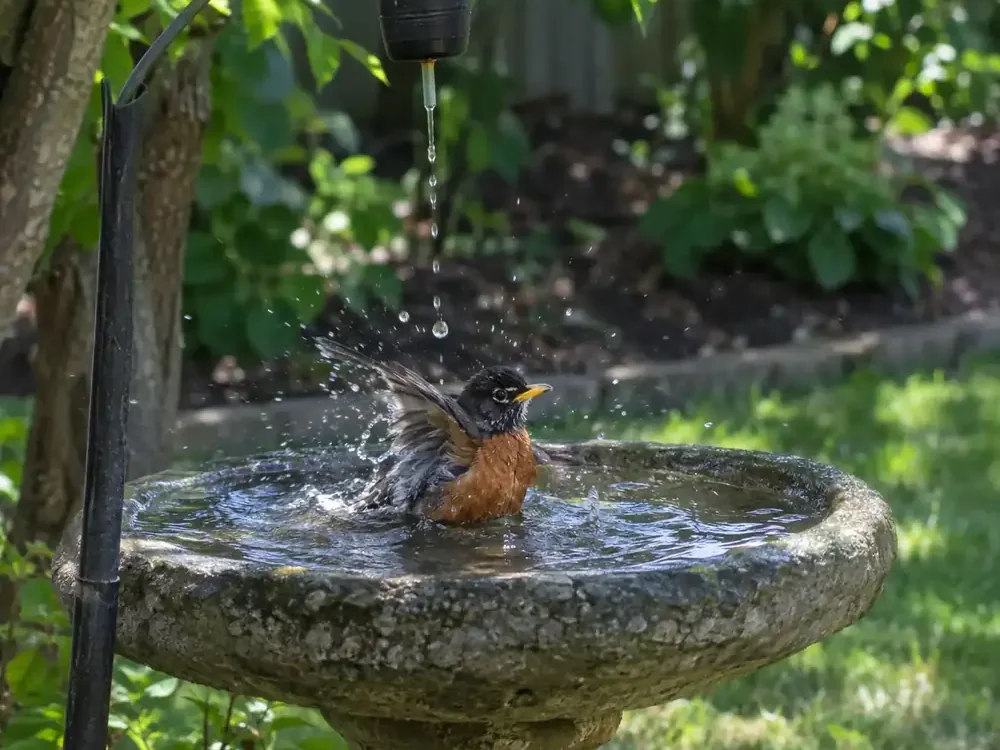
Last updated: September 24, 2026 · 7 min read
Here’s something the seed companies won’t tell you: a bird bath for backyard birds attracts more species than food. Every bird needs to drink and bathe — but not every bird eats seed. A good bird bath is the single highest-value addition to a bird yard.
Disclosure: Bird Feedly is reader-supported. When you buy through links on our site, we may earn an affiliate commission at no extra cost to you.
Why Water Beats Seed for Variety
Seed-eaters come for calories. Everyone comes for water — insect-eaters, fruit-eaters, and migrants passing through who’d never visit a feeder. Bathing is functional, not recreational: clean feathers insulate and fly properly, and birds will travel surprising distances for a reliable source. A good bath is the single highest-ROI addition to a bird yard.
Choosing a Bird Bath for Backyard Birds
Depth: 1–2 inches. This is the spec that matters most. Birds bathe by standing in the water and flicking it over themselves — anything deeper than 2 inches excludes small birds and makes everyone nervous. If your bath is deep, add flat stones to create shallow standing areas.
Texture matters. Smooth glazed surfaces are slippery and birds distrust them. Concrete, stone, or textured resin with a rough finish gets used far more. If you inherit a slippery bath, a layer of small pebbles fixes it.
Material pros and cons:
| Material | Pros | Cons |
|---|---|---|
| Concrete/stone | Stable, natural look, lasts years | Heavy, can crack in hard freezes |
| Resin/plastic | Light, cheap, freeze-tolerant | Blows over; looks less natural |
| Metal (copper) | Beautiful, durable | Heats up in sun; pricey |
| Ceramic | Attractive | Fragile, often too deep/smooth |
Height: pedestal baths (2–3 feet) are the classic for a reason — elevation gives birds a sightline for predators and keeps ground prowlers at bay.
Placing a Bird Bath for Backyard Birds: Three Rules
- Near cover, not in it. Place the bath 10–15 feet from shrubs or a brush pile — close enough for a quick escape, open enough that cats can’t ambush from hiding.
- Partial shade. Full sun turns the bath into a hot tub and grows algae fast. Morning sun with afternoon shade is ideal.
- Visible to you. Half the point is watching. Near a window you sit by — but see the feeder placement guide for window-strike spacing (within 3 feet or beyond 30 feet).
Cleaning: The Non-Negotiable Routine
Dirty baths spread disease — avian pox and trichomonosis transmit at water sources. The Cornell Lab and Audubon guidance converges on this:
- Every 2–3 days in warm weather: dump, scrub with a stiff brush, refill. Just water and elbow grease handles most days.
- Weekly deep clean: scrub with a 1:9 bleach solution (one part household bleach to nine parts water), rinse thoroughly, air-dry in sun before refilling.
- Never use soap or detergents for routine cleaning — residue strips waterproofing oils from feathers.
It takes five minutes. The birds that died at dirty baths don’t get a second chance, so this is the one chore to never skip.
Winter: Keeping Water Open
A heated bath in winter is a superpower — when everything else freezes, your yard becomes the only bar in town. Use a bird-safe immersion de-icer or a heated bath (thermostat-controlled, ~150 watts). What never to do:
- Never add antifreeze or salt — both are lethal, and birds will drink it.
- Don’t break ice and leave shards — sharp edges injure feet.
- Keep it full — heaters can’t work in an empty bath, and partial water freezes around them.
Place winter baths where you can reach them with a hose or bucket, because you’ll be topping up against evaporation.
Level Up: Moving Water
Still water is good; moving water is irresistible. A simple dripper, mister, or a small solar “wiggler” creates the sparkle and sound that pulls in birds from afar — warblers especially. See our moving-water guide; even an inexpensive dripper can significantly increase summer visitor counts.
Bird Bath for Backyard Birds: Frequently Asked Questions
How deep should a bird bath be? One to two inches at the deepest point. Birds stand in the water to bathe, so depth beyond 2 inches excludes small species and makes birds uneasy. Add flat stones to deepen baths that are too deep.
How often should I clean my bird bath? Dump and scrub every 2–3 days in warm weather, with a weekly bleach-solution deep clean (1 part bleach to 9 parts water, rinsed thoroughly). In winter, clean whenever you refill — cold slows but doesn’t stop contamination.
Do birds use bird baths in winter? Enthusiastically — a heated bird bath with open water is one of the best winter attractants there is, since natural water is frozen. Birds drink more than bathe in deep cold, so keep the water liquid and full.
What’s the best location for a bird bath? On level ground or a pedestal, 10–15 feet from escape cover, in partial shade, and visible from your favorite window. Avoid dense shrubs right against the bath (cat ambush risk) and full-day sun (algae and overheating).
Should I put rocks in my bird bath? Yes — flat stones or pebbles give birds secure footing, create variable depths for different-sized species, and make smooth baths usable. Just scrub the stones during your regular cleaning.
If you add one thing to your yard this year, make it water. A $30 bath, cleaned twice a week, will bring you birds no feeder ever could. Pair it with moving water and the right feeder setup, and your yard becomes a destination.
Keep Reading
- moving-water features
- feeder placement guide
- feeder cleaning routine
- keeping cats away
- bird-friendly backyard guide
- beginner’s feeding guide

Related Articles
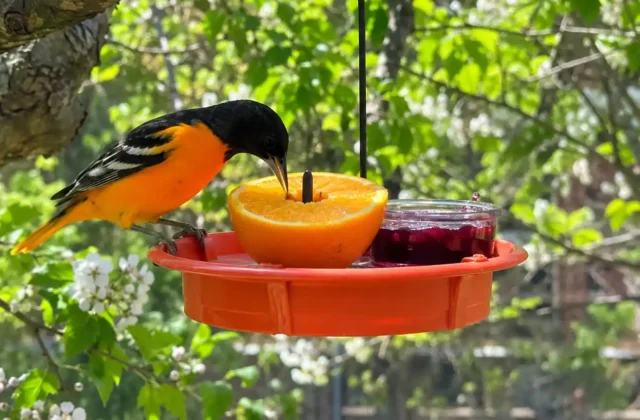
How to Attract Orioles to Your Backyard (Complete Guide)
A lot of people assume that if hummingbirds are already visiting their yard, orioles will simply show up…
Read Article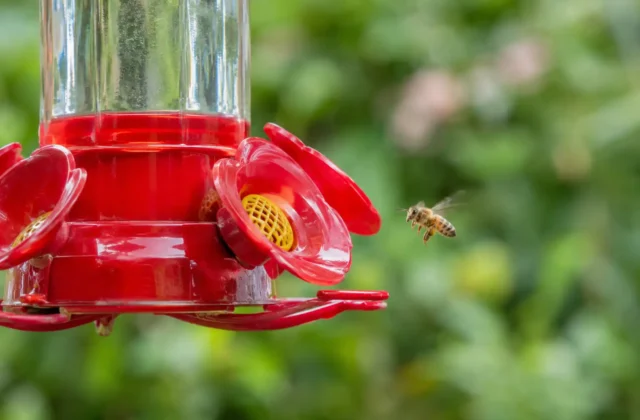
How to Keep Bees and Wasps Away from a Hummingbird Feeder
Most people assume the bright red parts of a hummingbird feeder are what’s drawing bees and wasps in…
Read Article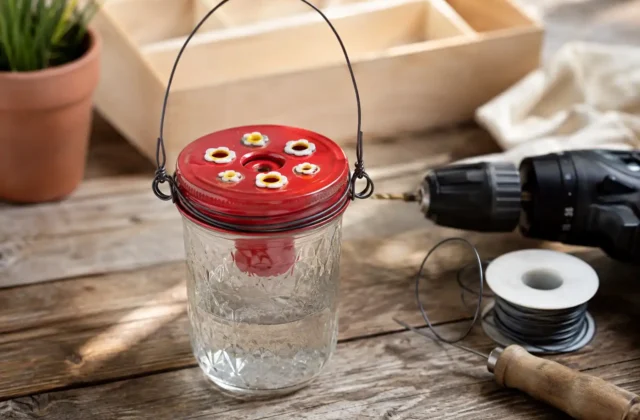
DIY Hummingbird Feeder: Easy Builds From Things You Already Have
An empty mason jar sitting in the recycling bin was the entire reason this turned into a project…
Read Article