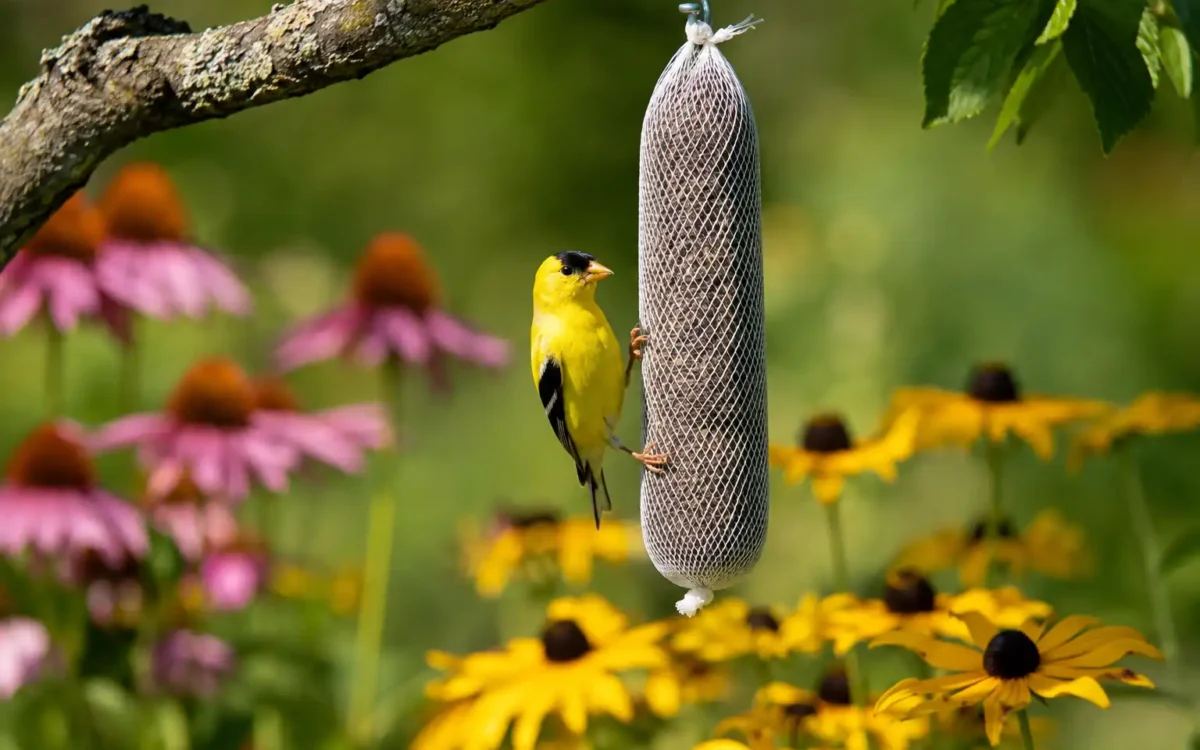
Finches are the small-billed specialists of the feeder world — goldfinches, house finches, pine siskins, and common redpolls — and they all answer to one seed: nyjer. It is tiny, oil-rich, and perishable, which makes it the most demanding seed in the shop and, when it is fresh, the most rewarding. Get the seed and the feeder right, and a finch flock becomes a daily fixture.
Short Answer
Finches come for fresh nyjer seed — the tiny oil-rich seed that goldfinches, pine siskins, and redpolls adore. Freshness is everything: buy small bags, use within 2–3 months, and pinch-test before filling — fresh nyjer feels oily and smells nutty; stale feels dry and dusty. Serve it in a dedicated feeder with genuinely tiny ports, because standard tube ports rain nyjer on the ground.
A finch, by the numbers
| Fact | Detail |
|---|---|
| Length | 5.1–5.5 in (13–14 cm) |
| Weight | 0.6–0.9 oz (16–27 g) |
| Wingspan | 7.9–9.8 in (20–25 cm) |
| Flock size | 50 or more birds can arrive once house finches find a feeder |
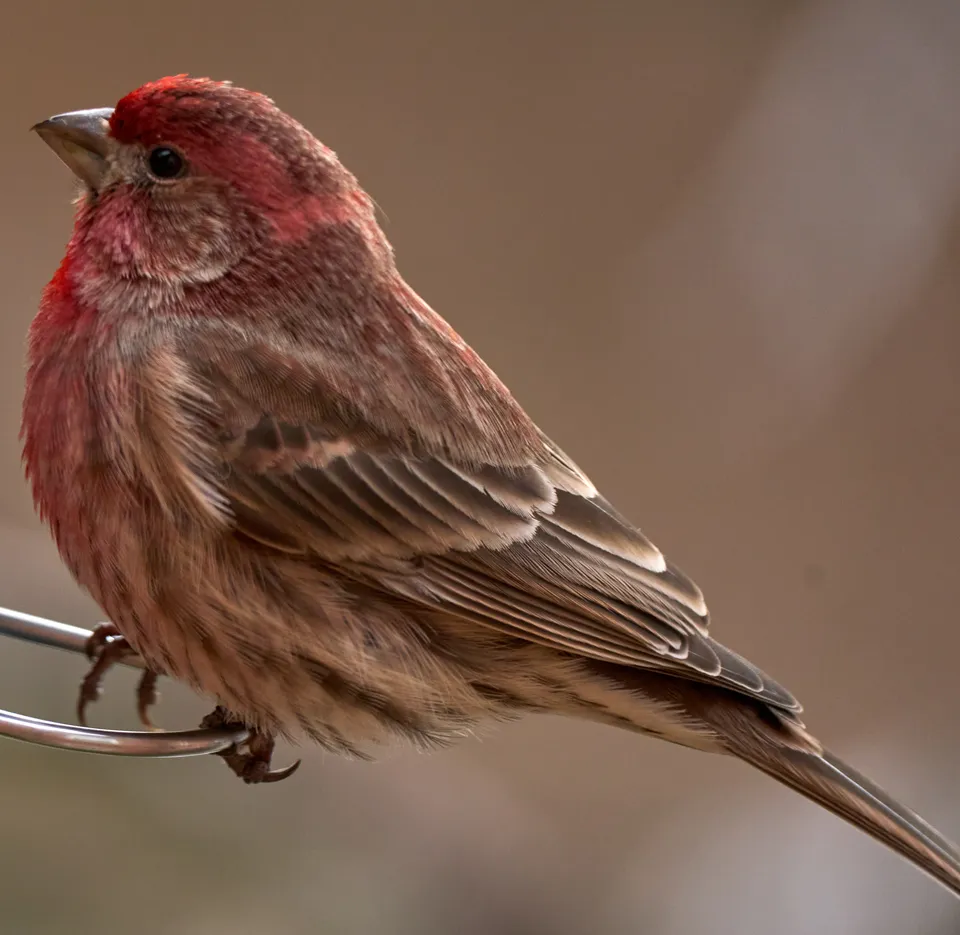
| Male colour | Rosy red from carotenoids in food — the richer the diet, the brighter the red |
| Nyjer crowd | American goldfinches, pine siskins, common redpolls, house finches |
Measurements and flock note: Cornell Lab, House Finch identification and overview. Figures are for the house finch, the most common backyard finch.
What nyjer actually is
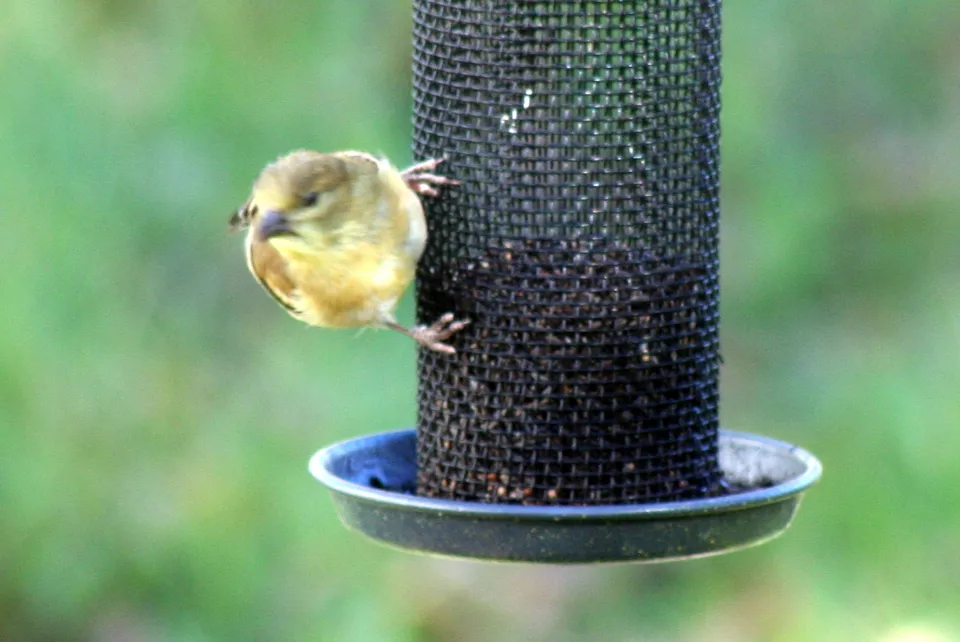
Nyjer is sold as “thistle seed” almost everywhere, but it is not a thistle at all. It is the seed of Guizotia abyssinica, the African yellow daisy, grown mainly in Ethiopia, Myanmar, and India. As John Rowden of the National Audubon Society explains, when people talk about thistle seed for feeders they are generally talking about nyjer. Every bag is heat-sterilized before import — a legal requirement to stop it sprouting as a weed — which is why spilled nyjer never grows under the feeder. Nutritionally it is a powerhouse: high in oil and protein, exactly what small, high-metabolism finches need. Read the full background in Birds & Blooms’ nyjer seed guide.
Freshness is the whole game
High oil is nyjer’s blessing and its curse. Once the oils go rancid — faster than with any other common seed — finches refuse it flatly. They can tell; we mostly cannot, which is why so many people conclude finches “don’t like” a feeder that is actually full of stale seed. The pinch test settles it: crush a few seeds between your fingernails. Fresh nyjer feels slightly oily and smells faintly nutty; stale nyjer feels dry and dusty. Buy in quantities you will use within 2–3 months, store cool, dry, dark, and sealed, and never buy dusty, clumped, or suspiciously cheap bags. Birds & Blooms puts it plainly: nyjer loses its appeal after it dries out, which can happen within a few months — so always keep it fresh.
The feeder has to fit the seed
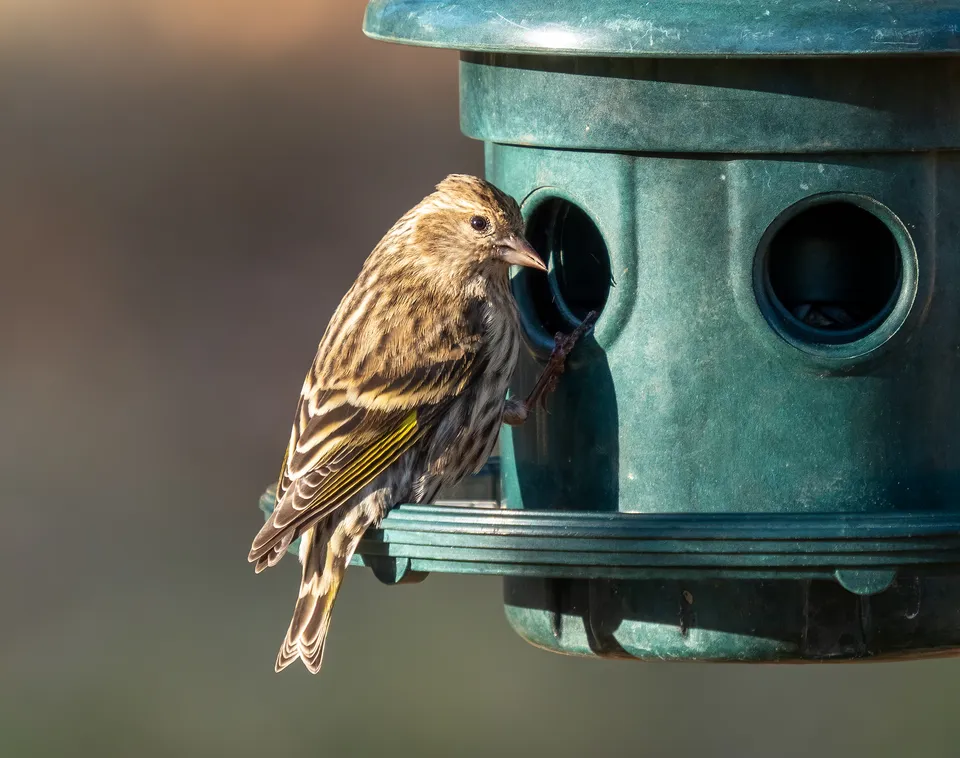
Nyjer is so small it slips through ordinary feeder ports, so the feeder matters as much as the seed. Three designs work: a mesh sock feeder is cheap and lets finches cling naturally, but it rots in rain and is hard to clean; a tube feeder with genuinely tiny ports is weather-resistant and easy to fill, but the ports clog if seed gets damp; a fine-mesh metal tube is chew-proof and durable, but pricier. Whichever you choose, keep it clean — finch feeders are notorious disease vectors. House finches are susceptible to eye disease, and Cornell’s advice is direct: if sick birds appear around feeders, remove the feeders and clean with a diluted bleach solution to reduce spread.
What else finches eat at the same station
Nyjer is the headliner, but it should not be the only food on the station. Cornell’s advice for house finches is to fill feeders with small black-oil sunflower seed — and once they discover a feeder, they may bring flocks of 50 or more birds with them. Sunflower hearts are the safety net for the whole finch crowd: every finch that eats nyjer eats hearts too, and hearts never go stale as fast. Our guide to sunflower seeds for backyard birds covers which type suits small bills. White proso millet, scattered on the ground or on a platform, is the third finch food — it draws juncos and sparrows alongside the finches and costs little.
When finches ignore the feeder
Stale seed is the first suspect — replace the bag and pinch-test the new one. Season is the second: goldfinches shift to natural food in late summer and fall, and patience is the only fix. Feeder novelty is the third: finches can take 2–4 weeks to trust a new feeder, so leave it up and keep it filled. Competition is the fourth: if sunflower hearts are on offer nearby, finches may simply prefer them — offer both, and place the nyjer feeder close to the other finch foods so birds can make the switch. Placement is the fifth: finches like feeders near shrubs or trees for quick cover. If fresh seed in a good spot still fails after a month, pivot to sunflower hearts — finches love those too.
The mistake that wastes the bag
The costliest finch mistake is buying nyjer in bulk. A big bag looks like a bargain until half of it goes stale in the cupboard and the finches refuse the rest — a stale bag is money in the trash. Buy small bags more often instead. The second mistake is mixing nyjer into a seed blend: the larger seeds get eaten, the nyjer sifts to the bottom and goes stale, and the feeder ends up full of seed nothing will touch. Nyjer works best alone, in its own dedicated feeder with tiny ports.
A finch calendar — when to expect them
Goldfinches are the headline act in summer, when males turn bright yellow — but they are also among the latest nesters of any North American songbird, nesting in July and August, so summer feeding supports them through breeding. In winter the males moult to dull olive, and the nyjer crowd changes: pine siskins and common redpolls arrive in roaming winter flocks, some years in big numbers, some years hardly at all. House finches stay put year-round in most neighbourhoods. Keep nyjer fresh through every season, and keep a sunflower-hearts feeder beside it as the safety net.
Quick answers
Is nyjer seed the same as thistle seed? No, though it is sold as “thistle” everywhere. True thistle seed is not commercially available as bird food. Nyjer comes from Guizotia abyssinica, an African plant in the daisy family. The name confusion is decades old and harmless — just know what you are buying.
Why is nyjer seed so expensive? It is imported, heat-sterilized, and harvested from a niche crop — all of which cost money. That is also why freshness matters so much: a stale bag is money in the trash. Buy small bags more often rather than bulk.
Will nyjer seed sprout under my feeder? No. All nyjer sold in the US is heat-treated to sterilize it, precisely so it cannot germinate and spread as a weed. What looks like sprouts under a nyjer feeder is usually something else entirely.
Can I mix nyjer with other seeds? You can, but it is wasteful — the larger seeds get eaten and the nyjer sifts to the bottom and goes stale. Nyjer works best in a dedicated feeder with tiny ports designed for it.
Nyjer is the diva of bird seeds — demanding, expensive, and absolutely worth it when goldfinches pile onto the feeder in bright summer plumage. Keep it fresh, keep the feeder clean, and let the finches do the rest. Goldfinches deserve their own closer look — our guide to attracting goldfinches to your backyard covers the flock behaviour behind the visits — and you can check your next bag with the Seed Bag Checker in Feeding Tools before you buy.
Sources: Cornell Lab of Ornithology, House Finch overview, House Finch identification, and American Goldfinch overview; Birds & Blooms, Offer Nyjer Seed to Attract More Finches (quoting John Rowden, National Audubon Society); National Audubon Society, 10 Fun Facts About the American Goldfinch.
Related guides: Backyard Bird Species Guides · How to Attract Goldfinches to Your Backyard (A Flock-First Guide) · How to Attract Chickadees to Your Backyard (A Small-Bird, Big-Personality Guide)

Related Articles
How to Help Birds in a Winter Storm
Fill your feeders before the storm, offer suet and sunflower seed, and keep water open — a small…
Read Article
Do Birds Use Birdhouses in Winter?
Yes — chickadees, bluebirds, titmice, wrens and nuthatches roost in birdhouses on cold nights. Clean yours out this…
Read Article
What Do Juncos Eat in Winter? (And How to Attract Them to Your Feeder)
In winter, juncos eat seeds — almost nothing else. White millet on the ground is their first choice.…
Read Article