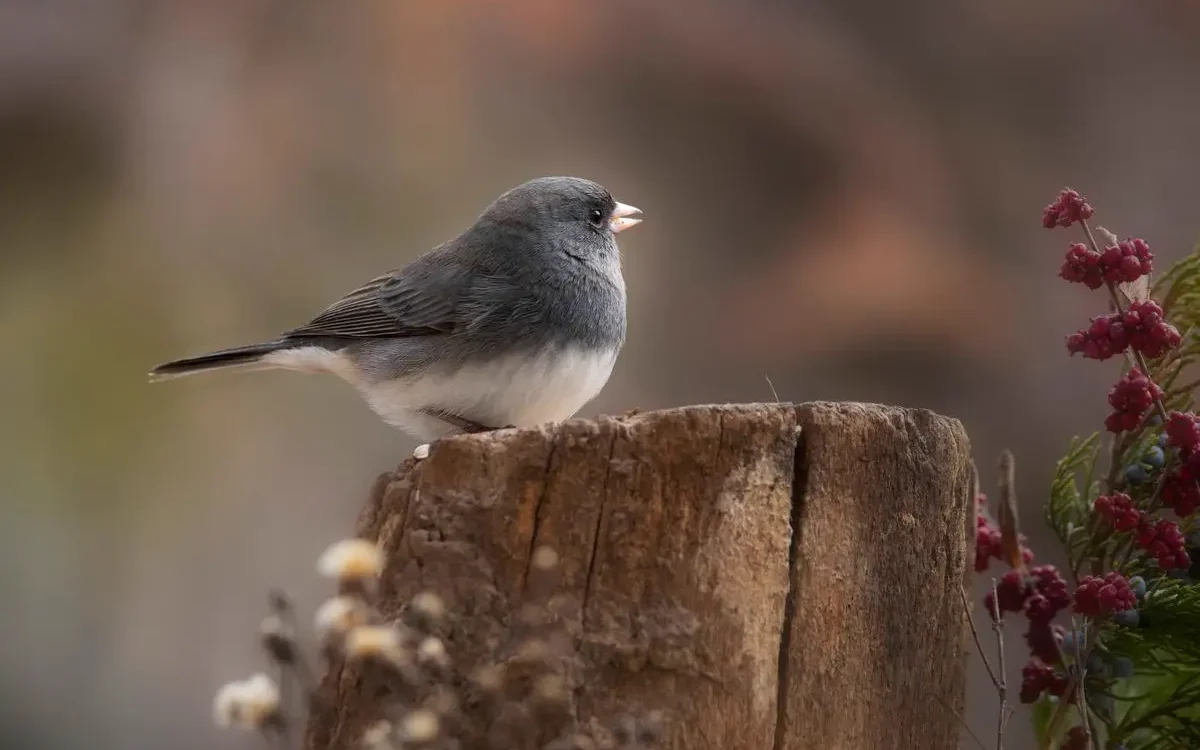
Short Answer: In winter, juncos eat seeds — almost nothing else. White proso millet scattered on the ground, or on a low tray, is the food they choose first. Put a small handful out each morning in a bare patch near shrubs, and they will come back all winter.
Every November, the same little gray birds show up under my feeder. They do not perch on the tube feeder like the finches. They hop around on the ground beneath it, scratching at the leaf litter with both feet at once, picking up whatever the other birds dropped. The first year I saw them, I thought they were just cleaning up. It took me a while to learn they are dark-eyed juncos — and that the ground under my feeder is exactly where they want to be.
If you have seen a neat gray bird with a white belly, a pale pink bill, and white outer tail feathers that flash when it flies, you have met a junco. They flood south across North America for winter, and a backyard with open ground and nearby cover is exactly the kind of place they settle in.
What juncos eat in winter
Seeds make up roughly 75 percent of a dark-eyed junco’s year-round diet, according to the Cornell Lab of Ornithology — mostly seeds of weeds and grasses like chickweed, buckwheat, lamb’s quarters, and sorrel. In summer they add insects and spiders, but in winter, when insects are scarce, it is seeds almost all the way. You do not need a fancy menu — just small seeds, on the ground.
In winter, juncos feed in loose flocks, and they keep a pecking order — the bigger birds, and the ones that arrived first, get the best spots. They feed heavily before dark, putting on fat fast when the cold sets in, which is why a late-afternoon handful matters as much as the morning one. After snow, they look for bare patches at the bases of trees, under dense shrubs, and on south-facing slopes, and they will drink from puddles or eat snow.
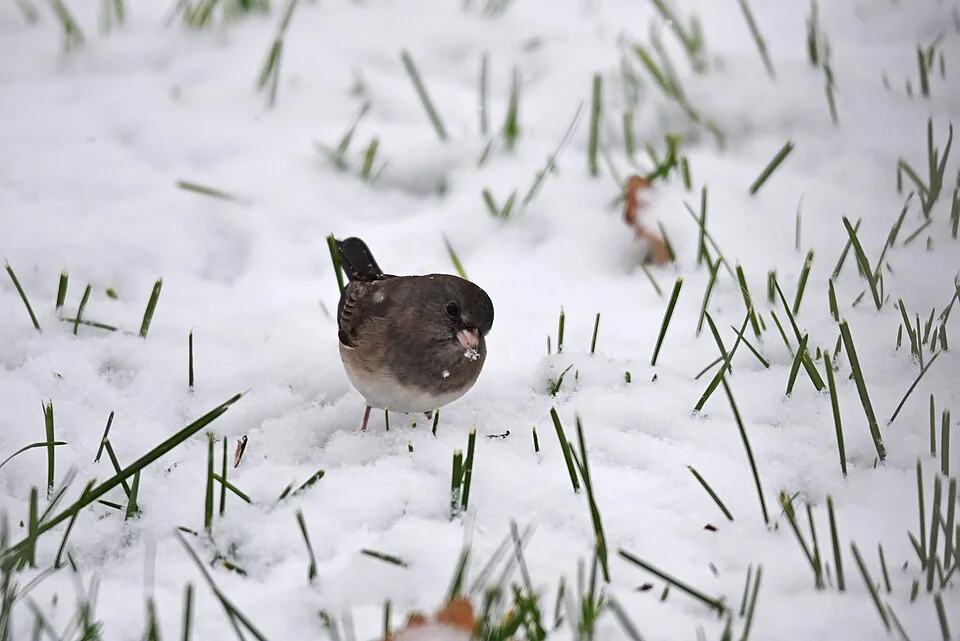
The foods that actually bring juncos in
Not every seed works. Juncos have small bills, and they choose small seeds. In tests, captive juncos chose millet over sunflower seed — and at real feeders, they do the same. Here is how the usual options compare for juncos specifically.
| Food | Do juncos eat it? | How to offer it |
|---|---|---|
| White proso millet | Yes — their first choice | Scatter on bare ground or a low tray |
| Cracked corn | Yes — a good second food | Mix with millet on the ground |
| Black-oil sunflower (hulled chips) | Yes, if hulled | Low tray; whole striped sunflower is too big for their bills |
| Nyjer | Sometimes, if it spills | Only as fallen seed under a finch feeder |
| Striped sunflower | Rarely | Skip it for juncos — too large and hard to crack |
Millet is the one to buy if you buy one thing. My millet guide explains which birds eat it and how to offer it: Millet for Backyard Birds. If you already offer sunflower, the hulled chips are the useful form for juncos — see Sunflower Seeds for Backyard Birds.
Juncos and the Flock Pecking Order
Watch a junco flock for ten minutes and you will see a pecking order at work. The bigger birds, and the ones that arrived first, feed in the best spots — the bare patch closest to cover — while the younger birds wait at the edges or feed in the open. The flock is loose, not a tight group, and it often mixes with sparrows and towhees, all feeding at ground level. One feeder at one height never serves the whole yard, so scatter your millet where the juncos already are — on the ground, near a shrub they can dive into — and let the tube feeder serve the birds above them. (Audubon, 11 Tips for Feeding Backyard Birds)

Where Juncos Sleep on Cold Nights
Juncos do not use birdhouses. On a cold night they roost in dense evergreens, thick shrubs and brush piles, tucked out of the wind — sometimes alone, sometimes in small groups, always close to cover. That is why the brush pile you were about to tidy away in autumn is worth keeping: it is a bedroom, not garden mess. Cavity-nesting birds such as chickadees and bluebirds will sleep in a cleaned-out birdhouse — my roost box guide shows how to set one up — but a junco wants low, dense cover. If you feed juncos on the ground, give them the cover to match.
Juncos vs. House Sparrows at the Ground Feeder
The two birds most likely to share your ground patch look nothing alike once you know what to check:
| What to check | Dark-eyed Junco | House Sparrow |
|---|---|---|
| Look | Slate-grey above, white belly, pale pink bill, white outer tail feathers that flash in flight | Brown and streaky, males with a black bib and grey cap |
| Feeding style | Hops and scratches with both feet at once, like a tiny rake | Pecks steadily, stays in one spot longer |
| Favourite food | White proso millet first, then cracked corn | Millet and cracked corn too — the two compete for the same patch |

My 5-step junco feeding routine
This is the routine I follow from November to March. It takes two minutes, and it is the whole system.
- Pick one bare patch. A spot of open ground near a shrub or hedge, where juncos can dart to cover. Keep it clear of deep leaf litter so they can scratch.
- Scatter a small handful of white millet. A little each morning, and a little again late in the afternoon. Small portions stay fresh; a big pile goes damp and mouldy.
- Add a low tray if you have one. A platform feeder a few inches off the ground works just as well, and it keeps seed off wet soil after rain.
- Let the spilled seed work. Seed that other birds toss out of the tube feeder lands right where juncos feed. If birds are throwing seed out of your feeder, that spilled seed is feeding your juncos — my guide to why birds throw seed (and how to stop the waste) explains the balance.
- Keep water open nearby. Juncos drink from puddles and eat snow, but an open water source close to their feeding patch keeps them around on freezing days. My winter water guide covers it: Best Bird Food for Winter.
The mistake I see most often
The most common mistake is filling a hanging tube feeder with millet and waiting. Juncos rarely perch on a tube feeder — they feed on the ground, and millet in a tube just sits there, getting damp. If your juncos never appear, the food is probably in the wrong place, not the wrong food. Move it to the ground and give it a week.
The second mistake is leaving ground seed to rot. A handful a day, eaten the same day, is right. A thick layer left for a week in wet weather goes mouldy, and mouldy seed is worse than no seed. If the patch stays wet, use the low tray and tip out what is left each evening.
Seasonal note: Juncos usually arrive in October and November and stay until spring. The first hard frost is your cue: start the ground routine the week the first flock appears, and keep it going through the coldest months, when natural seed is buried under snow. If you want the wider winter picture, my guide to how birds stay warm in winter explains what the cold costs them — and why that evening handful helps.
Plan the winter ground-feeding routine with the Feeding Tools planner.
Frequently asked questions
Do juncos use hanging feeders?
Rarely. They are ground feeders by habit. A low platform feeder or seed scattered on the ground is what brings them in.
Will juncos come if I only offer sunflower seed?
Some will pick up hulled sunflower chips from the ground, but they prefer millet. A scoop of millet alongside your sunflower is the reliable way to attract them.
Do juncos stay all winter?
In most of the United States they are winter visitors, arriving in fall and leaving in spring. In Canada and the far north they breed in summer and move south as the cold arrives.
Will juncos eat suet? Rarely. Suet suits woodpeckers, chickadees, nuthatches and titmice — clinging birds that feed above the ground. Juncos are seed-eaters that feed on the ground, so millet and cracked corn are what bring them in.
When do juncos leave in spring? Most leave in March and April, heading north to breed
Sources: diet and foraging facts from the Cornell Lab of Ornithology, All About Birds: Dark-eyed Junco.
Related guides: How to Attract Dark-Eyed Juncos to Your Backyard (A Winter Ground-Feeding Guide) · Best Bird Food for Winter (High-Fat Foods That Actually Help)

Related Articles
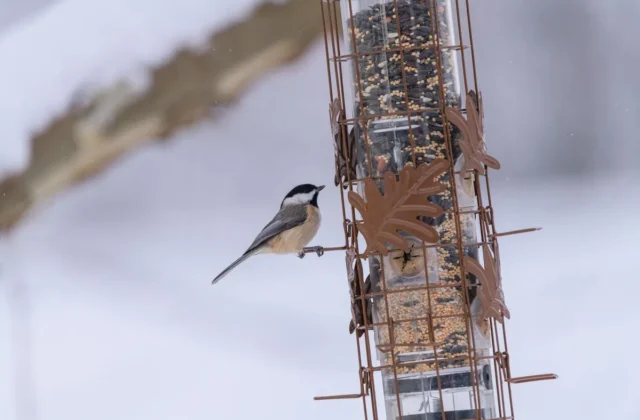
How to Help Birds in a Winter Storm
Fill your feeders before the storm, offer suet and sunflower seed, and keep water open — a small…
Read Article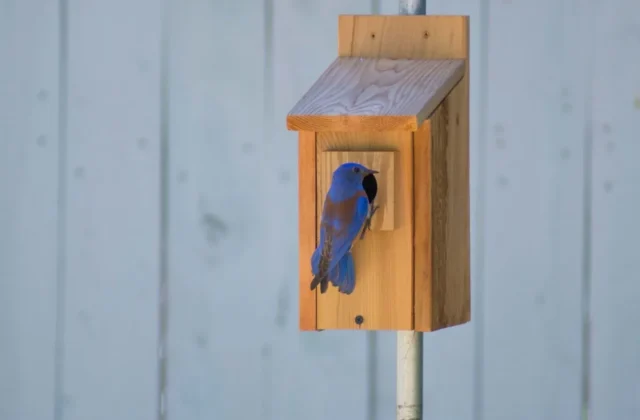
Do Birds Use Birdhouses in Winter?
Yes — chickadees, bluebirds, titmice, wrens and nuthatches roost in birdhouses on cold nights. Clean yours out this…
Read Article
Do Hummingbirds Need Food in Winter?
Most hummingbirds migrate, but the few that stay — above all Anna's Hummingbird — need food every day.…
Read Article