This is the least glamorous article on this site and possibly the most important — because it’s about the why of feeder hygiene, not just the how. If you want to stop disease at bird feeders, start by understanding the enemy: every year, dirty feeders kill songbirds — finches wasted by salmonellosis, greenfinches choked by trichomonosis — deaths that a bucket, a brush, and ten minutes would have prevented. What follows is the disease science: which pathogens spread at feeders, what the research says actually kills them, and the outbreak protocol to follow when you spot a sick bird. Feeding birds is a responsibility as much as a hobby — here’s how to do the responsible part right. (Want just the quick hands-on routine? See our 7-step bird feeder cleaning guide.)
🧼 The Hygiene Protocol, Up Front
- Soap alone doesn’t cut it. Research shows soap-and-water scrubbing still leaves infectious salmonella behind.
- 1:9 bleach soak, 10 minutes. That’s the step proven to actually kill feeder pathogens.
- Clean every 2 weeks minimum — weekly in wet weather or heavy use.
- See a sick bird? Take everything down, disinfect, and wait 2 full weeks.
A bucket, a brush, ten minutes — the most impactful thing you can do for bird health.
📋 In This Guide
🔬 Why Cleaning Matters (The Science)
Bird feeders concentrate birds unnaturally — dozens of individuals sharing the same perches and seed, day after day. That crowding turns a feeder into a disease transmission hub when hygiene slips.
The evidence is unusually clear here. A study by Feliciano, Underwood & Aruscavage (2018), published in The Wilson Journal of Ornithology, tested feeder-cleaning methods directly: feeders scrubbed with soap and water alone still carried enough salmonella to risk infecting birds — while a dilute bleach soak eliminated it. Cornell Lab’s Project FeederWatch and the UK’s RSPB both recommend the bleach method as the minimum standard.
The main culprits at dirty feeders:
| Disease | Affects | Signs |
|---|---|---|
| Salmonellosis | Finches, sparrows | Lethargy, puffed-up posture, reluctance to fly |
| Trichomonosis | Finches, doves | Difficulty swallowing, wet matted plumage around beak |
| Aspergillosis | Many species | Respiratory distress; from moldy seed/hulls |
| Avian pox | Many species | Wart-like growths on feet, beak, eyes |
The 6-Step Method to Stop Disease at Bird Feeders
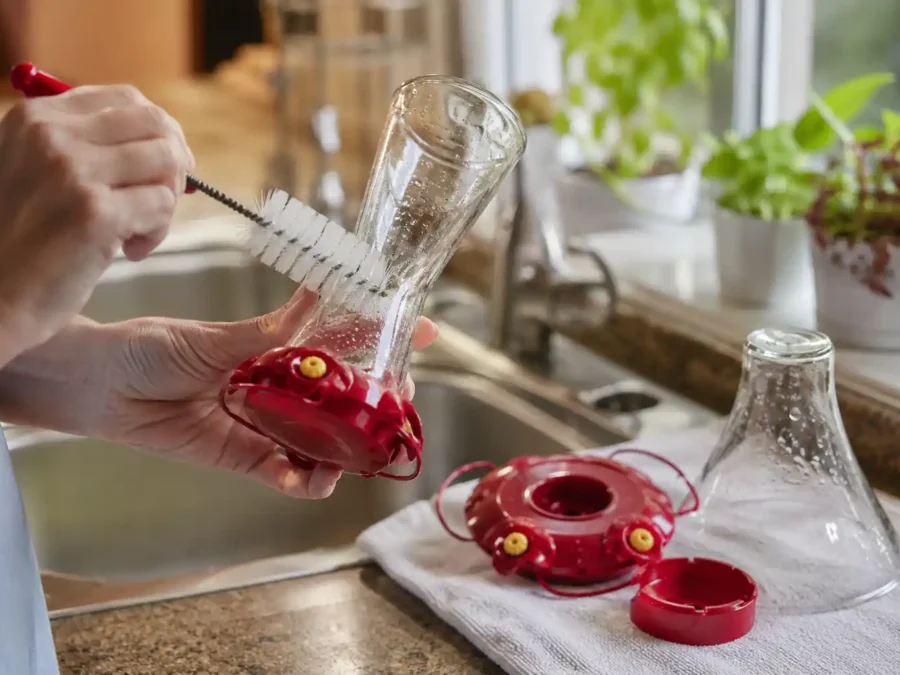
What you need: rubber gloves, stiff brush (a dedicated feeder brush), bucket, dish soap, household bleach, drying rack or old towel.
1Empty and dismantle
Wearing gloves, empty all old seed into the trash — never compost it or “use it up”; it may harbor bacteria. Take the feeder fully apart: lids, trays, perches, ports. Debris hides in crevices.
2Scrub with hot soapy water
Scrub every surface, inside and out, with hot water and dish soap. Pay special attention to corners, drainage holes, and perch joints where droppings accumulate. This removes the organic matter that shields bacteria from disinfectant.
3Bleach soak (the critical step)
Immerse all parts in a 1:9 bleach-to-water solution (1 part regular household bleach to 9 parts water) for 10 minutes. This is the step the research shows actually kills salmonella. Don’t skip it, don’t shorten it.
4Rinse thoroughly
Rinse every part under clean running water until no bleach smell remains. Residue is as bad as the bacteria — birds are small and sensitive to chemicals.
5Air-dry completely
Let everything dry 100% before reassembling. Moisture + seed = mold, which brings us right back to aspergillosis. Drying in sunlight adds bonus UV disinfection.
6Refill with fresh seed — and clean the ground too
Refill with fresh, dry seed (check our seed storage guide so it stays that way). Then rake up hulls, shells, and droppings under the feeder — the ground station is half the hygiene equation.
Cleaning Schedule
| Situation | Frequency |
|---|---|
| Standard use, dry weather | Every 2 weeks |
| Wet/rainy weather or heavy use | Weekly |
| Platform & ground feeders | Weekly (soil fastest) |
| Nectar feeders (hummingbird) | Every 2–3 days in heat |
| Birdbaths | Every 2–3 days; scrub weekly |
| After seeing a sick bird | Immediately, then pause feeding 2 weeks |
The Ground-Zone Rules
Feeders are only half the picture — what falls beneath them matters just as much:
- Rake weekly under feeders: hulls, shells, droppings. Wear a mask if it’s dusty (mold spores).
- Move feeders periodically — even 20 feet helps break disease cycles in the soil.
- Space multiple feeders apart — crowding spreads illness; spread stations across the yard.
- Mulch under feeders — makes cleanup easier and denies cats ambush cover.
- Take down ALL feeders and baths immediately.
- Disinfect everything with the bleach method above.
- Rake and clean the ground areas thoroughly.
- Wait at least 2 full weeks with no sick birds seen before rehanging.
- Report dead/sick birds to your local wildlife agency — it helps track outbreaks.
This feels drastic. It isn’t — it’s exactly what the RSPB and Cornell recommend, and it’s the difference between one sick bird and a local die-off.
What NOT to Use
- Household disinfectant sprays (Lysol etc.) — many contain chemicals unsafe for birds; stick to plain bleach, well-rinsed
- Vinegar as the primary disinfectant — fine for freshening a birdbath, but the research supports bleach for killing feeder pathogens
- Pressure washers on wood feeders — drives water deep into grain, causing rot and mold reservoirs
- Your kitchen sink without precautions — clean feeders outdoors; keep feeder brushes separate from food-prep tools
Frequently Asked Questions
How often should I clean my bird feeders?
At minimum every two weeks; weekly in wet weather, heavy use, or for platform feeders. Nectar feeders need cleaning every 2–3 days in summer heat.
What is the best solution for cleaning bird feeders?
A 1:9 bleach-to-water soak for 10 minutes, after scrubbing with hot soapy water. Research (Feliciano et al., 2018) showed soap alone left infectious salmonella behind; the bleach soak eliminated it. Rinse thoroughly and air-dry.
Can dirty bird feeders make birds sick?
Yes — this is well documented. Dirty feeders spread salmonellosis, trichomonosis, and aspergillosis, which kill thousands of feeder birds yearly. Regular cleaning is the single most impactful thing a bird-feeder can do for bird health.
Should I stop feeding birds if I see a sick one?
Yes. Remove all feeders and baths, disinfect everything, clean the ground area, and wait at least two weeks with no further sick birds before resuming. This is the RSPB/Cornell protocol.
Is vinegar enough to disinfect a bird feeder?
Vinegar freshens but isn’t the research-backed choice for killing feeder pathogens — use the dilute bleach method for feeders, and save vinegar for birdbath freshening.
How do I clean a birdbath?
Empty it, scrub with hot soapy water and a stiff brush, disinfect with the same 1:9 bleach solution, rinse very thoroughly, and refill. In summer, dump and refresh water every 2–3 days to prevent mosquito breeding.
Hygiene handled? Get back to the fun part: the best bird food, attracting cardinals, and our beginner’s feeding guide.

Related Articles
Why Do Birds Throw Seed Out of the Feeder? (And How to Stop It)
Last fall I stood under my tube feeder, stared at the two-inch carpet of seed and husks on…
Read Article
Do Bird Feeders Make Birds Dependent? The Honest Answer (2026)
Last February, watching a downy woodpecker work my suet feeder in a sleet storm, the guilty thought crossed…
Read Article
How to Keep Bird Seed Dry in Fall: 7 Proven Tips (2026)
Bird Feeding Note: This article is for general informational purposes. Keep feeders clean, provide fresh food and water,…
Read Article