
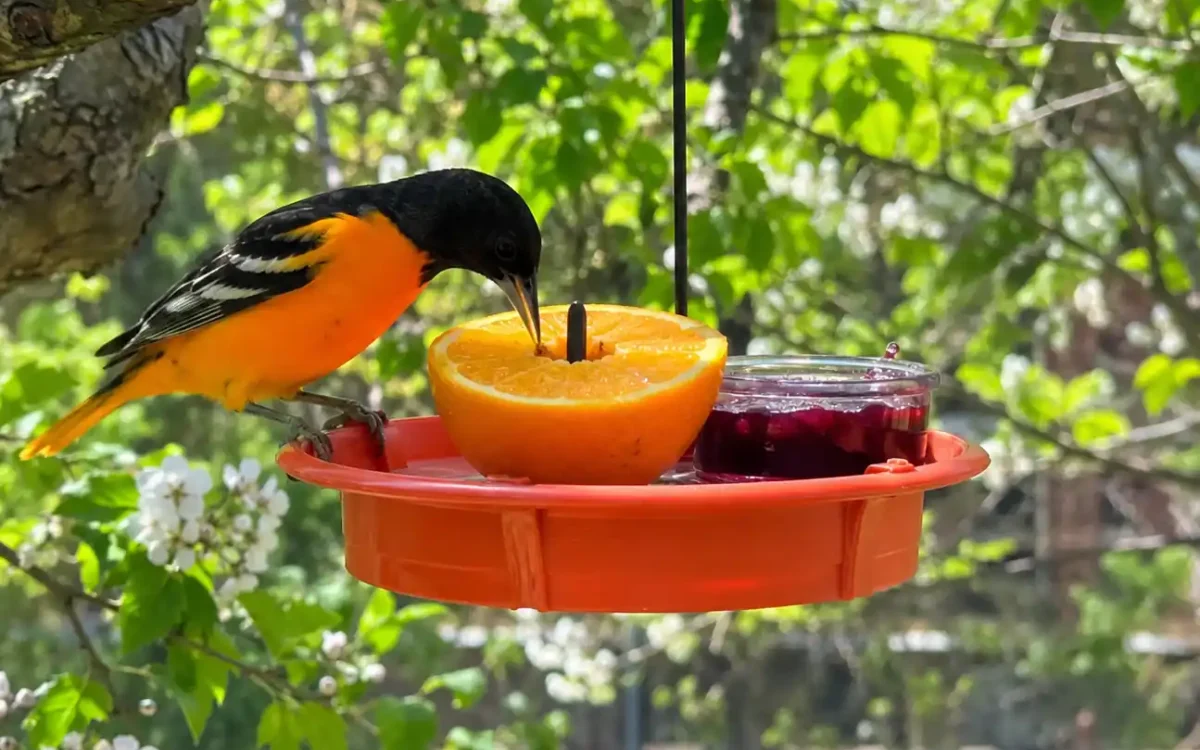
A lot of people assume that if hummingbirds are already visiting their yard, orioles will simply show up at the same feeder eventually and start feeding the same way. That’s not really how it works. Learning how to attract orioles to your backyard means understanding that these birds have their own preferences entirely — different food, different feeder shape, and a narrower window of time to get everything ready before they move on.
The good news is that once you understand what actually draws orioles in, the setup itself is simple and inexpensive. Here’s what matters most, in the order it tends to matter.
None of this requires a large yard or a lot of ongoing effort. A single feeder, one shallow water source, and the right timing usually does most of the work.
When Do Orioles Arrive in Spring (And Why Timing Matters)
When do orioles arrive in spring is the first question worth answering, since it changes everything else about your setup. Most oriole species return to North America from Central and South America between late April and mid-May, depending on your region.
Species like the Baltimore oriole tend to follow fairly predictable migration corridors, moving up from the Gulf Coast through the eastern half of the country over several weeks, which is part of why regional timing can vary so much even within a single country and a single migration season.
How early should you put out oriole feeders is a detail a lot of people get wrong — setting up one to two weeks before the expected arrival date in your area gives hungry, tired migrants a reliable food source right when they need it most, rather than making them search elsewhere first.
Checking regional migration trackers or joining local birding groups a few weeks ahead of spring gives a much more accurate arrival window than relying on a fixed calendar date alone, since timing can shift noticeably from year to year depending on weather patterns further south along the migration route.
Best Oriole Feeder and What Do Orioles Eat
Figuring out the best oriole feeder starts with size. Do orioles use hummingbird feeders? Occasionally, but their bills and bodies are noticeably larger, so a feeder with wider perches and larger drinking ports designed specifically for orioles works far better.
Color matters here too, and it’s not just marketing. Oriole feeders are almost always bright orange or yellow because these birds are genuinely drawn to those colors from a distance, often noticing a feeder well before they’d notice the food itself.
What do orioles eat beyond nectar is just as important to know. Unlike seed-eating backyard birds, orioles are drawn almost entirely to fruit, nectar, and insects — they won’t touch a standard sunflower or safflower seed mix at all, which is why our guide on attracting hummingbirds to your backyard covers a related but distinctly different feeding approach worth comparing.
Insects also make up a meaningful part of an oriole’s natural diet, particularly during nesting season, which is one more reason avoiding pesticides in the yard tends to help beyond just the fruit and nectar you’re offering directly. A yard with a healthy population of caterpillars and other soft-bodied insects gives nesting orioles the extra protein they need to raise their young successfully through the whole nesting season.
Oriole Nectar Recipe and Best Fruit to Offer
An oriole nectar recipe uses the same basic ratio as hummingbird nectar — one part sugar to four parts water, boiled and cooled, with no food coloring added. Why are orioles attracted to the color orange plays into feeder choice here too, since most oriole-specific feeders are made in bright orange or yellow to catch their attention from a distance.
It’s worth avoiding sugar-free jelly entirely if you happen to come across it, since the artificial sweeteners it uses provide no real calories at all, meaning orioles get nothing nutritionally useful from eating it despite the real effort spent visiting the feeder regularly.
Best fruit to attract orioles usually means orange halves impaled directly on a branch or feeder spike, along with grape jelly served in a small open dish. Best native plants to attract orioles, like serviceberry and other fruit-bearing shrubs, give orioles a natural food source that keeps working even after feeders come down for the season.
Grapes, cherries, and even overripe banana pieces are worth rotating in occasionally too, both for variety and because different orioles in the same area sometimes show a slight preference for one fruit over another.
How to Keep Ants Away From Your Oriole Feeder
How to keep ants away from oriole feeder setups is one detail that catches a lot of new oriole feeders off guard. Jelly and nectar are sugary enough to draw ants within hours of being set out, so an ant moat — a small water-filled barrier that sits between the feeder and its hook — solves most of the problem on its own.
Petroleum jelly or a sticky barrier product around the pole works as a reasonable backup for feeders mounted on a stand rather than hung from a hook, though an ant moat remains the more reliable and far more commonly recommended option among experienced oriole feeders overall.
How to stop bees from taking over an oriole feeder is a related concern, and bee guards on nectar ports, along with switching to a wider, open jelly dish that bees find less appealing than sealed ports, usually keeps both pests manageable without needing anything more drastic.
Cleaning the feeder weekly with hot water and a mild vinegar solution also cuts down on both ants and bees, since old, sticky residue left behind is often what draws them back even after the fresh food itself is already gone.
| Before | After Setup |
|---|---|
| No fruit or nectar feeder, only standard seed offered | Dedicated oriole feeder with orange halves, jelly, and nectar |
| Feeder set out only after orioles are already spotted | Feeder set out 1–2 weeks before expected spring arrival |
| No water source or a deep birdbath | Shallow bath, 2–3 inches deep, with moving water if possible |
| Sticky jelly and nectar drawing ants unchecked | Ant moat and bee guards keeping the feeder pest-free |
I visited a friend’s backyard a few springs ago specifically because she’d mentioned orioles showing up reliably every year, and I wanted to see the setup for myself. It wasn’t elaborate at all — just a simple orange-colored feeder with jelly and orange halves, placed near a serviceberry shrub she’d deliberately left unpruned. She told me the orioles had been coming back to that same corner of the yard for at least three seasons in a row.
What struck me most was how little the actual setup had changed year to year — she wasn’t constantly experimenting with new gadgets or products, just keeping the same reliable basics fresh and in place well before the birds were even due to arrive each spring.
Water, Nesting Material, and the Complete Setup
How deep should an oriole bird bath be is worth getting right, since it’s shallower than most general-purpose baths — around two to three inches is ideal, and orioles are especially drawn to moving water, so a small dripper or bubbler helps here too, a detail we cover more broadly in our guide on attracting birds with water.
A shallow dish placed near the feeder, rather than tucked away in a separate, far-off part of the yard, tends to get noticed much faster, since orioles investigating the food source will often spot the nearby water source at the very same time.
How to attract orioles with nesting material is a simple extra step: a mesh bag filled with short pieces of natural string, yarn, or plant fiber gives them what they need to build their distinctive hanging nests. Best trees to attract nesting orioles tend to be tall, mature deciduous trees, since orioles typically build their nests high up near the outer branches. Do orioles come back to the same yard every year is a common question, and the honest answer is that they often do, especially once a reliable food and nesting setup is established.
It’s worth using only natural fibers for nesting material, since synthetic string or fabric strips can tangle around a bird’s legs or wings and cause real harm. Leaving an old, empty nest in place over the winter months also gives returning orioles material to reuse the following spring rather than starting entirely from scratch.
Frequently Asked Questions
When do orioles typically arrive in spring?
Most oriole species arrive in North America between late April and mid-May, though exact timing varies by region and can shift slightly year to year.
Do orioles use hummingbird feeders?
Sometimes, but their larger bills and bodies make standard hummingbird feeders awkward for them, so a dedicated oriole feeder generally works much better.
What is the best oriole nectar recipe?
A simple one-part sugar to four-parts water ratio, boiled and fully cooled before use, with no food coloring or artificial additives.
How do I keep ants off my oriole feeder?
An ant moat placed between the feeder and its hanging hook is the most reliable fix, since it creates a water barrier ants can’t cross.
Will orioles come back to my yard every year?
Often, yes — orioles are known to return to the same general nesting area repeatedly once a yard reliably offers the food and shelter they need.
What fruit do orioles like best?
Orange halves are the classic favorite, though grapes, berries, and even banana pieces are readily accepted as well.
How to Attract Orioles to Your Backyard: What Might Already Be Waiting in Your Yard?
If you already have a fruit tree, a berry bush, or even just a quiet corner with some cover, it might be worth picturing what a small feeder and a shallow dish of water would add to that same spot come spring.

Related Articles
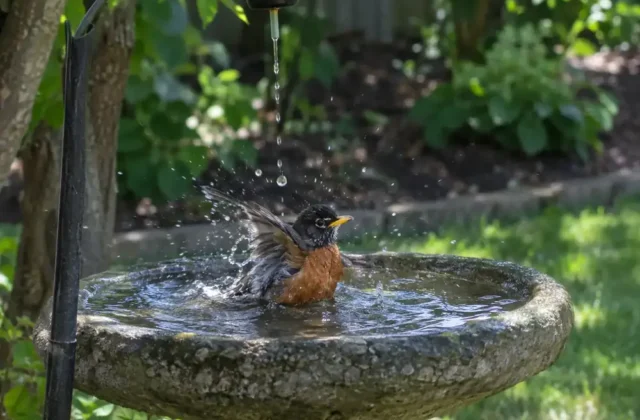
How to Attract Birds With Water (Complete Bird Bath Guide)
Last updated: September 24, 2026 · 7 min read Here’s something the seed companies won’t tell you: a…
Read Article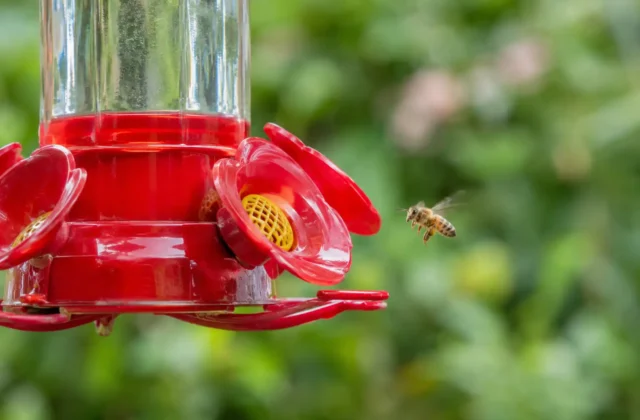
How to Keep Bees and Wasps Away from a Hummingbird Feeder
Most people assume the bright red parts of a hummingbird feeder are what’s drawing bees and wasps in…
Read Article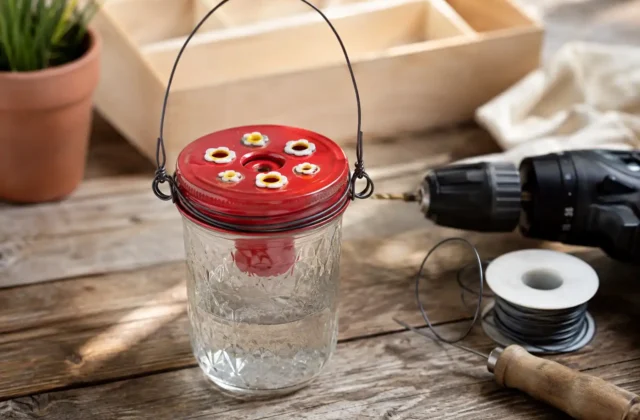
DIY Hummingbird Feeder: Easy Builds From Things You Already Have
An empty mason jar sitting in the recycling bin was the entire reason this turned into a project…
Read Article