
Short Answer: Early November is when the winter feeder crowd settles in. Cardinals, chickadees, goldfinches and blue jays visit daily in most US yards, dark-eyed juncos arrive from the north, and nuthatches and woodpeckers start coming to suet as insects disappear. Black-oil sunflower seed feeds the widest range of them, suet is the high-energy food for the cold, and fresh water matters as much as food. (Guidance: Cornell Lab, All About Birds; National Audubon Society.)
Early November is the month the feeder changes hands. Summer visitors are gone, the first frosts have arrived, and the birds at the feeder now are mostly the ones that will stay through winter — plus a few new arrivals from the north. This guide covers what to expect at a backyard feeder in early November in the United States: which birds typically show up, what they are looking for, and how to help them through the first cold weeks. The guidance below follows the Cornell Lab of Ornithology and the National Audubon Society.
The arrivals: who shows up in early November
The most noticeable new arrival is the dark-eyed junco. Juncos breed in northern forests and move south in fall, reaching many US yards in late October and November, and they stay all winter, feeding on the ground under feeders. Look for a small grey bird with a white belly and white outer tail feathers that flash as it flies. (Cornell Lab, All About Birds: Dark-eyed Junco)
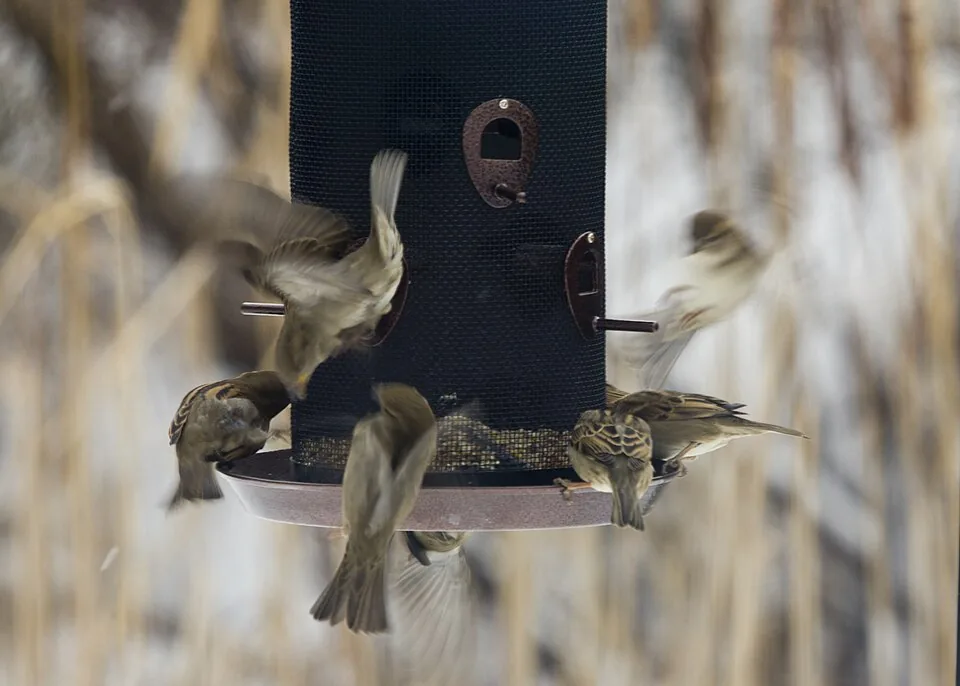
The regulars become more visible too. Chickadees and white-breasted nuthatches are year-round residents, but they visit feeders more often once natural food thins out. Northern cardinals do not migrate at all, so the pair at your feeder in November is likely the same pair you will see in January. Blue jays come for peanuts and sunflower seed and carry food away to store. American goldfinches feed in small groups, and in November they are in soft olive winter plumage, not the bright yellow of summer. Downy and hairy woodpeckers start visiting suet as insects disappear. House sparrows stay on the ground and the platform feeder, picking at millet. Which of these you see depends on your region and what you offer — but in most US yards, this is the November crowd.

What each visitor is after
Different birds want different food, and in November they are all building up energy for cold nights. Match the bird to the food and the feeder:
| Bird | What it looks for in early November | Best food to offer |
|---|---|---|
| Northern Cardinal | Sunflower and safflower; feeds on the ground and platform feeders | Black-oil sunflower, safflower |
| Black-capped Chickadee | Sunflower seed, carried away one at a time to eat under cover or store | Black-oil sunflower |
| Dark-eyed Junco | Small seeds on the ground under feeders | Millet, cracked corn, sunflower |
| American Goldfinch | Sunflower and nyjer, feeding in small groups | Sunflower, nyjer |
| Blue Jay | Peanuts and sunflower; carries food away to store | Peanuts in the shell, sunflower |
| White-breasted Nuthatch | Suet and sunflower; wedges seeds into bark crevices | Suet, sunflower |
| Downy Woodpecker | Suet as insects disappear | Suet |
| House Sparrow | Millet on the ground or platform feeder | Millet |
Sunflower seed disappears fastest, and for good reason — black-oil sunflower is the one food almost every feeder bird will eat. Millet goes more slowly but steadily, mostly to the ground feeders. Suet is beef fat, the highest-energy food on offer once insects are gone, and its visitors build up as the cold deepens.
Three things the cold changes
First, the dawn rush. The feeder is busiest at first light, when birds refuel after a long cold night. A small bird can lose up to ten percent of its body weight on a single freezing night, according to the Cornell Lab — so the first hour of daylight is the most important feeding hour of the day.
Second, the chickadees never stay. In, grab a seed, out again — that is not nervousness, it is storage. Chickadees hide seeds in hundreds of different places — under bark, in crevices — and can remember thousands of hiding places, Cornell Lab research notes, so a seed carried away is a meal saved for a harder day. (Alaska Department of Fish and Game, Black-capped Chickadee profile, citing Cornell Lab.)
Third, suet season starts now. Put the suet cage out in early November, before the hard cold arrives, so woodpeckers and nuthatches learn where it is while they still have other food. Suet visits are usually slow at first and build steadily as insects disappear and the cold deepens.
The goldfinch’s winter coat
American goldfinches are one of the few backyard birds that molt twice a year — bright lemon-yellow in summer, soft olive in winter — so the goldfinches at your feeder this month may look quite different from the ones you saw in July. Cornell Lab notes that the American Goldfinch is one of the only birds in its family to molt twice a year, in spring and again in fall. (Cornell Lab, All About Birds: American Goldfinch)

The cardinal that stays
Northern Cardinals do not migrate. The pair at your feeder at dawn in November is likely the same pair that will visit in January, and the male’s bright red plumage makes him the easiest bird to spot against bare branches and snow. Cardinals feed mostly on the ground and on platform feeders, and they prefer sunflower seed and safflower — and because they stay all winter, a feeder they trust in November is a feeder they will rely on in the coldest weeks. (Cornell Lab, All About Birds: Northern Cardinal)
Getting the feeder ready for the cold
November is the month to get the feeder ready for the cold. Four jobs cover it: put the suet cage up, keep the water dish shallow so small birds can drink safely and change it daily, clean the feeders with soap and water before refilling them, and keep the seed fresh. A clean feeder with fresh food and water makes a real difference on frosty mornings, when birds need energy most. For what birds do on those cold nights, see the BirdFeedly guide to how birds stay warm in winter. The Winter Checklist tool walks through the same jobs, step by step, with a printable version for your own feeder.
Early-November feeder check
- ☐ Empty old seed and scrub feeders with soap and water
- ☐ Refill sunflower seed and millet; put the suet cage out
- ☐ Change the water dish daily, and check it has not frozen
- ☐ Sweep up spilled seed under the feeder so it does not go mouldy
- ☐ Keep a simple note of who visits — after a month you will see patterns
Early November questions
Which birds visit a backyard feeder in early November? Cardinals, chickadees, goldfinches, blue jays, nuthatches, woodpeckers and house sparrows are the usual crowd in most US yards, and dark-eyed juncos arrive from the north in fall. Which ones you see depends on your region and the food you offer — sunflower seed and suet bring the widest range.
Why do chickadees grab one seed and leave? They carry seeds away to eat under cover, or hide them for later. Cornell Lab notes they can remember thousands of hiding places.
What if no birds visit the feeder? Give it two weeks. Keep the seed fresh, the water clean, and the feeder near cover. Birds find new feeders by watching other birds, so the first visitor is the slowest to arrive — after that, word gets around.
When should suet go out? In early November, before the hard cold. Suet is beef fat — the highest-energy feeder food — and woodpeckers, nuthatches and chickadees rely on it once insects are gone. Put it out early so birds learn where it is.
Is it worth keeping notes on feeder visitors? Yes — a notebook by the window is enough. Write the date, the weather, who visited and what they ate. After a month you will see patterns you never noticed.
Early November is the easiest month to get the feeder right: the winter crowd is arriving, the food they need is simple, and a clean feeder with fresh seed, suet and water will hold them through the coldest weeks. Watch for the juncos on the ground, the chickadees caching seed, and the first woodpecker on the suet — those are the signs the winter feeder season has begun.
Related guides: How to Attract Birds During Fall Migration (Backyard Guide) · How to Do October Big Day From Your Backyard: A Beginner’s 1-Day Plan (2026)

Related Articles
Pine Siskin Irruption 2026–27: Essential Feeder Prep
A sizable Pine Siskin irruption is forecast for winter 2026–27 and flocks are already moving. Fresh nyjer, sunflower…
Read Article
Join the Christmas Bird Count From Your Feeder
Join the Christmas Bird Count from your own feeder: find your circle, email the compiler, count one December…
Read Article
How to Attract Orioles to Your Backyard (Complete Guide)
Short Answer Set a dedicated bright-orange feeder out 1–2 weeks before orioles arrive in late April to mid-May,…
Read Article