
Short Answer
Birds stay warm in winter by trapping air in fluffed feathers, shivering to make heat, eating high-energy food through the short day, roosting in shelter, and, in a few small species, dropping into torpor overnight. The work you can do is simple: steady high-energy food, unfrozen water, and undisturbed cover. You cannot, and should not try to, heat a bird from outside.
I used to worry every time I saw a sparrow sitting round and puffed up on a freezing morning, as if the cold had already beaten it. Then I learned what I was actually looking at: a bird wearing its own down jacket, working hard underneath it, and doing fine. Winter feeding is not about rescuing birds from the cold. It is about keeping their fuel topped up so their own heating system can do its job.

How the Warmth Actually Works
| Trick | What it does | What you will see |
|---|---|---|
| Fluffed feathers | Traps still air close to the body, like a down jacket | A round, puffed-up bird on a cold morning, not a sick or fat bird |
| Shivering | Muscle activity makes heat, trapped by those feathers | A bird that looks still but is working hard, especially at dawn |
| Eating through the day | Replaces the fuel burned overnight | Busy feeders early morning and again before dark |
| Shelter and roosting | Cuts wind and shares warmth | Birds in dense evergreens, cavities, or brush piles at dusk |
| Torpor (a few species) | Lowers body temperature and metabolism overnight to save fuel | A hummingbird or chickadee that looks still and must not be disturbed; it wakes as the day warms |
| Cold feet, warm body | Counter-current blood flow keeps feet near freezing while the core stays warm | Birds standing on ice or snow without apparent distress |
How Much Fuel Does a Cold Night Cost?
A cold night is paid for in fat. A small bird burns through its daytime meals just to hold its body temperature until dawn — the Cornell Lab notes that a small bird can lose up to ten percent of its body weight on one freezing night. That is why the feeder is busiest at first light. Chickadees have a second trick for the same problem: they hide seeds in hundreds of different places through autumn and can remember thousands of hiding places, so a seed carried away in October can become breakfast in January. In one long-running Wisconsin study, chickadees with access to a feeder survived the winter at 69 percent, against 37 percent without one — and the feeder supplied about a fifth of their daily energy. Your feeder is not a decoration. In the coldest months it is a measurable part of how birds survive the night.
Which Birds Feel the Cold Most
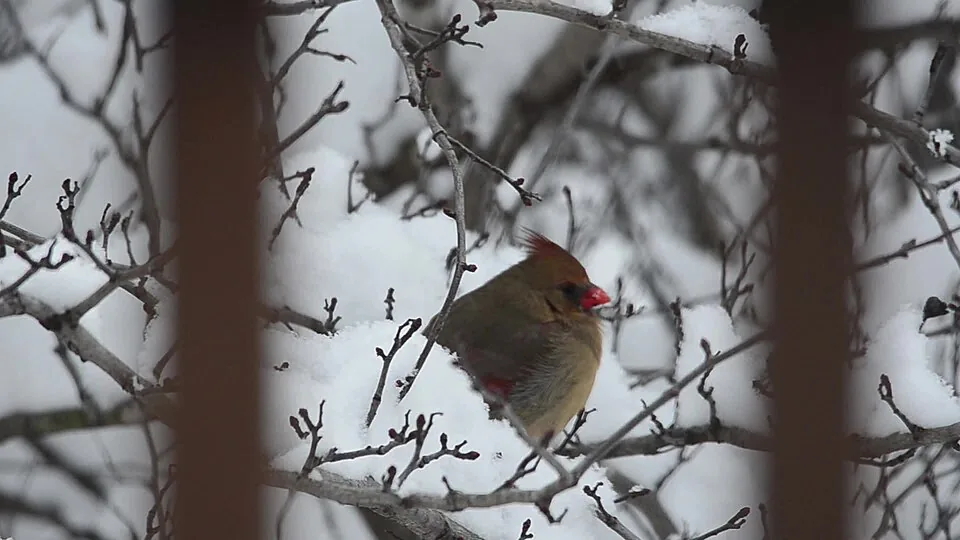
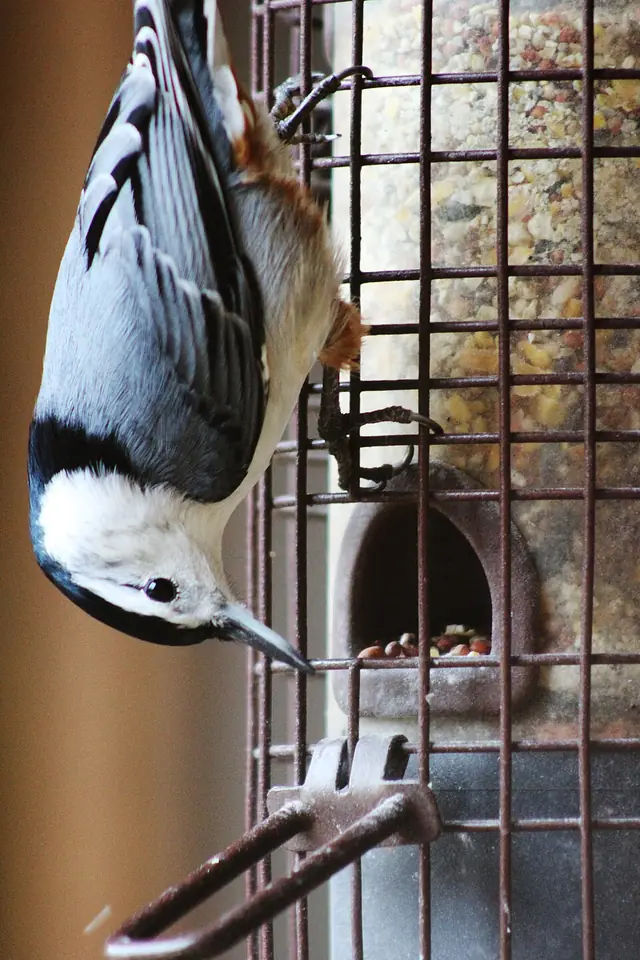
The smallest birds pay the highest price. A chickadee, a kinglet or a wren has a large surface area for its tiny body, so it loses heat fast and must eat almost constantly through the short winter day to keep up. Larger birds — jays, crows, doves — carry more fat and lose heat more slowly, so they can afford to be pickier about when they feed. The birds that need your feeder most are therefore the small ones, and the ones that never migrate: chickadees, titmice, nuthatches and cardinals spend the whole winter in your yard, while the summer birds are already gone. If you only fill one feeder, fill the one the small birds can use — a tube feeder with short perches, where a big bird cannot muscle in and block the ports.
Water in Winter
Birds need liquid water in winter, not just food — and eating snow is a poor substitute, because melting snow inside the body costs the very heat the bird is trying to save. A heated birdbath is the simplest answer; without one, swap in a fresh bowl of lukewarm water twice a day, morning and afternoon, and tip out the ice. A dark-coloured bowl in a sunny spot stays open longer than a pale one in the shade. Never add antifreeze, salt or sugar to the water to stop it freezing — all three can harm or kill birds. See my guides on keeping a bird bath from freezing and why birds need water in winter.
Feed at Every Level
Not every bird feeds at the same height, and one feeder at one height only serves one group. Audubon’s feeding guidance puts it plainly: sparrows, juncos and towhees feed on the ground, finches and cardinals feed in shrubs, and chickadees, titmice and woodpeckers feed in trees. To serve all three, offer a table or platform feeder low down for the ground birds, a tube or hopper feeder at shrub height for the middle group, and a suet feeder well off the ground for the clinging birds. Offer different seeds in different feeders rather than one mixed blend — black-oil sunflower seed appeals to the greatest number of birds, and when sunflower specialists toss the millet and corn out of a mix, the ground birds eat it below. (Audubon, 11 Tips for Feeding Backyard Birds)
What to Do in Your Yard
- Offer black-oil sunflower seed and suet in winter; they are the high-energy staples in Audubon’s winter feeding guidance.
- Feed early in the morning and top up before dark, so birds can refuel after the long night and before the next one.
- Keep water unfrozen and clean; check it in the morning, break thin ice, and refill with fresh water. See my guide on how to keep a bird bath from freezing in winter.
- Leave dense evergreens, brush piles, and cavities undisturbed through winter; they are roosting cover, not garden mess to tidy away.
- Do not move the feeder in winter; birds learn a route and a safe spot, and moving it costs them energy.
- Do not disturb a torpid hummingbird or a roosting bird; a still bird in torpor is saving energy, not necessarily in trouble.
- Keep feeders clean and seed dry; wet, mouldy seed harms birds and wastes the fuel they need. Start with the best bird food for winter, and prepare your feeder for winter before the first hard freeze. Birds also need water in winter, not just food: see do birds need water in winter.
Mistake to Avoid
Bringing a wild bird indoors to “warm it up” or handling a torpid bird. Warmth from a house, handling, and bright light stress a bird and can break torpor badly. If a bird has hit a window and does not recover quickly on its own in a quiet, dark, safe place, contact a local wildlife centre instead of treating it yourself.
Seasonal Note
This matters most on the first hard cold snap, not only in deep midwinter. Birds that have been feeding steadily since autumn carry more fuel and know the roosting spots; a yard that only starts feeding in January helps, but it helps less than the same yard fed from autumn onward.
Frequently Asked Questions
Do puffed-up birds need help? No, in most cases fluffing is insulation working as it should.
Do birds need food every day in winter? Yes; short days and long cold nights mean daily fuel matters, and a missed day is harder to make up.
Should I heat the water? Fresh, unfrozen water checked often is the simple answer; do not add anything to the water to stop it freezing.
Can I put out suet in warm weather? Audubon advises suet in cool weather only, because it can turn rancid in heat.
Will birds become dependent on my feeder? No. In the Wisconsin study mentioned above, birds fed for 25 winters survived just as well as never-fed birds a month after feeding stopped. A feeder is a supplement, not a trap.
Do I need to feed all winter once I start? Consistency matters more than quantity. If you must stop, stop when natural food is plentiful and the weather is mild — never in the middle of a cold snap, when birds are counting on the feeder you trained them to visit.
Plan your winter feeding with my Feeding Tools — the Winter Checklist walks through food, water and shelter in one place.
Further reading: Audubon, 11 Tips for Feeding Backyard Birds and the U.S. National Park Service on Anna’s Hummingbird (torpor: heart rate can dip to about 50 beats per minute, body temperature documented as low as 8.8°C / 48°F; a torpid hummingbird has fluffed feathers and closed eyes and must not be disturbed).
Photo: a northern cardinal after a snowstorm, by Jennifer Aitkens, CC BY, via Wikimedia Commons.
Related guides: How to Help Birds in a Winter Storm · Winter Bird Feeding Guide: 9 Tips for Cold Months (2026)

Related Articles
How to Help Birds in a Winter Storm
Fill your feeders before the storm, offer suet and sunflower seed, and keep water open — a small…
Read Article
Do Birds Use Birdhouses in Winter?
Yes — chickadees, bluebirds, titmice, wrens and nuthatches roost in birdhouses on cold nights. Clean yours out this…
Read Article
What Do Juncos Eat in Winter? (And How to Attract Them to Your Feeder)
In winter, juncos eat seeds — almost nothing else. White millet on the ground is their first choice.…
Read Article