
How to Keep a Bird Bath from Freezing in Winter
A small patch of open water, kept safe and clean, can be one of the most useful winter gifts you offer birds. To score your winter setup, try the winter readiness checklist in our Feeding Tools. For the year-round side of the same setup — choosing, placing, and cleaning a bath in any season — see our guide to attracting birds with water.
Short Answer
bird bath from freezing in winter is easier than many people expect, if you choose one method and keep it up. A heated bath or a thermostatic de-icer is the most reliable choice for long, hard freezes, while a daily fresh-water routine suits mild winters and a person who is home in the morning. Keep water shallow, about one to two inches deep, change it daily, never add antifreeze or salt, and in deep cold, let birds drink without bathing, so wet feathers do not freeze.
- Why birds need water in winter
- Methods compared
- Choosing and placing your bath
- Safety rules
- Daily routine and cleaning
- Mistakes to avoid
- FAQs
On cold mornings, a bird bath can change quickly from a busy drinking spot to a solid sheet of ice. The birds still come, because they still need water, but they find nothing they can drink. A little planning before the first hard freeze makes a real difference. The first hard freeze reaches the Mid-Atlantic and Upper South in mid-November to early December (NOAA 1991–2020 normals) — so the method in this guide should be in place before then.
A bird bath in winter is not a luxury. In cold weather, natural water is often locked under ice, and eating snow is a poor substitute, because a bird must spend its own warmth to melt it. A small patch of open water, kept safe and clean, is therefore one of the most useful things you offer in winter, alongside food and shelter.
Why birds need liquid water in winter
Birds lose water all the time, even in winter, through breathing and droppings, and dry winter air makes that loss worse. Drinking replaces it quickly, without spending energy they need to stay warm. Bathing matters too: clean feathers trap air and hold warmth, while dirty or matted feathers do that job less well.
That is why the goal of a winter bird bath is modest. You are not trying to make a warm pool. You are trying to keep a bird bath from freezing in winter just enough that birds can drink, and to do it in a way that does not soak them on a bitterly cold day. A heater that keeps water just above freezing is enough. A routine of fresh water in the morning is enough, if you can keep it up. The method you choose should fit your weather, your time, and whether you have a safe outdoor power point.
Methods to keep a bird bath from freezing in winter compared
There is no single method that suits every yard. A heated bath suits long, hard freezes with a safe power point. A manual routine suits mild winters and a person home in the morning. A sunny, dark basin suits light, short freezes. The table below compares the main methods, so you can choose one and stick with it.
| Method | How it works | Best for | Watch out for |
|---|---|---|---|
| Heated bird bath, built in | A bath with its own heater, switched on by a thermostat | Long, hard freezes; hands-off winter water | Needs a safe outdoor power point; must never run dry |
| Immersion de-icer in your own bath | A heater placed in a bath you already own | A bath you like, with a power point nearby | Check depth and basin type in the manual; keep the cord sheltered |
| Fresh water, morning and evening | Empty ice, refill with cool water, repeat | Mild winters; people home during the day | Freezes again in hard cold; needs a daily routine |
| Dark basin in a sunny spot | A dark plastic basin or insert that warms in sun | Light freezes; a sunny, sheltered corner | Fails in deep cold or on cloudy days; still needs daily checks |
| Moving water or solar fountain | A pump or solar fountain that keeps water moving | Mild winters; a sunny spot | Stops at sunset for solar models; not a hard-freeze solution |
What a heater costs to run
Most de-icers draw 50–200 watts and only run when temperatures demand it, thanks to built-in thermostats (typically on around 32°F). Expect pennies per hour of runtime — a few dollars a month. The same figures, and the full cost breakdown, are in our guide to whether birds need water in winter.
Choosing and placing your winter bird bath
Start with the method that fits your coldest weeks, not your mildest days. If your bath freezes solid most nights, a heated bath or de-icer will give birds steadier water. If it only skins over on a few nights, a morning refill and a sunny spot may be enough.
Depth matters in every method. A bath should be shallow, about one to two inches deep at most, with a rough surface or a few stones so birds can stand safely. A deep bath is not better in winter. It is harder for small birds to use, and it holds more water that can freeze into a heavy block. If your bath is deep, add stones to raise the floor, or use a shallow basin instead. Keep the water level topped up in a heated bath, because heated water evaporates, and a heater should never run dry.
Placement matters too. Put the bath in a sunny spot, out of the wind, where you can see it and reach it easily for cleaning and refilling. Birds also need nearby cover, such as shrubs or a small tree, so they can wait, drink, and retreat quickly. Do not put the bath right under a feeder, or seed hulls will fall into the water and foul it. Do not put it where cats can hide close by. A spot near cover, but not inside it, is a good balance. For feeder placement in general, see where to place a bird feeder in your backyard.
Safety rules for a bird bath from freezing in winter
Safety comes first with any electric method. Plug a heater or de-icer into a ground-fault protected outdoor outlet, keep the plug and cord off the ground and out of snow, and follow the manual for water depth and basin type. Do not use a heater in a cracked basin, and do not run a heater in an empty bath. If you are unsure about outdoor wiring, ask a qualified person before you buy, rather than running a long extension cord across a path.
Never add antifreeze, salt, or glycerin to a bird bath to stop it freezing. Those substances are harmful to birds and other animals, even in small amounts. Never pour boiling water into a frozen bath to clear it quickly. Boiling water can crack a basin and damage a heating element, and it can refreeze into a new sheet of ice. If you use a manual routine, use cool water, not hot water, and empty the ice first.
In deep cold, let birds drink, but do not encourage bathing. A bird that bathes on a bitterly cold day can end up with wet feathers that freeze, and a wet bird loses warmth fast. You can help by covering most of the water surface with a non-metal grille, or by placing stones in the basin, so birds can stand and sip without soaking themselves. On milder winter days, when birds can preen and dry in cover, a normal shallow bath is fine. Watch the weather, not just the calendar.
Daily routine, cleaning, and winter food
A winter bath needs a simple routine, or it will soon become a dirty ice block. Change the water every day — the RSPB’s updated guidance of 30 October 2026 — and scrub and disinfect the basin at least once a week, so droppings, seed hulls, and algae do not build up. Audubon guidance for bird baths is to keep water shallow, replace it often, and clean the basin, and that advice is even more important in winter, when birds gather at the few open water sources. Unplug any heater before you scrub, and let the bath dry briefly if you can, before you refill it.
Keep the bath near your food routine, so one check covers both. When you refill feeders, check the bath, look for ice underneath, and clear it if it is slippery. If the water is not open, the basin is not clean, or the cord is not safe, fix that one thing first, and give birds a few days to respond.
Winter water works best beside winter food, so keep feeders filled too. See the best bird food for winter, how to prepare your bird feeder for winter, and why birds are not coming to your feeder.
Do birds need water in winter, even when there is snow? Yes. Snow is not the same as open water, because melting it inside the body costs warmth. A bird bath from freezing in winter, kept open by a heater or a daily refill, gives birds a faster, warmer way to drink.
Mistakes to avoid
Adding antifreeze or salt to melt ice
These substances are harmful to birds and other animals. Use a heater, a de-icer, or a fresh-water routine instead, and never try to melt ice with chemicals.
Pouring boiling water into a frozen bath
Boiling water can crack the basin, damage a heater, and refreeze. Empty the ice first, then refill with cool water.
Letting birds bathe in deep cold
A wet bird in bitter cold can freeze its feathers and lose warmth fast. In deep cold, let birds sip from stones or a grille, and save bathing for milder days.
Running a heater dry
Heated water evaporates, and a heater should never run in an empty bath. Top up the water often, and check the level each day.
Using a deep, dirty bath
A deep bath is hard for small birds to use, and a dirty bath can spread disease. Keep water shallow, about one to two inches, and clean it regularly.
Key Takeaways
- Keep a bird bath from freezing in winter by choosing one method that fits your weather: a heated bath, a de-icer, or a daily fresh-water routine.
- Keep water shallow, about one to two inches deep, with stones or a rough surface for safe footing.
- Never add antifreeze, salt, or glycerin, and never pour boiling water into a frozen bath.
- In deep cold, let birds drink without bathing, using stones or a grille over most of the surface.
- Change water every day or every other day, clean the basin regularly, and keep electric cords safe and off the ground.
Frequently asked questions
Do birds really need a bird bath in winter?
Yes. A bird bath from freezing in winter gives birds a faster way to drink than eating snow, which costs them warmth to melt. Keep water shallow, clean, and open, near cover.
What is the best way to keep a bird bath from freezing?
For long, hard freezes, a heated bath or thermostatic de-icer is the most reliable way to keep a bird bath from freezing in winter, keeping water just above freezing. For light freezes, a dark basin in sun plus a morning refill can work, but it fails in deep cold.
Can I just put fresh water out every morning?
Yes, if winters are mild and you are home each day. Empty the ice, refill with cool water in the morning, and check again later, because the bath will freeze again in hard cold.
Is a heated bird bath safe for birds?
Yes, when used as directed: a ground-fault protected outlet, a cord off the ground and out of snow, and water topped up so the heater never runs dry. Never add antifreeze or salt, never pour boiling water in, and in deep cold, cover most of the surface so birds drink without soaking feathers.
Will a bird bath attract birds in winter?
A bird bath from freezing in winter can attract birds already visiting for food and cover, because open water is scarce when natural sources freeze. It will not, alone, bring birds to a yard with no food or cover, so keep feeders filled and give birds time to find a new bath.
Should I leave the heater on all winter?
Yes, if it is thermostat-controlled — it only runs when temperatures demand it. Never run a heater dry: top the water up often. Unplug and store it when the freezes end.
For trusted background reading, Audubon offers practical feeding tips, including offering different seeds in different feeders: Audubon: 11 Tips for Feeding Backyard Birds. Audubon Community Nature Center explains that bird baths should be shallow, one to two inches deep at most, with water replaced every day or every other day: Audubon Community Nature Center: Bird Baths.
Start with one method, keep it clean, and let birds drink in safety through the coldest weeks.
Related guides: Do Birds Need Water in Winter? · How to Attract Birds With Water (Complete Bird Bath Guide)

Related Articles
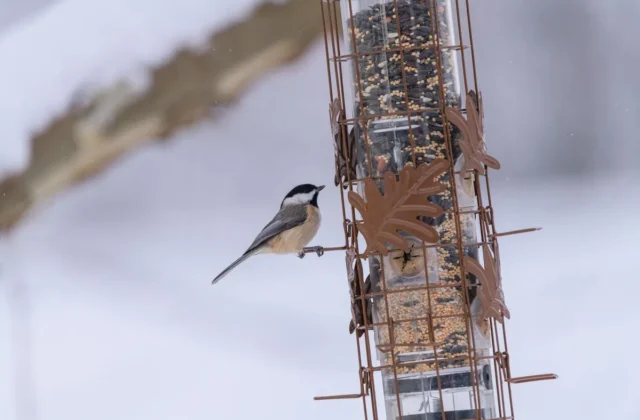
How to Help Birds in a Winter Storm
Fill your feeders before the storm, offer suet and sunflower seed, and keep water open — a small…
Read Article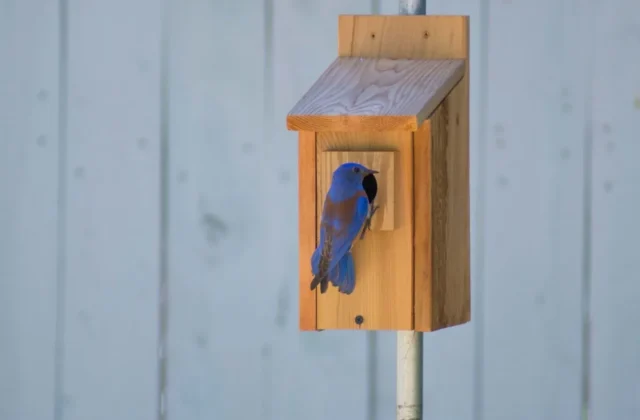
Do Birds Use Birdhouses in Winter?
Yes — chickadees, bluebirds, titmice, wrens and nuthatches roost in birdhouses on cold nights. Clean yours out this…
Read Article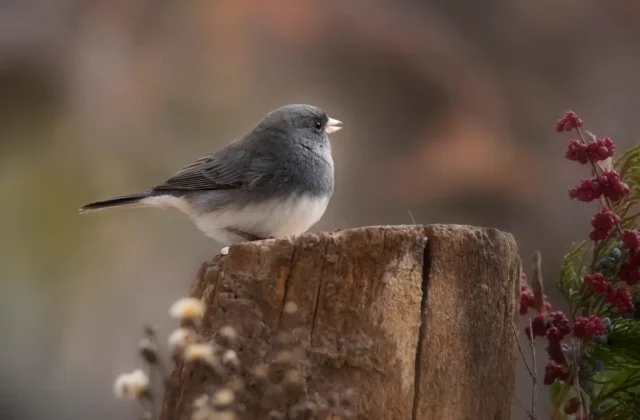
What Do Juncos Eat in Winter? (And How to Attract Them to Your Feeder)
In winter, juncos eat seeds — almost nothing else. White millet on the ground is their first choice.…
Read Article