
Short Answer
Yes, where hummingbirds stay through winter, they need food every day, and in the coldest places they need it most. Most hummingbirds migrate, so in most yards the winter question is really about late migrants passing through and the few species that overwinter, above all Anna’s Hummingbird on the Pacific coast. For those birds, keep a clean nectar feeder going with plain 1 part sugar to 4 parts water, no dye, no honey, and do not take the feeder down just because the calendar says winter.
I used to think a hummingbird in January meant something had gone wrong, a bird that had missed its flight south. It took me a while to learn that some of them are exactly where they mean to be, and that a feeder left up through winter is not a trap. It is a lifeline for the birds that stay. If you have never had one visit, start with how I attract hummingbirds to a feeder.
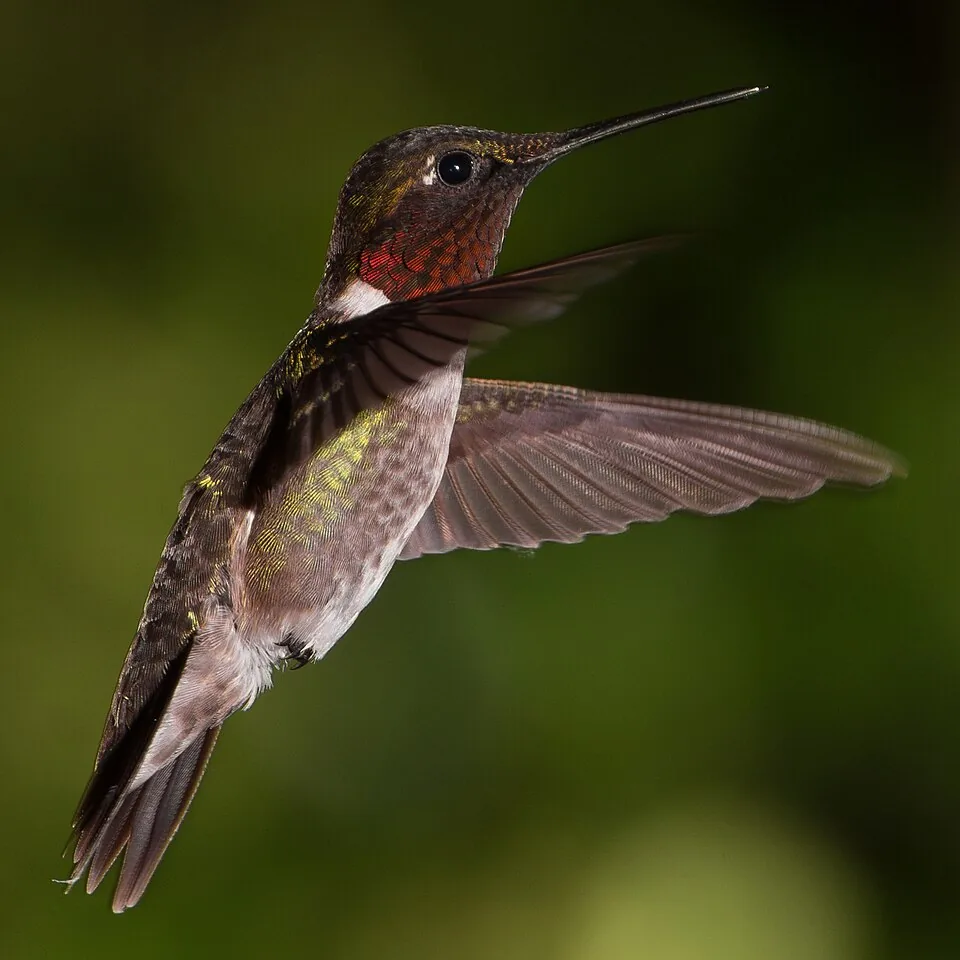
Who Actually Stays?
| Bird / situation | Winter food need |
|---|---|
| Most ruby-throated and other migratory hummingbirds | They leave; a feeder in late autumn helps late migrants refuel, and taking it down does not make them stay or stop migration |
| Anna’s Hummingbird (Pacific coast) | Largely non-migratory there; stays, feeds, and can even breed in winter, so it needs steady nectar and insects all winter |
| A hummingbird seen in winter outside the Pacific coast | Unusual; keep a clean feeder up, do not assume it is lost, and do not handle it |
| All hummingbirds, all year | Nectar is only part of the diet; small insects and spiders supply protein, so do not rely on sugar water alone and do not spray away their insect food |
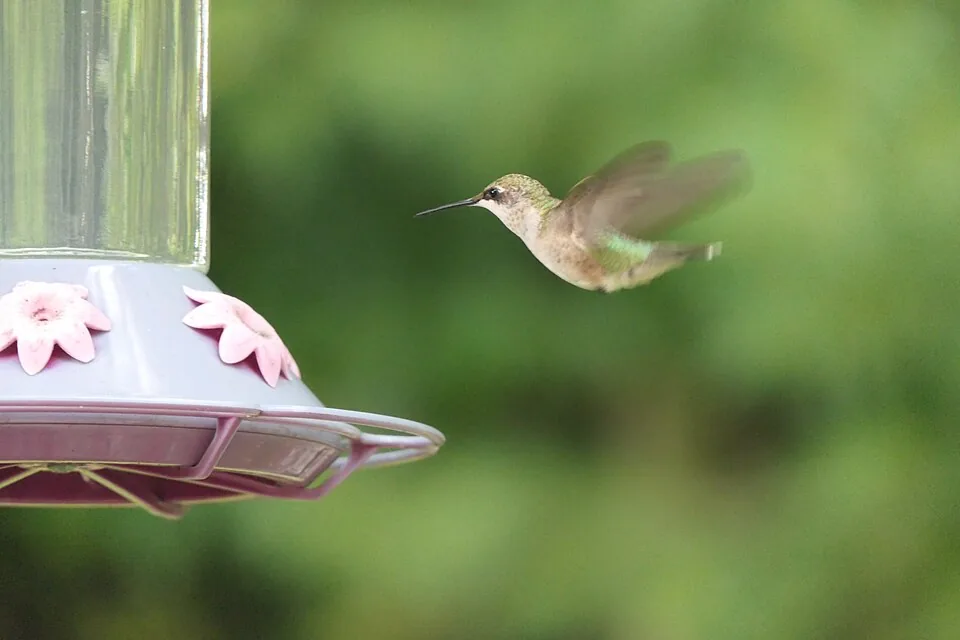
Winter Nectar, Done Safely
- Mix 1 part refined white sugar to 4 parts water (for example, 1/4 cup sugar in 1 cup water), boil briefly, and cool before filling. This is Audubon’s recipe, and it stays 1:4 all winter, so do not make it stronger for the cold. My step-by-step is in how to make hummingbird nectar.
- No red dye, no honey, no brown sugar, no artificial sweeteners. Audubon is explicit on all four.
- Clean and refill every few days, more often in mild weather; sugar water spoils and mould harms hummingbirds. Here is how I clean a hummingbird feeder.
- Keep the feeder in a sheltered spot near plants, not in the open wind, and keep a spare feeder so one can be swapped while the other is cleaned.
- In a freeze, bring a frozen feeder in to thaw and swap it back; do not add antifreeze or anything else to the nectar.
- Leave flowers and unsprayed plants where you can; winter-blooming currant, gooseberry, and manzanita are real nectar sources for Anna’s Hummingbirds, and the insects on those plants matter too.
A sticky feeder still draws ants on mild winter days; if that happens, here is how I keep ants out of a hummingbird feeder.
Keeping Nectar From Freezing
A sugar-water feeder has one advantage in a freeze: the sugar solution freezes at a lower temperature than plain water, so on nights that only dip slightly below freezing your nectar may not freeze at all. On harder nights, it will. The practical fix is two feeders: bring one in at dusk, put the other out at first light, and swap them through the day. Do not add antifreeze, salt or anything else to the nectar — there is no safe additive, and a frozen feeder swapped for a fresh one is the whole solution. The bird needs the food at dawn, cold or not, and the feeder that is out and full is the one that saves it. (Audubon, Hummingbird Feeding FAQs)
Where Hummingbirds Spend the Winter
Not every hummingbird leaves. Several species regularly overwinter along the Gulf Coast, in southern Arizona and in south Florida, and Anna’s Hummingbirds are resident all year from northwestern Baja California along the Pacific coast to British Columbia. Allen’s Hummingbirds stay in coastal Southern California, and Costa’s Hummingbirds stay in Baja California and from southeast California to western Arizona. That is why “winter hummingbird” means different things in different yards: in most of the country it means a late migrant passing through, while on the Pacific coast it means a resident bird that will visit your feeder every day until spring. If a hummingbird appears in your yard outside those areas in deep winter, keep a clean feeder up, do not assume it is lost, and do not handle it.
Cleaning in Cool Weather
Winter makes cleaning easier, not unnecessary. Audubon’s rule is simple: in hot weather, empty and clean the feeder every day or every other day; in temperate weather, every three days; in cooler weather, twice a week is enough. Clean it every time the birds empty it, and clean right away if you see mould, a sick bird has used it, or insects have got in. Hot tap water and hydrogen peroxide work well, or a weak vinegar solution — avoid dish soap, which can leave a harmful residue. A spare feeder makes all of this easy: one on the hook, one clean and ready to swap in.
Why the Feeder Does Not Stop Migration
The fear that keeps people taking feeders down in autumn is backwards. Hummingbirds are genetically programmed to head south in the fall, and what tells them to go is the changing length of the day and the angle of the sun — not the amount of nectar in your yard, and not the temperature. A feeder left up does not hold a bird back, and taking it down does not push a bird on its way. What taking it down does is remove fuel from a late migrant that is still passing through and needs it. Leave the feeder up while birds are visiting, keep it clean, and let the daylight do the deciding.

Torpor: The Still Hummingbird
A hummingbird in torpor looks still, with fluffed feathers and closed eyes. The National Park Service notes that in torpor a hummingbird’s heart rate can dip to about 50 beats per minute, breathing can pause for minutes, and body temperature has been documented as low as 8.8°C (48°F). Do not disturb it, do not warm it by hand, and do not assume it is dead. It wakes as the day warms, and then it needs food at once, which is why a clean, filled feeder matters on cold mornings.
Mistake to Avoid
The safer rule is: keep it clean and filled while birds are visiting, and only stop when no bird has visited for a sustained period and the season is genuinely over for your area. I cover the timing in when to take down hummingbird feeders.
Seasonal Note
Winter feeding is a commitment, not a one-week gesture. An Anna’s Hummingbird that finds a reliable winter feeder will return to it daily; a feeder that is filled once and then left empty, dirty, or frozen teaches the bird to waste energy searching. If you cannot keep a feeder clean and filled through winter, it is better not to start one than to start and abandon it.
Frequently Asked Questions
Do hummingbirds need food in winter? Yes, where they overwinter; most migrate, but Anna’s Hummingbirds on the Pacific coast stay and need daily nectar and insects.
What nectar ratio in winter? The same 1 to 4 sugar to water, plain white sugar only.
Should I take my hummingbird feeder down in winter? Not while birds are visiting, and not to force migration; feeders do not stop migration.
Is a still hummingbird dead? Not necessarily; it may be in torpor. Do not disturb it.
Do hummingbirds eat anything besides nectar? Yes, small insects and spiders for protein.
Can hummingbirds drink cold nectar? Yes. Audubon notes that cold nectar does not “cold stun” hummingbirds, so a feeder that is out and full on a freezing morning is doing its job.
Which hummingbirds stay all winter? Anna’s Hummingbirds on the Pacific coast, Allen’s in coastal Southern California, Costa’s in the desert Southwest, and several species along the Gulf Coast and in south Florida. Everywhere else, winter visitors are usually late migrants.
Further reading: Audubon, Hummingbird Feeding FAQs (the 1:4 recipe, no dye or honey, feeder cleaning) and the U.S. National Park Service on Anna’s Hummingbird (largely non-migratory on the Pacific coast; torpor figures: heart rate about 50 beats per minute, body temperature documented as low as 8.8°C / 48°F). See also Audubon, 11 Tips for Feeding Backyard Birds.
Plan the winter hummingbird routine with the Feeding Tools planner — and run the Winter Checklist before the first freeze.
Photo: a female Anna’s Hummingbird perched on a wire in the Puget Sound area, by MesoComet, CC0, via Wikimedia Commons.
Related guides: How to Attract Hummingbirds to a Feeder (Complete Beginner’s Guide) · When to Take Down Hummingbird Feeders: 7 Smart Rules (2026)

Related Articles
How to Help Birds in a Winter Storm
Fill your feeders before the storm, offer suet and sunflower seed, and keep water open — a small…
Read Article
Do Birds Use Birdhouses in Winter?
Yes — chickadees, bluebirds, titmice, wrens and nuthatches roost in birdhouses on cold nights. Clean yours out this…
Read Article
What Do Juncos Eat in Winter? (And How to Attract Them to Your Feeder)
In winter, juncos eat seeds — almost nothing else. White millet on the ground is their first choice.…
Read Article