Short Answer
White proso millet is the millet worth buying for most backyard bird feeders. It is a small, pale seed that suits ground-feeding birds best: sparrows, dark-eyed juncos, doves, towhees, and quail. Offer it on the ground near cover or in a low tray feeder with good drainage, and put out only about what the birds can eat in a day. Red and golden millet, by contrast, are often used as fillers in cheap mixes, and most birds largely ignore them.
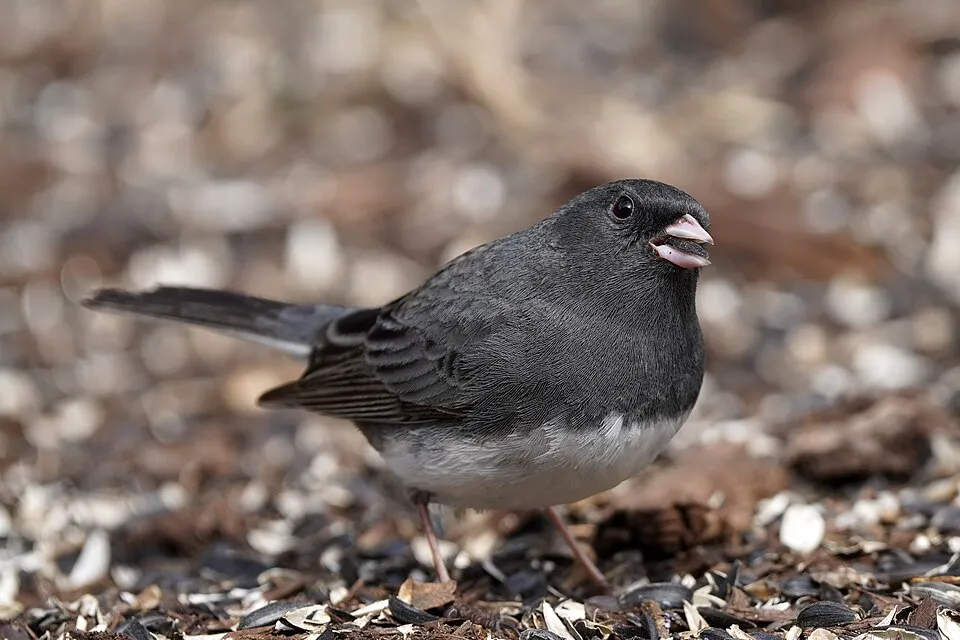
Millet is the most misunderstood seed in the birdseed aisle. It arrives in almost every mixed bag, yet much of it is never eaten — and the reason is not the birds. It is the kind of millet in the bag, and where it is offered. Millet is a specialist seed for ground-feeding birds. Offered the right way, it brings sparrows, juncos, doves, and towhees to the ground near shrubs and cover, a part of the yard hanging feeders never reach. Offered the wrong way, it becomes a sprouting pile that feeds no one.
White proso is the millet to buy — the rest is mostly filler
Millet is a group of small-seeded grains, not a single seed, and the name on the bag matters more than the word “millet” itself. The Cornell Lab of Ornithology’s seed guide draws the line clearly: white proso millet is a favourite of ground-feeding birds, while golden millet, red millet, and flax are often used as fillers in packaged mixes that most birds do not favour.
| Millet type | What it looks like | How birds treat it | Should you buy it? |
|---|---|---|---|
| White proso millet | Small, round, pale yellow-tan seeds | Readily eaten by ground-feeding birds | Yes — this is the millet to buy |
| Red millet | Small, reddish seeds, often in cheap mixes | Eaten by some birds, but often left uneaten | Usually no — check the label before buying |
| Golden millet | Small, golden seeds, often added for colour | Often ignored and left as waste | No — a common filler |
| Hulled millet | White proso millet with the shell removed | Easy to eat, leaves no hulls behind | Yes, if you want a tidier feeding spot |
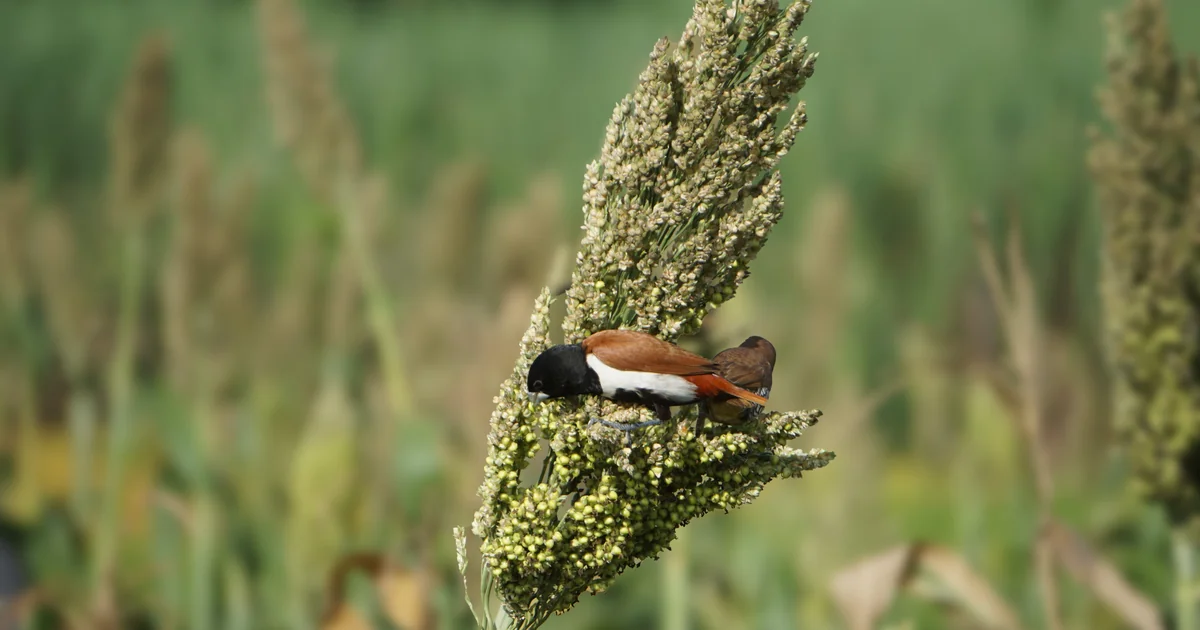
The seeds themselves tell the same story. Proso millet seeds are small, smooth, and oval, only 2.4–3 mm long, and domestic varieties are yellow or light brown — the pale seed in the photograph below. Red and golden millet look different, and birds treat them differently: Cornell notes that most birds shun them, and waste seed becomes a breeding ground for bacteria and fungus that contaminates fresh seed.

Read the ingredient list before buying. A bag that leads with sunflower seed and white proso millet is a good sign; a bag that leads with red millet, golden millet, milo, wheat, or oats is mostly filler. Audubon gives the same practical advice for blends: choose mixtures containing sunflower seeds, millet, and cracked corn — the three most popular types of birdseed — and offer different seeds in different feeders to reduce waste.
White proso millet by the numbers
| Fact | Figure | Source |
|---|---|---|
| Seed length | 2.4–3 mm | USDA NRCS, Proso Millet Plant Guide |
| Seeds in a pound | About 80,000 | USDA NRCS, Proso Millet Plant Guide |
| Bird groups Cornell names | 6 — quails, native American sparrows, doves, towhees, juncos, cardinals | Cornell Lab of Ornithology |
| Daily amount | Only what birds eat in a day | Cornell Lab of Ornithology |
| Feeder cleaning | Every 2 weeks in regular use | Univ. of Nebraska–Lincoln Extension |
| Escape cover | Shrubs or trees 10–15 feet away | Univ. of Nebraska–Lincoln Extension |
The ground is where millet works
Most millet eaters feed on or near the ground, so the feeder should match that habit. White millet in a tall tube feeder is an easy mistake: a few birds may find it, but most millet eaters will not look for it up there.
- A low tray or platform feeder. The best choice. It keeps seed off wet soil, gives birds a clear view, and is easy to clean. Choose one with drainage holes.
- Scattered on the ground near cover. Scatter millet close to shrubs or a brush pile, where ground-feeding birds feel safe. Avoid open ground far from cover.
- A low hopper feeder. This can work, but it is second to a tray feeder for true ground feeders.
Place the feeding spot where it can be seen and cleaned. A ground area that cannot be reached easily will become damp and sprouting, and the birds will stop coming before the problem is noticed. For a plan built around the birds actually visiting, try the Feeding Tools planner.
The cowbird catch: when millet feeds the wrong birds
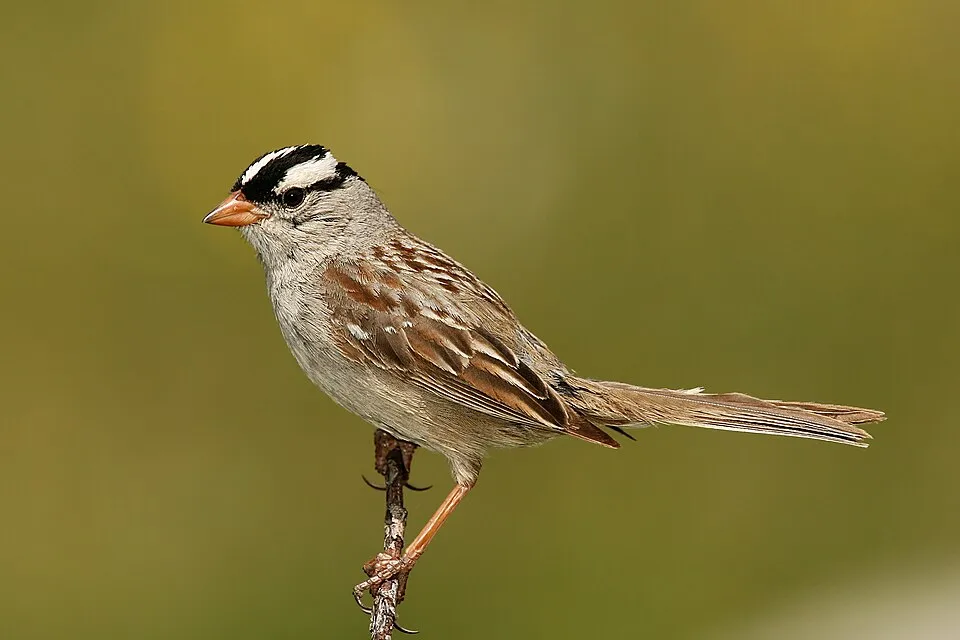
White millet has one serious drawback. Cornell’s guide states it plainly: white millet is also a favourite with cowbirds and other blackbirds and House Sparrows. When those species are present, Cornell advises that it is wisest not to use millet, because virtually all the birds that like it are equally attracted to black oil sunflower.
If cowbirds or large numbers of House Sparrows dominate the ground feeder, millet feeds the very birds least wanted, while sunflower seed will still serve the sparrows, juncos, and doves. In that case, pause millet and offer black oil sunflower instead.
The mistake that wastes most millet
The single most wasteful mistake is offering too much. Cornell’s rule for scattered white millet is simple: set out no more than birds can eat in a day. A big weekly pile gets wet, germinates, and can foster bacteria and fungal growth — and wet seed is a breeding ground for a fungus that can cause a potentially fatal bird infection, according to University of Nebraska–Lincoln Extension.
| Problem | Likely cause | Fix |
|---|---|---|
| Seed piles up untouched | Red or golden millet, or the wrong feeder | Switch to white proso in a low tray feeder |
| Seed sprouts under the feeder | Too much seed, or seed left out in wet weather | Offer only what birds eat in a day; clear old seed first |
| Only House Sparrows visit | Millet is attracting the birds Cornell warns about | Pause millet; offer black oil sunflower |
| Musty or mouldy seed | Damp storage or a tray without drainage | Throw the seed out, clean the tray, and store seed dry |
Store seed dry, cool, and sealed, and throw out any seed that smells musty or shows mould. Full storage guidance is in the guide to storing bird seed.
Millet in winter: small amounts, near cover
November is a good time for millet. Juncos have arrived in many yards, sparrows feed in flocks, and natural seed is harder to find. A small, reliable patch near cover gives ground feeders a steady source without asking them to compete at a hanging feeder they were never built to use. Pair millet with fresh water nearby and cover close at hand: Audubon’s winter advice rests on three essentials — quality seed, fresh water, and ample cover. Millet covers only the first.
Frequently Asked Questions
Do all backyard birds eat millet?
No. Millet is mainly for ground-feeding seed eaters such as sparrows, juncos, doves, towhees, and quail. Many other birds, including hummingbirds, woodpeckers, and goldfinches, prefer other foods.
Is white millet better than red millet for birds?
Yes. Cornell describes white proso millet as a favourite of ground-feeding birds, while red and golden millet are often used as fillers most birds do not favour.
Can I put millet in a tube feeder?
You can, but most millet eaters will not use it well. A low tray feeder or scattered seed near cover works far better.
Why is millet sprouting under my feeder?
Too much seed, or wet seed left out. Offer only what birds eat in a day, remove old seed first, and use a tray with drainage.
Should I stop offering millet if House Sparrows take over?
Yes, for a while. Cornell advises against millet when cowbirds, blackbirds, or House Sparrows are present, because the birds you want will also eat black oil sunflower seed.
Related Reading on BirdFeedly
- Sunflower Seeds for Backyard Birds.
- Safflower Seeds for Backyard Birds.
- Best Bird Seed for Backyard Birds.
- Why Do Birds Throw Seed Out of the Feeder?.
Sources and Further Reading
- Cornell Lab of Ornithology — Feeding Birds: A Quick Guide to Seed Types
- Audubon — The Audubon Guide to Winter Bird Feeding
- Audubon — 11 Tips for Feeding Backyard Birds
- University of Nebraska–Lincoln Extension — Feeding Birds in Winter
- USDA Natural Resources Conservation Service — Proso Millet Plant Guide
Related guides: Sunflower Seeds for Backyard Birds: Black-Oil vs Striped vs Hulled · Best Bird Seed for Backyard Birds (What to Buy and Avoid)

Related Articles
Safflower Seed: The Squirrel-Resistant Seed Cardinals Love
Safflower seeds are a squirrel-resistant feeder food loved by cardinals, chickadees, and finches. Learn which birds eat them,…
Read Article
Sunflower Seeds for Backyard Birds: Black-Oil vs Striped vs Hulled
sunflower seeds for backyard birds are a simple, reliable starting food — learn which form suits your visitors,…
Read Article
Peanuts at the Feeder: Whole, Shelled, or Butter — What Each Bird Can Actually Use
Peanuts for backyard birds: which form to buy, which birds love them, and the salted, stale and mouldy…
Read Article