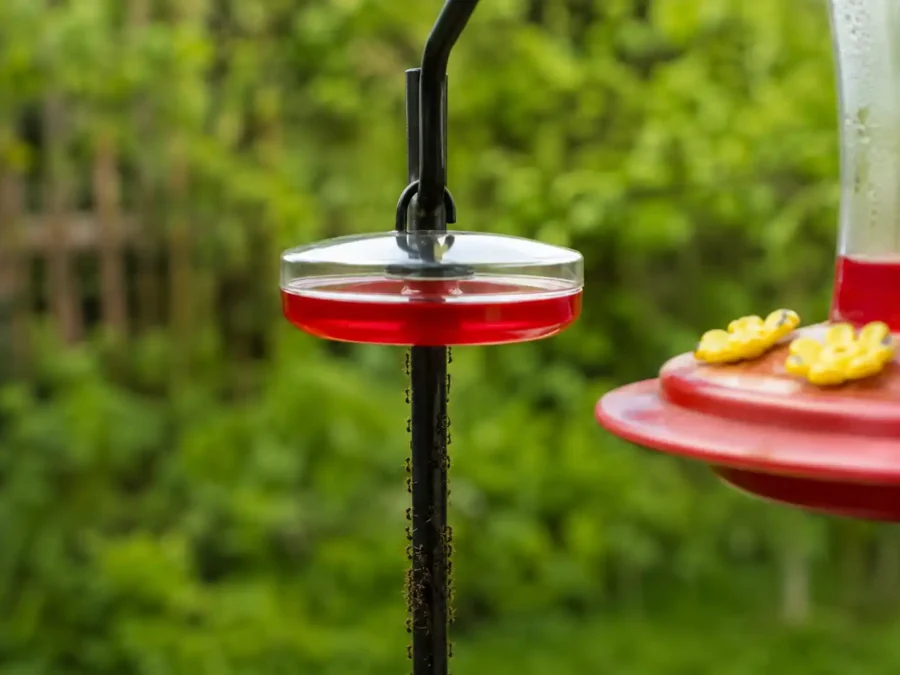
Ever walked out to refill a hummingbird feeder and found a thin line of ants trailing straight up the pole and into the nectar? If you’ve been searching for how to keep ants out of a hummingbird feeder without resorting to anything that could harm the birds, you’re dealing with one of the most common backyard feeder problems there is. If you’re still working on getting birds to visit in the first place, our guide on how to attract hummingbirds to a feeder covers that groundwork — this one picks up once ants become the issue.
Ants communicate through scent trails, and a sugar-water feeder is essentially a beacon once even one scout finds it. A single drop of leaked nectar on the pole or hanger is enough to start a trail that an entire colony will follow within hours.
This is really the root of most hummingbird feeder ant problems — it’s rarely about the feeder’s location alone, and almost always about some combination of a small leak, a sticky residue, or an easy path up from the ground or a nearby branch.
🐜 The Ant Solution, Up Front
- Ant moat = best fix. A small water-filled cup between hanger and feeder — ants can’t cross open water.
- Kill the scent trail. One drop of leaked nectar starts the whole colony trail; clean sticky residue.
- Break the path. Hang free of walls/branches; thin fishing line defeats their grip.
- Skip the poison. Every fix here is bird-safe — no sprays near feeders, ever.
7 safe methods below — the cheapest one is a cup of water.
📋 In This Guide
The Ant Moat: The Best Way to Keep Ants Away
Arguably the best way to keep ants away from a hummingbird feeder is a physical barrier they simply can’t cross — commonly known as an ant moat. It’s a small water-filled cup that sits between the hanger and the feeder itself.
Ants can climb almost anything, but they can’t cross open water, so a properly filled moat stops the trail completely before it ever reaches the nectar. It’s a passive, chemical-free method, which makes it one of the safest options if you’re specifically after how to keep ants away from a hummingbird feeder without harming birds.
DIY Ant Moat in 5 Minutes
A DIY ant moat takes about five minutes and barely any materials. Here’s a simple version most people can put together with things already at home:
- Take a small plastic cup or container and punch a hole through the center of its base
- Thread the feeder’s hanging hook or wire through that hole
- Position the cup a few inches above the feeder, secured so it doesn’t slide down
- Fill it about halfway with plain water and check it every few days, topping it off as it evaporates
This homemade ant moat approach works just as well as most store-bought versions, and it’s a genuinely reliable fix for anyone dealing with ants without a moat already built into their current feeder.
Natural Ways to Keep Ants Off
If you’d rather skip a moat setup entirely, there are several natural ways to keep ants off a hummingbird feeder that rely on scent and texture rather than water.
- Ground cinnamon or coffee grounds sprinkled around the base of the pole tend to disrupt the ants’ scent trail
- A light wipe-down using a diluted vinegar solution on the pole (never on the feeder itself) can mask the sugar scent that draws them in
- Fresh mint planted near the feeder area is a mild, ongoing deterrent for many common ant species
None of these are as consistently effective as a physical barrier, but combined with regular cleaning, they noticeably cut down on repeat visits.
Placement & Hanging Tricks
Ants need a physical path to climb, so the best place to hang a hummingbird feeder to avoid ants is somewhere that doesn’t touch a wall, tree trunk, or railing. Swapping a metal or plastic hanger for thin fishing line is a simple trick many people overlook — it supports the feeder’s weight just fine, but ants can’t get a grip on it.
If you keep noticing the same trail forming, the pole itself may be the issue. Learning how to stop ants from climbing a feeder pole often comes down to switching to a smoother hanging method rather than treating the pole surface repeatedly.
Keeping the feeder itself clean also removes a big part of the problem before it starts — a wipe-down after every refill prevents the kind of sticky residue that draws ants in the first place. Our full guide on how to clean a hummingbird feeder covers exactly how to do that without leaving anything behind that could bother the birds.
Cost Comparison
Cost is often the deciding factor between building something yourself and buying a ready-made solution. Here’s a general sense of how the common options compare:
| Method | Approx. Cost | Effort to Set Up |
|---|---|---|
| DIY plastic cup moat | Free – $1 | Low, ready in minutes |
| Store-bought ant moat | $5 – $12 | Low, minimal assembly |
| Fishing line hanger swap | $2 – $5 | Low, one-time setup |
| Natural repellents (cinnamon, mint) | $0 – $6 | Low, needs reapplying |
Prices are general estimates and will vary depending on region and what you already have on hand.
Frequently Asked Questions
Do ants harm hummingbirds?
Ants don’t typically attack hummingbirds directly, but a heavily infested feeder can contaminate the nectar and will often drive birds away from an otherwise good food source.
Is petroleum jelly safe near a hummingbird feeder?
It’s generally safe when applied well below the feeder on the pole itself, away from any spot where a bird’s feathers could make contact. It should never be applied directly on or near the feeding ports.
Why are ants suddenly attracted to my hummingbird feeder?
A sudden increase usually points to a small leak, spilled nectar during a refill, or a buildup of sticky residue that a scout ant has recently discovered and started signaling to its colony.
Can I use vinegar to keep ants off a hummingbird feeder?
Yes, a diluted vinegar wipe on the pole or hanger can help mask the scent trail ants follow, as long as it’s kept away from the nectar itself and rinsed off the feeder before refilling.
How do ant moats actually work?
An ant moat is a small water-filled barrier placed between the hanger and the feeder. Ants can climb almost any surface but can’t cross open water, so the moat physically blocks their path to the nectar.
Before you reach for a store-bought fix
It’s worth thinking about which of these you haven’t actually tried yet — chances are, the cheapest solution is already sitting in a kitchen cabinet somewhere. Whether it’s a spare cup for a moat or a spool of fishing line in a drawer, keeping ants out of a hummingbird feeder rarely requires buying something new before trying what’s already on hand.

Related Articles
Why Do Birds Throw Seed Out of the Feeder? (And How to Stop It)
Last fall I stood under my tube feeder, stared at the two-inch carpet of seed and husks on…
Read Article
Do Bird Feeders Make Birds Dependent? The Honest Answer (2026)
Last February, watching a downy woodpecker work my suet feeder in a sleet storm, the guilty thought crossed…
Read Article
How to Keep Bird Seed Dry in Fall: 7 Proven Tips (2026)
Bird Feeding Note: This article is for general informational purposes. Keep feeders clean, provide fresh food and water,…
Read Article