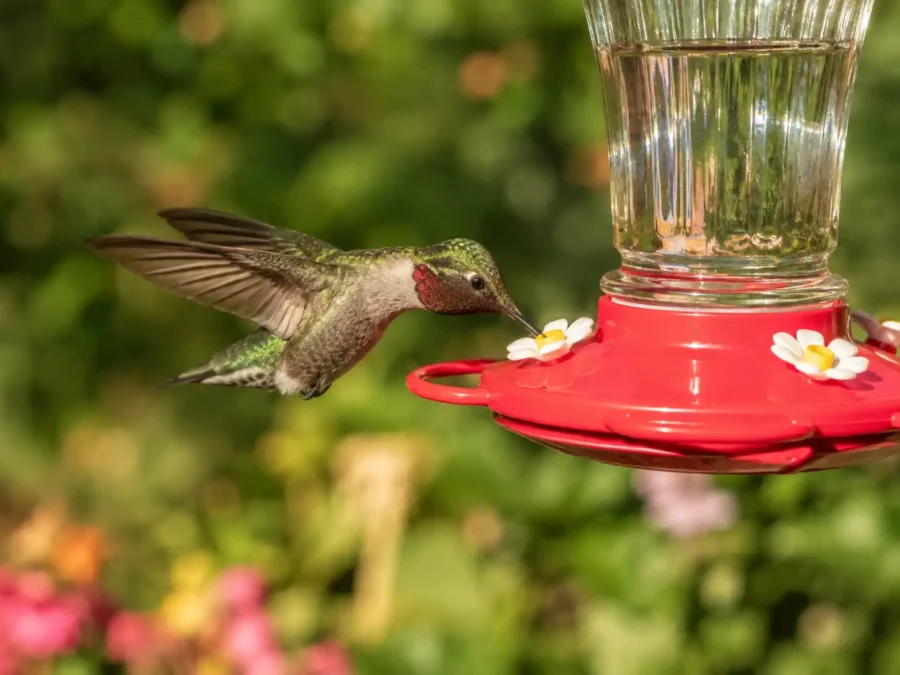
A hummingbird’s heart can beat well over a thousand times a minute, and that non-stop engine needs refueling almost every ten to fifteen minutes during daylight hours. That single fact explains most of what you need to know about how to attract hummingbirds to a feeder — it has less to do with luck and more to do with consistently being a reliable food source in a spot they can find. If you’ve hung a feeder and are still waiting for your first visitor, this guide walks through what actually works, based on real trial, error, and a fair bit of patience.
🌸 Hummingbird Success, Up Front
- Be reliable. It’s about being a consistent food source in a findable spot — not luck.
- Nectar first: 4 parts water to 1 part plain white sugar, boiled and cooled.
- Placement near cover: within 10–15 feet of a tree, shrub, or trellis.
- Give it weeks, not days. Discovery takes a few days to a few weeks — don’t keep moving the feeder.
7 sections below — from why they ignore new feeders to a realistic timeline.
📋 In This Guide
1Why Hummingbirds Ignore a Brand-New Feeder
New feeders almost never get visitors on day one, and that’s normal rather than a sign that something’s wrong. Hummingbirds tend to follow familiar routes between known food sources, and a feeder they’ve never seen simply isn’t on that mental map yet.
It usually takes anywhere from a few days to a few weeks for a scouting bird to notice a new feeder and start returning to it regularly. Placement near existing perches, flowering shrubs, or a spot with some natural cover tends to shorten that window, since it puts the feeder inside territory a hummingbird is already checking.
If nothing has shown up after the first week, resist the urge to move the feeder every few days — constant relocation actually resets that discovery process and can slow things down further.
2The Best Way to Attract Hummingbirds Starts With the Nectar
Arguably the best way to attract hummingbirds has nothing to do with the feeder’s design and everything to do with what’s inside it. A simple mix of four parts water to one part plain white sugar, brought to a boil and then cooled, matches the sugar concentration found in most nectar-producing flowers.
Skip red dye, honey, and artificial sweeteners entirely — dye offers no real benefit and honey can ferment quickly, which isn’t good for the birds. Fresh nectar also matters more than most people expect.
- Replace nectar every 2–3 days in warm weather, sooner if it looks cloudy
- Rinse the feeder with hot water between refills, no soap residue
- Store extra nectar in the fridge for up to a week
For a deeper clean beyond the daily rinse — including how to deal with mold or stubborn buildup — our full guide on how to clean a hummingbird feeder walks through the process step by step.
3How to Get Hummingbirds to Come to a Feeder: Placement Tips
Placement is where most of the actual work happens if you’re trying to figure out how to get hummingbirds to come to a feeder faster. Red or orange accents on the feeder itself catch a hummingbird’s eye from a distance, which is one reason the best color to attract hummingbirds to a feeder tends to be some variation of red — but the nectar itself never needs to be dyed to achieve that.
Hang the feeder within ten to fifteen feet of a tree, shrub, or trellis. That nearby cover gives hummingbirds a place to perch, rest, and watch for predators between visits, which makes them far more comfortable sticking around.
Small-space setups work just as well. A hummingbird feeder on a balcony or a suction-mounted window feeder can perform just as reliably as a yard feeder, as long as it’s visible, gets some shade during the hottest part of the day, and isn’t constantly disturbed by foot traffic right next to it.
4Other Ways to Attract Hummingbirds to Your Yard
A feeder alone can absolutely work, but pairing it with a couple of natural elements tends to speed things up considerably. These are some of the more reliable ways to attract hummingbirds to your yard beyond the feeder itself:
- Tubular flowers like salvia, bee balm, or trumpet vine give hummingbirds a secondary nectar source and help confirm the area is worth revisiting
- Skip pesticides and herbicides — hummingbirds also rely on small insects for protein, so a chemical-free yard supports their full diet
- A shallow mister or fountain gives them a place to bathe, which many hummingbirds actively seek out
None of this is mandatory — plenty of people successfully learn how to attract hummingbirds without flowers using a feeder alone — but a garden with even one or two nectar plants nearby tends to hold a hummingbird’s interest longer once it’s found you.
5A Realistic Timeline for a New Feeder
One of the most common frustrations is not knowing what to expect after hanging a feeder for the first time. Here’s a general sense of how the process tends to unfold under normal backyard conditions:
| Timeframe | What Usually Happens | What You Can Do |
|---|---|---|
| Days 1–7 | Little to no activity while local hummingbirds are still scouting the area | Leave the feeder in place; keep nectar fresh and clean |
| Weeks 2–3 | Occasional, brief visits as one or two birds start checking in | Avoid moving the feeder; note visit times to spot a pattern |
| Month 1–2 | Regular visits from returning birds, sometimes joined by others | Consider adding a second feeder if activity increases |
| Through the season | Established routine visits, especially near flowering plants | Maintain a consistent refill and cleaning schedule |
Timelines vary by region, season, and local hummingbird population — this reflects typical, not guaranteed, behavior.
6What I Noticed After Moving My Feeder
While putting this guide together, I spent a season testing a few different placements in my own backyard rather than relying only on general advice. The feeder sat in an open, sunny spot for nearly three weeks with barely a single visit.
After moving it about eight feet closer to a viburnum shrub, still within view of a window, the first confirmed visit happened within four days. Over the following two weeks, visits became noticeably more consistent, usually in the early morning and again in the late afternoon.
It wasn’t a scientific test, just close observation over one season, but it lined up with what most placement guidance already suggests: proximity to natural cover seems to matter more than sun exposure or feeder style.
7Quick Tips to Attract More Hummingbirds, Fast
If you want a shortlist of tips to attract more hummingbirds without rereading the whole guide, these are the ones that tend to make the biggest difference first:
- 1 Hang the feeder before the local hummingbird season typically begins in your region, not after
- 2 Keep nectar fresh — cloudy or fermenting nectar will actively drive birds away
- 3 Add a second feeder spaced well apart to reduce territorial squabbling
- 4 For a small backyard, one well-placed feeder near cover often outperforms several scattered ones
- 5 Be patient for at least three to four weeks before assuming the spot isn’t working
Most people trying to learn how to attract hummingbirds fast underestimate how much consistency matters more than any single trick — the birds simply need time to notice you’re there.
Frequently Asked Questions
Do hummingbirds prefer red feeders?
Generally, yes. Red and orange tend to catch a hummingbird’s attention from a distance, which is why many feeders include red parts near the feeding ports. The nectar itself doesn’t need to be dyed for this to work.
How often should I refill my hummingbird feeder?
Every 2–3 days is a safe rule of thumb, and more often in hot weather since nectar spoils faster above 90°F. Fresh nectar keeps birds returning and reduces the risk of harmful bacteria or mold.
What time of day are hummingbirds most active at feeders?
Early morning and late afternoon tend to see the most activity, when hummingbirds are refueling after roosting overnight or before settling in for the evening. Midday visits still happen, just less frequently.
Can I use fruit or flowers to attract hummingbirds besides a feeder?
Yes — tubular, nectar-rich flowers like salvia or bee balm work well alongside a feeder. Overripe fruit won’t attract hummingbirds directly, but it can draw small fruit flies, which hummingbirds occasionally eat for protein.
How many feeders do I need to attract hummingbirds?
One feeder is enough to get started, especially in a small yard or balcony. Adding a second feeder, spaced well apart, mainly helps reduce competition once multiple birds are regularly visiting.
Still waiting on your first visitor?
Getting the timing, placement, and nectar right is really the whole strategy behind how to attract hummingbirds to a feeder — the rest is just patience. Have you spotted your first hummingbird yet this season, or are you still watching an empty feeder and wondering what’s taking so long?

Related Articles
How to Attract Orioles to Your Backyard (Complete Guide)
Bird Feeding Note: This article is for general informational purposes. Keep feeders clean, provide fresh food and water,…
Read Article
How to Attract Birds With Water (Complete Bird Bath Guide)
Bird Feeding Note: This article is for general informational purposes. Keep feeders clean, provide fresh food and water,…
Read Article
How to Keep Bees and Wasps Away from a Hummingbird Feeder
Bird Feeding Note: This article is for general informational purposes. Keep feeders clean, provide fresh food and water,…
Read Article